Christmas Day in Venezuela is 25 December. It is a public holiday.
How to say it
Spanish
Feliz Navidad
say it: feh-LEESS nah-vee-DAHD
A synthesised voice — not a recording of a person — saying Feliz Navidad
in es-VE.
The ordinary Spanish greeting, and Venezuela adds no form of its own — which is worth saying plainly rather than inventing a local variant. The Diccionario de la lengua española has no «feliz navidad» among the expressions it lists under navidad; it gives only «árbol de Navidad» and «tarjeta de Navidad». The phrase is universal enough across the Spanish-speaking world that no dictionary treats it as a lemma.
The Venezuelan word that does carry weight is aguinaldo, which here means the carol rather than the bonus, and which is what the nine dawn masses are named after.
The presents come from the Christ child himself, on the night of the 24th, and the language records it more plainly than any custom does: a Venezuelan parent going out to buy the presents says they are going to buy the Niño Jesús.
The letter is written to him rather than to Santa Claus. Santa is present in Venezuela — in shop windows and on streets — and a Venezuelan Catholic writer describes him as foreign to the country's own identity rather than as a second gift bringer.
The state moved the start of Christmas, and the bishops said the timing was not the state's to set
Twice in three years the Venezuelan government has announced that Christmas would begin early — on 1 October in 2024, and on 1 November in 2026 — and both times the announcement was made in a speech rather than in the statute book.
The 2024 announcement was framed as a reward: «Y por eso este año, en homenaje, en agradecimiento a ustedes, voy a decretar el adelanto de la Navidad para el primero de octubre.» The 2026 one was framed as economics, by the acting president Delcy Rodríguez at the annual assembly of the employers' federation: «Anuncio que el 1 de noviembre arranca la Navidad, porque yo sé que la Navidad también activa mucha actividad económica, pero principalmente activa la felicidad de los venezolanos y de las venezolanas.»
The Conferencia Episcopal Venezolana answered the first one in a short statement that conceded the celebration and refused the authority over it: «La Navidad es una celebración de carácter universal. El modo y el tiempo de su celebración compete a la autoridad eclesiástica. Esta festividad no debe ser utilizada con fines propagandísticos ni políticos particulares.»
The reply came on state television, and it is the sentence the episode of 2024 is remembered by. Nicolás Maduro called the bishops «unos tipos con sotana» — some fellows in cassocks — who had dared to say «que no había Navidad si ellos no la decretaban», and answered them directly: «No, señor con sotana, usted aquí no decreta nada. Jesucristo le pertenece al pueblo. Las navidades son del pueblo y el pueblo las celebra cuando quiera celebrar sus navidades.»
Two institutions, each telling the other that the date of Christmas was not theirs to decree.
Las misas de aguinaldo — nine masses before dawn, named after the songs
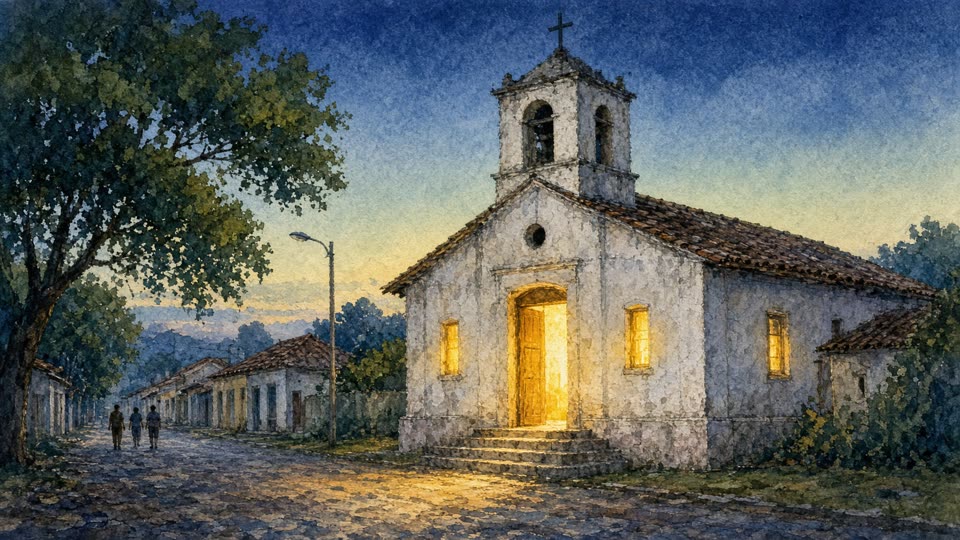
From 16 to 24 December, nine mornings running, mass is said before the sun is up. A heritage body in Caracas gives the span and the hours: «Las Misas de Aguinaldos dan inicio en la segunda quincena del mes, desde el 16 hasta el 24 de diciembre, para celebrar durante nueve días», and «Las Misas de Aguinaldos se celebran en la madrugada, desde las 4 – 5 am, o en la mañana entre las 6 y las 7 am.» Afterwards the congregation eats arepitas dulces and drinks hot chocolate outside the church, and Caracas parishes still field children's, youth and adult choirs for them.
The name is the whole point and it goes missing in translation. An aguinaldo in Venezuela is not the Christmas bonus — it is the carol. These are the masses with the songs in them.
They are old. The academy of history of Carabobo state, working from the archive, records that in Valencia a captain endowed them in the eighteenth century: «el 12 de junio de 1766, el capitán Bernardo Joseph Páez verificó un censo por la cantidad de 540 pesos, a favor de la Iglesia Matriz (Hoy Iglesia Catedral) de la ciudad para la celebración de las misas de aguinaldo.» Somebody settled 540 pesos on a church so that the aguinaldo masses would go on being said after he was dead.
Las patinatas — the street closes and the children skate, and nobody agrees when
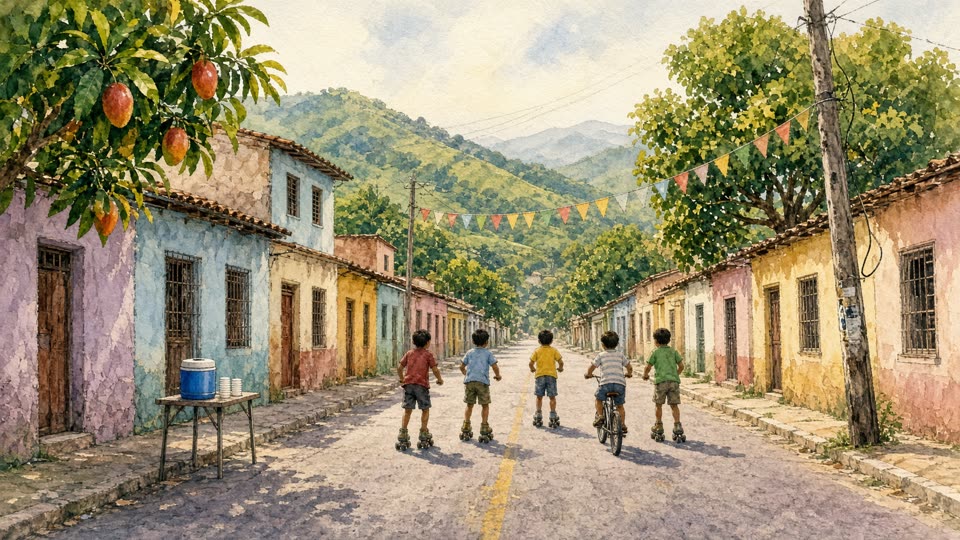
A patinata is a block party on wheels: streets closed, children out on skates, bicycles and boards, music, food stalls. It is one of the best-known Venezuelan Christmas customs and three accounts of it disagree with one another about the two things you would most want to know — when it started and which day it happens on.
The fullest account is an interview with a Venezuelan who grew up between Caracas and Miami, and it puts the patinata on Christmas Day, as the first outing of the presents: «The concept of the holiday is so that kids could actually use their gifts that they got from El Niño Jesús on the 24th.» A lot of Venezuelan children are given something with wheels on it, the climate is tropical, and the 25th is spent outdoors. The tradition grew popular enough that the authorities sometimes closed the streets officially.
A Caracas newspaper dates it to 1940 and ties it to the dawn masses instead — the young slipping out to skate while the adults were inside: «Esta actividad se remonta a 1940, cuando los jóvenes aprovechan que los adultos se encontraban en las “misas de gallo” o “misas de aguinaldo” para salir a patinar por las calles.» A city guide dates the first recorded patinatas to the 1950s and keeps the Christmas Day framing: «La patinata del 25 de diciembre era una de las más tradicionales, ya que los más pequeños de la casa salían con sus regalos de “Niño Jesús” a disfrutar de estos eventos.»
So: 1940 or the 1950s, at dawn or in the afternoon, during the novena or on the day itself. None of the three cites a source of its own, and there is no good ground for preferring one over the others.
What all three agree on is that it has thinned. «The tradition has really died down in the last two decades with the insecurity and protests», says the same interviewee, whose younger cousin has never really taken part. «Las patinatas became a historical memory.»
La Paradura del Niño — the Christ child is stolen, searched for, and stood upright
In the Andean states the Christmas season does not end in December. From 1 January to 2 February — La Candelaria — households hold the Paradura del Niño, and a study of the custom in Mérida gives both the range and the reach: «Es una fiesta hogareña muy corriente en casi todas las poblaciones de los Estados Táchira, Mérida y Trujillo. Tiene vigencia en el tiempo comprendido desde el 1ero de enero hasta el 2 de febrero, día de Nuestra Señora de La Candelaria.»
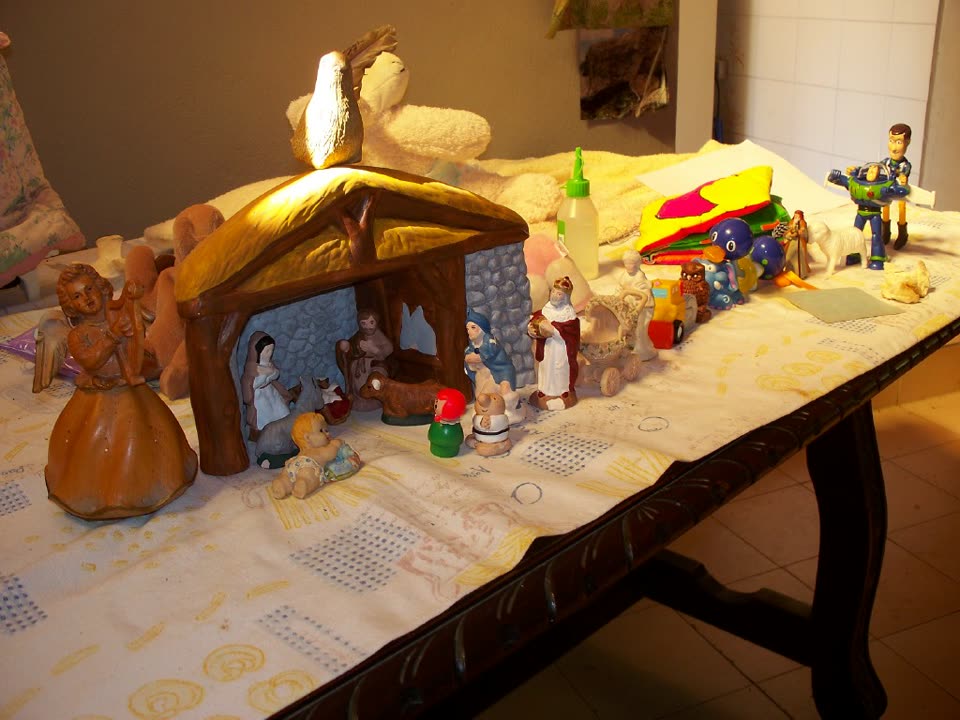
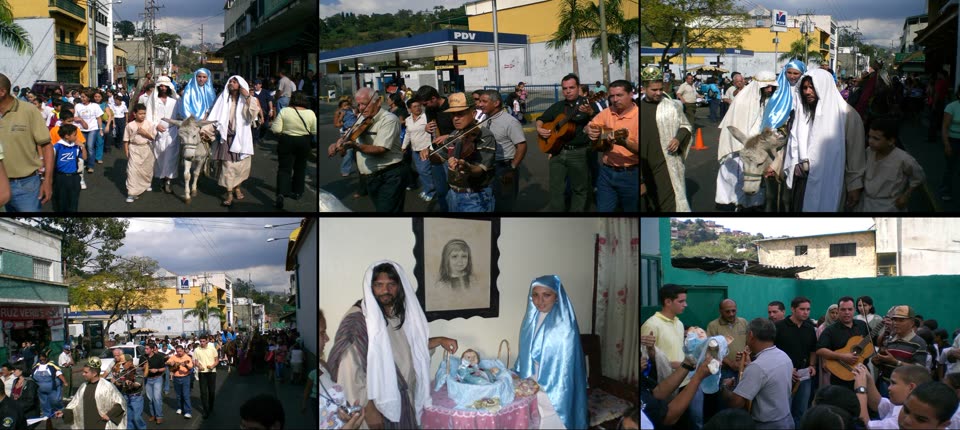
The ceremony is built around one physical act. The host hands out candles, the largest and best decorated to the godparents, who carry the small image of Jesus on the corners of a handkerchief. A procession goes through the house or the nearby streets by candlelight while the trovistas sing verses to the bandolín, the cuatro, the tiple, the violin and the maracas. Back at the house the godparents kneel at the crib, kiss the image, pass it to be kissed, and then stand up and perform the paradura itself: «colocan de pie al Niño Jesús en el nacimiento, en medio de las imágenes de San José y la Virgen María». The child who has been lying in the manger since Christmas Eve is set on his feet.
The figure is often taken first. El Robo y Búsqueda del Niño Perdido — the theft and the search for the lost child — is the version in which the image goes missing from the crib and has to be hunted for before it can be stood up.
Whether anybody dances afterwards depends on where you are, and the study is blunt about the split: «En los medios rurales, en tal alborozo, no se baila. La gente del campo considera este hecho como una imprudencia o falta de devoción al Hijo de María. Sin embargo, en los centros urbanos, el baile constituye uno de los principales atractivos y con él rematan la fiesta que, muchas veces, suele durar casi hasta el nuevo día.»
La gaita zuliana — regional music that became the sound of a national Christmas
Gaita is from Zulia, in the north-west, where it began in the nineteenth century as improvised party music. Since the 1960s it has been recorded, sold and played across the whole country every December, which has left it doing two different jobs at once.
A doctoral study of the genre in Maracaibo puts the double life precisely: «Since the 1960s, gaita has become a commercialized folk music that is popular throughout Venezuela during the Christmas holiday season, but in Zulia, where gaita originated, the music serves as a medium through which regional identity is defined, promoted, negotiated, celebrated, and even marketed.»
So the rest of Venezuela hears Christmas music, and Zulia hears itself. In Maracaibo the genre is bound up with devotion to the Virgen de Chiquinquirá — La Chinita — whose feast falls in November, which is also roughly when the gaitas start.
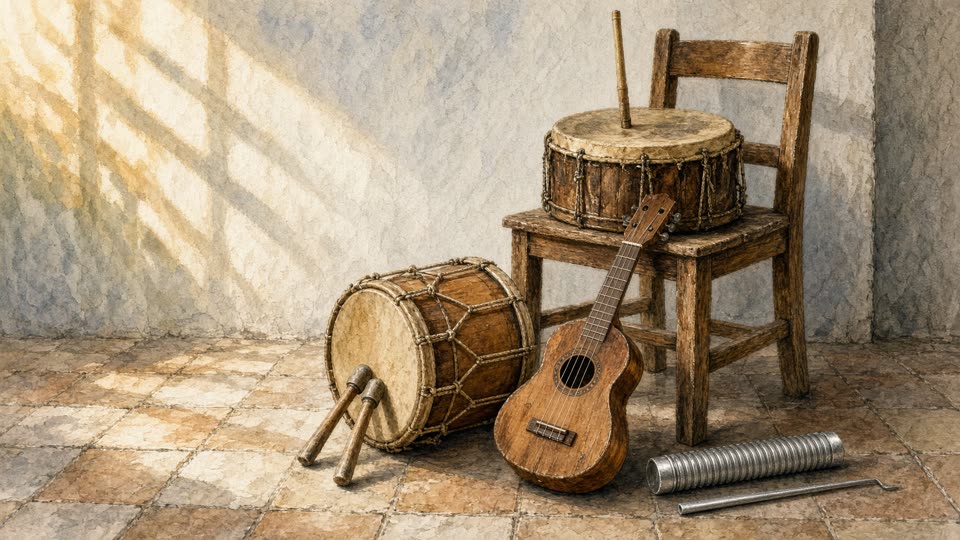
What it is played on is a short list, and a Caracas daily gives it: «El furruco, la tambora, el cuatro y la charrasca marcan el ritmo de la tradición». The same report starts the season a good deal earlier than the Chinita feast would — «desde mediados de septiembre se convierte en la antesala de la llegada de la Navidad» — so two starting points are published, mid-September and mid-November, and neither source contradicts the other.
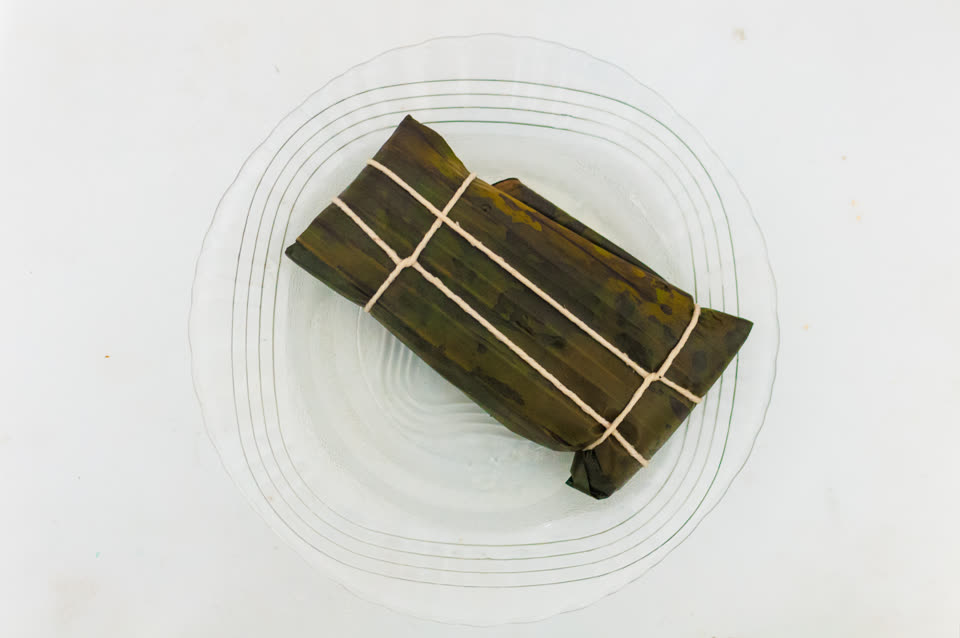
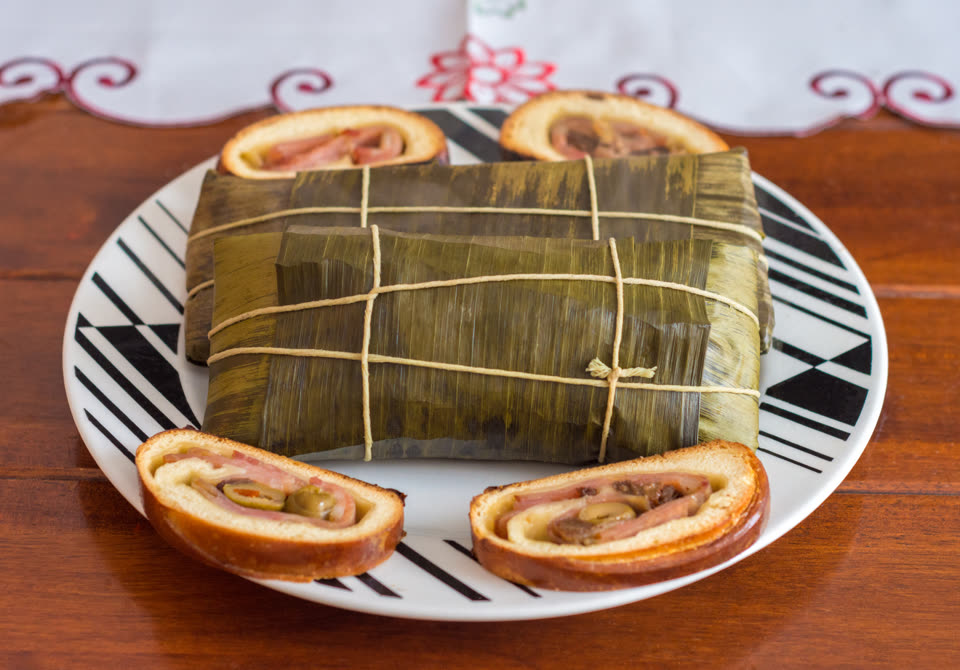
Maize dough coloured with onoto, spread on scalded plantain or banana leaves, filled with a stew of beef, pork or hen, decorated with egg, olives and raisins, tied up and boiled. It is the Venezuelan Christmas dish, and a family makes them in a production line over two days.
The name came from a bundle. One etymology, which a Venezuelan nutrition journal quotes from the philologist Ángel Rosemblat, has hayaca as an indigenous word meaning a bundle or a tied parcel, and points at a document of 13 September 1608 that reads «tres hayacas de sal grandes» — three large bundles of salt. Rosemblat's conclusion is that the dish itself is a tamal, Aztec in origin, and that only the Venezuelan name is local: «En cambio hayaca es voz exclusivamente de Venezuela y no la hemos encontrado en los antiguos cronistas.» A competing etymology, from Adolfo Ernst, derives it instead from a Guaraní verb meaning to stir or mix — «ayuaca», a mixed thing, becoming «ayaca» in the eighteenth century. Neither is settled.
It is not one recipe. In the Andes they put in potatoes, chickpeas, beans and the root Venezuelans call apio, and the stew goes in raw; in the east, fish or mussels; in Zulia plantain sometimes replaces the maize altogether. The leaves are not only a wrapper — a Venezuelan lexicographer is quoted to the effect that boiling in banana leaf is what gives the hallaca the flavour that distinguishes it.
And one industrial change rewrote the household's December. From 1960 pre-cooked maize flour replaced the pounding and boiling of whole maize, which is what made the hallaca practical in a city flat — and portable. It is now one of the two dishes that travel with every Venezuelan who emigrates.
La hallaca tradición y nutrición — Maritza Landaeta-Jiménez, Fundación Bengoa; Anales Venezolanos de Nutrición, vol. 34 no. 2, Caracas, December 2021
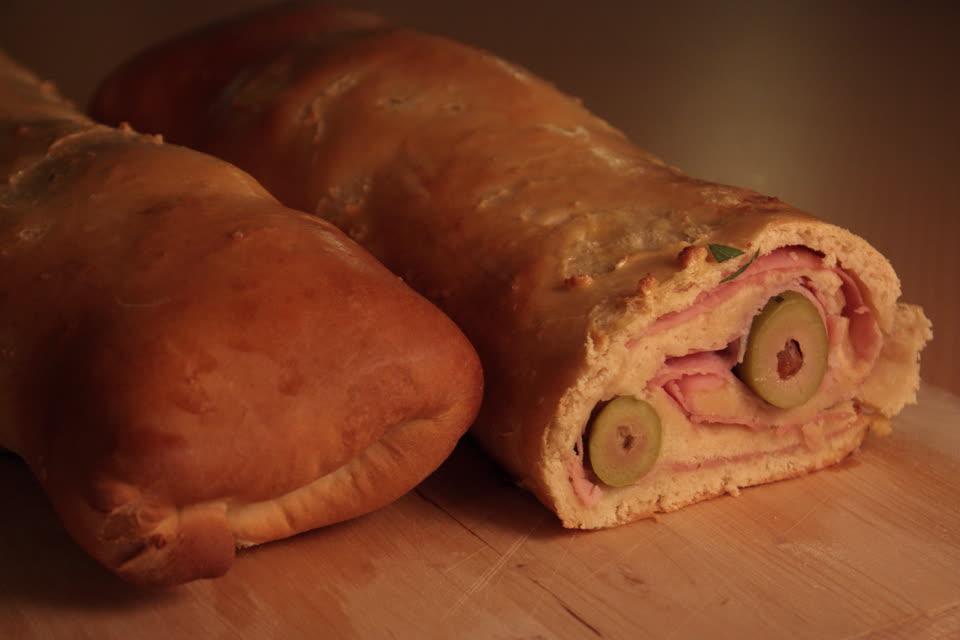
A soft loaf rolled around ham, olives and raisins, baked, and eaten in slices through December. Venezuela's Christmas bread has a bakery, a date and a man attached to it, which almost no national dish anywhere does — and it began as a way of using up scraps.
The bakery was the Panadería Ramella, on the corner of Las Gradillas in Caracas. Its owner was Dr Lucas Manuel Ramella Martínez, a physician. At Christmas 1905 he made the first pan de jamón with beer dough and pressed ham, and the idea was thrift: «La idea surgió como una forma ingeniosa de aprovechar los últimos trozos de jamón adheridos al hueso, cortándolos en pequeños cubos y agregándolos al pan» — a clever way to use the last bits of ham stuck to the bone, diced and worked into the dough. The first documented record is the advertisement he ran that December, offering customers his «pan con jamón».
It was not a village invention. Two years earlier, in May 1903, the magazine El Cojo Ilustrado had reported the Ramella bakery refitting its workshops «ofreciendo una instalación ajustada a las previsiones higiénicas, por aislamiento y resguardo de los laboratorios y maquinarias» — and among the new machines was the first electric dough mixer in Venezuela, alongside French baking equipment. This was the most industrialised bakery in the country: 1,500 sacks of wheat flour a month, biscuits exported to Trinidad, and by 1920 five branches in Caracas, one in La Guaira and 244 employees. The Venezuelan Christmas loaf was invented in a factory by a doctor.
The competition caught up within a year. On 21 December 1906 the newspaper El Constitucional carried a rival's advertisement: «Pan con jamón. Especialidades de la casa para los días de Pascuas, a 2, 4, 6 y 8 reales… Panadería de Sociedad Montaubán & C.A.»
What the loaf is not is colonial. The stories that put it in the back yards of Spanish Caracas, or credit an Italian baker in the 1940s who supposedly invented a «cachito gigante» during a December drinking session, have nothing behind them: «Lo cierto es que el pan de jamón no tiene raíces coloniales ni se originó en los patios traseros de las casas de la época, pues no hay registros históricos que lo respalden.»
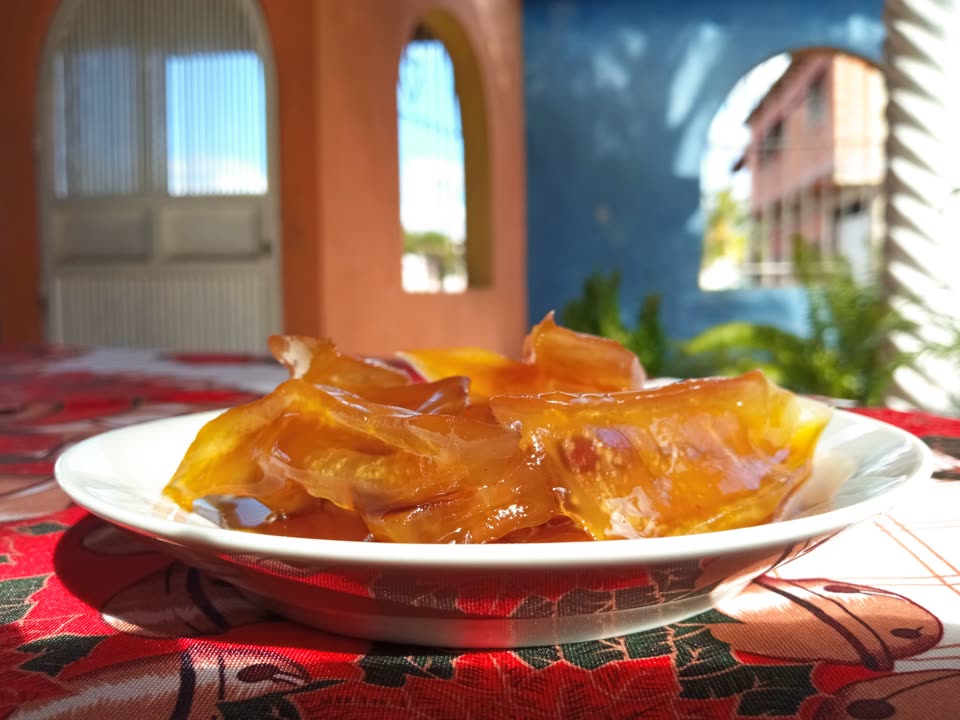
Unripe papaya — lechosa — cut into strips and candied slowly in syrup until the pieces are translucent amber and soft at the edges. It is the Christmas sweet, and Venezuelans eat conspicuously more of it in December and January than in the rest of the year.
It is also, formally, heritage: in 2019 the dulce de lechosa was declared Patrimonio Inmaterial de Venezuela under certificate number 000212.
Widely repeated claims about Christmas in Venezuela that do not survive
checking. Each one says what is actually the case, because a correction
with nothing in its place leaves you worse off than before.
Oversimplified
Venezuela's government moved the date of Christmas
What is actually the case. Something real happened and it was not this. In 2024 the government announced that the Christmas season would begin on 1 October, and in 2026 that it would begin on 1 November — but neither announcement touched a statutory holiday. The days off are set by article 184 of the labour code and they are still 24, 25 and 31 December. A Venezuelan newspaper put the scope of the 2024 announcement in one sentence: «este anuncio gubernamental no tiene ningún cambio real en las fechas legalmente festivas, sino únicamente en la decoración típica navideña en espacios públicos» — no real change in the legally festive dates, only in the usual Christmas decoration of public spaces. What moved was when the lights go up.
The word «decree» in the English coverage is doing more work than the evidence supports. The 2024 announcement was made on television, and the presidential press office's own report of it cites no gazette. No gazette entry has been found for any of these announcements — which is not the same as establishing that none exists, because the Imprenta Nacional's archive of past gazettes cannot currently be searched by anybody: its index page offers a search by date, and the search itself returns nothing at all.
Venezuelan children sleep with a string tied to a toe and hanging out of the window, so that roller-skaters on their way to dawn Mass can give it a tug
What is actually the case. The skating is real. The string is not attested anywhere in Venezuela.
The patinatas are a genuine and well-loved custom — block parties on closed streets, with children out on skates and wheels — and the fullest account of them puts them on Christmas Day, as the outing of the presents the Niño Jesús brought on the 24th, not on the way to anything. No Spanish-language account of the custom mentions a string, a toe or a window, and none has anybody skating to mass.
The English version appears to have been copied from site to site. A Caracas blog was asked by a British magazine in 2011 to confirm it and could not: «I also read that children tie a piece of string around their toe when they go to bed, and they put the other end out of the window, for people to pull when they roller skate past… Is this a thing? Really? The theory is floating around the Intertoobz but I've never ever heard of it before…» Two years later an American outlet reprinted the whole story — the closed streets and the toe string together — and attributed it to MSN rather than to any Venezuelan source.
Wait…what?! — Caracas Chronicles, 12 September 2011
In Venezuela an aguinaldo is a carol, not a Christmas bonus — and the Spanish historical dictionary records the shift as a Venezuelanism. Across most of the Spanish-speaking world the word keeps its oldest sense, a present given at Christmas or New Year, attested from the fifteenth century and defined by Nebrija in 1495. In Venezuela it moved to the song. A dictionary of provincialisms from Lara state put it flatly in 1941: «Aguinaldos: Como venezolanismo, equivale a villancico.» Rómulo Gallegos had already used it that way in his 1925 novel La Trepadora, with the maracas and the furruco going «a tiempo que se elevaban voces agudas y vibrantes, entonando los aguinaldos al Niño Jesús». This is why the nine dawn masses are called misas de aguinaldo: they are named after what is sung at them. Venezuela also has the other sense — the statutory bonus — so the word now carries both.
The retired Archbishop of Caracas recorded the country's Christmas message while making hallacas. In December 2025 Cardinal Baltazar Porras delivered his seasonal message on camera «en el que se lo ve preparando hallacas», and built the whole of it on the dish — the long work of assembling them, the family around the table, and Saint Teresa of Ávila's line that «en las ollas se encuentra Dios», God is to be found among the cooking pots. «Las tradiciones navideñas que tenemos en nuestra patria hace unir a las familias», he said. A cardinal choosing a kitchen rather than a cathedral for the national Christmas address says something about where the Venezuelan Christmas is held.
Venezuelan grandparents have spent Christmases in an empty house while the hallacas went on being made. Emigration has taken the generation in the middle out of the country, and the testimony collected from those left behind is specific about what remains and what does not: «Nos fuimos quedando solos y llegamos a pasar tres navidades en Venezuela los viejos solos. La diáspora nos llevó a diferentes sitios y hoy estamos lejos unos de otros. Persiste la reunión de los que estamos cerca, mantenemos la tradición de las hallacas y el pan de jamón.» Another grandmother describes the substitute: «El Zoom nos reúne con los otros hijos y nietos para felicitarnos mutuamente.» The food survived the scattering more intact than the table did.
Ley Orgánica del Trabajo, los Trabajadores y las Trabajadoras, artículo 184, quoted in «Días festivos» — Acceso a la Justicia, Caracas — glosario jurídico. Retrieved 2026-10-28. archived 19 July 2025Venezuela keeps its holidays in the labour code rather than in a holidays act, and the article is short enough to print whole: «Todos los días del año son hábiles para el trabajo con excepción de los feriados. Son días feriados, a los efectos de esta Ley: a) Los domingos; b) El 1º de enero; lunes y martes de carnaval; el Jueves y el Viernes Santos; el 1º de mayo y el 24, 25 y el 31 de diciembre; c) Los señalados en la Ley de Fiestas Nacionales; y d) Los que se hayan declarado o se declaren festivos por el Gobierno Nacional, por los Estados o por las Municipalidades, hasta un límite total de tres por año. Durante los días feriados se suspenderán las labores y permanecerán cerradas para el público las entidades de trabajo sin que se pueda efectuar en ellos trabajos de ninguna especie, salvo las excepciones previstas en esta Ley.»The entry ends by naming the gazette the law was published in: «G.O.E. N° 6.076 del 7-05-2012» — Gaceta Oficial Extraordinaria number 6,076 of 7 May 2012.
Maduro adelanta la Navidad en Venezuela y ataca a los obispos del país — ACI Prensa / EWTN Noticias, Andrés Henríquez, 2 October 2024. Retrieved 2026-10-28.For the televised reply, quoted in full: «No, señor con sotana, usted aquí no decreta nada. Jesucristo le pertenece al pueblo. Las navidades son del pueblo y el pueblo las celebra cuando quiera celebrar sus navidades.» The same report has the characterisation of the bishops as «unos tipos con sotana» and the paraphrase of what they were taken to have said, «que no había Navidad si ellos no la decretaban».
Mensaje de Navidad 2025 de los obispos de Venezuela — ACI Prensa / EWTN Noticias, Andrés Henríquez, 20 December 2025. Retrieved 2026-10-28.Monsignor Jesús González de Zárate, Archbishop of Valencia and president of the Conferencia Episcopal Venezolana, closes the bishops' Christmas message of 15 December 2025 with it: «Que el Niño Jesús, Príncipe de la Paz, bendiga a nuestra tierra venezolana y nos de la fuerza para seguir construyendo la Venezuela que todos queremos. ¡Feliz Navidad y un año nuevo lleno de bendiciones para todos ustedes!»
Delcy Rodríguez decreta el inicio de la Navidad en Venezuela desde 1 de noviembre — Agencia EFE, via SWI swissinfo.ch, 8 October 2026. Retrieved 2026-10-28. archived 9 October 2026For the 2026 announcement and its setting: the acting president made it «en la instalación de la 82 asamblea anual de Federación de Cámaras y Asociaciones de Comercio y Producción de Venezuela (Fedecámaras)» — the employers' federation — and gave economic activity as the first reason and happiness as the second.
Wait…what?! — Caracas Chronicles, 12 September 2011. Retrieved 2026-10-28. archived 17 June 2026A blogger's denial is not ethnographic proof, which is why the verdict is «unsupported» rather than «false».
La CEV rechazó el «adelanto» de la Navidad y detalló que esta festividad no debe usarse con fines políticos — El Diario (Caracas), 3 September 2024. Retrieved 2026-10-28. archived 15 June 2026Carries the bishops' statement verbatim — «La Navidad es una celebración de carácter universal. El modo y el tiempo de su celebración compete a la autoridad eclesiástica. Esta festividad no debe ser utilizada con fines propagandísticos ni políticos particulares» — which the CEV issued through Instagram.The same report carries the sentence that settles what the announcement actually did: «este anuncio gubernamental no tiene ningún cambio real en las fechas legalmente festivas, sino únicamente en la decoración típica navideña en espacios públicos».
El origen del pan de jamón: una tradición caraqueña — El Nacional (Caracas), Luis Alberto Perozo Padua, 6 January 2025. Retrieved 2026-10-28.On the date: «El pan de jamón tiene sus orígenes en Caracas, con el primer registro documentado en diciembre de 1905. En esa fecha, la Panadería Ramella publicó un anuncio ofreciendo a sus clientes su innovador “pan con jamón”.» On the man: «el doctor Lucas Manuel Ramella Martínez, médico y dueño de la Panadería Ramella, ubicada en la esquina de Gradillas, en Caracas». On the first loaf: «Durante la Navidad de 1905, Ramella preparó el primer pan de jamón utilizando “masa de cerveza” y jamón “de ferry” o “planchado”», and the ham-bone origin quoted in full above.On the bakery: the May 1903 El Cojo Ilustrado report, «la primera amasadora eléctrica en Venezuela», the 1,500 monthly sacks of flour, the biscuits exported to Trinidad, and the 1920 figures — five Caracas branches, one in La Guaira, 244 workers, 700,000 bolívares of capital.
En Navidad el dulce de lechosa engalana las mesas de los hogares venezolanos — Fundación Instituto de Estudios Avanzados (IDEA), state research institute, 19 December 2024. Retrieved 2026-10-28. archived 10 May 2026A state research institute's press item, reporting one of its own researchers: «Díaz agregó que en los hogares venezolanos es muy común degustar el dulce de lechosa, pero entre los meses de diciembre y enero, el consumo se incrementa por la celebración de la Navidad», and «El investigador agregó que en el año 2019, el dulce de lechosa fue declarado Patrimonio Inmaterial de Venezuela, con el certificado N° 000212».
La tradición decembrina de las Patinatas — La Guía de Caracas, Rafael Franquíz, 27 December 2023. Retrieved 2026-10-28. archived 14 April 2026Its earliest dated reference is «Las primeras patinatas que se reseñan son en la década de los años cincuenta», which agrees with the Atlas Obscura account against the 1940 dating, and its description of the 25 December patinata is quoted above.
Church-goers Roller-skate to Christmas Mass in Caracas, Venezuela — Latin Post, 17 December 2013. Retrieved 2026-10-28. archived 30 August 2026The English-language chain of custody, in one sentence of the article's own: «According to MSN, “vehicular access to the city is blocked off in many areas before 8 a.m. to allow this unconventional commute to take place, and the night before, children will tie one end of string to their big toe and hang the other out of the window — allowing the passing roller skaters to offer a friendly tug as they pass in the morning.”»
La Paradura del niño: al rescate de una tradición (memoria de grado) — Lourdes Briceño Rodríguez, tutor Maén Puerta; Escuela de Historia, Facultad de Humanidades y Educación, Universidad de Los Andes, Mérida, July 2006. Retrieved 2026-10-28. archived 5 January 2026One internal inconsistency, kept rather than smoothed: the introduction dates the season «en el mes de Enero hasta el dos de Febrero» while the body gives «desde el 1ero de enero».
La hallaca tradición y nutrición — Maritza Landaeta-Jiménez, Fundación Bengoa; Anales Venezolanos de Nutrición, vol. 34 no. 2, Caracas, December 2021. Retrieved 2026-10-28.It carries both etymologies side by side without choosing — Rosemblat's bundle with the 1608 document, and Adolfo Ernst's Guaraní derivation through «ayúa»/«ayuar» to «ayuaca» and then «ayaca» — and suggests the dish probably arrived in the eighteenth century through Venezuela's trade with New Spain.The four components are its own: «la masa de maíz pilado, sancochado y molido, el guiso de carnes picadas con los demás condimentos, el adorno de huevos, aceitunas, pasas, etc., y el envoltorio de hojas de cambur o plátano soasadas». On the leaves it quotes Silva Uzcátegui: the point «no es solamente para que sirvan de protección durante el cocimiento, sino también porque al hervir, las hojas comunican a la hallaca el sabor típico que la distingue». On the 1960 change: «Desde 1960, se usa la harina precocida de maíz, que facilitó su preparación urbana y su internacionalización.» And on emigration: «La hallaca, ya es internacional, junto con la arepa, ha emprendido el viaje con cada venezolano que ha tenido que emigrar.»It also records the line a reader from anywhere will recognise — «la mejor hallaca es la de mi mamá» — and puts each hallaca at about 700 calories.
Presidente Maduro decreta la Navidad a partir del 1.° de octubre — Prensa Presidencial de Venezuela, 2 September 2024. Retrieved 2026-10-28. archived 24 January 2026The presidential press office's own report of the announcement, which is the primary source for the words said: «Y por eso este año, en homenaje, en agradecimiento a ustedes, voy a decretar el adelanto de la Navidad para el primero de octubre.» The page describes it as something the president «anunció la noche de este lunes» on television.The word «Gaceta» does not appear anywhere in the page.
La metamorfosis del doctor Lucas Ramella y el pan de jamón — Prodavinci (Caracas), Miro Popić. Retrieved 2026-10-28. archived 14 March 2026He puts the making before the advertising: «Aunque no lo publicitó desde un comienzo, el primer pan de jamón se elaboró en la Panadería Ramella de la esquina de Las Gradillas, luego de que fuera renovada en 1903 por Lucas Ramella.»
«aguinaldo», Tesoro de los diccionarios históricos de la lengua española — Real Academia Española / ASALE, incorporating the Diccionario histórico de la lengua española (1933–1936) and (1960–1996). Retrieved 2026-10-28. archived 22 December 2025The historical dictionary's sense 1(e) is «Villancico de Navidad», and its dated attestations are where the Venezuelan material sits: 1925 Gallegos La Trepadora; 1929 Lisandro Alvarado's Glosario del bajo español en Venezuela, defining it as «Villancico para ser cantado por Navidad … Ú. t. en Puerto Rico»; 1940 Malaret's supplement marking the sense for «Perú, StoDomingo, Venez.»; and 1941 Silva Uzcátegui's Diccionario de Provincialismos de Lara, p. 659, quoted above.Sense 1, the older one, is «Regalo que a modo de felicitación se ofrece en Navidad y Año Nuevo», with attestations running from Villasandino around 1400 through «1495 NEBRIJA: Aguinaldo: strenae, arum».
Feeling Zulian through Gaita: Singing Regional Identity in Maracaibo, Venezuela — Robert Thomas Carroll, PhD dissertation, University of Washington, 2013. Retrieved 2026-10-28.It does not give a start date for the gaita season, so the sentence above about November is hedged as «roughly» and rests on the Chinita feast falling on 18 November rather than on this source.