Christmas Day in Romania is 25 December. It is a public holiday.
How to say it
Romanian
Crăciun fericit
say it: kruh-CHOON feh-ree-CHEET
A synthesised voice — not a recording of a person — saying Crăciun fericit
in ro-RO.
The ordinary Romanian greeting, and there was a period when saying it openly was a political act. A Bucharest news site puts the return of the words and the return of the figure in one sentence: «Moș Gerilă a devenit din nou Moș Crăciun în anul 1990, moment când românii au putut din nou să-și ureze, fățiș: „Crăciun Fericit!”»
The noun is the hard part for an English speaker. Crăciun carries the ă of a reduced vowel and a ciun that is a single sound, roughly choon.
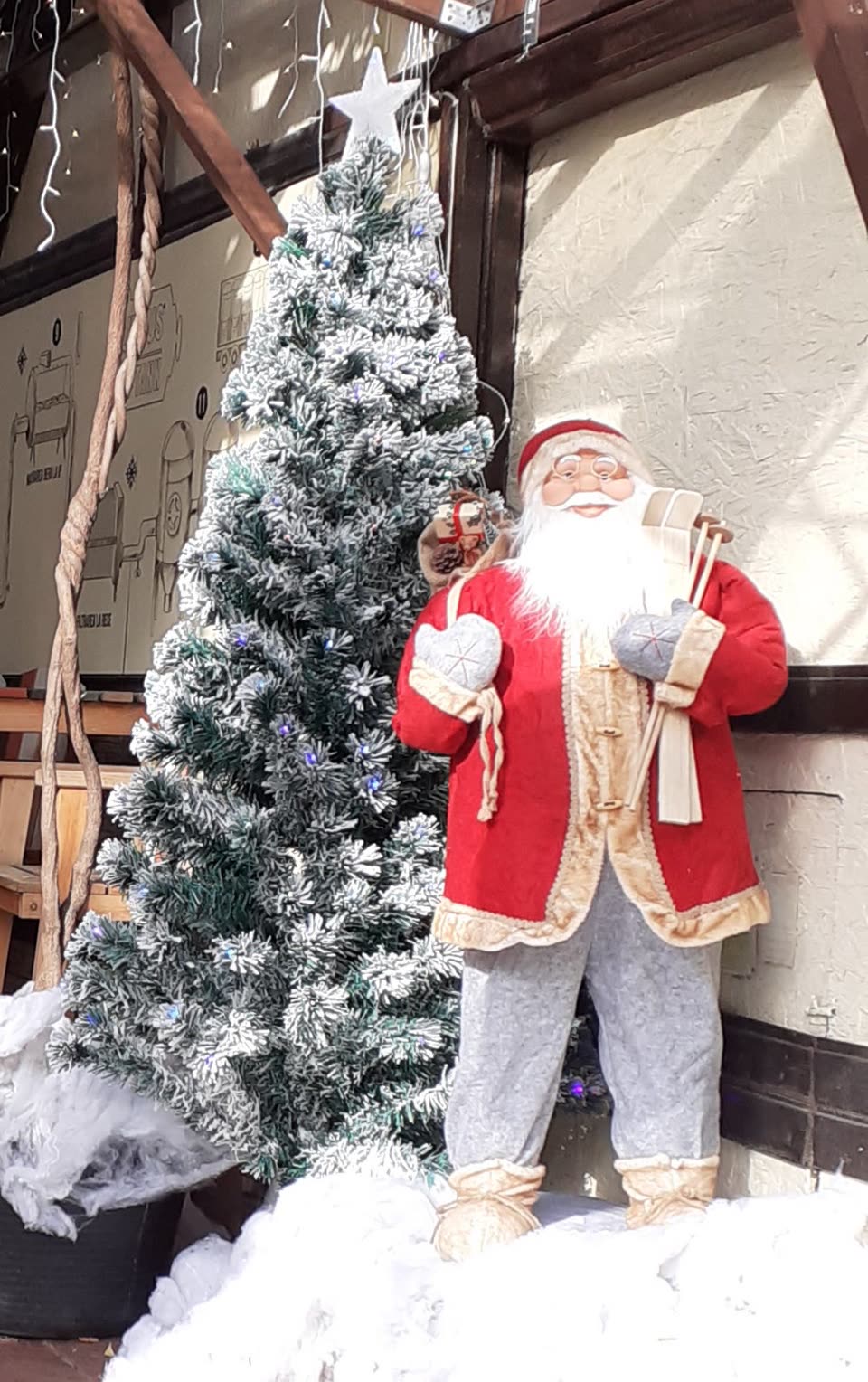
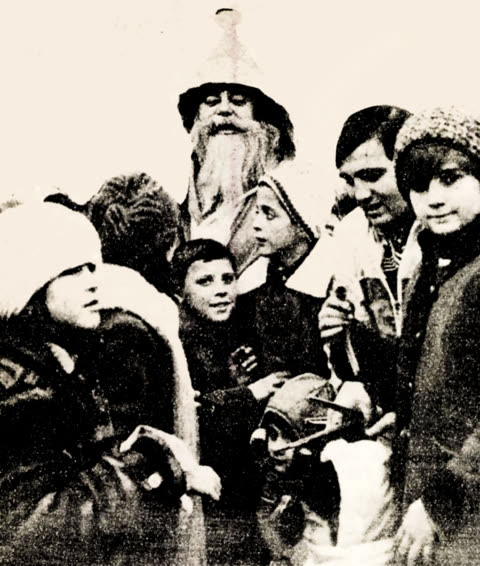
Father Christmas, and he is younger in Romania than he looks. The state broadcaster's radio service says the modern set of Christmas customs «did not spread that much before the communist regime» and that Santa Claus «emerged even more recently», without putting a date on either. He was displaced by Moș Gerilă for roughly forty years and came back in 1990.
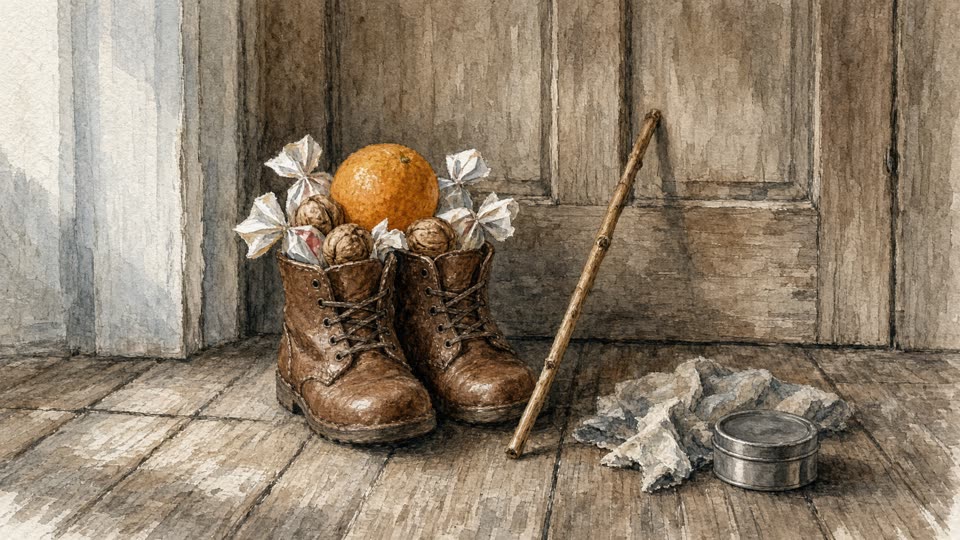
He comes three weeks early and the children prepare for him by cleaning their shoes. The national news agency: «În fiecare an, în seara zilei de 5 decembrie, copiii îşi curăţă pantofii, ghetele sau cizmele pentru a-l aştepta cum se cuvine pe Moş Nicolae» — on the evening of 5 December they clean their shoes, boots or wellingtons to wait for him properly, and find chocolate, sweets, apples, nuts, oranges and sometimes clothes or toys in them.
The older half of the custom is the one for the others: «copii neascultători găsesc o nuieluşă în încălţările lor», disobedient children find a switch in their shoes.
The men's carol round is on the UNESCO list, and it is shared with Moldova
Romania's best-known Christmas custom has a UNESCO inscription and a precise shape. The nomination describes it plainly: «Each year before Christmas, groups of young men gather in villages throughout Romania and the Republic of Moldova to prepare for the ritual of Colindat. On Christmas Eve, they go from house to house performing festive songs.»
It was inscribed in 2013, and it is one listing for two countries rather than Romania's alone. What is listed is the men's group form specifically — not children's carolling, not the star, not the New Year rounds, all of which exist alongside it.
In Maramureș the night has an order to it. The first out on Christmas Eve are the children, then the young people, and the adults go late: «În seara de Ajun, primii care merg cu colinda sunt copii, urmaţi de tineri şi târziu în noapte, adulţii.» The same account says the adult round is thinning, and that in some villages it has gone.
The pig is killed on Ignat, 20 December, and the sentence that says so also says not everywhere
The Christmas meat has its own day. A county museum in Sălaj puts it this way: «În trecut exista un timp ritual, respectat în multe zone şi astăzi, al sacrificării porcului în ziua de Ignat (20 decembrie)» — there was a ritual time for killing the pig on Ignat, and it is still kept in many areas.
The same page refuses to make it universal, and it refuses using its own county: «În Sălaj, sacrificiul animalier nu era legat neapărat de ziua de Ignat» — in Sălaj the killing was not necessarily tied to Ignat at all, and the customs around it survived anyway. In that county it was done a week or two before Christmas.
What comes off the animal is the whole of the Christmas larder. Museum staff at Sibiu list the work of the day: «În ziua în care se tăia porcul, se preparau cârnațul, cârtaboșul şi pateul, sângeretele, jumările, untura topită, toba» — sausage, liver sausage and pâté, blood sausage, crackling, rendered lard and brawn.
And there is a folk belief attached to the night before, reported as a belief: «Conform credinței populare, se spune că porcul își visează moartea în noaptea de Ignat», the pig dreams its death on the night of Ignat.
The carollers are paid in bread, and the bread gets a speech of its own
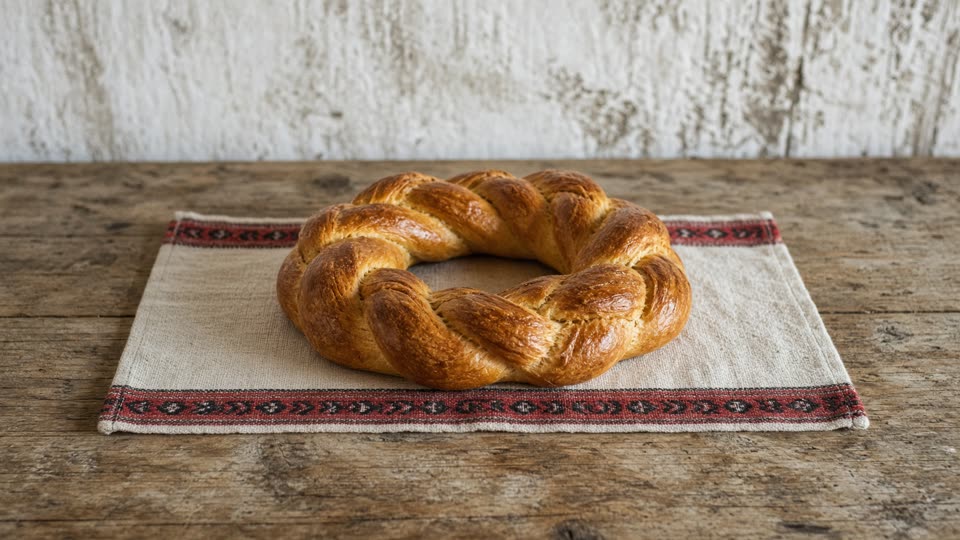
In the villages of Cluj the gift that matters is a colac, a large ring loaf, and handing it over is a ceremony rather than a transaction.
A Cluj paper, following the ethnologist Aurel Bodiu, describes the moment: «Un moment important în cadrul tradiției colindatului este alduirea colacului, o urare ceremonială deosebită, care are loc înainte de a se primi alte daruri, precum țuică, picior de porc sau bani» — the blessing of the loaf comes before the other gifts, which are plum brandy, a pig's trotter or money. It is sung with great solemnity and it is «cea mai lungă dintre urările care însoțesc colindele de Crăciun», the longest of the wishes that go with the Christmas carols.
Everybody stands. The household and the carollers get to their feet, and the leader of the group — called the taroste in Cluj county — lifts the loaf and says the words.
Moș Gerilă came to school and Moș Crăciun came home, and the two of them divided the country for forty years
Under communism the gift-bringer was replaced. Moș Gerilă — Old Man Frost, the Romanian Ded Moroz — was imported from the Soviet Union, and the radio service of the Romanian state broadcaster describes the swap in one line: «Imported form the former USSR, he was no longer clad in red, but in blue, and he no longer arrived on Christmas Eve, but on the night when the New Years Eve Party was held.»
How complete the break was is not agreed. A Romanian history magazine says flatly that «În România, Crăciunul a fost interzis în 1948, după ce Partidul Comunist a preluat conducerea ţării», Christmas was banned in 1948. The broadcaster says the opposite about intent: «They did not want to take Christmas completely out of peoples lives, as they knew people were attached to those symbols», and that people kept Christmas in the family while also turning up to the official celebrations.
What both sides agree on is narrower and harder: 25 and 26 December became working days — «25 şi 26 decembrie au devenit zile lucrătoare».
An architect who worked for the Ceaușescus remembered the arrangement from the inside, and it is the division that explains the forty years: «Moş Crăciun venea acasă, iar la grădiniţă sau la şcoală venea Moş Gerilă» — Father Christmas came to the house, Old Man Frost came to the kindergarten and the school.
A historian at the National Archives puts Moș Gerilă in his real setting, which is not the chimney: «Moș Gerilă e de fapt un sindicalist, se sindicalizează și aduce daruri în cadru organizat membrilor de sindicat» — he is essentially a trade unionist, handing out presents in an organised setting to union members.
The plough carol belongs to New Year's Eve, not to Christmas
The verse everybody abroad files under Romanian Christmas is not a Christmas custom at all. The national heritage institute defines the Plugușorul, the little plough, as «Tip de urare făcută de ceata de feciori, în cadrul obiceiului numit „Uratul cu plugul”, ce se desfășoară în seara de 31 decembrie (Ajunul Anului Nou)» — a wish made by the band of young men on the evening of 31 December.
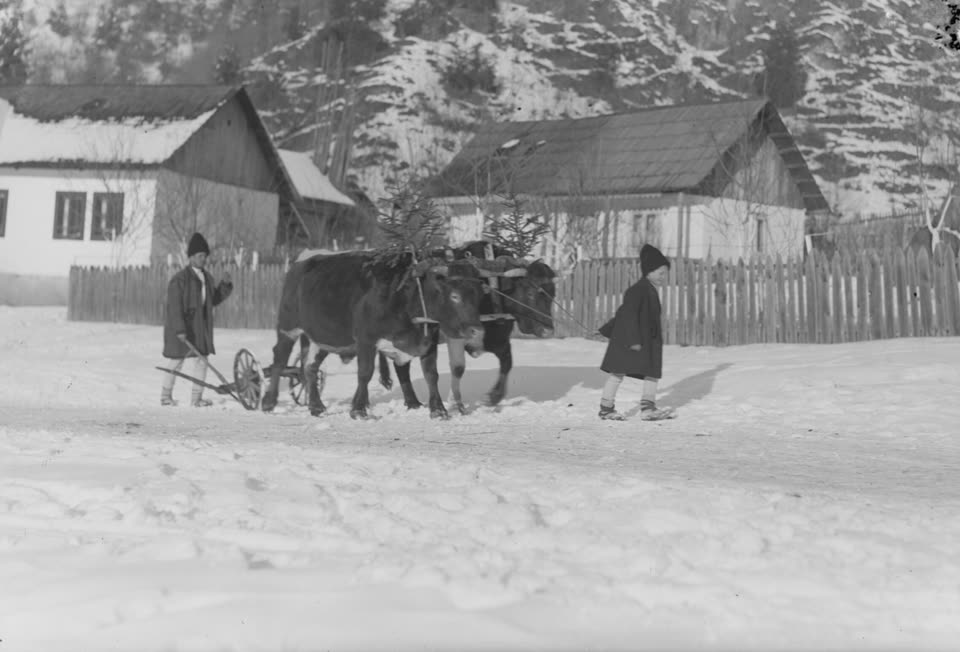
The verses are a year of farm work told in order, from the ploughing to the bread, and they are recited rather than sung, with a bell and a whip and sometimes a real plough.
Who goes out first depends on where you ask. The institute says the band of young men; an ethnographic museum in Mureș says the children: «Copiii sunt primii care pornesc cu plugușorul, primind în schimbul urărilor de an bun, colaci, fructe sau bani» — they are the first out, and they are given ring loaves, fruit or money for the wishes.
Plugușorul — cIMeC, Institutul Național al Patrimoniului (National Heritage Institute)
In the Lutheran villages the light is a candelabrum the fourteen-year-olds build, and the service is at seven on Christmas morning
Transylvania's German-speaking Lutheran villages keep a Christmas object of their own: the Christleuchter, in Romanian the Lichtert, a man-high candle-tree dressed in moss and greenery.
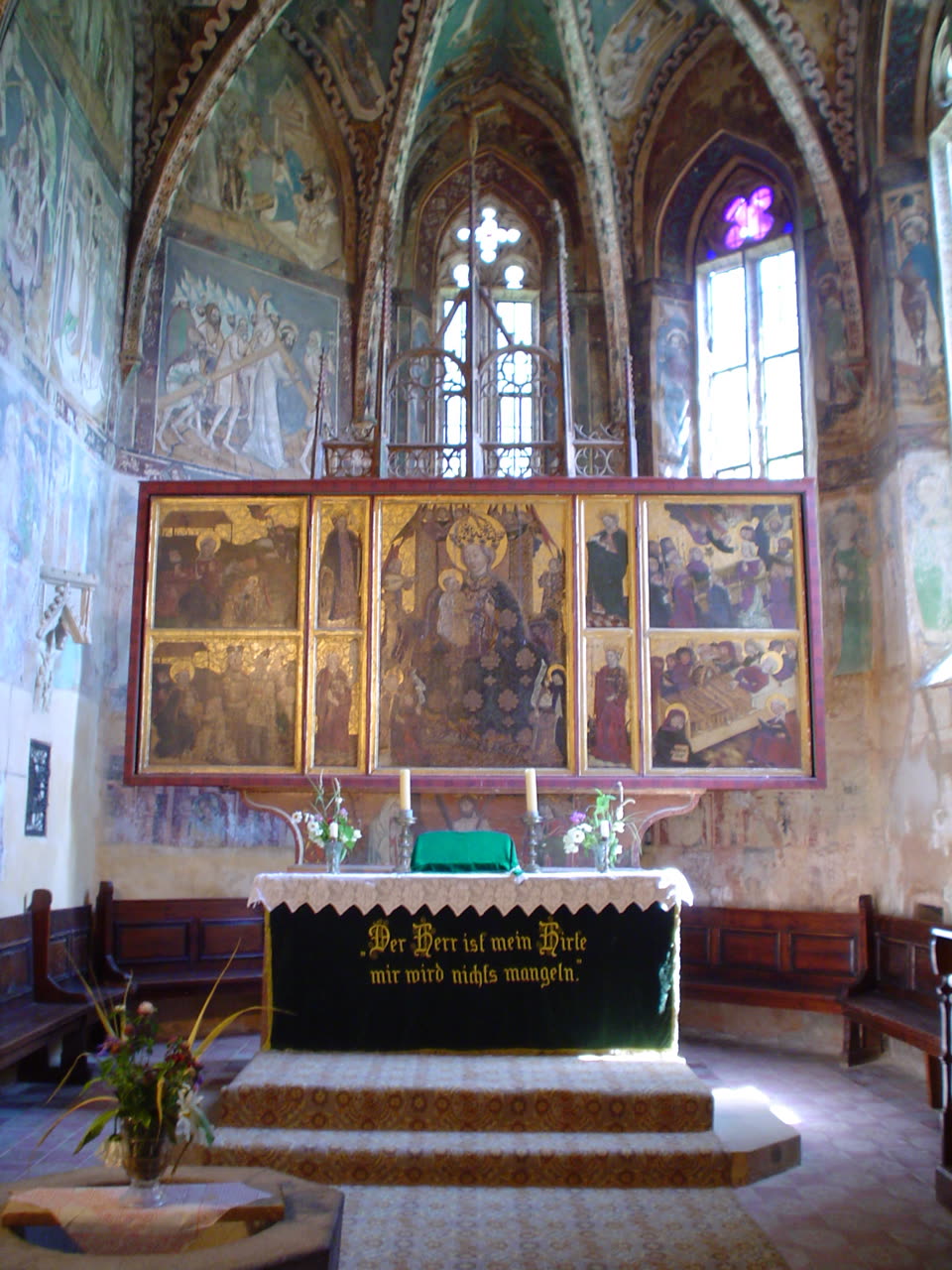
The fullest account of it is an Austrian folklore journal's, written when one was handed to a Vienna museum in 1998 by the community of Neppendorf — Turnișor, now a district of Sibiu. What it describes is not a decoration but the centre of a service: four of them, «die vier mannshohen, wunderschön geschmückten Christleuchter» with so many candles that they were «die das einzige Licht in die finstere Kirche brachten», the only light in the dark church. The electric light went off and the organ began.
The making of them belonged to the boys. «Das Moos für das Aufputzen der vier Christleuchter mußte jedes Jahr in der Adventszeit herbeigeschafft werden» — the moss had to be fetched every Advent, and it was the job of the Leuchterburschen, the fourteen-year-olds, who went out in four groups with handcarts, bells and cracking whips to race each other into the wood. That moss-gathering was first recorded in writing in 1881, in a note telling the boys to be quieter.
And the service it was built for is the one that marks the day there. Not Christmas Eve: the Liachtlkira, the early service at seven on Christmas morning, which is when the presents were given.
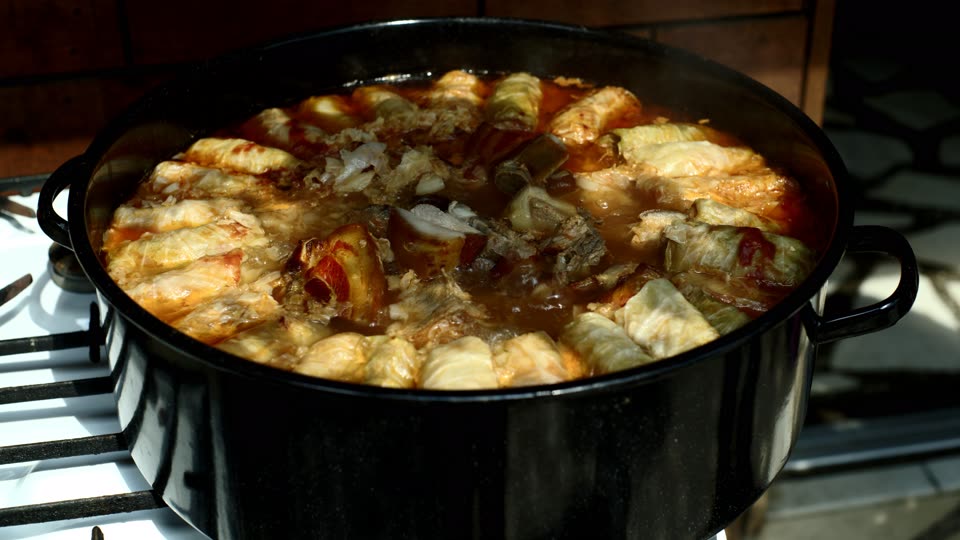
Minced meat rolled in cabbage or vine leaves, simmered for hours, and the one dish a Romanian Christmas table is not allowed to be without. The national radio's news agency puts it as a given: «Bineînţeles că sarmalele, fie ele în foi de varză sau de viţă, fie fierte în vin sau în supa de carne, sunt nelipsite de pe masa de Crăciun» — in cabbage leaves or vine leaves, cooked in wine or in meat broth, they are never missing.
At Christmas the meat is the pig killed on Ignat, and in Sălaj the filling is pork with sauerkraut.
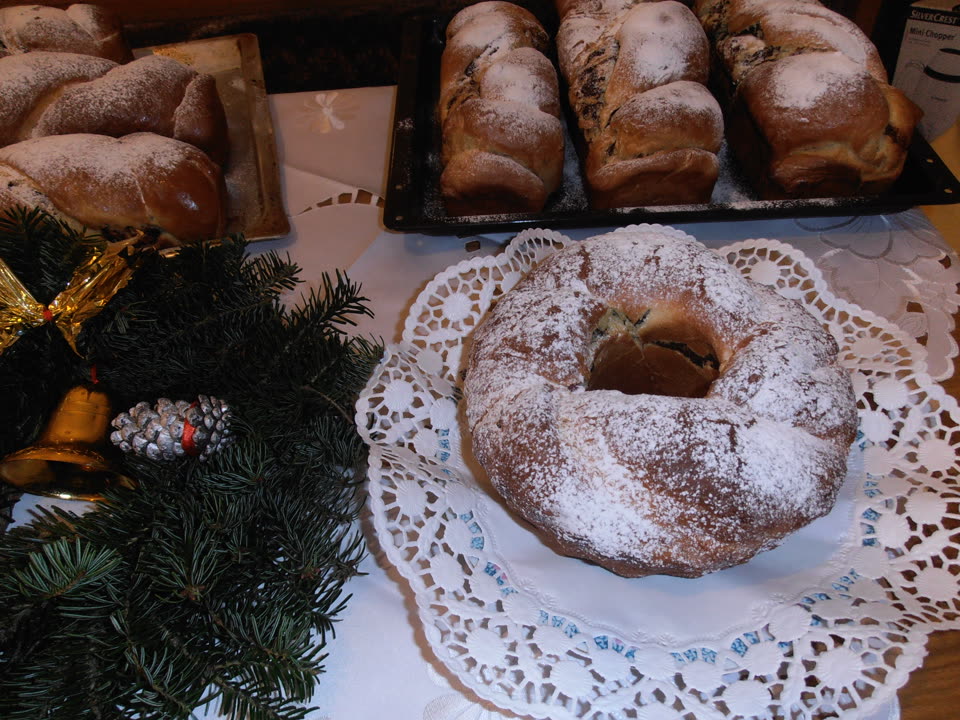
The meal ends with a slice of cozonac, a sweet yeast loaf made of flour, eggs, sugar, butter, milk and yeast, and rolled around a filling: walnuts, raisins, poppy seed, Turkish delight or cocoa.
It is baked in a long tin and cut across, so every slice shows the spiral of the filling.
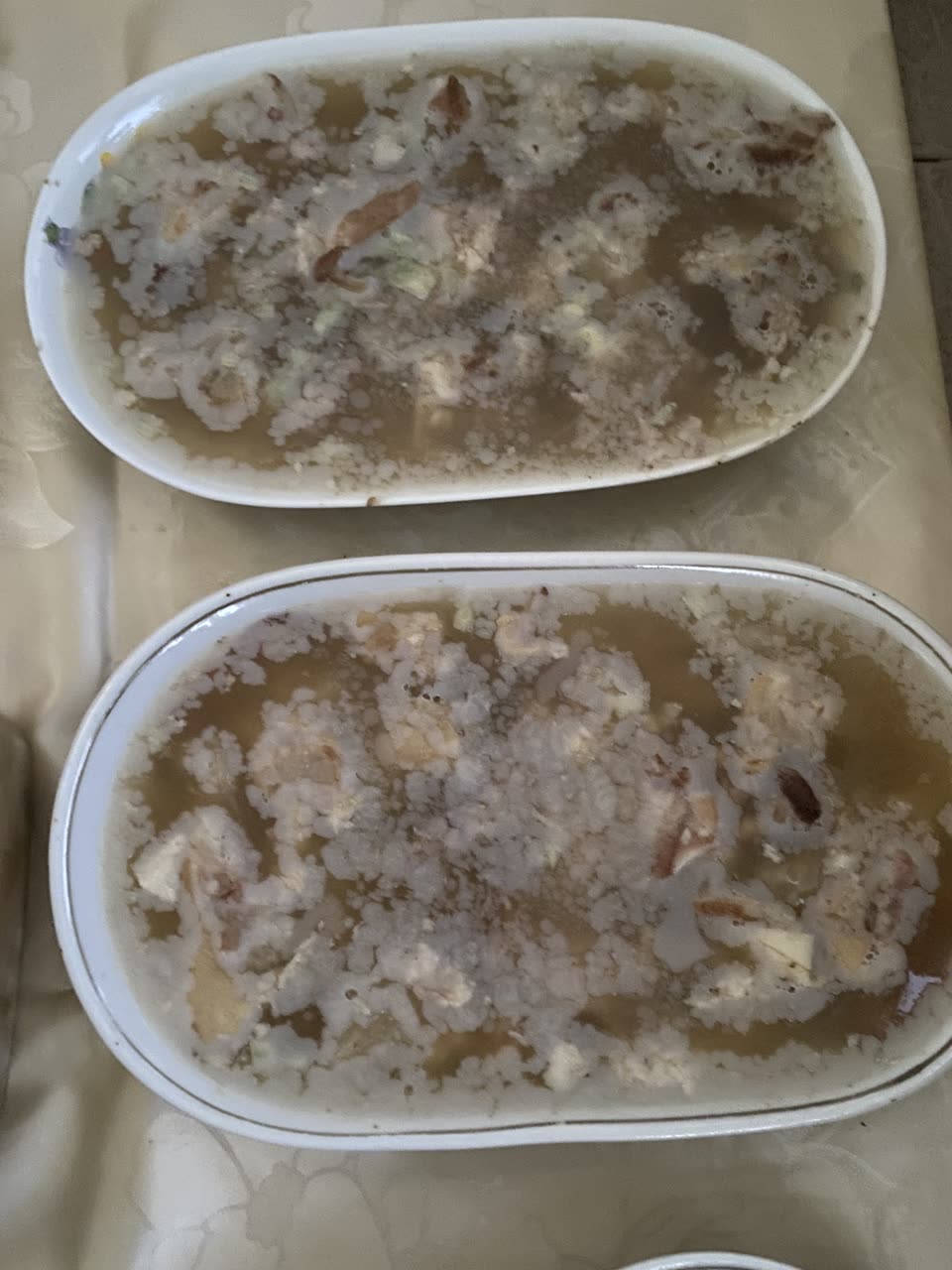
Pork jelly, set without gelatine from what is left of the pig. Museum staff in Sibiu describe it as the cold-weather dish of the season: «Din picioare, urechi și șorici se făceau piftiile / răcile, preparate înainte de Bobotează atunci când era frig de crăpau pietrele» — made from the trotters, the ears and the rind, prepared before Epiphany when it was cold enough to split stones.
The name changes as you move: piftie, răcituri, răcile.
Widely repeated claims about Christmas in Romania that do not survive
checking. Each one says what is actually the case, because a correction
with nothing in its place leaves you worse off than before.
Oversimplified
Communist Romania banned Christmas.
What is actually the case. Two Romanian sources say different things and both are reputable. A history magazine states it as a prohibition: «În România, Crăciunul a fost interzis în 1948, după ce Partidul Comunist a preluat conducerea ţării.» The radio service of the state broadcaster says the regime chose not to go that far: «They did not want to take Christmas completely out of peoples lives, as they knew people were attached to those symbols», and families kept celebrating at home while also attending the official New Year events.
What both support is the measurable part: 25 and 26 December stopped being days off and became working days, and the gift-bringer at school became Moș Gerilă, who came at New Year. Christmas lost its public status and survived in the house.
The Romanian word Crăciun comes from the Latin creatio, the creation.
What is actually the case. It is the best-known derivation and it is one of at least three, with no agreement between them. A survey in a linguistics review sets them out: many researchers take it from Latin creatio — «mulţi cercetători consideră că provine din lat. creatio, -ne(m)» — and others object that the derivation runs into trouble, «dificultăţi de ordin fonologic, dar şi de ordin teologic». A second line takes it from Latin colationem, the day the pre-Christian Roman priest called people together to announce the month's feasts. A third takes it from Slavic korochun.
Linguists disagree, and no derivation is preferred.
Moș Crăciun is an old Romanian figure, the one communism interrupted.
What is actually the case. The interruption is real: he was displaced by Moș Gerilă for about forty years and returned in 1990. What is not established is the age. The state broadcaster's own account says the modern set of Christmas customs «did not spread that much before the communist regime» and that Santa Claus «emerged even more recently» — which puts the figure's arrival close to the period that then replaced him. The broadcaster gives no date for it.
Romania's statutory holiday list has grown four times in a decade, and the newest two days are in January. 24 January came first, by a law of 7 October 2016; 1 June followed six weeks later; Good Friday was added in 2018; and 6 ianuarie – Botezul Domnului – Boboteaza and 7 ianuarie – Soborul Sfântului Proroc Ioan Botezătorul by a law of 3 March 2023.
The January one had been a national day since 2014 without being a day off. What the 2016 law changed was the line in the Labour Code that lists the days nobody works.
That last one lands on the date the Old Calendar communities keep Christmas. The statute names it for Saint John the Baptist and says nothing about Christmas at all.
The Nativity Fast runs about forty days and its length was fixed by a synod in Constantinople in 1166: «Sinodul a hotărât ca toţi credincioşii să postească timp de 40 de zile, începând cu 15 noiembrie.»
It does not start on the same date every year. The Patriarchate's own news agency announced the fast beginning on Friday 15 November in 2024, and in 2025 a day earlier, on 14 November, running 41 days.
Christmas starts in a Romanian church more than a month before Christmas. The hymns of the Nativity begin on 21 November, the feast of the Entry of the Theotokos into the Temple: «Din punct de vedere liturgic, cântările dedicate Nașterii Domnului încep în ziua de 21 noiembrie.»
That is the liturgical calendar rather than the carollers. The door-to-door round still waits for Christmas Eve.
Maramureş: Crăciunul, afectat de modernitate; în unele sate se mai păstrează încă tradiţiile — AGERPRES, the Romanian national news agency, 17 December 2024. Retrieved 2026-10-29.One informant's account of one region, reported by the national agency, and it is as much about loss as about practice: «foarte puţinii adulţi mai merg cu colinda», very few adults still go.
Tradiţii de Moş Nicolae — AGERPRES, the Romanian national news agency, 5 December 2024. Retrieved 2026-10-29.
A început Postul Nașterii Domnului — Basilica.ro, the news agency of the Romanian Patriarchate. Retrieved 2026-10-29. archived 7 February 2025The 1166 decision and the 2024 dates are both in the same announcement: «Postul Nașterii Domnului a început vineri, 15 noiembrie și se încheie marți, 24 decembrie.» The 2025 announcement is a separate page by the same agency — «Postul Nașterii Domnului 2025 … va începe în data de 14 noiembrie» and «Timp de 41 de zile» — and neither page explains why the start moved.
Plugușorul — cIMeC, Institutul Național al Patrimoniului (National Heritage Institute). Retrieved 2026-10-29. archived 6 April 2026
Codul muncii (Legea nr. 53/2003, republicată), articolul 139 — Consolidated text of the Romanian Labour Code, legislatie.info. Retrieved 2026-10-29.In order: 1 and 2 January; «6 ianuarie - Botezul Domnului - Boboteaza»; «7 ianuarie - Soborul Sfântului Proroc Ioan Botezătorul»; 24 January, the union of the Romanian principalities; Good Friday; the first and second day of Easter; 1 May; 1 June; the first and second day of Pentecost; the Dormition of the Mother of God; 30 November, Saint Andrew; 1 December; «prima și a doua zi de Crăciun», the first and second day of Christmas; and two days for each of three annual religious feasts of legally recognised faiths other than Christian, for the people belonging to them.And one clause bends the calendar to the worshipper rather than the other way round: for employees of a legally recognised Christian denomination, the days off for Good Friday, Easter and Pentecost «se acordă în funcție de data la care sunt celebrate de acel cult» — they are given on the date that denomination keeps them.
Tradiții și obiceiuri de Anul Nou — Muzeul Etnografic „Anton Badea" Reghin. Retrieved 2026-10-29. archived 9 May 2026The same page lists the New Year carolling forms — «cu turca, cu vasilica, cu plugul, cu sorcova, steaua, vergelul și cu plugușorul» — and the star is among them, which is a different placing from the one the popular press gives it.
Sărbătoarea Ignatului cu actori, colindători, măcelari, lăutari și pomana porcului — Muzeul Etnografic al Transilvaniei, Cluj-Napoca, December 2025. Retrieved 2026-10-29. archived 17 June 2026What staging the day in a museum takes: «Pentru că e vorba despre un muzeu, porcul nu a putut fi sacrificat în incinta muzeului, ci a fost adus gata asomat și pârlit, iar sceneta s-a desfășurat cu mașină de fum» — the animal arrived already stunned and singed, and the scene was played with a smoke machine.
Pregătirea Crăciunului: tăiatul porcului — Muzeul Județean de Istorie și Artă Zalău (Sălaj county museum). Retrieved 2026-10-29. archived 14 September 2025It also carries the pork-heavy summary of the season: «Sărbătoarea Crăciunului, din punct de vedere culinar, se caracterizează prin abundenţa preparatelor din carne de porc.»
Men's group Colindat, Christmas-time ritual — UNESCO, Representative List of the Intangible Cultural Heritage of Humanity. Retrieved 2026-10-29. archived 4 October 2026The nomination's own description, and the inscription year is on the same page: «Inscribed in 2013 (8.COM)».
Alduirea colacului: Tradiție sacră de Crăciun în satele clujene — Ziua de Cluj, quoting the Cluj ethnologist Aurel Bodiu. Retrieved 2026-10-29. archived 30 December 2024The standing and the taroste are on the same page: «Atât gazdele, cât și colindătorii, se ridică în picioare, iar conducătorul colindătorilor, cunoscut sub numele de taroste în localitățile din județul Cluj, ridică colacul, rostind urările specifice.»