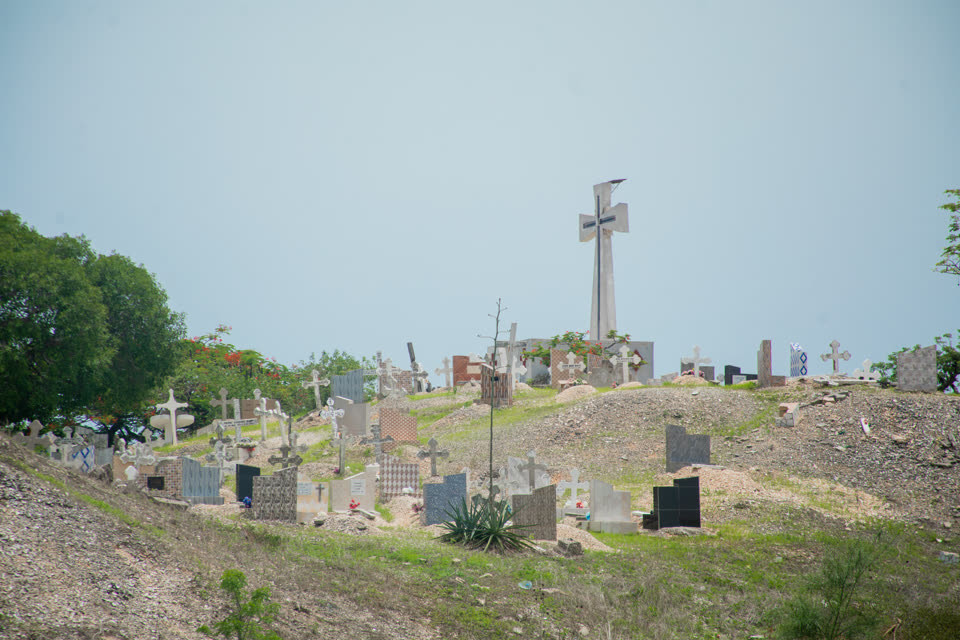
Christmas Day in Senegal is 25 December. It is a public holiday.
How to say it
French
Joyeux Noël
Joyeux Noël
say it: zhwa-YUH no-EL
A synthesised voice — not a recording of a person — saying Joyeux Noël
in fr-FR.
French is Senegal’s official language and the one the Christmas greeting is said in, in a country where most people speak Wolof at home. The Catholic liturgy in Dakar is in French too, which is what the cathedral report above is reporting.
Wolof has its own festival greeting formulas, and the ones used at Korité and Tabaski are heard from every Senegalese household. No published source gives a Wolof form for Christmas.
Midnight Mass at the Dakar cathedral starts filling up before nine
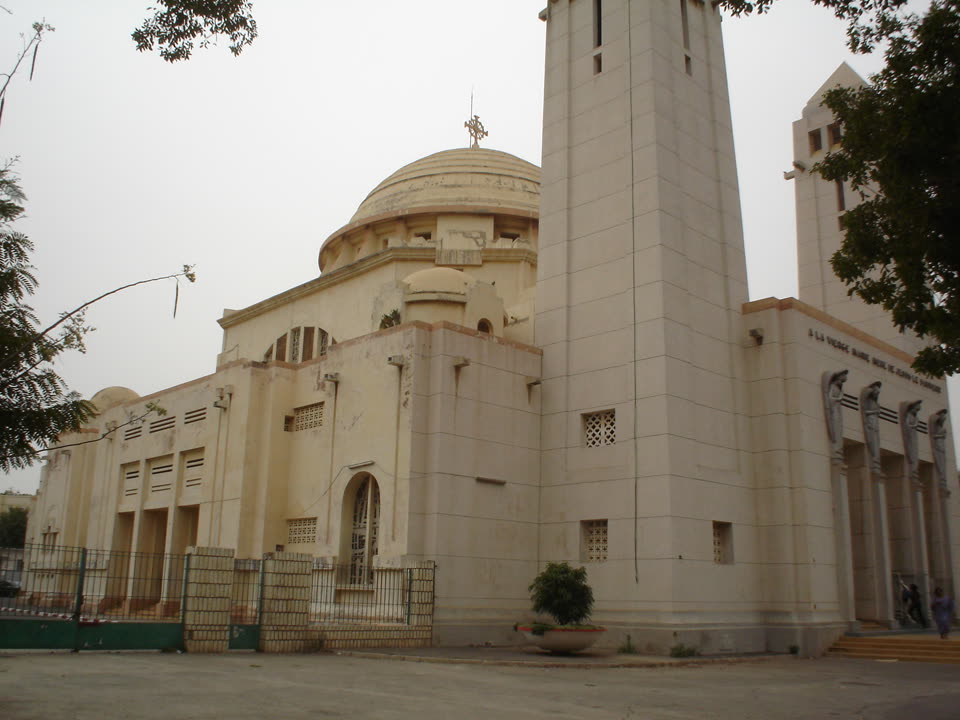
Le Soleil was inside the Cathedral Notre-Dame des Victoires on the night of 24 December 2025: «Peu avant 21 heures, dans la nuit du 24 décembre, les fidèles catholiques commencent à franchir le grand portail de la Cathédrale Notre-Dame des Victoires, cette bâtisse, presque centenaire» — shortly before nine, the faithful begin to come through the great door of a building almost a century old.
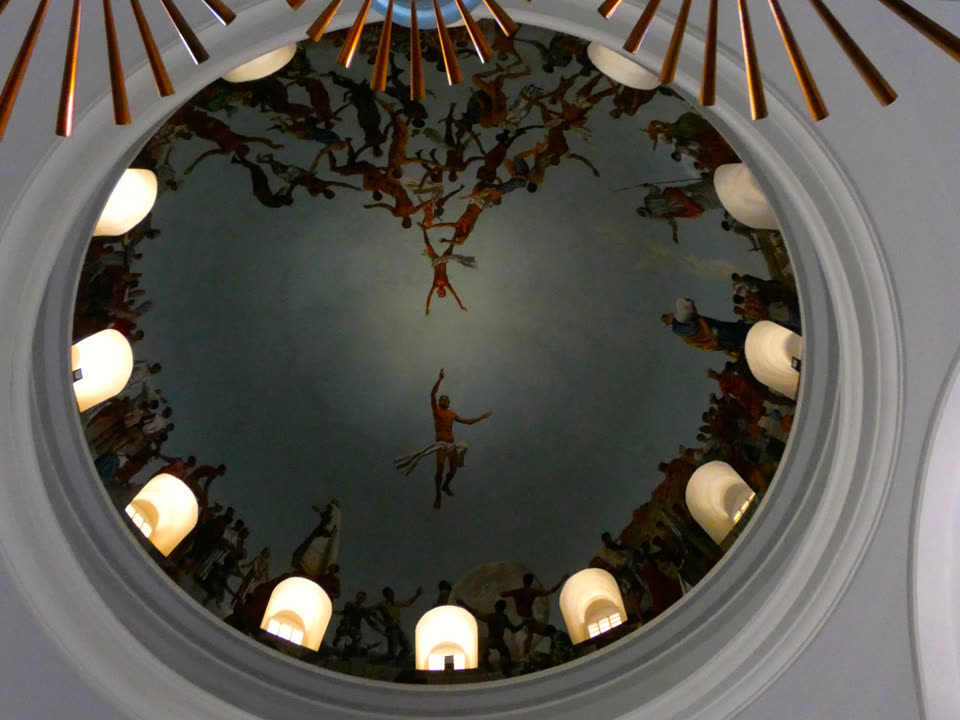
What fills the wait is scripture and short meditative chants; then liturgical choreography and staged scenes retelling episodes of the biblical story, with «Les choristes, vêtus de tenues traditionnelles, à la fois modestes et élégantes, donnent chair au récit sacré.» The paper does not say what the traditional dress is.
The archbishop comes up the nave on his crosier, and censes the crib at length
The procession is the altar servers first, then the deacons and the priests. Le Soleil describes the archbishop of Dakar coming up the central aisle slowly, leaning on his crosier — the pastoral staff topped with a cross, the sign of the shepherd leading his people — blessing the crowd and taking his seat.
Then the incense: «L’archevêque se lève et se rend à la crèche, la mangeoire de la Nativité, qu’il encense longuement.» He goes to the crib, the manger of the Nativity, and censes it for a long time.
The Christmas trees in Dakar are bought mostly by Muslims
A tree seller in Dakar, Ndiaga Gueye, told VOA: «It's mostly Muslims who buy the trees, because Senegal is a secular country». He said it again at the end of the same answer — «But, it's mostly Muslims who buy the [Christmas] trees.» — after explaining that Christians take part in Muslim holidays and Muslims in Christian ones.
He is one trader describing his own customers, and no survey of who buys Senegal's Christmas trees has been published.
The reason given is Tabaski: they came to ours, so we go to theirs
Asked why, a business director in Dakar, Abibou Dadh, put it as an exchange rather than as tolerance. Senegal’s Christians, he said, keep the Muslim feasts too: «These days Christians celebrate Tabaski and our Christian brothers accompany us by celebrating it with us». And therefore «it is normal for us Muslims to try to accompany Christians, to celebrate Christmas with them».
Tabaski is Eid al-Adha, the feast of the sacrifice, and it is the largest day in the Senegalese year. The symmetry he is describing runs in both directions and is why the Christmas trees sell.
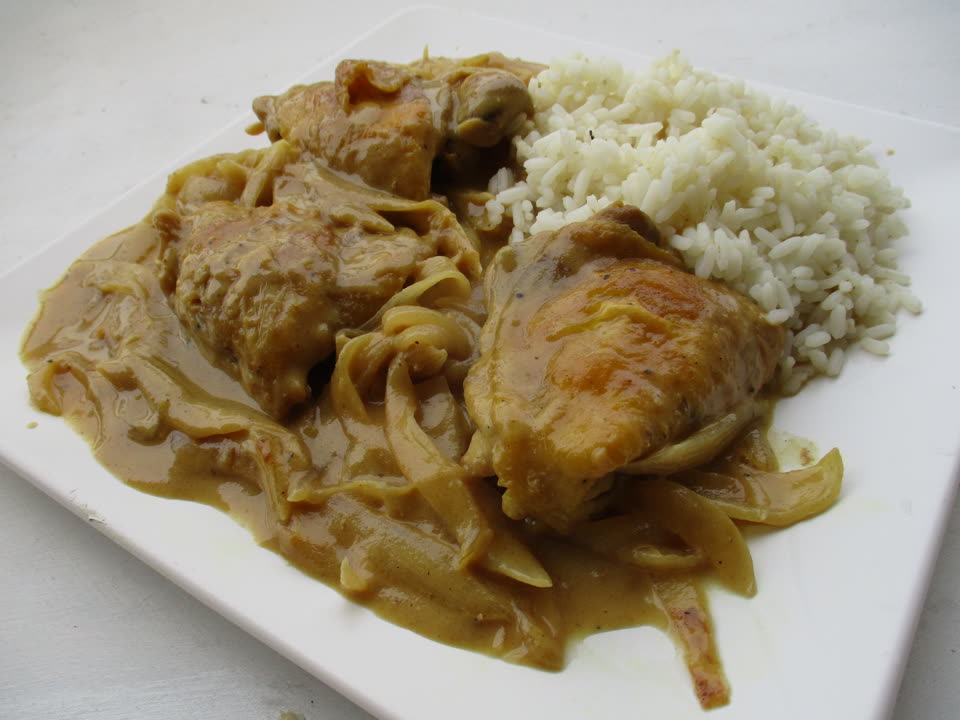
Christmas lunch in Senegal is a Senegalese meal that Western dishes are added to, rather than a Western meal with Senegalese touches. Dakaractu, publishing on Christmas Day 2024: «Le jour de Noël, 25 décembre, après la messe matinale, la fête se poursuit dans les foyers. Les familles se retrouvent autour d'un repas copieux, souvent composé de plats traditionnels sénégalais tels que le poulet yassa, auxquels s'ajoutent parfois des mets d'inspiration occidentale, témoignant de la diversité culturelle du pays.»
So: at home, after the morning Mass, a large meal, and the dish the report names is yassa chicken — with Western dishes sometimes beside it rather than in place of it.
The chicken is the older half of that. Writing from Dakar in December 2000, the Catholic agency cath.ch listed what families in the capital and the larger inland towns were spending on: «achats de cadeaux pour les enfants, de gâteaux dont le plus célèbre est la bûche, au Sénégal aussi, préparation de repas au poulet enfin.» Presents for the children, cakes — the bûche above all — and chicken for the table.
The constitutional position is explicit: «The constitution defines the country as a secular state and provides for the free practice of religious beliefs, provided public order is maintained, as well as self-governance by religious groups free from state interference.» It also «prohibits political parties from identifying with a specific religion.»
The arithmetic underneath it: «Approximately 2.7 percent of the population is Christian.» And «Most Christians live in towns in the west and south.»
So the public holiday on 25 December is kept by a country in which about one person in thirty-seven is a Christian, and it is not an establishment of religion: the same calendar carries Korité, Tabaski, Tamkharit and the Magal of Touba.
On 22 December 2022 the Council of Ministers recorded that the President, marking Christmas and congratulating the Christian community, «a décidé de déclarer férié, chômé et payé le lundi 26 décembre 2022, conformément aux dispositions de l’article 8 du décret n°74-1125 du 19 novembre 1974 fixant le régime de la fête nationale et du 1er Mai et celui des autres fêtes légales».
That sentence does three things at once. It names the instrument — a decree of 1974 covering the national day, 1 May and «the other legal feasts». It shows the mechanism: article 8 lets the President add a day. And it dates the practice, because 2022 was not the first time; the press reported the same decision for 26 December 2016, announced late the night before.
Cathédrale de Dakar : Mgr André Guèye exhorte à l’espérance, à la paix et à la crédibilité — Le Soleil, Dakar, 26 décembre 2025. Retrieved 2026-10-31. archived 26 December 2025The arrival: «Peu avant 21 heures, dans la nuit du 24 décembre, les fidèles catholiques commencent à franchir le grand portail de la Cathédrale Notre-Dame des Victoires, cette bâtisse, presque centenaire». The liturgy: «Les choristes, vêtus de tenues traditionnelles, à la fois modestes et élégantes, donnent chair au récit sacré.» And the crib: «L’archevêque se lève et se rend à la crèche, la mangeoire de la Nativité, qu’il encense longuement.»
Communiqué du Conseil des ministres du jeudi 22 décembre 2022 — Présidence de la République du Sénégal, carried by Seneweb. Retrieved 2026-10-31.Marking Christmas, the President «a décidé de déclarer férié, chômé et payé le lundi 26 décembre 2022, conformément aux dispositions de l’article 8 du décret n°74-1125 du 19 novembre 1974 fixant le régime de la fête nationale et du 1er Mai et celui des autres fêtes légales» — a holiday on the Monday, because 25 December 2022 fell on a Sunday. The same communiqué records that the President «a adressé ses chaleureuses félicitations à la communauté chrétienne».
2023 Report on International Religious Freedom: Senegal — United States Department of State. Retrieved 2026-10-31. archived 26 February 2026On the population: «Approximately 2.7 percent of the population is Christian.» On where they are: «Most Christians live in towns in the west and south.» And on the state: «The constitution defines the country as a secular state and provides for the free practice of religious beliefs, provided public order is maintained, as well as self-governance by religious groups free from state interference.» The same section notes that «The constitution prohibits political parties from identifying with a specific religion.» and that parents in public schools may choose an Islamic or a Christian curriculum.
Senegal, a Muslim country, can’t get enough of Christmas — Voice of America. Retrieved 2026-10-31. archived 11 June 2026The tree seller Ndiaga Gueye: «It's mostly Muslims who buy the trees, because Senegal is a secular country», and again at the end of the same answer, «But, it's mostly Muslims who buy the [Christmas] trees.» The business director Abibou Dadh puts it as an exchange: «These days Christians celebrate Tabaski and our Christian brothers accompany us by celebrating it with us», so «it is normal for us Muslims to try to accompany Christians, to celebrate Christmas with them». VOA's own summary of what it found is «While Muslim Senegal's Christmas is limited to the commercial and secular», which is the broadcaster's own characterisation of what it found.