The Christmas Eve cachupa is the first one made from the new maize
Cachupa is boiled maize and beans and whatever else the household has, and it is eaten all year. The Christmas Eve one is marked out by its ingredient rather than its recipe: it is the first cachupa of the new maize, the crop that has just come in, and the family gathers round that pot. Grogue, fried fish and cuscuz go beside it.
Singers come to the door all evening, and they are paid in food
Groups of young men and young women went house to house singing the kings, kept separate by sex, and more than fifty groups might pass a single house in a day. Nobody was sent away empty: a plate of cachupa to eat there, and something to carry off — a tray of new maize, a dried fish, a ripe banana, an egg. Money if the household had any.
The Christmas tree was cut on the hillside, and the other decoration was a sugar cane hung with food
Before shop-bought pines there were two kinds of greenery. One was a tree fetched from the hill — acacia, or tarrafe — and dressed at home with a star, balloons and sand. The other was not a tree at all: tall sugar canes tied into a ramalhete and hung with ripe bananas, pork fat and mackerel, which was then the cheapest fish there was. A mustard flower stood in a mug of water to scent the house for eight days.
You go to your godparent, give the good feasts, and ask for a blessing
The Christmas and New Year round of visits has a fixed first call. A child goes to the godparent, says the boas festas, and asks for the blessing; the godparent gives a coin. Two tostões was a great happiness. The verb for the whole visit is to give the good feasts — dar as boas festas — and it applies to the neighbours too.
The midnight Mass starts at ten, and the child in the manger is a real baby
The Missa do Galo is set for ten at night and people start arriving long before it, walking in from every corner of the parish. The nativity is staged live, with a donkey, a cow and sheep. At the Gospel the young people act the birth, and the child laid in the manger is a baby belonging to one of the parish's recently married couples. Mass ends after midnight; then everyone wishes each other the good feasts and goes home to a piece of cake.
The janeiras are sung by children, on instruments made out of old tins
At the new year the house-to-house singing passes to the children, and only to them. They form groups of ten to fifteen, make their own instruments out of old tins — some beaten with sticks, some filled with rattles — and go round without rehearsing, singing in Creole a verse that asks for something and threatens, cheerfully, to send the dog after it. The priests' house is a favourite call, because the priests always give a ten-escudo coin and a few sweets. Some children come back twice.
The country moves between its islands, and the state plans around it
Christmas and New Year are when Cape Verdeans travel back to the island they come from, and the government treats that as a fact to be administered rather than a sentiment. Each year it signs a resolution granting the public administration time off around the two dates, and the reasoning it writes down is the travel: these are family feasts rooted in the culture, people move away from where they usually live, and the country is an archipelago.
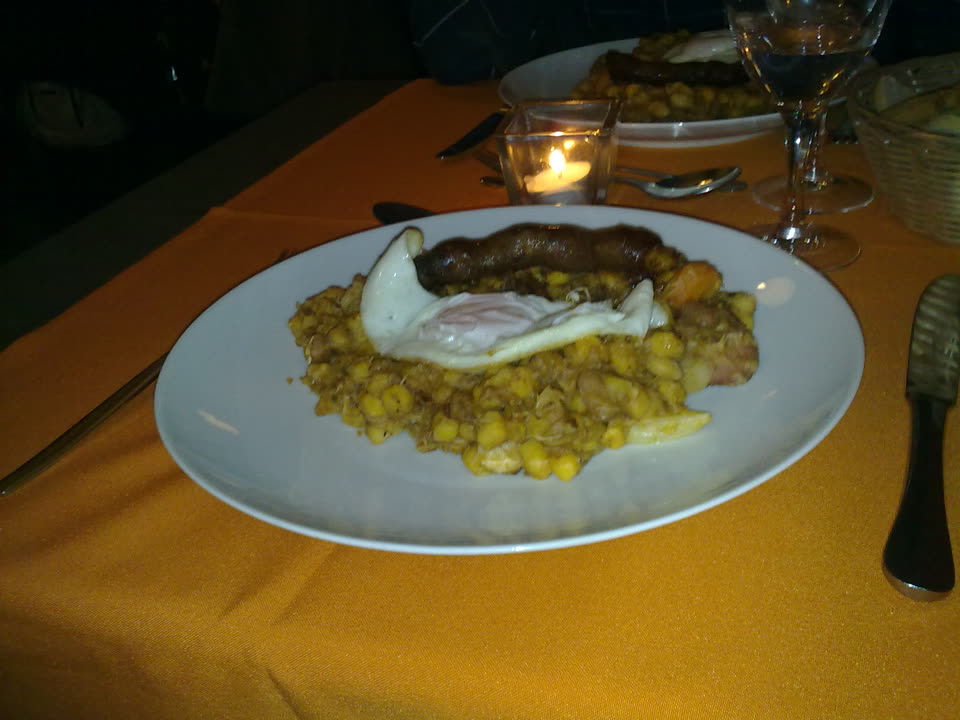
Maize and beans boiled slowly together with whatever else the house has — vegetables, fish, meat — and the national dish by common consent. At Christmas it appears twice and differently: the Christmas Eve pot, made from the first maize of the new crop and in the old accounts cooked with fish meal or fresh mackerel, and then on Christmas Day the leftovers fried, cachupa frita, eaten with a fried egg.
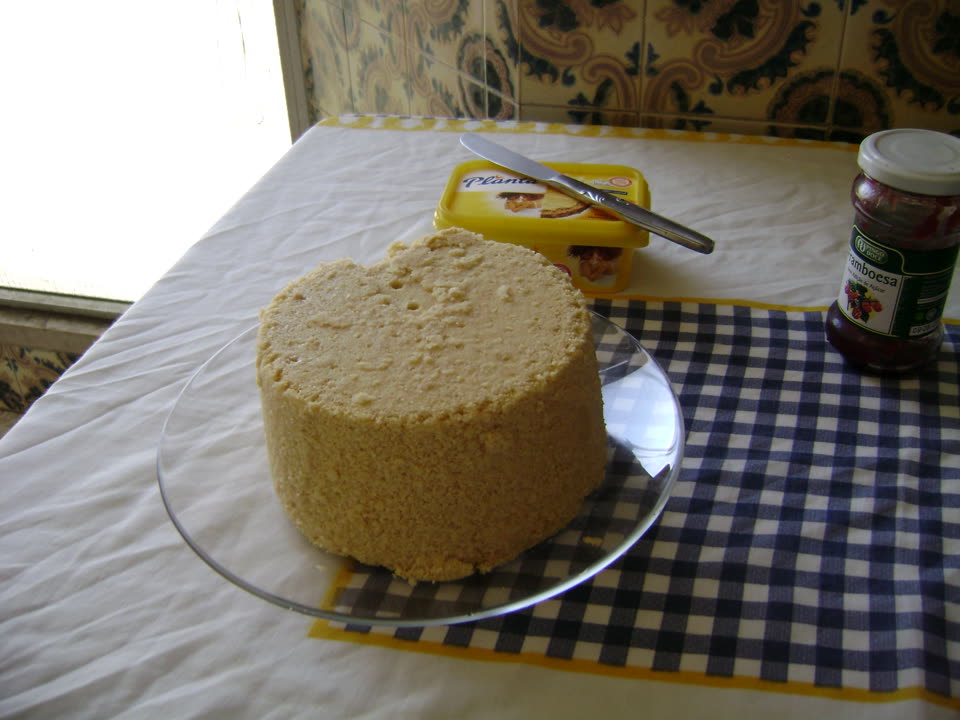
Not the Maghrebi grain but a steamed maize bread, and in the old way of making it the work started three days early. The maize went into water for three days, then into the pilão — the standing wooden mortar — and was pounded through the small hours to make the flour. The other version used farinha talisca, dried cassava. It was made to give away as much as to eat at home.
26 December appears on no list of Cabo Verde's national holidays. What happens is that the government decides each December to give the public administration the day, by resolution, along with the afternoons of the 24th and the 31st. It is a day off that has to be re-granted annually, and the police, the hospitals and the prisons do not get it.
Asked about Christmas, the older Cape Verdeans interviewed by their own national press kept answering about New Year instead. The preparation was for both, but the anticipation was for the second one — and the house-to-house visiting that everyone misses most was the New Year's, not Christmas Day's.
In October 2026 the recipe entered the FAO's museum in Rome, in a book of small-island cooking, and the chef who carried it was Lamine Medina — the official cook of the Tubarões Azuis, Cabo Verde's national football team, who was invited two months after the World Cup.
The annual message is addressed to Cape Verdeans at home and abroad and reads as a year's accounts: the country's reclassification as an upper-middle-income state, its ranking as the second most stable in Africa, and its first qualification for the football World Cup — all three in the first lines, before anything about Christmas itself.
Every claim carries its own citation. They are collected below, so you
can see what the page rests on and how much of it comes from where.
O verdadeiro Natal — O Natal dos simples, vivido na Calheta de São Miguel, Cabo Verde — Agência ECCLESIA (Portugal), by Padre Nuno Rodrigues, Cssp, missionário em Cabo Verde. Retrieved 2026-11-18.A first-hand account by a Spiritan missionary of the Christmas he describes as the best he has lived: «o primeiro Natal que experimentei aqui em terras de Cabo Verde no ano de 1998 quando cheguei pela primeira vez», at Calheta de São Miguel on Santiago. «Montamos o presépio ao vivo, não faltando o pequeno burro e vaca, bem como algumas ovelhas... Estando a missa marcada para as 10 horas da noite, logo desde muito cedo as pessoas começaram a chegar vindas de todos os lugares e cantos da Paróquia... Estavam mais de três mil pessoas que enchiam todo o adro da igreja. Momento alto que a todos comoveu, foi o auto do nascimento de Jesus que foi feito na altura do Evangelho representado pelos nossos jovens. E eis que de Maria e José nos nasceu um menino Jesus! Um menino que era um bebé de um dos casais da nossa Paróquia recentemente casados! Terminamos a Eucaristia quando já era meia noite e meia. Momento de dar as boas festas uns aos outros e irmos para casa começar um pedaço de bolo.»
Feriados Nacionais — Embaixada da República de Cabo Verde em Itália. Retrieved 2026-11-18.The embassy's own list of the national holidays gives «25 de Dezembro: Natal», alongside «01 de Janeiro: Ano Novo», «13 de Janeiro: Dia da Democracia e Liberdade», «20 de Janeiro: Dia dos Heróis Nacionais», «Março ou Abril: Sexta-feira Santa e Páscoa», «01 de Maio: Dia do Trabalhador», «01 de Junho: Dia Internacional das crianças», «05 de Julho: Dia da Independência», «15 de Agosto: Dia de Nossa Srª da Graça» and «01 de Novembro: Dia de todos os Santos».
Natal: A tradição já não é o que era — Expresso das Ilhas (Cabo Verde). Retrieved 2026-11-18.Joaquim António Almeida, then 71, born on São Nicolau, an emigrant who settled on São Vicente after retiring, describes his island's Christmases: «no 24 de Dezembro, confeccionava-se uma grande cachupa “com farinha de peixe ou com cavala fresca”. E era à volta daquela cachupa “a primeira de milho novo” que as pessoas se juntavam. “Tínhamos também grogue, erva, peixe frito e cuscuz.”» He also says the bigger feast was not Christmas: «Preparávamo-nos para o Natal, mas mais para o Ano Novo» — a preference the paper records being repeated by several other interviewees.
Governo concede tolerância de ponto na Administração Pública no Natal e Fim de Ano — Expresso das Ilhas (Cabo Verde). Retrieved 2026-11-18.Time off was granted «a partir das 13h00 dos dias 24 e 31 de Dezembro, bem como no dia 26 de Dezembro, durante todo o dia». The stated grounds: «o facto de o Natal e o Fim de Ano serem festas de família, enraizadas na cultura cabo-verdiana, períodos tradicionalmente marcados pela deslocação de muitas pessoas para fora do seu local de residência habitual, nomeadamente para as respetivas ilhas de origem, com o objectivo de promover o convívio familiar», together with «a condição arquipelágica do país» and the two days falling on a Thursday.
Receita da cachupa inscrita no Museu da FAO — Expresso das Ilhas (Cabo Verde). Retrieved 2026-11-18.The FAO launched «A Taste of SIDS» at its Rome headquarters on 16 October 2026, World Food Day, at an event called «Sabores dos PEID: Honrar a herança. Inspirar resiliência», with live cooking by Lamine Medina (Cabo Verde), Ron Duprat (Haiti) and Fiaailetoa Charlotte Chan Mow-Brunt (Samoa); Cabo Verde's Minister for Transport and the Sea, João do Carmo, was present. «Lamine Medina, o cozinheiro oficial dos “Tubarões Azuis”, recebeu o convite da FAO dois meses depois da Copa do Mundo.» To Televisão de Cabo Verde he said: «Senti-me guardião da nossa gastronomia. Mas podia ser outra pessoa qualquer. Então, obviamente, fiquei muito orgulhoso.»