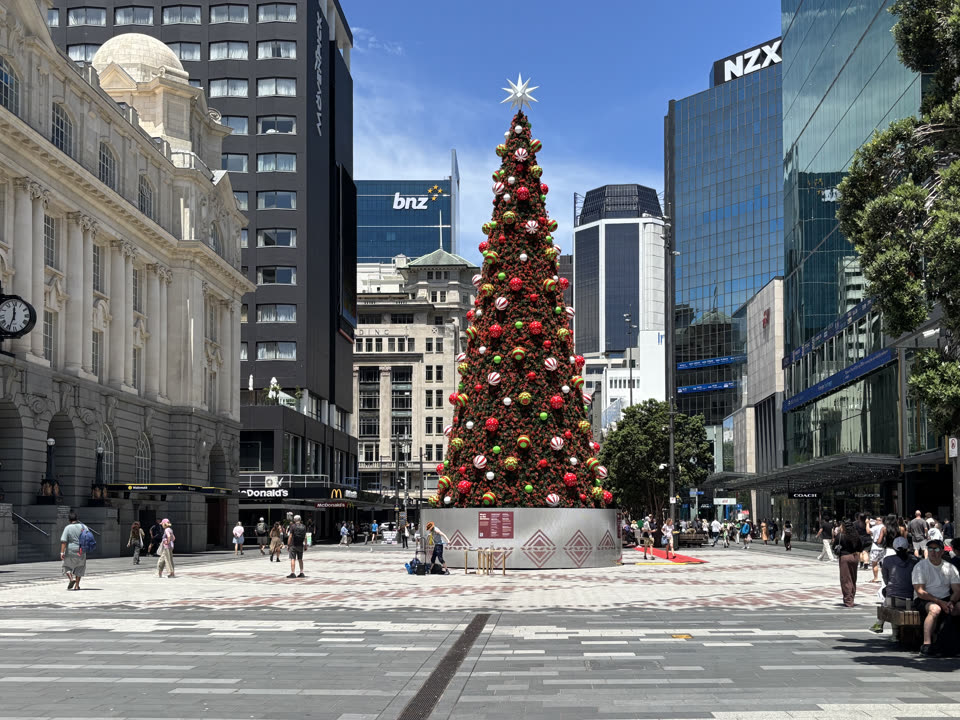
Christmas Day in New Zealand is 25 December. It is a public holiday.
How to say it
Māori
Meri Kirihimete
Meri Kirihimete
The te reo Māori wish, and a loan word rather than a translation — Kirihimete is Christmas said in Māori sounds. It is old: Te Aka, the Māori dictionary, carries an example from a Māori-language newspaper of December 1898, «“Meri Kirihimete me te Hape Nū Ia” (e kī ana te Pākehā) ki ngā iwi me ngā hapū katoa» — Merry Christmas and a Happy New Year, as the Pākehā say, to all the tribes and hapū. The aside is in the original.
Meri Kirihimete — Te Aka Māori Dictionary, Te Ipukarea, Auckland University of Technology
English
Merry Christmas
Merry Christmas
A synthesised voice — not a recording of a person — saying Merry Christmas
in en-NZ.
The English wish, in a country whose public Christmas is largely secular: at the 2023 Census «No Religion» was 51.6 per cent of those who answered and «Christian» 32.3 per cent.
The ordinary English-speaking figure, and the country’s own contribution is how he arrives rather than who he is. NZHistory records his commercial debut: «Santa Claus made his commercial debut in New Zealand in 1894, when he took his place, complete with tree and toys, among the furniture in the DIC store on Wellington’s Lambton Quay.»
Since then he has come by railway station, by elephant, by plane, by parachute and, to the Chatham Islands in 1951, «a TEAL Solent flying boat».
NZHistory puts the whole shape of it in one line: «Christmas in New Zealand is less about snow and sleigh bells and more about sun, sand and barbecues in the backyard.»
The day falls at the start of the long summer holidays, so it runs into them — the ministry’s own account lists «lazy days at the beach or the bach (or crib), games of backyard cricket, food on the barbecue and the holiday uniform of shorts, jandals and T-shirts».
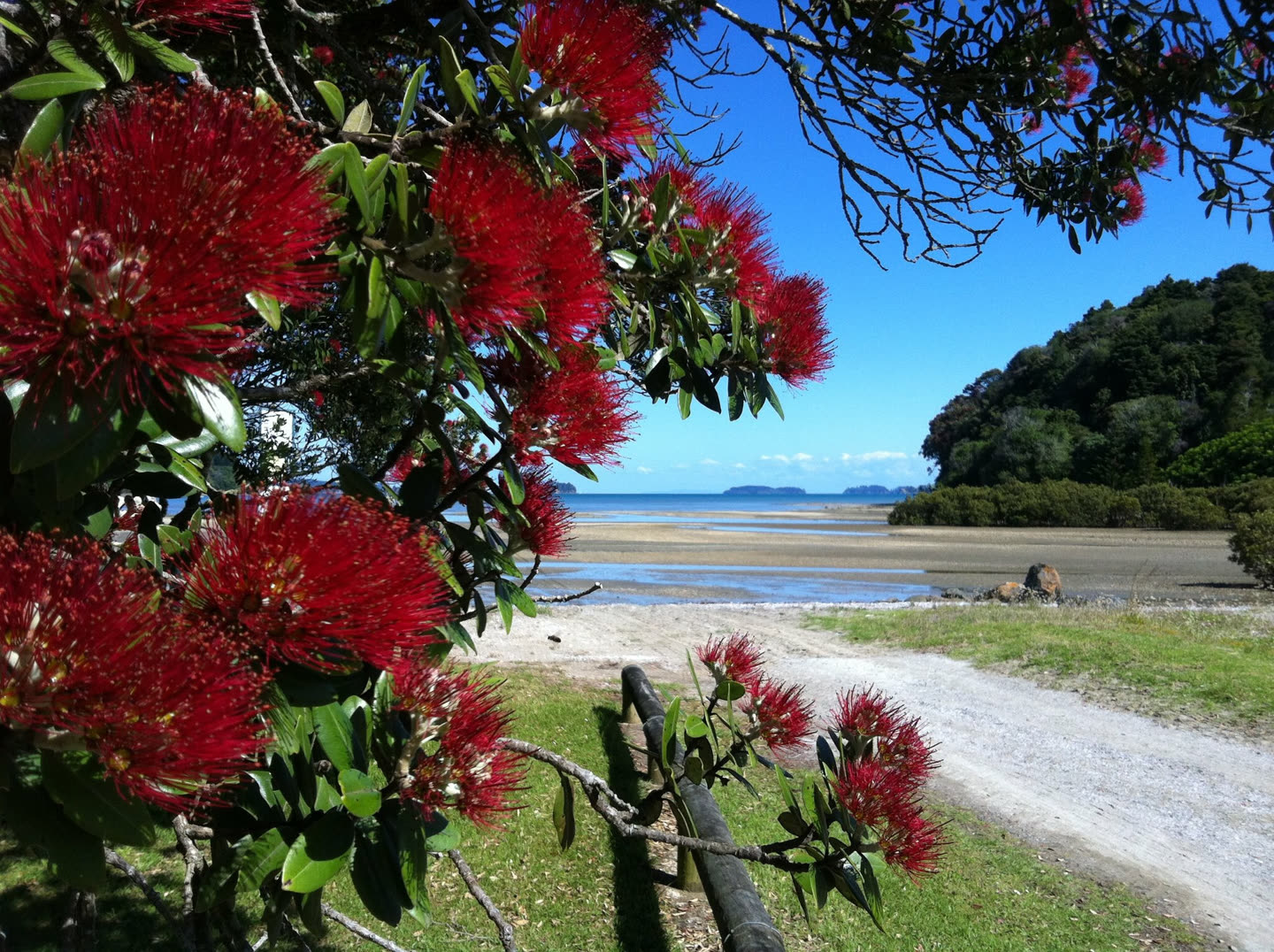
The Christmas tree is a native one, and it flowers
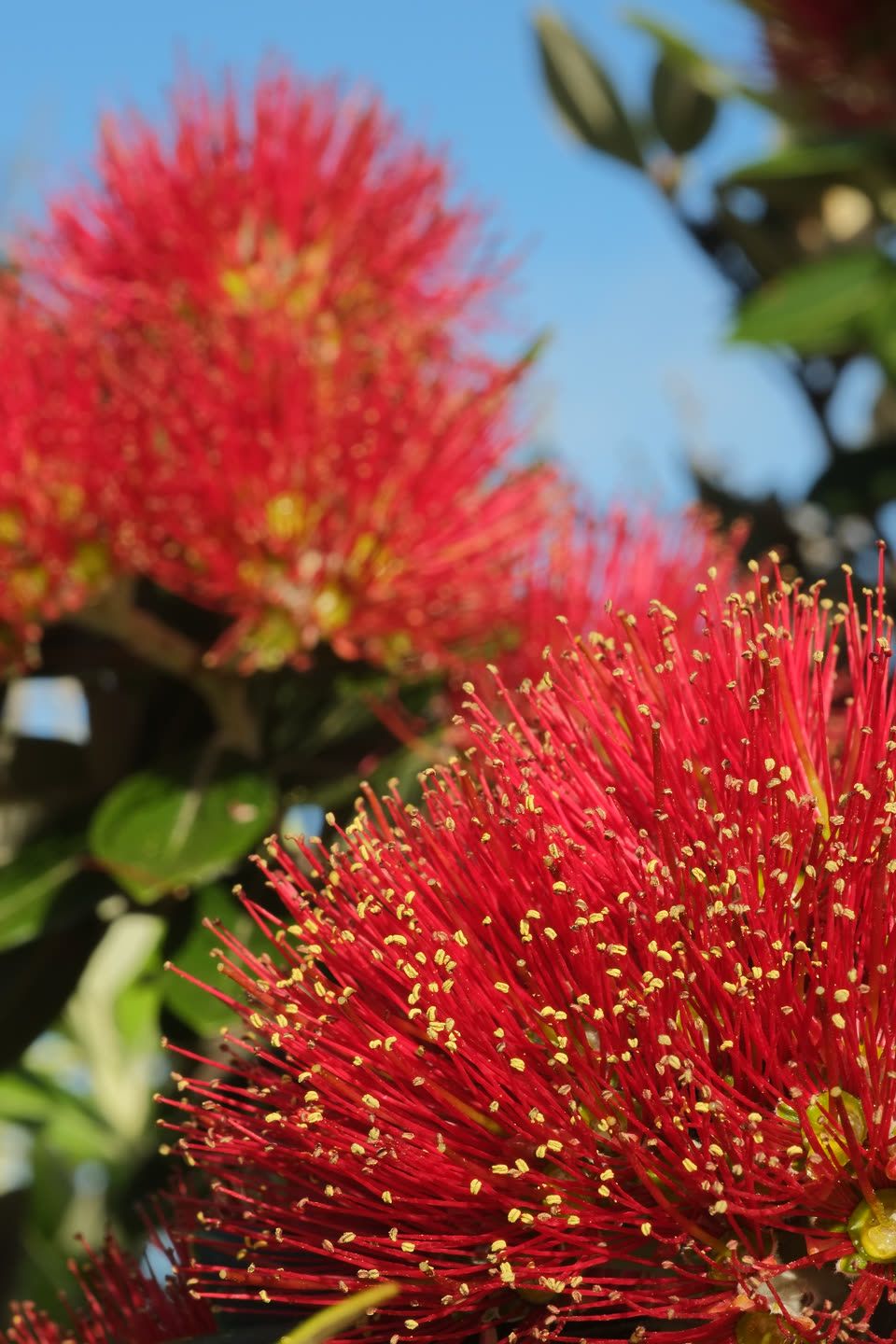
The pōhutukawa does the job a fir does elsewhere, and it does it by being in bloom. Te Ara: «Summer-flowering pōhutukawa (Metrosideros excelsa) is New Zealand’s iconic Christmas tree. Around December, crowns of pōhutukawa are covered in clusters of bright red to dark crimson flowers.» They are coastal trees that «occasionally reach 25 metres in height».
They are also looked after on purpose: «Project Crimson is a charitable conservation trust that works to protect New Zealand’s native Christmas trees – pōhutukawa and rātā. Since it was set up in 1990, volunteers have planted hundreds of thousands of trees.»
The same tree stands at the place the dead leave from
The pōhutukawa’s other meaning has nothing to do with Christmas, and the two should not be run together. Auckland Zoo states the standing: «Pōhutukawa are tapu (sacred) to Māori, known as rākau rangatira (chiefly trees) for their status in the forest canopy as one of the first to greet the sun.»
At Te Rerenga Wairua, the cape at the far north, an old pōhutukawa grows out of the cliff, and in Māori tradition spirits «descend down the roots of the tree and into the sea, to begin the journey to their ancestral homeland, Hawaiki». NZHistory describes the same tree as «reputed to guard the entrance to a sacred cave through which spirits pass on their way to the next world».
Lamb has overtaken ham, and a third of the country is at the barbecue
Retail Meat New Zealand asked more than 1,100 people in 2025: «42% said lamb would be the hero protein of their main Christmas meal, well ahead of pork or ham (30%) and beef (13%).»
How it is cooked is split: «Most meals will be cooked in the oven (59%), but the barbecue isn’t far behind (38%).» The sides are «Potatoes (91%) and mixed salads (79%)… followed by kumara (59%), carrots (54%), broccoli (43%) and peas (42%)». These are Retail Meat New Zealand’s own figures, from its own online survey of more than 1,100 people.
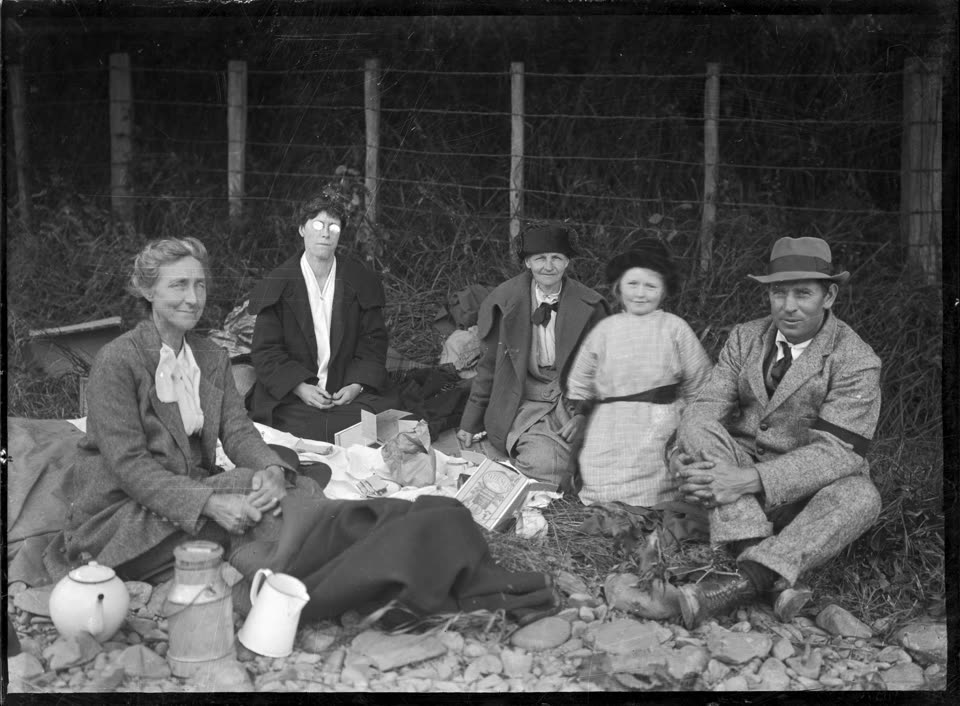
Many whānau spend it at the marae or the beach, with hāngī
Waatea News, reporting Christmas Day 2025: «communities came together to reflect on the year, share kai hāngī and fresh seasonal bites, sing waiata and embrace time with loved ones.»
«Across the motu, whānau picnicked at beaches – from Te Oneroa-a-Tōhe in the far north to Pōneke’s sandy shores – and enjoyed waiata under the summer sun, blending tikanga Māori with festive cheer. Others gathered at marae, where whanaungatanga was woven through shared plates and kōrero about the year behind and hopes for 2026.» One day’s reporting, about many whānau rather than about all.
The oven is in the ground, and the fire service has opinions
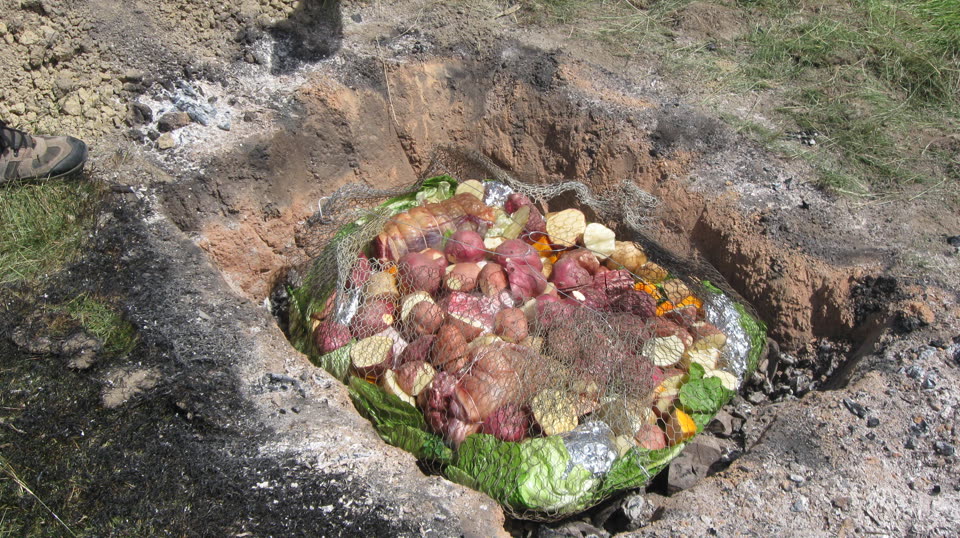
Hāngī, umu and lovo — Māori, Samoan and Tongan, and Fijian earth ovens — are, in Te Ao Māori News’s words, «cultural cooking methods [that] are a common feature of festive celebrations». Fire and Emergency New Zealand’s kaupapa Māori national manager, Piki Thomas, agrees: «Hāngī, umu and lovo bring whānau and friends together in the festive season.»
Which is why the fire service publishes Christmas advice about them. A southern Christmas falls in the dry season, so: «Make sure your hāngī, umu or lovo is at least three metres away from structures like any part of a building, hedge, shelter belt or any other combustible material.»
The Santa parade was invented by department stores
It began as shop publicity and the ministry says so. «George and Kersley Ltd’s Wellington store ‘the Economic’ appears to have been the first to ‘parade’ their Santa. In 1905 they invited local children to come to see ‘Mother and Father Christmas’ arrive at the railway station.»
The arrivals escalated: «During the 1930s Christchurch store Armstrong’s had Santa arrive on an elephant, while Farmers in Auckland and the DIC in Christchurch had their Santas arrive by plane». Then, in 1937, «disaster was narrowly averted when Farmers outdid all previous efforts by having their Santa parachute onto Auckland Domain».
Farmers’ first grand parade in Auckland in 1934 put Santa in company: «the ‘Waggles and Goggles, The Fat Boy, The Man that Walks on his Hands, Harold Lloyd, the Giant and the Big Fiddle’».
Santa parades — NZHistory, Ministry for Culture and Heritage (Manatū Taonga)
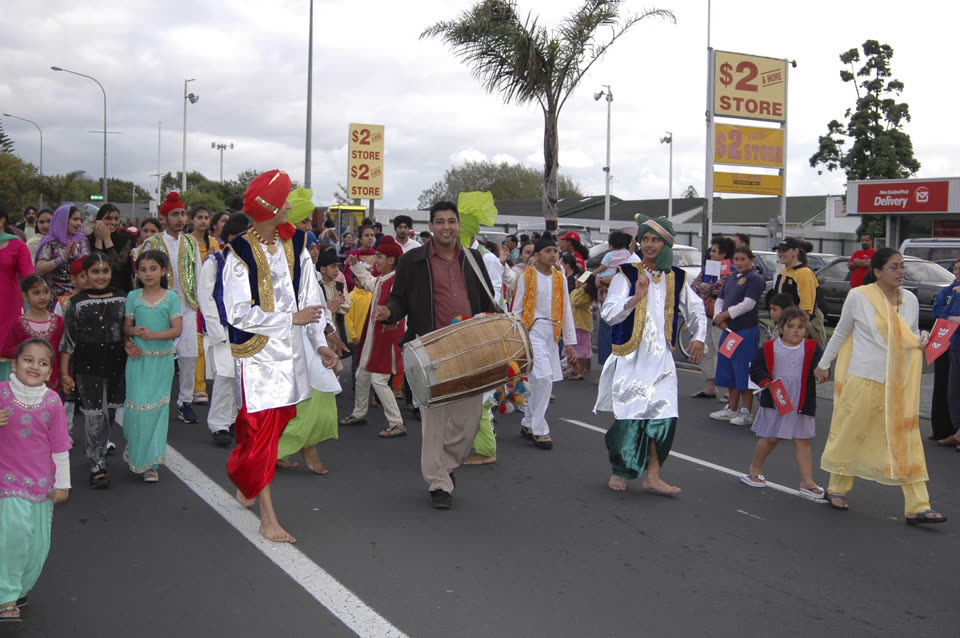
The Auckland parade still carries the department store’s name although a charitable trust has run it for decades — Heart of the City dates the Auckland Children’s Christmas Parade Charitable Trust to 1991, and the parade itself to «1934… with the Hobson Street department store sending Santa, his reindeer and an entourage of decorated carts and story characters on a tour of the city centre via K Road and Queen Street».
What moved along the route changed: NZHistory records that «the parades became more representative of New Zealand society, with a broad range of community and voluntary groups participating alongside local businesses and traditional floats».
Christmas in the Park began at the Auckland Domain on «10th December 1994», and the organisers count «60 concerts to massive live audiences in Auckland, Wellington, and Christchurch» since. Those are the promoter’s own numbers for the promoter’s own event.
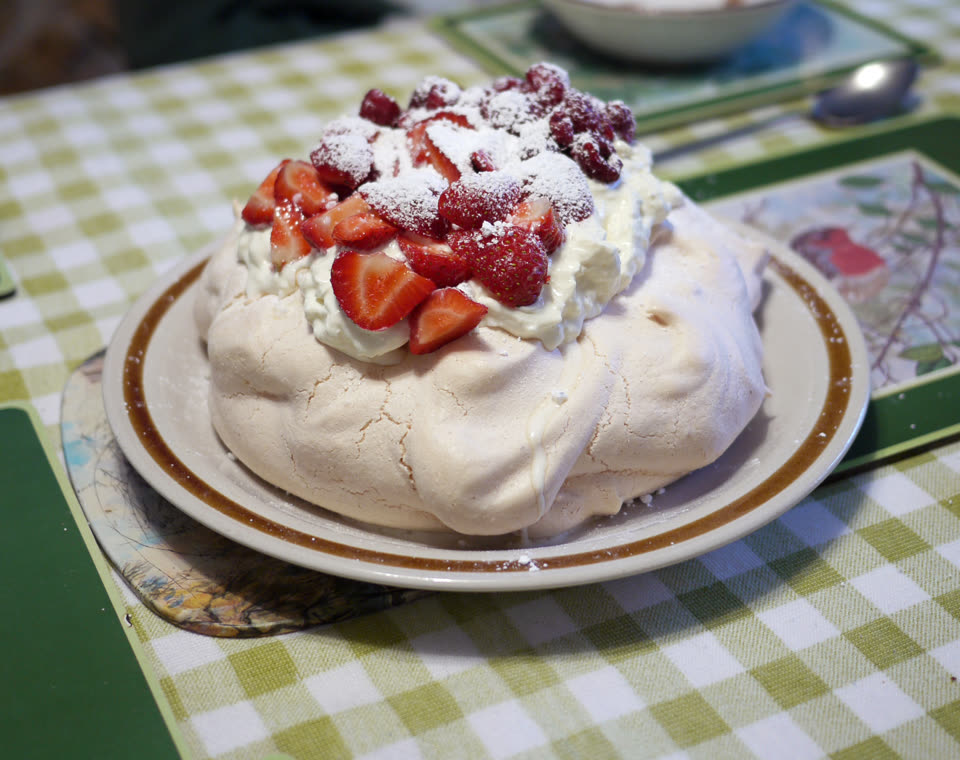
A large baked meringue cake under cream and fruit, and the Christmas dessert by a distance: 71 per cent in Retail Meat New Zealand’s 2025 survey, against trifle at 46 and strawberries with ice cream at 42. Whether New Zealand or Australia arrived at it first is a long argument, and an unusually well-documented one.
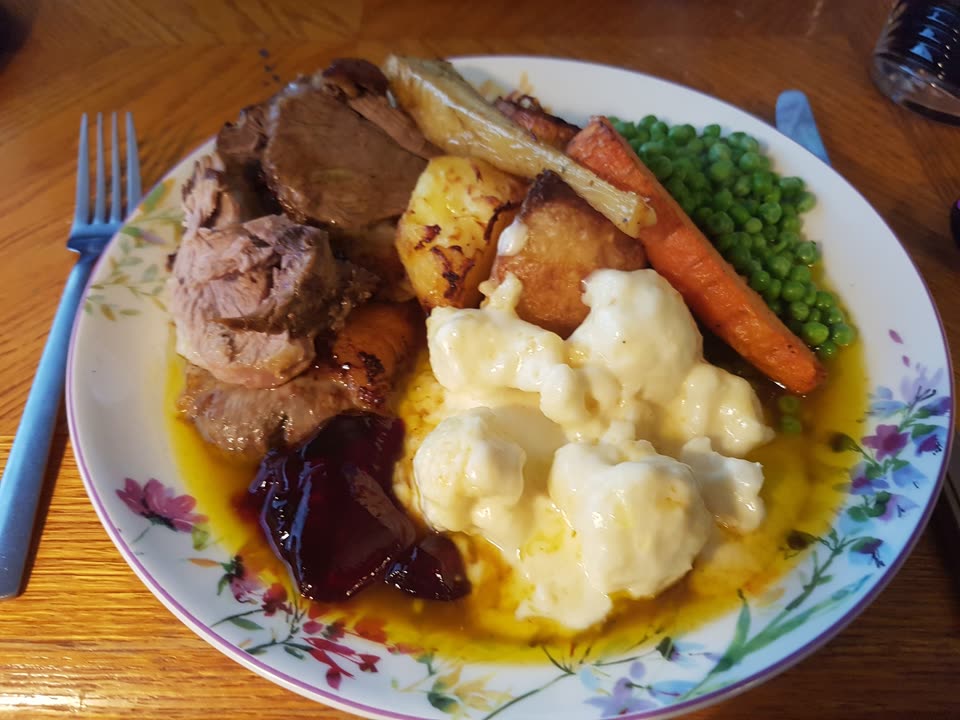
The meat most often named for the main Christmas meal, ahead of ham: «42% said lamb would be the hero protein of their main Christmas meal, well ahead of pork or ham (30%) and beef (13%)». A traditional roast was the most common plan at 49 per cent, with the barbecue at 38.
Tongan parcels of taro leaf and coconut cream with mutton, on Christmas tables in New Zealand’s Tongan families. An RNZ Pacific journalist: «When I think of Christmas, I’m reminded of the Tongan dishes that my parents and siblings prepare for our big lunch feast on Christmas day.» Her own caption for the tray: «Lu wrapped up in foil, ready for the oven or umu».
Widely repeated claims about Christmas in New Zealand that do not survive
checking. Each one says what is actually the case, because a correction
with nothing in its place leaves you worse off than before.
Oversimplified
New Zealand invented the pavlova
What is actually the case. The earliest known recipe is New Zealand’s, and the historian who found it says that is not the same as inventing the thing. Te Ara: «while both countries contributed to its evolution, detailed research by food historian Helen Leach established that the first known recipe for pavlova as we now understand it appeared in New Zealand. In 1929 The New Zealand Dairy Exporter published a recipe for ‘pavlova cake’, a large baked meringue cake.»
The same passage gives Australia an earlier use of the name for something else: «An Australian recipe book had used the name pavlova for a multi-layered jelly in 1926.» And the Australian claim is about a different thing again — the BBC records that «chef Herbert “Bert” Sachse is said to have created the pavlova at Perth’s Esplanade Hotel in 1935». Earliest printed recipe, earliest use of the name, and a chef’s claim to have made one are three different questions, and the two countries have been answering different ones at each other.
Boxing Day is one of the days New Zealand shops have to close
What is actually the case. Boxing Day is a public holiday and an ordinary trading day. The four restricted trading days are «Christmas Day (a public holiday) Good Friday (a public holiday) Anzac Day, until 1.00 pm on 25 April (a public holiday) Easter Sunday (not a public holiday)» — and Boxing Day is not among them. In practice it is one of the biggest shopping days of the year.
A day off on 25 December is younger than the country’s newspapers. NZHistory: «a day off on 25 December hasn’t always been a legal entitlement. A newspaper published on 25 December 1841 doesn’t even mention Christmas, and the day only became a formal public holiday in 1910.»
Christmas Day is one of only three and a half days a year when the shops shut. «On 3 and a half days each year, almost all shops must close», and the list is «Christmas Day (a public holiday) Good Friday (a public holiday) Anzac Day, until 1.00 pm on 25 April (a public holiday) Easter Sunday (not a public holiday)».
The half day is Anzac morning. Some shops are exempt or sit in an exemption area, so the law says almost all rather than all.
Just over half the country ticks no religion. At the 2023 Census, of those who answered, «No Religion» was 51.6 per cent and «Christian» 32.3 per cent, with Hinduism at 2.9, Islam at 1.5 and «Maori Religions, Beliefs and Philosophies» at 1.3.
So the national holiday with the largest public apparatus in New Zealand is a Christian feast in a country where Christians are under a third of those who answered.
The first Christmas dinners here were eaten by sailors who had just arrived. «In 1642, Abel Tasman’s crew enjoyed the first Christmas dinner in New Zealand – freshly killed pork from the ship’s menagerie washed down with ‘extra rations of wine’. In 1769 James Cook’s crew marked the occasion by feasting on ‘Goose pye’ (made with gannet).»
First here means first recorded, and European: the gannet pie was eaten off a coast where nobody kept Christmas.
On Christmas Day 1814 the sermon needed a translator, and the translator was a Ngāpuhi chief. «At Hohi (Oihi) Beach in the Bay of Islands, Samuel Marsden preached in English to a largely Māori gathering, launching New Zealand’s first Christian mission. The Ngāpuhi leader Ruatara translated Marsden’s sermon. The two men had first met in Port Jackson (Sydney) in 1809.»
NZHistory itself declines to call it flatly the first: Marsden’s service «is often cited as the first in New Zealand, but did a French priest travelling with Jean François Marie de Surville in 1769 beat him to it?»
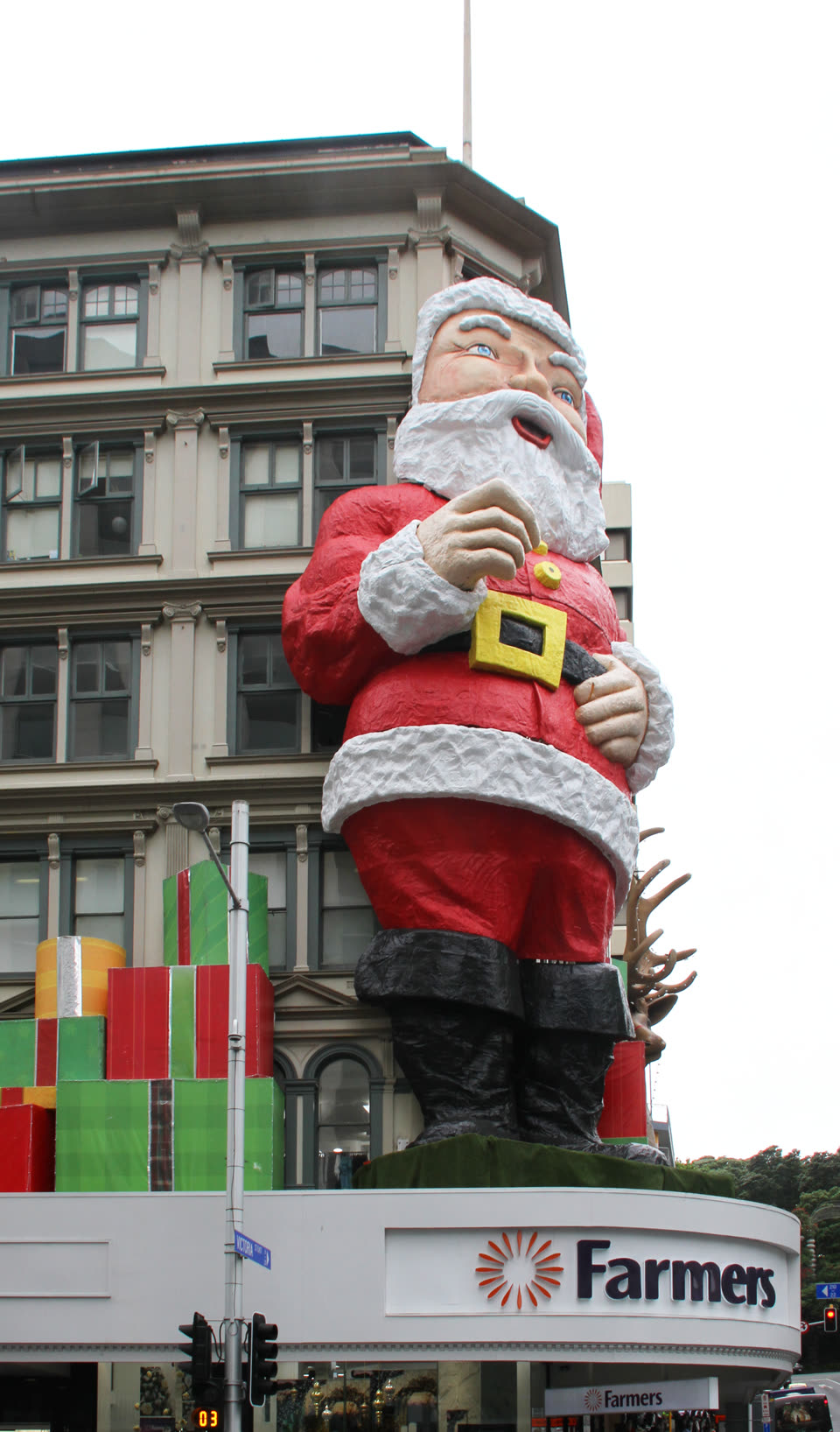
A giant Santa has looked down on central Auckland for most of the time since 1960. «In 1960 Farmers erected a giant Santa on top of their Hobson Street department store in Auckland. He appeared above the store each Christmas for almost 30 years. He left Auckland’s CBD in 1990, but was re-erected above Whitcoulls’ store on Queen Street in 1998.»
Christmas songs get rewritten for the weather. «Many traditional Christmas songs have been adapted for New Zealand audiences and conditions», and «One of the most popular New Zealand Christmas songs of the 1960s was ‘Sticky Beak the kiwi’».
Every claim carries its own citation. They are collected below, so you
can see what the page rests on and how much of it comes from where.
Aotearoa’s Christmas tree — sacred and beautiful — Auckland Zoo. Retrieved 2026-11-04. archived 19 May 2026«Pōhutukawa are tapu (sacred) to Māori, known as rākau rangatira (chiefly trees) for their status in the forest canopy as one of the first to greet the sun.» On Te Rerenga Wairua: spirits «descend down the roots of the tree and into the sea, to begin the journey to their ancestral homeland, Hawaiki.»
Public holidays and anniversary dates — Employment New Zealand, Ministry of Business, Innovation and Employment. Retrieved 2026-11-04. archived 15 October 2026The 2026 row reads «Christmas Day 25 December Friday 25 December» and «Boxing Day 26 December Saturday 26 December or Monday 28 December».The transfer rule is its own paragraph and it is not the one that applies to the other holidays: «Christmas Day, Boxing Day, New Year’s Day and 2 January holiday — These public holidays are observed on the actual day when they fall on a weekday. When they fall on a Saturday/Sunday: If the employee would have worked on the Saturday/Sunday, the public holiday is observed on the Saturday/Sunday. If the employee would not have» worked it, it moves. The same page reserves the word «Mondayised» for two other days: «The public holidays for ANZAC Day and Waitangi Day are “Mondayised” (moved to the following Monday)».
Restricted trading days for shops — Employment New Zealand, Ministry of Business, Innovation and Employment. Retrieved 2026-11-04. archived 29 October 2026«On 3 and a half days each year, almost all shops must close. But some shops can open with conditions, or they have an area exemption or Easter Sunday local policy.»The list: «Christmas Day (a public holiday) Good Friday (a public holiday) Anzac Day, until 1.00 pm on 25 April (a public holiday) Easter Sunday (not a public holiday)».
Why we love the Farmers Santa Parade — Heart of the City, the Auckland city-centre business association. Retrieved 2026-11-04. archived 29 January 2023«1934 was also the first year Aucklanders enjoyed the first ever Farmers Santa Parade, with the Hobson Street department store sending Santa, his reindeer and an entourage of decorated carts and story characters on a tour of the city centre via K Road and Queen Street for the enjoyment of the city’s kids and young at heart.»On who runs it now: the parade ran «a century or so before the creation of the Auckland Children’s Christmas Parade Charitable Trust in 1991».
Celebrating thirty years — Christmas in the Park — Muzic.NZ, carrying the event’s press release, 14 November 2024. Retrieved 2026-11-04.«The first Coca-Cola Christmas in the Park was held on 10th December 1994 at the Auckland Domain and since then has presented 60 concerts to massive live audiences in Auckland, Wellington, and Christchurch.»
Christmas in New Zealand — NZHistory, Ministry for Culture and Heritage (Manatū Taonga). Retrieved 2026-11-04. archived 28 January 2026«Christmas in New Zealand is less about snow and sleigh bells and more about sun, sand and barbecues in the backyard.»On the holiday: «a day off on 25 December hasn’t always been a legal entitlement. A newspaper published on 25 December 1841 doesn’t even mention Christmas, and the day only became a formal public holiday in 1910.»On the first meals: «In 1642, Abel Tasman’s crew enjoyed the first Christmas dinner in New Zealand – freshly killed pork from the ship’s menagerie washed down with ‘extra rations of wine’. In 1769 James Cook’s crew marked the occasion by feasting on ‘Goose pye’ (made with gannet).»On 1814, hedged by the site itself: Marsden at Hohi «is often cited as the first in New Zealand, but did a French priest travelling with Jean François Marie de Surville in 1769 beat him to it?»On the tree: «The beautiful pohutukawa is regarded as New Zealand’s iconic Christmas tree» and «an 800-year-old tree clinging to the cliffs of Cape Reinga is reputed to guard the entrance to a sacred cave through which spirits pass on their way to the next world.»On Santa: «Santa Claus made his commercial debut in New Zealand in 1894, when he took his place, complete with tree and toys, among the furniture in the DIC store on Wellington’s Lambton Quay.» On the Chathams: «When Santa Claus visited the remote Chatham Islands in 1951, he swapped his reindeer for a TEAL Solent flying boat. More than 400 of the islands’ 500 inhabitants cheered him wildly.» On Auckland: «In 1960 Farmers erected a giant Santa on top of their Hobson Street department store in Auckland. He appeared above the store each Christmas for almost 30 years. He left Auckland’s CBD in 1990, but was re-erected above Whitcoulls’ store on Queen Street in 1998.»And on the music: «One of the most popular New Zealand Christmas songs of the 1960s was ‘Sticky Beak the kiwi’».
Santa parades — NZHistory, Ministry for Culture and Heritage (Manatū Taonga). Retrieved 2026-11-04. archived 19 May 2024«George and Kersley Ltd’s Wellington store ‘the Economic’ appears to have been the first to ‘parade’ their Santa. In 1905 they invited local children to come to see ‘Mother and Father Christmas’ arrive at the railway station.»«During the 1930s Christchurch store Armstrong’s had Santa arrive on an elephant, while Farmers in Auckland and the DIC in Christchurch had their Santas arrive by plane (though he then had to travel by car to the store). In 1937 disaster was narrowly averted when Farmers outdid all previous efforts by having their Santa parachute onto Auckland Domain.»The 1934 cast: Santa «was accompanied by the ‘Waggles and Goggles, The Fat Boy, The Man that Walks on his Hands, Harold Lloyd, the Giant and the Big Fiddle’».And later: «the parades became more representative of New Zealand society, with a broad range of community and voluntary groups participating alongside local businesses and traditional floats.»
First Christian mission established, 25 December 1814 — NZHistory, Ministry for Culture and Heritage (Manatū Taonga). Retrieved 2026-11-04. archived 30 October 2026«At Hohi (Oihi) Beach in the Bay of Islands, Samuel Marsden preached in English to a largely Māori gathering, launching New Zealand’s first Christian mission. The Ngāpuhi leader Ruatara translated Marsden’s sermon. The two men had first met in Port Jackson (Sydney) in 1809.»
Lamb takes out ham this Christmas — Annual Christmas Survey 2025 — Retail Meat New Zealand, an industry body. Retrieved 2026-11-04. archived 5 February 2026«In an online survey of more than 1,100 New Zealanders, 42% said lamb would be the hero protein of their main Christmas meal, well ahead of pork or ham (30%) and beef (13%).»«Most meals will be cooked in the oven (59%), but the barbecue isn’t far behind (38%). Potatoes (91%) and mixed salads (79%) top the list of sides, followed by kumara (59%), carrots (54%), broccoli (43%) and peas (42%).» And «pavlova remains the nation’s standout favourite (71%), with trifle (46%) and strawberries with ice cream (42%) also strong contenders.»
RNZ Pacific Xmas: Lu are ‘parcels of goodness’ — RNZ Pacific, Sela Jane Hopgood, 23 December 2020. Retrieved 2026-11-04.«When I think of Christmas, I’m reminded of the Tongan dishes that my parents and siblings prepare for our big lunch feast on Christmas day.» The caption on her own photograph reads «Lu wrapped up in foil, ready for the oven or umu».
Meri Kirihimete — Te Aka Māori Dictionary, Te Ipukarea, Auckland University of Technology. Retrieved 2026-11-04. archived 17 January 2026The headword is glossed «(loan) (noun) Merry Christmas» and carries an 1898 example from a Māori-language newspaper: «“Meri Kirihimete me te Hape Nū Ia” (e kī ana te Pākehā) ki ngā iwi me ngā hapū katoa (HKW 12/1898:6). / “Merry Christmas and a Happy New Year” (as the Pākehā say) to all the tribes and hapū.»The dictionary lists «Mere Kirihimete» as a synonym.
Cook hāngī, umu and lovo safely this Christmas — Te Ao Māori News, 21 December 2020. Retrieved 2026-11-04.Piki Thomas, Fire and Emergency New Zealand’s kaupapa Māori national manager: «Hāngī, umu and lovo bring whānau and friends together in the festive season.» And the advice: «Make sure your hāngī, umu or lovo is at least three metres away from structures like any part of a building, hedge, shelter belt or any other combustible material.»The piece calls them «cultural cooking methods [that] are a common feature of festive celebrations».
Tall broadleaf trees — Pōhutukawa — Te Ara: The Encyclopedia of New Zealand, Manatū Taonga. Retrieved 2026-11-04. archived 22 October 2026«Summer-flowering pōhutukawa (Metrosideros excelsa) is New Zealand’s iconic Christmas tree. Around December, crowns of pōhutukawa are covered in clusters of bright red to dark crimson flowers. Pōhutukawa usually grow as multi-trunked spreading trees that occasionally reach 25 metres in height.»On the conservation side: «Project Crimson is a charitable conservation trust that works to protect New Zealand’s native Christmas trees – pōhutukawa and rātā. Since it was set up in 1990, volunteers have planted hundreds of thousands of trees.»
Cooking — cooking methods — Te Ara: The Encyclopedia of New Zealand, Manatū Taonga. Retrieved 2026-11-04. archived 21 October 2026«while both countries contributed to its evolution, detailed research by food historian Helen Leach established that the first known recipe for pavlova as we now understand it appeared in New Zealand. In 1929 The New Zealand Dairy Exporter published a recipe for ‘pavlova cake’, a large baked meringue cake. An Australian recipe book had used the name pavlova for a multi-layered jelly in 1926.»
Religion in New Zealand — dataset of published Stats NZ 2023 Census figures — Te Kawa Mataaho Public Service Commission. Retrieved 2026-11-04. archived 6 August 2025The 2023 Census rows, as the Commission publishes them: «No Religion,0.552,Published Stats NZ figure: 51.6%», «Christian,0.347,Published Stats NZ figure: 32.3%», «Hinduism,0.031,Published Stats NZ figure: 2.9%», «Islam,0.016,Published Stats NZ figure: 1.5%», and «Maori Religions, Beliefs and Philosophies,0.014,Published Stats NZ figure: 1.3%».
Kirihimete 2025: How whānau spent Christmas Day — Waatea News, 25 December 2025. Retrieved 2026-11-04. archived 25 December 2025«Christmas Day this year was a time of whanaungatanga, kai and celebration for many Māori whānau across Aotearoa. As the sun shone on Thursday 25 December, communities came together to reflect on the year, share kai hāngī and fresh seasonal bites, sing waiata and embrace time with loved ones.»«Across the motu, whānau picnicked at beaches – from Te Oneroa-a-Tōhe in the far north to Pōneke’s sandy shores – and enjoyed waiata under the summer sun, blending tikanga Māori with festive cheer. Others gathered at marae, where whanaungatanga was woven through shared plates and kōrero about the year behind and hopes for 2026.»