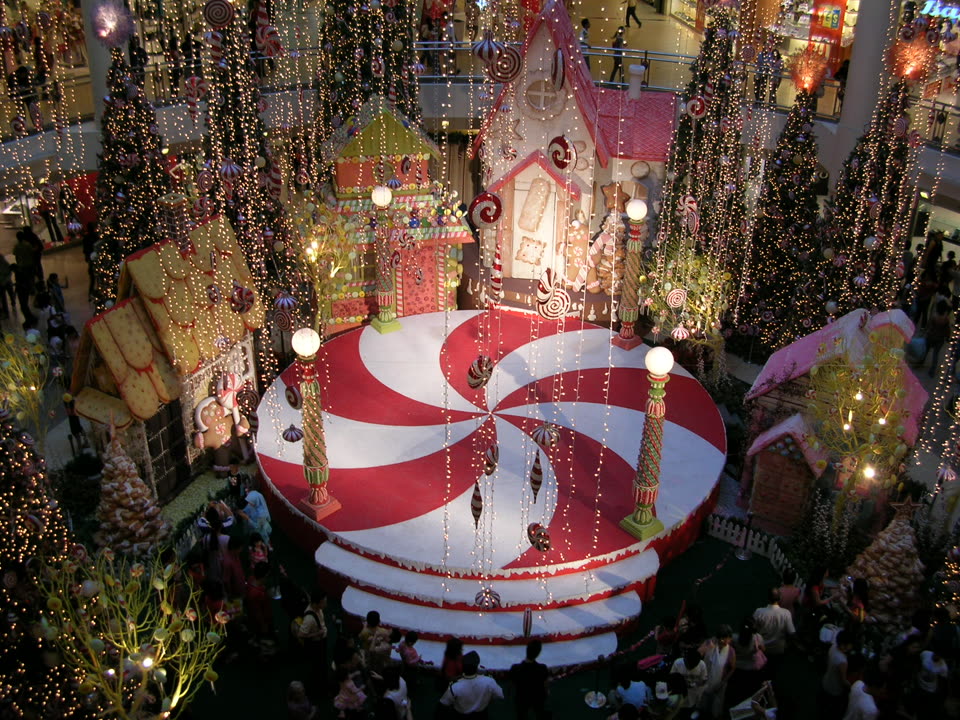
Christmas Day in Malaysia is 25 December. It is a public holiday.
How to say it
Malay
Selamat Hari Krismas
Selamat Hari Krismas
say it: ser-LAH-mat HAH-ree KRIS-mas
A synthesised voice — not a recording of a person — saying Selamat Hari Krismas
in ms-MY.
Malay borrows the English word and puts it in the ordinary festival frame — selamat, safe or blessed, then hari, day. The same frame gives Selamat Hari Raya and Selamat Hari Gawai, so a Malaysian hears it as one of a series rather than as a foreign import.
The fuller form is the one officials use. The Chief Minister of Sabah’s 2025 Christmas message ends «saya mengucapkan Selamat Menyambut Hari Krismas kepada seluruh rakyat Sabah yang meraikannya» — I wish a happy Christmas to all the people of Sabah who celebrate it — with menyambut, celebrating, between the two halves.
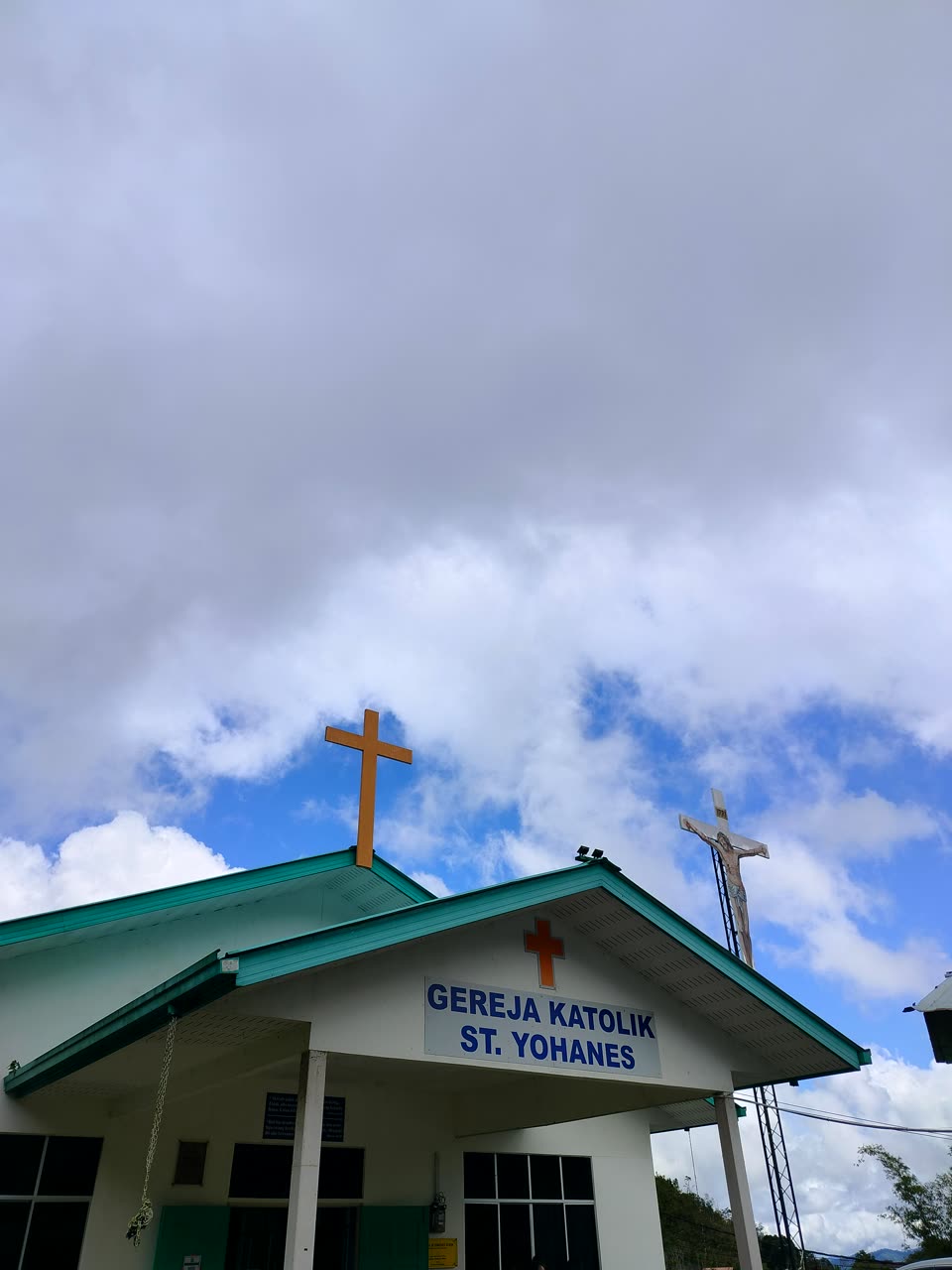
Most Malaysian Christians are Bumiputera of Sabah and Sarawak, and the Iban phrase in circulation is this Malay one rather than a form of its own.
The open house, and at Christmas it is the Head of State who asks for it
Malaysia’s festivals are kept with the doors open. The rumah terbuka — open house — belongs to Hari Raya, Deepavali, Chinese New Year and Gawai Dayak equally, and Christmas is simply one more of them.
In Sarawak it is official. The Head of State’s Christmas message for 2025 «expressed pride in Sarawak’s long-standing open house tradition during major religious celebrations, including Hari Raya Aidilfitri, Gawai Dayak, Chinese New Year, Deepavali and Christmas», and he asked Sarawakians to spend the season visiting: «This practice proves that differences do not divide us; instead, they make us stronger, more united and more mature as a society living in peace, mutual respect and care.»
The practical consequence is a Christmas table laid for people who do not keep Christmas, and in a Malaysian kitchen that is a decision about the cooking.
A Christmas dinner cooked halal, because half the guests are Muslim
At Kampung Paon Sungai Rimu, a Bidayuh village at Serian in Sarawak, the people round the Christmas table are not all Bidayuh and not all Christian: «terdapat juga kaum lain hasil daripada perkahwinan campur, antaranya Iban, Siam, India, Ulu, dan Melayu» — other peoples by mixed marriage, among them Iban, Siamese, Indian, Ulu and Malay.
So the cooking takes account of them. A resident, Mary Sena, told Utusan Malaysia what she was making — «itik masak talu, pekasam Bidayuh dan umai kaki ayam» — and then added the condition: «kami juga akan memastikan makanan disediakan secara halal, ekoran saudara-mara lain beragama Islam», we also make sure the food is prepared halal, because the other relatives are Muslim.
It is not a village eccentricity. When the Sabah government put on a free banquet at its state Christmas celebration the same requirement applied there, and the Federal Territories Mufti’s Office names halal food as the condition on which a Muslim may attend a Christmas gathering at all.
Two nights, not one: the village gathers on the 24th and again on the 25th
In the same village Christmas is a two-night affair for everybody at once. Kevin Tharan, who had married in from Perak and found it unlike anything at home, put it plainly: «pada malam 24 dan 25 Desember semua komuniti kampung akan berkumpul bersama-sama menyambut bersama» — on the nights of 24 and 25 December the whole village community gathers to celebrate together.
The evening opens with a formality rather than a meal: the men receive the women as they arrive, to Bidayuh drums and gongs, and the women of the village lead the cutting of the cake.
Church at seven in the morning, and the rest of the day with the family
Christmas morning in Kuching starts early. The national news agency reported in 2025 that «Christians in Sarawak began their Christmas celebrations early today, flocking to churches as early as 7am to attend religious services before spending the day with family and loved ones».
What happens after the service is an ordinary public holiday in a tropical city. The agency’s own survey of the day found people out «sightseeing with their families at popular landmarks around the city, including the Kuching Waterfront, Darul Hana Bridge and the Borneo Cultural Museum».
Sabah puts on a state Christmas, and a Muslim chief minister’s speech opens it
On 16 December 2025 the Sabah government launched a three-day Christmas celebration at Padang Merdeka in Kota Kinabalu, under the theme «‘Pengharapan Damai dalam Kasih’ (Hope for Peace in Love)». The Yang di-Pertua Negeri attended; the Chief Minister’s address was read for him by his deputy.
The argument in it is the one Malaysian politics makes about every festival. He said «it was not merely a religious celebration, but the state-level Christmas celebration reflects social maturity and the beauty of harmony among the people of Sabah», and the speech ends by wishing a happy Christmas to everyone in Sabah who keeps it.
Sabah is about a quarter Christian, and the celebration is run by a state government whose chief minister is Muslim.
Whether a Muslim may say Merry Christmas is a published question with a published answer
It comes up every December in the Malay-language press, and the Federal Territories Mufti’s Office has written it out. Its own first move is to refuse the simple version: «isu ini adalah isu ijtihadi dan tidak mutlak keharaman serta keharusannya» — a question of ijtihad, neither absolutely forbidden nor absolutely permitted, and it turns on circumstances.
Its conclusion is that the greeting is «diharuskan dengan syarat-syarat dan garis panduan yang khusus», permitted under specific conditions, and the conditions are where the country shows through. Permitted where there is a need to keep the peace between neighbours — «Apatah lagi dalam konteks pemimpin bagi masyarakat majmuk, kaum keluarga yang memiliki anggota Islam dan bukan Islam, kejiranan dan rakan sekerja.» Attendance only so far as needed, «seperti jamuan makan atau bergambar», a meal or a photograph, and not the costume. Gifts may be given and received, alcohol excepted. A gathering in a hall, a field, an office or a house is fine with halal food; inside a church on the day it is makruh.
The paper notes that other fatwa bodies reach the same place, and the Egyptian Dar al-Ifta’ holds that the greeting is not the forbidden kind of imitation at all.
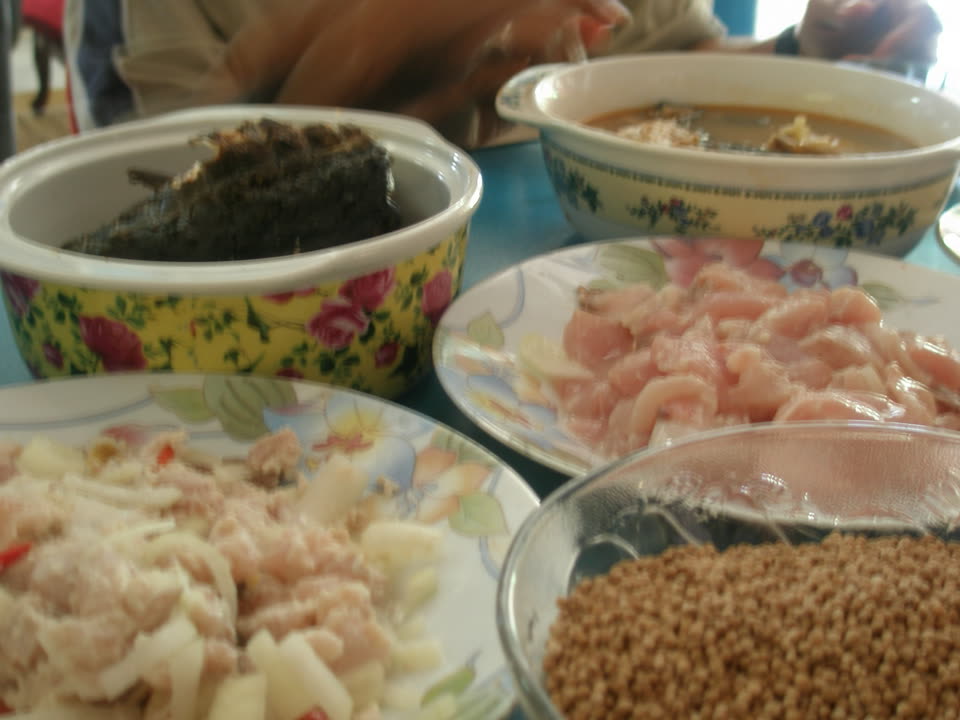
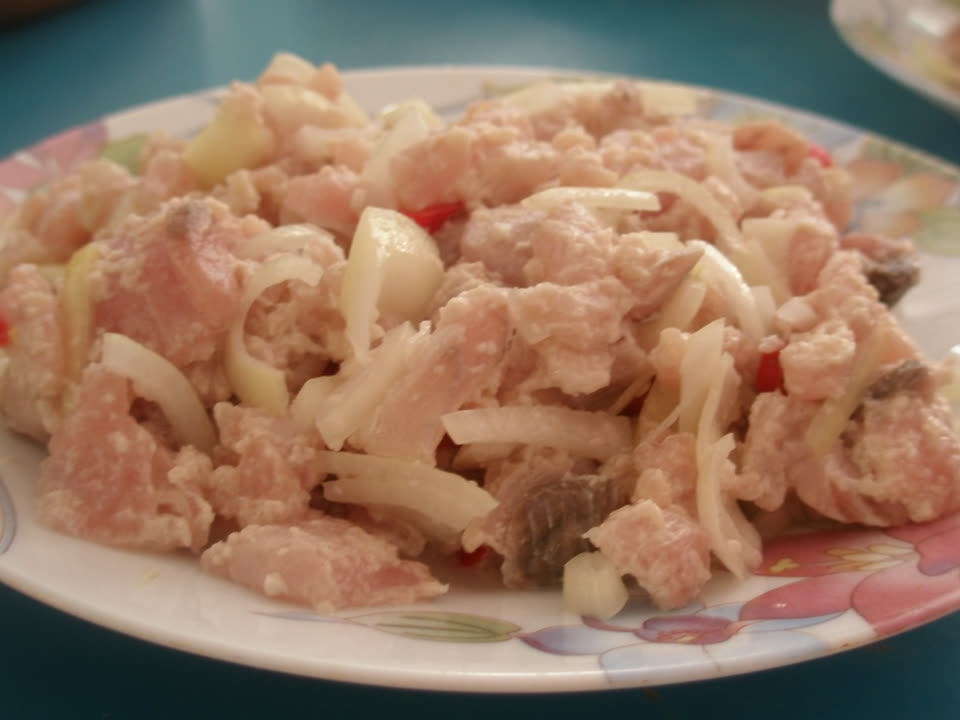
The Christmas table in a Bidayuh village is a Bidayuh table. Asked what she was cooking, a resident of Kampung Paon Sungai Rimu named three things: «itik masak talu, pekasam Bidayuh dan umai kaki ayam» — duck cooked talu, Bidayuh pekasam, and umai made with chicken feet.
Pekasam is fish or meat fermented with rice and salt and is a Sarawak staple rather than a Christmas dish; umai is the raw, limed, sliced dish that Sarawak is known for, usually made with fish. Both arrive at Christmas because they are what the house cooks, and both are made halal when Muslim relatives are coming.
No turkey, no ham and no plum cake is recorded in this account. There is a cake, and the women of the village cut it.
Widely repeated claims about Christmas in Malaysia that do not survive
checking. Each one says what is actually the case, because a correction
with nothing in its place leaves you worse off than before.
Oversimplified
Christmas is a federal public holiday across Malaysia
What is actually the case. Christmas Day is a public holiday everywhere in Malaysia, and it is not one instrument that makes it so. It is three.
The Holidays Act 1951 does list «Christmas day.» among its ten public holidays. It also says «This Act shall apply to the States of Peninsular Malaysia only.» Sabah joined the Federation in 1963 with its holiday ordinance of 1948 intact and Sarawak with its ordinance of 1946, and both still run. Christmas Day is in all three schedules; Christmas Eve is in only one.
What follows from the difference is not academic. A Sarawakian’s Christmas holiday was granted by the Sarawak government in 1977, not by Kuala Lumpur, and Good Friday — which is in the Bornean schedules and not the federal one — is the proof that the three lists are genuinely separate instruments and not copies.
The federal Holidays Act 1951 puts «Christmas day.» in its First Schedule, and it also says, in section 1, «This Act shall apply to the States of Peninsular Malaysia only.» Sabah and Sarawak were not part of the Federation when it was passed and keep their own holiday statutes to this day.
Sarawak’s Public Holidays Ordinance carries «Christmas day. [Swk. L.N. 78/77].» — with the gazette notification that added it, in 1977, alongside Awal Muharram. Sabah’s Holidays Ordinance goes one better and gives the feast two days: «Christmas Eve and Christmas Day.», which the state government’s own calendar prints as «Christmas Eve 24 December 2026» and «Hari Krismas 25 December 2026».
So 24 December is a day off in Kota Kinabalu and a working day in Kuala Lumpur, and the sentence «Christmas is a public holiday in Malaysia» is true by three separate routes.
The contrast is visible as an entry present in two lists and missing from a third. Sarawak’s schedule has «Good Friday. [Swk. L.N. 105/66].», added in 1966 in the same notification as «Dayak Festival Day (the first day of June)». Sabah’s has «Good Friday.» too. The federal First Schedule has ten entries and Good Friday is not one of them.
Christmas crosses the South China Sea and Easter does not. The reason is arithmetic rather than theology: Christians are half of Sarawak and a quarter of Sabah, and about three per cent of Peninsular Malaysia.
The 2020 census puts Christians at 9.1 per cent of Malaysia, third after Islam at 63.5 and Buddhism at 18.7. The national figure hides the shape of it. In Sarawak Christians are 50.1 per cent of 2,453,677 people; in Sabah, 24.7 per cent of 3,418,785.
The series is the interesting part. Sarawak’s Christian share runs 19.3 per cent in 1970, 28.5 in 1980, 36.6 in 1991, 42.4 in 2000, 42.5 in 2010 and 50.1 in 2020. Islam rose over the same half-century from 25.9 to 34.2. What fell was the line the census calls «other religion», from 29.6 per cent to 0.5 — the traditional religions of the Dayak peoples, counted out of the table within two generations.
The census publishes no figure for how many of Malaysia’s Christians live in Borneo. Multiplying each state’s share by its population gives roughly 1.23 million in Sarawak and 0.84 million in Sabah against about 2.95 million nationally: a little over seventy per cent, rather than the two-thirds usually quoted.
Holidays Act 1951 (Act 369), First Schedule — Laws of Malaysia, Attorney General’s Chambers, online version of the updated reprint. Retrieved 2026-10-31. archived 2 November 2026The federal statute, and the first thing it says is the thing nobody quotes: «This Act shall apply to the States of Peninsular Malaysia only.» Section 3 makes the First Schedule the list, and that schedule, headed PUBLIC HOLIDAYS, has ten entries: the Birthday of the Prophet Muhammad, National Day, Chinese New Year, Wesak Day, the Birthday of the Yang di-Pertuan Agong, Hari Raya Puasa, Hari Raya Haji, Deepavali, «Christmas day.» and Malaysia Day.
Public Holidays Ordinance, Chapter 8 (1958 Edition), First Schedule — Laws of Sarawak, State Attorney-General’s Chambers, online version. Retrieved 2026-10-31. archived 21 February 2026It carries «Good Friday. [Swk. L.N. 105/66].» and «Christmas day. [Swk. L.N. 78/77].», each with the gazette notification that added it, so the dates are in the statute itself: Good Friday in 1966, in the same notification as «Dayak Festival Day (the first day of June)», and Christmas in 1977, in the same notification as Awal Muharram. The compiled text is headed «Incorporating all amendments up to 30th April, 2010» and then cites notifications of 2016 and 2017, so the header understates it.
Sambutan Krismas platform kukuh perpaduan, cermin harmoni rakyat Sabah — Majlis Keselamatan Negara (National Security Council), Sabah, 17 Disember 2025. Retrieved 2026-10-31. archived 10 July 2026The theme is given in both languages — «‘Pengharapan Damai dalam Kasih’ (Hope for Peace in Love)» — the Chief Minister’s text was read by his deputy, «Teks ucapan Hajiji dibacakan oleh Timbalan Ketua Menteri merangkap Menteri Kerja Raya dan Utiliti, Datuk Seri Panglima Dr. Joachim Gunsalam.», and it closes with the greeting itself: «Bagi pihak seluruh kepimpinan negeri, saya mengucapkan Selamat Menyambut Hari Krismas kepada seluruh rakyat Sabah yang meraikannya».
Christians in Sarawak kick off Christmas with early church services and family celebrations — Malay Mail, carrying Bernama, 25 December 2025. Retrieved 2026-10-31. archived 5 March 2026The national news agency’s account of Christmas morning in Kuching: «Christians in Sarawak began their Christmas celebrations early today, flocking to churches as early as 7am to attend religious services before spending the day with family and loved ones». Its two named interviewees are students at Universiti Malaysia Sarawak who had come in from Bintulu and Batu Kawa, and the agency also reports that people spent the holiday «sightseeing with their families at popular landmarks around the city, including the Kuching Waterfront, Darul Hana Bridge and the Borneo Cultural Museum».
Wan Junaidi: Christmas values strengthen Sarawak’s unity — Sarawak Tribune, Sarah Hafizah Chandra, 24 December 2025. Retrieved 2026-10-31. archived 24 December 2025On the open house the sentence is the paper’s rather than his: he «expressed pride in Sarawak’s long-standing open house tradition during major religious celebrations, including Hari Raya Aidilfitri, Gawai Dayak, Chinese New Year, Deepavali and Christmas». His own words are quoted for the rest: «Christmas is a meaningful celebration that symbolises love, sincerity and the spirit of giving and sharing», and the close, «my wife, family and I respectfully extend our Merry Christmas greetings to all Christians in Sarawak and wherever they may be».
Haram, harus ucap Merry Christmas bergantung keadaan — Sinar Harian, Muhamad Tarmize Mohd Nor, 23 Disember 2024, summarising the Federal Territories Mufti’s Office. Retrieved 2026-10-31.A Malay daily’s religion desk setting out the Federal Territories Mufti’s Office position, from its paper «Tahqiq al-Masail 7: Hukum mengucapkan ‘Merry Christmas’ kepada mereka yang beragama Islam». The office’s own framing is that the question is not settled either way — «isu ini adalah isu ijtihadi dan tidak mutlak keharaman serta keharusannya» — and it concludes that the greeting is «diharuskan dengan syarat-syarat dan garis panduan yang khusus». The guidelines that follow name the cases: «Apatah lagi dalam konteks pemimpin bagi masyarakat majmuk, kaum keluarga yang memiliki anggota Islam dan bukan Islam, kejiranan dan rakan sekerja.» On attending, «Penyertaan orang Islam dalam majlis sambutan Krismas hanyalah pada kadar yang diperlukan sahaja seperti jamuan makan atau bergambar.» On gifts, «Dibolehkan untuk menerima atau memberi hadiah», excluding alcohol. On where, «Dibolehkan untuk hadir ke majilis orang bukan Islam sekiranya ianya diadakan di luar rumah ibadat seperti di dewan orang ramai, padang, pejabat atau rumah», with halal food — and inside a place of worship on the day it is makruh.
Holidays Ordinance (Sabah Cap. 56), First Schedule — State Attorney-General’s Chambers, Sabah, consolidated text marked for reference, May 2026. Retrieved 2026-10-31.Sabah’s schedule is the only one of the three that gives Christmas two days: «Christmas Eve and Christmas Day.» It also carries «Good Friday.», «The last two days in May (Pesta Kaamatan).» and, unlike either of the others, «Every Sunday.» The list of amendments shows the First Schedule last altered before 2025 by «G.N.S. 11/2019», in force from 19 December 2019.
Sabah Christmas celebrations kicks off — The Star, 17 December 2025. Retrieved 2026-10-31. archived 12 January 2026The Chief Minister’s framing, in reported speech: «He said it was not merely a religious celebration, but the state-level Christmas celebration reflects social maturity and the beauty of harmony among the people of Sabah». The paper calls it «The three-day Sabah Christmas Celebrations 2025» and says «A variety of events will be spread over till Dec 18.», so it ran from the 16th to the 18th.
Pelbagai etnik Sarawak penyeri sambutan Krismas Bumi Kenyalang — Utusan Malaysia, Catherine Irene Milton, 27 December 2024. Retrieved 2026-10-31. archived 27 December 2024It records who is at the table — «terdapat juga kaum lain hasil daripada perkahwinan campur, antaranya Iban, Siam, India, Ulu, dan Melayu», other peoples through mixed marriage, among them Iban, Siamese, Indian, Ulu and Malay. A resident, Mary Sena, names the food: «saya menyediakan masakan seperti itik masak talu, pekasam Bidayuh dan umai kaki ayam», and then the condition on it: «kami juga akan memastikan makanan disediakan secara halal, ekoran saudara-mara lain beragama Islam». Another, Kevin Tharan, says of the two nights: «pada malam 24 dan 25 Desember semua komuniti kampung akan berkumpul bersama-sama menyambut bersama».