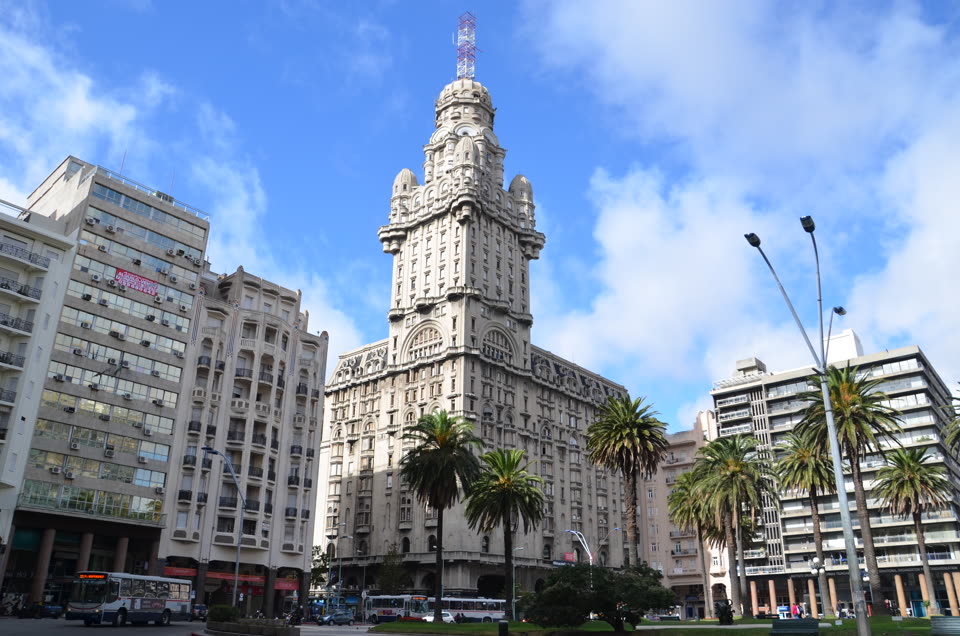
Christmas Day in Uruguay is 25 December. It is a public holiday.
How to say it
Spanish
Feliz Navidad
Feliz Navidad
say it: feh-LEESS nah-vee-DAHD
A synthesised voice — not a recording of a person — saying Feliz Navidad
in es-UY.
No Uruguayan variant was found and none should be invented. The thing worth noticing is not the greeting but the official vocabulary around it: the season is «las Fiestas Tradicionales» in administrative and press usage, and the statutes name 25 December by date alone.
He does not come in the night and the presents are not found in the morning. The 24th runs to midnight and the children open them then, which is why the Galería families describe the ritual as Mass, the crib, twelve o'clock, and the parcels in that order.
The second delivery, twelve days later, and the one with the ritual attached to it: a shoebox, cut grass and a bucket of water left out on the night of the 5th. 6 January is also the date Ley 6.997 renamed the Día de los Niños, so the statute and the children agree about who the day belongs to even though the statute took the Kings' names off it.
The tree goes up on 8 December, and the crib goes up with it
The Uruguayan Christmas does not begin in late November and it does not begin on the 24th. It begins on 8 December, when households put up the tree and set out the figures of the pesebre, and that is the date the countdown to the Fiestas Tradicionales starts from. The municipalities keep the same calendar — departmental governments switch on their public trees that day — so a single date carries the private custom and the civic one.
It is worth saying plainly what 8 December is in the Church's calendar, because the law changed the name and not the date: the Immaculate Conception.
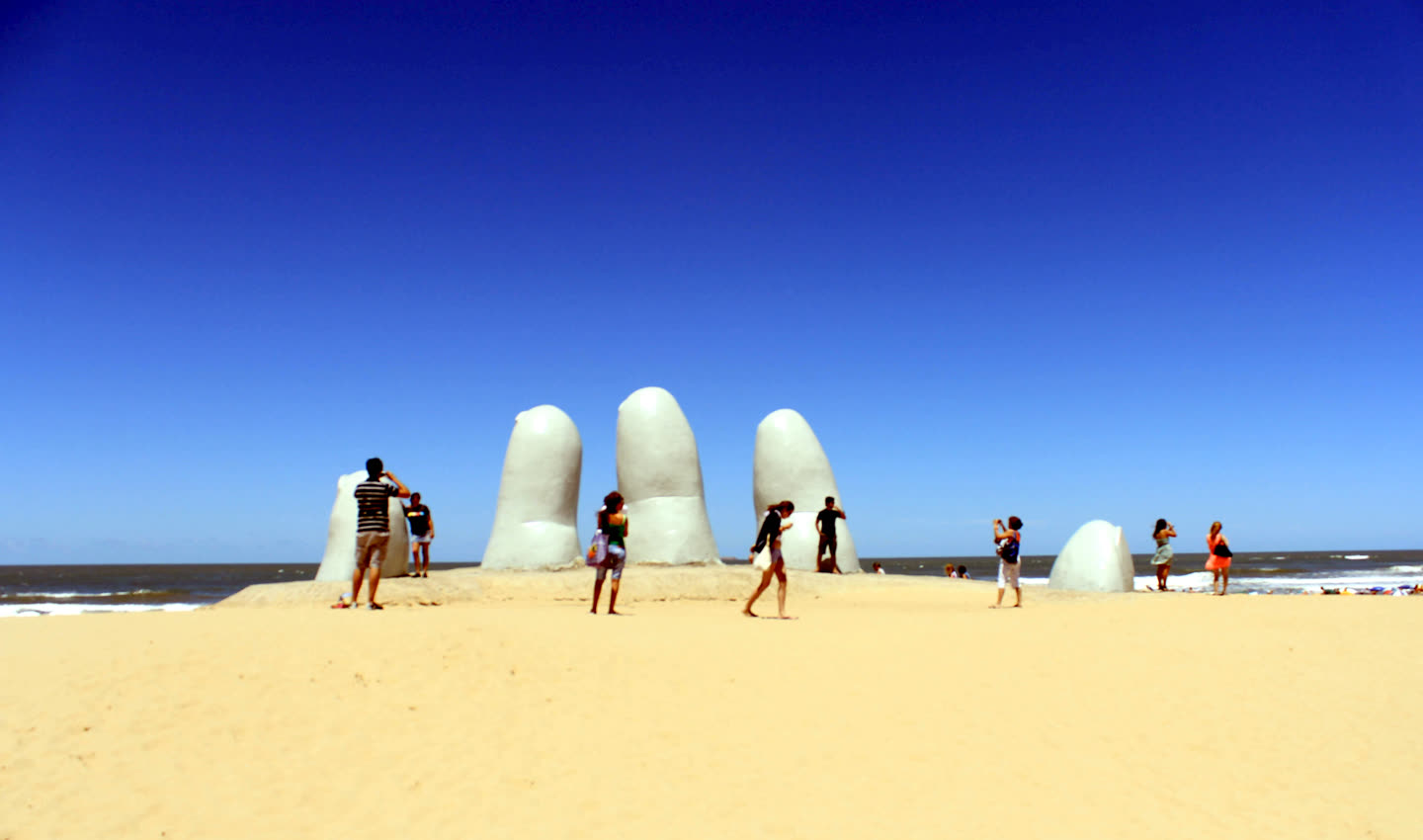
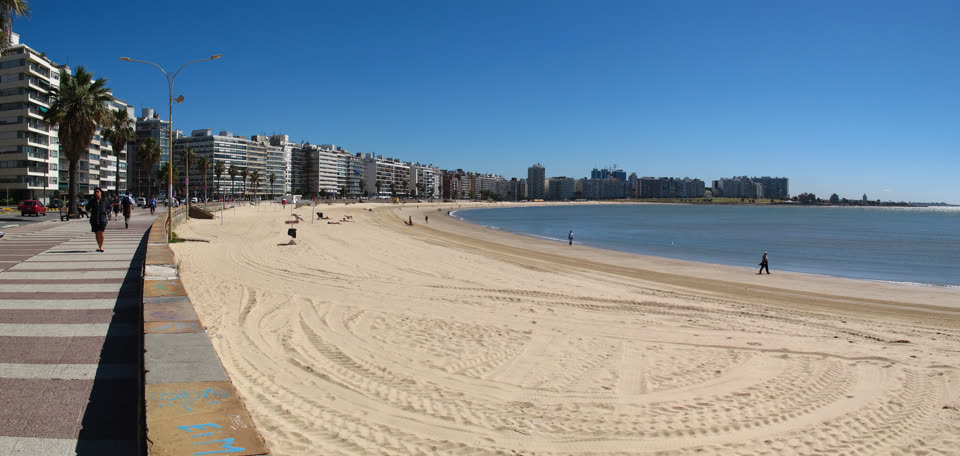
The same 8 December is, by statute, the Day of the Beaches
Ley 6.997 of 1919 struck the Immaculate Conception out of the holiday list and put «8 de Diciembre, Día de las Playas» in its place, and the name took. It is the day the summer season opens: the Intendencia de Montevideo publishes its bathing-water results beach by beach beforehand, posts its lifeguard and cyanobacteria advice, and reminds people that dogs may not stay on the sand.
So one date does two jobs that would be in tension anywhere else. Uruguayans put up the Christmas tree and go to the beach on the feast of the Virgin, under a secular name a hundred and seven years old.
Ley N° 6997, Declaración de feriado, artículo 1 — IMPO — Centro de Información Oficial, Uruguay (promulgada 23/10/1919, publicada 25/10/1919; Registro Nacional de Leyes y Decretos, tomo 2, semestre 2, año 1919, p. 433)
The Church still blesses the waters on 8 December, the day the state renamed the Day of the Beaches
The 1919 law took the Virgin's name off 8 December and gave the date to the beaches. The Church kept the date and kept blessing the water, and the two have been running in parallel ever since.
In Florida in 2016 the diocesan chancellor blessed the Río Santa Lucía at the Parque Rodó on the morning of the 8th, standing with the municipal director of sport, and declared the holiday season open; children from the Intendencia's own swimming classes then jumped in. In Villa Ansina in Tacuarembó in 2012 the bishop blessed the Río Tacuarembó while the image of the Virgen de Itatí arrived by boat with two launches behind it, at the fourteenth gaucho festival held in her honour.
Note what these are and are not. Both are rivers rather than sea beaches, and both are the opening of a swimming season as much as a feast — in Florida the priest and the sports director did it together. The civil holiday and the religious one are not in competition on that date; they are the same afternoon, described twice.
And the bishop's proclamation at Ansina was not about Christmas at all. It was about fresh water: the Guaraní Aquifer, the FAO's projection on scarcity, and the Guaraní names of the rivers that cross the north of the country.
Christmas Eve is the event and the clock is the structure. In observant households the evening runs Mass, then home to pray at the crib shortly before twelve; the toast and the presents come after midnight, not in the morning. In the rest of them the midnight line still holds — it is when the parcels are opened and when the sky goes up.
The table is a summer table and mostly a cold one. The asado is there, but so are mussels on toast, a seafood tart, tuna mayonnaise and vitel toné, and the menu is collaborative: the hosts do the main course and everyone else brings a starter, a side or a pudding.
Two street corners in the Montevideo neighbourhood of La Blanqueada — Jaime Cibils and Martín Fierro, Emilio Raña and Azambuya — each build a giant figure of papier-mâché over newspaper and flour paste, and burn it minutes after midnight on 24 December. The neighbours compete over which one makes the louder bang and which gives the better show, and the money is collected house to house.
The figure is the person of the year. The first one burned with an identity was Fulmine, a cartoon bringer of bad luck; since then the fire has taken Gregorio Álvarez — with a coffin — Pinochet, Néstor Kirchner, Michael Jackson, Fidel Castro, Donald Trump, Luis Suárez, José Mujica, and in 2019 the senator-elect Guido Manini Ríos. In 2010 the neighbours put the tradition at sixty-four or sixty-five years old.
The detail that says most about where Christmas Eve sits in the Uruguayan evening is in la diaria's first sentence: the families put the toast off to come and watch. Burning a Judas is a Holy Week custom across most of Latin America. Here it is a Christmas one.
Explotados y explotadores — la diaria, 24 December 2010 (Genoveva Malcuori; photograph by Nicolás Celaya)
The bangs at midnight are now limited by law, in decibels
Fireworks at twelve are the ordinary Uruguayan Christmas, and for a decade they have been the ordinary Uruguayan Christmas argument. The departments moved first: by December 2021, eleven of the nineteen departmental governments had passed some resolution against noisy pyrotechnics, ahead of any national rule and mostly ahead of their own regulations.
Then Ley 20.246 of 29 December 2023 banned the import, manufacture, sale and storage of any firework louder than 110 decibels nationwide, dropping the ceiling to 105 from the end of 2025. Authorised items carry a hexagonal green, yellow or red label. Public displays by licensed technicians are expressly excepted, so the sky over the rambla is unaffected; what the law is aimed at is the bang in the street.
On 5 January: a shoebox, cut grass and a bucket of water
The Kings are the children's second Christmas and the one with the protocol. On the night of 5 January the shoes go out near a window or beside the tree, so that Melchor, Gaspar and Baltasar can count how many children live in the house; outside go a little cut grass and a bucket of water for the camels, which in a Montevideo January is a kindness with the weather in mind.
The 6th itself is beach and new toys. The rambla and the parks fill with bicycles, scooters and footballs out of their boxes that morning, which is the clearest single picture of what a Southern-Hemisphere Christmas season actually looks like.
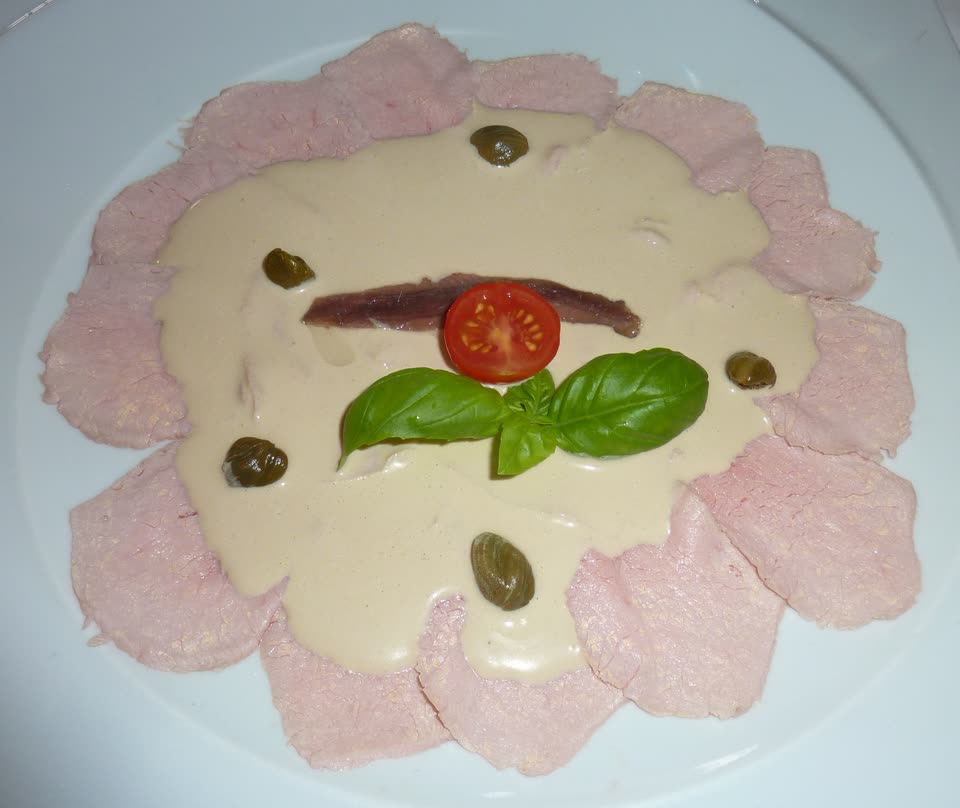
Cold veal under a cold sauce of tuna, anchovy and mayonnaise — a Piedmontese dish the Río de la Plata adopted whole — and the starter that anchors a summer Christmas Eve. Around it the rest of the cold table: mussels on toast, a seafood tart, tuna mayonnaise, russian salad. The asado is on the fire as well, but the dishes people name first are the ones you can make in the afternoon and eat at midnight in the heat.
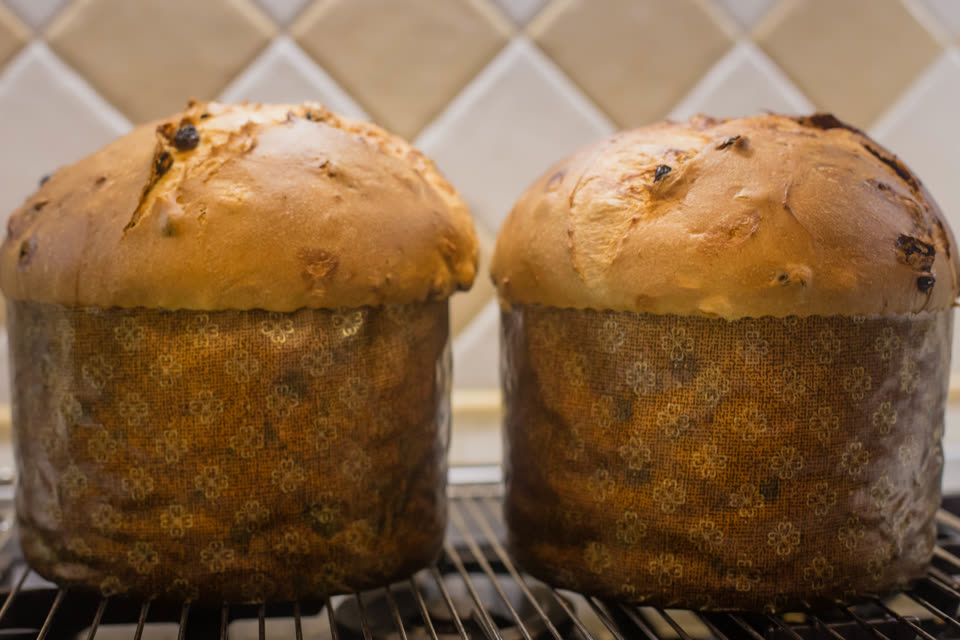
Pan dulce and budín inglés pan dulce, budín inglés
The two sweet things that are not optional. Pan dulce is the Italian panettone naturalised — a Uruguayan recipe index carries four versions of it, including a light one and one for coeliacs, which is a better measure of how fixed a dish is than any amount of prose. Budín inglés is the dense fruit loaf beside it, and turrón de mazapán is the Spanish half of the same immigrant inheritance.
What the toast is actually made with in a great many houses: white wine or sparkling wine over cut summer fruit, served cold in a jug. It is the drink a Uruguayan gastronomy page puts under «para la hora del brindis», and it is the Southern-Hemisphere answer to mulled wine — same job, opposite temperature.
The ring eaten on 6 January, and the Uruguayan one is its own thing: a sweet bread filled with crema pastelera and set with figs, eaten at breakfast or at merienda rather than cut over a hidden figurine as in Mexico. It closes the season the tree opened on 8 December.
Widely repeated claims about Christmas in Uruguay that do not survive
checking. Each one says what is actually the case, because a correction
with nothing in its place leaves you worse off than before.
Oversimplified
Uruguay is the only country in Latin America that does not celebrate Christmas.
What is actually the case. 25 December is a public holiday in Uruguay — one of only five that are paid as though worked and doubled if worked, and one of the ten that never slide to a Monday. Shops close, families eat together at midnight, children open presents from Papá Noel, and whole neighbourhoods set the sky on fire.
What changed in 1919 was the official NAME, and a century of Spanish- and Portuguese-language press has turned that into abolition: «eliminó la Navidad del calendario», «baniu a comemoração do Natal», «el país sin Navidad». Several of those pieces also date the change to a Batlle y Ordóñez decree of 1917, which is wrong twice over: it was a law, Ley 6.997 of 23 October 1919, and his name is not on it.
The defensible version of the claim is about religiosity rather than about the holiday. Gabriel Quirici, citing recent sociological work, puts about a third of Uruguayans as atheist or agnostic and says most of the rest are nominally Christian without institutional practice, which does make Uruguay an outlier in the region. It does not make 25 December a working day.
The 1919 renaming was José Batlle y Ordóñez's law.
What is actually the case. Batlle y Ordóñez is the right answer to the question the claim is reaching for and the wrong answer to the one it asks. He is the architect of Uruguayan secularisation — he founded the newspaper El Día, signed articles in it under the pen name «El Judas», and the paper marked Good Friday with a large asado in the street — and he was twice President of the Republic, 1903–1907 and 1911–1915.
He was not in office in October 1919 and his name is not on Ley 6.997, which is signed VIERA — RODOLFO MEZZERA — R. VECINO. It IS on the only amendment that law ever took: Ley 7.556 of 27 February 1923, which adds 1 March to the list whenever it coincides with the handover of the presidency, and which is signed BATLLE Y ORDÓÑEZ — PABLO BLANCO ACEVEDO — MANUEL V. RODRIGUEZ.
Which chair each man signed from is a harder question than it looks. Uruguay's 1918 constitution, in force from 1 March 1919, split the executive in two — a President of the Republic, and a Consejo Nacional de Administración that held education and public instruction — and a holiday law belongs with the second of those. Beyond that, the signatures say no more than they say.
Ley 6.997, promulgated on 23 October 1919, opens by declaring that «within the new constitutional regime» the following are «the only surviving festivities», and then lists eighteen dates with new names. 6 January stops being Epiphany and becomes the Día de los Niños. 8 December stops being the Immaculate Conception and becomes the Día de las Playas. 12 October is the Fiesta de la Raza, 2 May the Día de España, 20 September the Día de Italia, 14 July the Día de la Humanidad, 4 July the Día de la Democracia, 25 May the Día de América. Article 2 orders work to stop on 2 November for the commemoration of the dead. Article 4 declares the sixth week after Carnival a holiday «with the name Semana de Turismo».
And 25 December, in the statute's own words: «25 Diciembre, Día de la Familia.»
So the famous fact is true and it is the smallest part of the law. What Uruguay did in 1919 was hand the religious calendar's dates to the nations, the workers, the children, the dead and the beach — and keep every one of those dates exactly where the Church had left it.
Ley N° 6997, Declaración de feriado, artículos 1 a 4 — IMPO — Centro de Información Oficial, Uruguay (promulgada 23/10/1919, publicada 25/10/1919; Registro Nacional de Leyes y Decretos, tomo 2, semestre 2, año 1919, p. 433)
Semana de Turismo is the one secular renaming everybody knows, and the interesting half is that the week did not move. Article 4 of the 1919 law dates it as «la sexta semana siguiente a la de Carnaval» — and Carnival is itself dated from Easter, so the secular week is still calculated off the Resurrection.
The historian Mónica Maronna says that was argued out at the time and lost on commercial grounds. Some parliamentarians wanted the holiday detached from Holy Week altogether; what defeated them was regional tourism, and specifically Argentine tourism, then the largest in the region. In her words, not coinciding «sería también un problema para atraer turismo».
The second reason she gives for the whole exercise is the same one: the state wanted to develop tourism as an economic activity. The law that took religion out of the Uruguayan calendar is also the law that invented the Uruguayan holiday season, and it is named after it.
The popular version is that Uruguay officially calls 25 December the Día de la Familia. The 1919 statute does — and every instrument passed since gives the day a date and no name at all.
Ley 12.590 of 1958, article 18, quoted today on the Labour Ministry's own page: «1º de enero, 1º de mayo, 18 de julio, 25 de agosto y 25 de diciembre». Ley 16.805 of 1996, article 2, as amended in 2001: the same bare dates. Ley 19.121 of 2013, article 10, for public servants: «el 25 de diciembre».
But all of those name Carnival, and two of them name Semana de Turismo in so many words. The secular replacement for Holy Week is live statutory vocabulary. The secular replacement for Christmas Day sits in a law from 1919 that IMPO still serves as current, that records no repeal, and whose other seventeen names are mostly gone — Terra cut most of the 1919 holidays in the 1930s and kept 25 August.
So the honest statement is narrower than the headline and stranger than it. The laws that actually govern the Uruguayan Christmas do not call it anything.
Ley 20.246, article 8, declares the month of December in every year the «Mes para la promoción y concientización del uso responsable de Pirotecnia», and obliges the executive and the departmental governments to run campaigns. Article 5 sends the money raised in fines and seizures to organisations working on autism spectrum disorder and on animal protection.
Article 2 is the part worth quoting, because statutes rarely say this out loud. It states that the law exists «in the understanding that above the levels described, the attitude of amusement becomes injurious to coexistence and public health».
Every claim carries its own citation. They are collected below, so you
can see what the page rests on and how much of it comes from where.
Mons. Bonino bendijo las aguas del Río Tacuarembó y exhortó a cuidar «la casa de todos» — Conferencia Episcopal del Uruguay, 20 December 2012, reporting the blessing of Saturday 8 December 2012, with the bishop's proclamation printed in full. Retrieved 2026-11-16.«El sábado 8 de diciembre, día de la Inmaculada Concepción, en el Marco de la 14ª. fiesta gaucha de la Virgen de Itatí, el Obispo de Tacuarembó, Mons. Julio Bonino, bendijo, en Villa Ansina, las aguas del Río Tacuarembó, ante la impactante llegada de la imagen de la Virgen de Itatí en un bote, junto a otras dos lanchas.»
Bendición de aguas e inauguración de temporada de vacaciones en Florida — Conferencia Episcopal del Uruguay, 9 December 2016, reporting the blessing of 8 December 2016; the item credits santuariovirgentreintaytres.com as its source. Retrieved 2026-11-16.«En la mañana del 8 de diciembre, Solemnidad de la Inmaculada Concepción, el Canciller de la Diócesis de Florida, Pbro. Giovanni Chinchilla, bendijo las aguas de[l] Río Santa Lucía dándose por inaugurada la temporada de vacaciones.» Gustavo Pérez; after the blessing, children and teenagers from the municipal swimming programme opened the season «con un chapuzón en el agua».
Ley N° 6997 and Ley N° 7556, signature lines and reference index — IMPO — Centro de Información Oficial, Uruguay. Retrieved 2026-11-16.Ley 7.556 of 27/02/1923, article 1: «Incorpórase a la ley de 23 de Octubre de 1919, sobre institución de feriados, la fecha del 1.° de Marzo, siempre que coincida con el acto de la transmisión del mando de Presidente de la República y de Consejeros Nacionales.»
Ley N° 12590, artículo 18 — IMPO — Centro de Información Oficial, Uruguay (23 December 1958). Retrieved 2026-11-16.The paid-holiday rule the Labour Ministry quotes on its own feriados page: on «1.º de enero, 1.º de mayo, 18 de julio, 25 de agosto y 25 de diciembre de cada año, todo trabajador percibirá remuneración como si trabajara; en caso de trabajar, recibirá doble paga».
Ley N° 19121, Estatuto del funcionario público de la Administración Central, artículo 10 (Feriados) — IMPO — Centro de Información Oficial, Uruguay (promulgada 20/08/2013, publicada 28/08/2013). Retrieved 2026-11-16.«Son feriados no laborables pagos el 1° de enero, el 1° de mayo, el 18 de julio, el 25 de agosto y el 25 de diciembre.» The same article names «Semana de Turismo» twice, in the provisions about skeleton staff and about leave accrued by those who work it.
Ley N° 6997, Declaración de feriado, artículo 1 — IMPO — Centro de Información Oficial, Uruguay (promulgada 23/10/1919, publicada 25/10/1919; Registro Nacional de Leyes y Decretos, tomo 2, semestre 2, año 1919, p. 433). Retrieved 2026-11-16.Article 1 opens «Dentro del nuevo régimen constitucional, comprendidos los días domingo, quedan subsistentes las siguientes únicas festividades» and then lists eighteen dates with their names, ending «8 de Diciembre, Día de las Playas. 25 Diciembre, Día de la Familia.»
Ley N° 16805, Feriados nacionales, artículo 2 (redacción dada por Ley N° 17.414 de 08/11/2001) — IMPO — Centro de Información Oficial, Uruguay (promulgada 24/12/1996, publicada 31/12/1996). Retrieved 2026-11-16.«Quedan exceptuados de este régimen los feriados de Carnaval y Semana de Turismo y los correspondientes al 1º y 6 de enero, 1º de mayo, 19 de junio, 18 de julio, 25 de agosto, 2 de noviembre y 25 de diciembre, los que se continuarán observando en el día de la semana en que ocurrieren, cualquiera fuere el mismo.»
Tensiones identitarias y discursos conmemorativos: los ítalo-uruguayos filofascistas ante las fiestas cívicas de sus dos patrias (1918-1941) — Juan Andrés Bresciano Lacava, Universidad de la República, in Anuario de Estudios Americanos 76:1, CSIC, Seville, 2019, pp. 51-77 (footnote 18). Retrieved 2026-11-16.It also records that President Terra later «elimina la mayor parte de los feriados establecidos por la ley de 1919» while keeping 25 August. Note a transcription difference: Bresciano prints «Fiesta de la Familia» and «Día de la Raza» where the live official text has «Día de la Familia» and «Fiesta de la Raza». The statute is the authority; the discrepancy is recorded because «Fiesta de la Familia» is the form much of the press repeats.
Explotados y explotadores — la diaria, 24 December 2010 (Genoveva Malcuori; photograph by Nicolás Celaya). Retrieved 2026-11-16.«Cada 24 de diciembre, minutos antes de la medianoche, las esquinas de Jaime Cibils y Martín Fierro y de Emilio Raña y Azambuya comienzan a colmarse de personas. Las familias dejan el brindis para otro momento y arrancan a presenciar la quema de los judas.» Papier-mâché over newspaper with flour paste; two rival corners; the first judas burned with an identity was Fulmine, a cartoon bringer of bad luck; «el Goyo Álvarez, con ataúd y todo», Pinochet and Néstor Kirchner among those burned since. The neighbours put the tradition at «unos 64, 65 años» in 2010.
1919 – 2019: Un siglo de la transformación de la Semana Santa en la de Turismo — Montevideo Portal, 18 April 2019, carrying an EFE interview with the historians Mónica Maronna and Gabriel Quirici, Universidad de la República. Retrieved 2026-11-16.Maronna, quoted directly: «En la discusión emergía el tema de que eso era poco práctico para el turismo regional. Ahí se menciona específicamente el turismo argentino, que era el más importante en ese momento en la región. Entonces decían que la no coincidencia sería también un problema para atraer turismo.» The article's own shorthand «la Constitución de 1919» is loose — the text was approved in 1917 and came into force on 1 March 1919 — and is not repeated here.
En la clásica quema del Judas de La Blanqueada, el turno fue para Guido Manini Ríos — Montevideo Portal, 25 December 2019. Retrieved 2026-11-16.The same custom nine years later, which is why it is cited beside the 2010 report: «Como todos los años, los vecinos de La Blanqueada eligen al personaje del año, se organizan y arman un Judas gigante personificado.»
Reyes Magos: las tradiciones que no pasan de moda y cómo se viven en Uruguay y la región — Montevideo Portal, 5 January 2026 (María Noel Dominguez). Retrieved 2026-11-16.«Llega la noche del 5 de enero y el ritual se repite [...]: buscar la caja de zapatos, salir a cortar un poco de pasto [...] y dejar el infaltable balde con agua.» The shoes go near a window or the tree «para que Melchor, Gaspar y Baltasar sepan cuántos niños hay en la casa»; the grass and water are for the camels. «Para los uruguayos, el 6 de enero es sinónimo de playa y juguetes nuevos.»
Día de las playas, con la costa habilitada — Montevideo Portal, 8 December 2011. Retrieved 2026-11-16.«El ‘Día de las playas’ se celebra el 8 de diciembre desde 1919, cuando se produjo la separación de Estado e Iglesia y se cambiaron muchas fiestas de orden católico por nombres laicos.»
El 8 de diciembre, se arma el arbolito de Navidad — Montevideo Portal, 8 December 2025. Retrieved 2026-11-16.«Con el armado del arbolito de Navidad y el pesebre, tradición que se realiza cada 8 de diciembre, comienza la cuenta regresiva para las Fiestas Tradicionales.»
«navidad», Diccionario de la lengua española, 24th edition — Real Academia Española and Asociación de Academias de la Lengua Española. Retrieved 2026-11-16. archived 25 May 2026Its third sense is the season rather than the day — «tiempo comprendido entre Nochebuena y la festividad de los Reyes Magos» — which is the span this page describes, from the tree on 8 December to the shoes on 5 January.
Las familias vuelven a juntarse entre tradiciones, brindis y abrazos — Revista Galería / Montevideo Portal, 23 December 2021 (María Inés Fiordelmondo). Retrieved 2026-11-16.Named Uruguayan families describing their own Christmas, which is why it carries the ritual order rather than a summary of it: «Cada 24 los Lestido van a misa y vuelven a rezar junto al pesebre poco antes de las 12 de la noche», and the children's «emoción al recibir los regalos de Papá Noel». The Risso table: «Nunca faltan el asado, el vitel toné, las tostadas con mejillones, la tarta de mariscos, la mayonesa de atún, el budín inglés de la abuela Zule.»