Christmas Day is in the statute. Boxing Day is not, and is declared every year
The Public Holidays Act of 1979 lists the days Nigeria keeps, and in the Schedule as it stands today — amended in 1984 and again in 2000 — Christmas Day is the seventh of them. The 26th of December is not on the list at all. Nigerians get it anyway, every year, because the Act separately lets the President appoint special days by public notice — so each December the Minister of the Interior announces the holidays, names them, and wishes the country well. In 2025 that was Thursday 25 December, Friday 26 December and Thursday 1 January, declared on 22 December by Dr Olubunmi Tunji-Ojo.
The same law fixes the Christian feasts by date and leaves the Muslim ones to be announced
One schedule of ten days gives national holidays to two religions, and it gives them in two different grammars. The Christian days are named with dates attached — Good Friday, Easter Monday, Christmas Day — because they sit on a solar calendar. The three Muslim festivals appear as a different kind of entry: «such day as the Minister may declare», because Id el Fitr, Id el Kabir and Id el Maulud move against the Gregorian year. The same Act therefore hands one faith fixed squares in the calendar and the other an annual announcement, and the reason is arithmetic rather than precedence.
Cross River State answered Christmas with a month of carnival
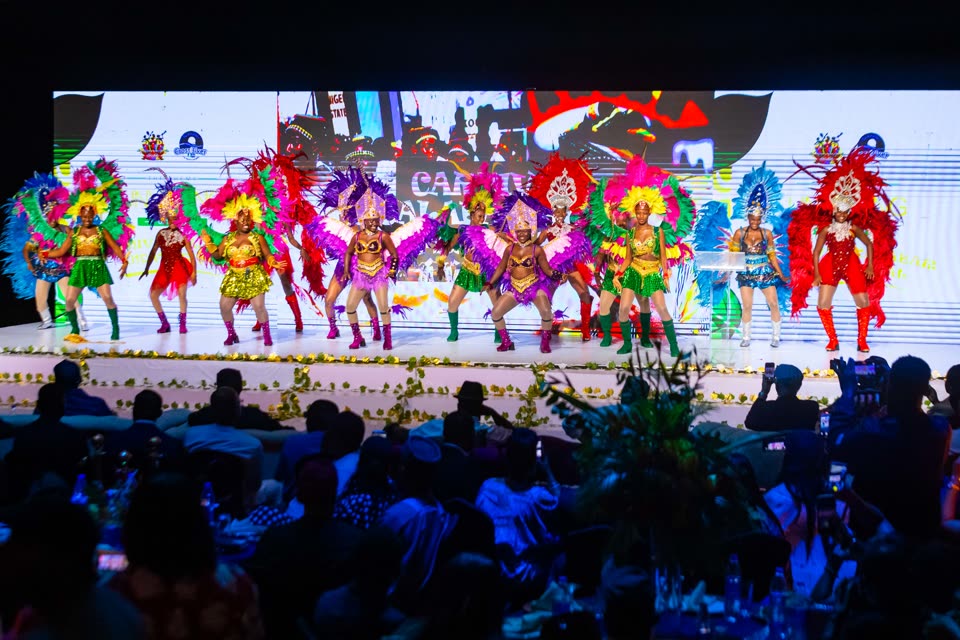
Calabar, the capital of Cross River State in the south-east, spends December on the street. The Calabar Carnival was started in the 2000s by the state government as a Christmas attraction and has become what the state and the federal broadcaster both call Africa's biggest street party — competing bands, costumes, a route through the city, and crowds that come from across Nigeria and beyond. In 2025 the state marked a twentieth anniversary and launched a Diaspora Band, an official slot for Cross River people living abroad to take part in the parade.
History of Calabar Carnival — National Institute for Cultural Orientation (NICO), Federal Ministry of Art, Culture and the Creative Economy
Christmas is the biggest journey of the Nigerian year, and the state plans for the casualties
Nigerian Christmas is a mass movement of people out of the cities and back to home towns and villages, down roads that are not built for it. The Federal Road Safety Corps runs an annual campaign for what Nigerians call the ember months — the four that end in -ber — and then a named operation across the holiday itself. Operation Zero ran from 15 December 2024 to 15 January 2025. In Niger State alone, over that month, the Corps recorded 47 crashes, 432 people involved, 205 injured and 46 killed.
The official Christmas message asks people to be security-conscious
Every December the Minister of the Interior announces the holidays and says something about the season. The 2025 message ran the way they tend to: Christians were urged to reflect on love, peace, humility and sacrifice, and then all citizens were asked to stay law-abiding and security-conscious, to be moderate in their celebrations, and to cooperate with the security agencies so that the festive period passes peacefully. A Christmas greeting from the state that includes a safety instruction is not a neutral formality, and it is the ordinary form of words.
Everybody goes home, and the Igbo have a phrase for it
The other half of the December journey is the reason for it. Nigerians who have lived in the cities for decades travel back to the village for Christmas, and the end of December fills every airport and every bus park with people doing it at once. Among the Igbo of the south-east the return is close to obligatory and has its own sentence — «anam ala ulo Disemba», I am going home for December. It is not a holiday trip. The weeks at home are when family meetings are held, when village and town-union business gets decided, and when the people who live elsewhere are all in one place long enough to agree anything.
Weeks of carol rehearsal, and then the Watchnight Service on the 31st
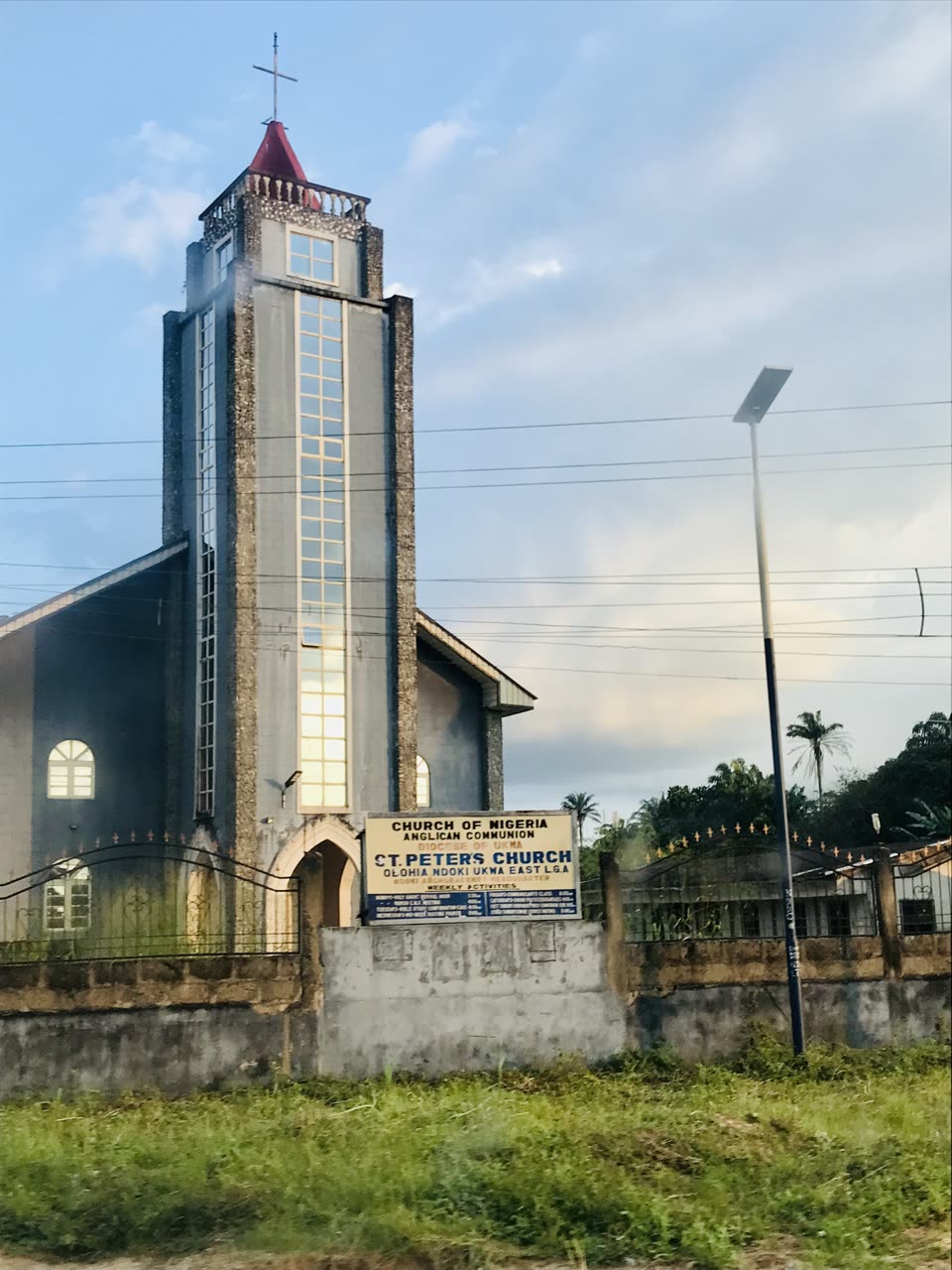
Church is the spine of the season for a great many Nigerian families, and it runs at both ends of the fortnight. Choirs begin rehearsing carols weeks before the 25th. Then on 31 December comes the Watchnight Service — the crossover — where families gather to pray and sing and count the old year out. Christmas Day is the feast; the crossover is the one that holds the room until midnight.
In the Igbo south-east, the masquerades come out while everyone is home
The December return is also when the village festivals happen, and some of them bring out the masquerades. For returnees that is part of the point: it is the entertainment that cannot be had in the city they came from. A masquerade is not a parade float. Mmanwụ is a religious institution with its own societies, its own secrecy and its own authority, and the fact that it appears in the same weeks as Christmas does not make it a Christmas custom.
Food moves sideways between houses all through the season. The modern form is the hamper — a basket of biscuits, wine, juice, spaghetti and sweets, sent between offices, families and neighbours. The older form is simpler and has outlasted it: a plate of rice and chicken carried next door. In many communities the expectation is that no household ends the day without receiving at least one.
Children are given Christmas money, and the amount is not the point
Nigerian children do not wait for a figure in a red suit; they wait for the adults. Over Christmas and the New Year, relatives and neighbours hand children cash — two hundred naira, five hundred, more — as a blessing for the year coming. The sums are small and the ritual is not. It is a gift-giving tradition with a named shape and no gift bringer attached to it at all.
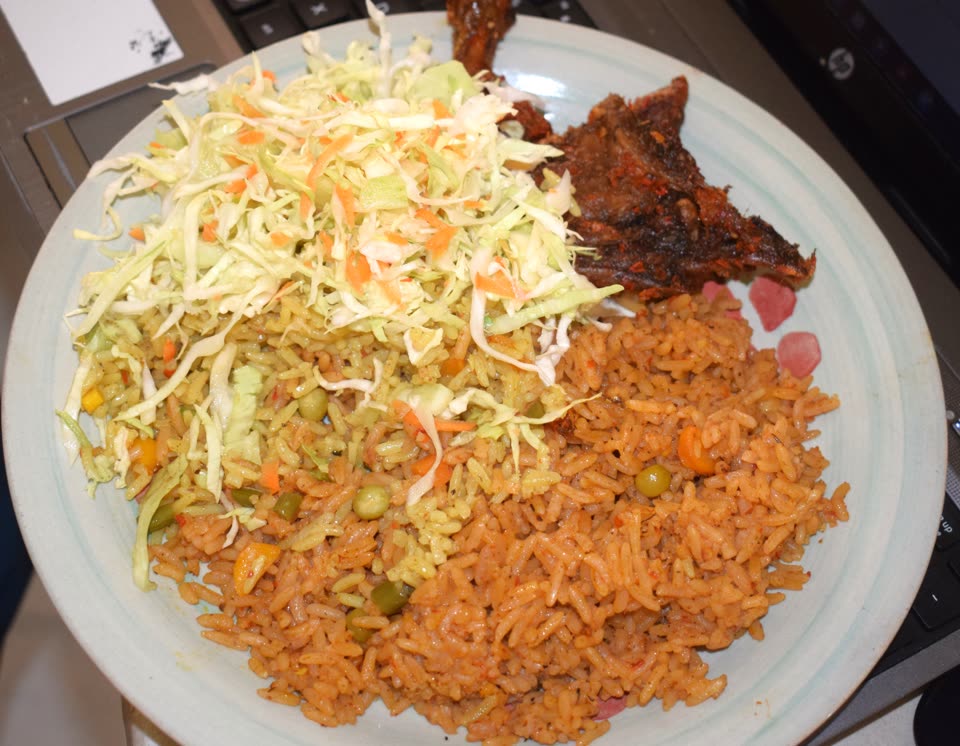
Ask a Nigerian what is being eaten on Christmas Day and the answer has not changed in a long time: jollof rice. It is orange-red from tomato, tatashe pepper, tomato paste, ginger and onion, cooked with long-grain parboiled rice, and it is served with dodo — fried plantain — and fried or grilled chicken and coleslaw. Nigerian writing about it does not treat it as one option among several. It is the thing the day is built around, and the rest of the table arranges itself behind it.
Jollof's sibling, and the reason a Nigerian Christmas plate usually has two rices on it. Fried rice is a party dish rather than an everyday one, and through the Christmas season it is one of the most popular things on the table. Households that cannot choose between the two do not choose — they are «both sometimes served together».
December is also a frying and baking season, done in bulk and ahead of time. Aunties gather to make chin chin, families fry puff-puff, mothers roll out dough for meat pies, and somebody is always put in charge of the drinks: zobo, kunu, or homemade Chapman. All of it is made in large batches and stored in big containers, so that whenever a visitor arrives there is something to bring out.
Widely repeated claims about Christmas in Nigeria that do not survive
checking. Each one says what is actually the case, because a correction
with nothing in its place leaves you worse off than before.
Contradicted
Boxing Day is a statutory public holiday in Nigeria, as it is in Britain.
What is actually the case. It is kept every year and it is not in the statute. The Public Holidays Act's Schedule lists seven named days and three Muslim festivals to be declared, and 26 December is none of them. It exists as a holiday because the President may appoint special days by public notice and the Minister of the Interior announces them each December — which is why the dates shift when Christmas falls at a weekend, and why Nigerians wait for the announcement rather than reading it off a law.
Jollof rice — the dish at the centre of Nigerian Christmas — is a Nigerian invention.
What is actually the case. Nigerian jollof is thoroughly Nigerian as it is cooked and eaten, and the Christmas plate it sits on belongs to nobody else. The NAME does not come from Nigeria. It is the name of the Wolof, and of the Jolof empire that ruled in what is now Senegal, Mali, the Gambia and Mauritania — some fifteen hundred miles west of Lagos. The ancestor dish is Senegalese: UNESCO inscribed Senegal's ceebu jën on its Representative List in 2021 and places its origin in the fishing communities of the Island of Saint-Louis. So the long-running «Jollof Wars» between Nigeria and Ghana are an argument about whose version is best, conducted by two countries that are both downstream of a third.
Nigeria's Christmas holidays move when the calendar is awkward. Because the Act lets the Minister alter a day when it would be «inexpedient» to keep it, and lets the President appoint others, the two days float: in 2022, when Christmas Day fell on a Sunday, the Federal Government declared Monday 26 and Tuesday 27 December as the holidays instead, with Monday 2 January for the New Year.
The Calabar Carnival's own website is now a gambling site. The organisers' domain, carnivalcalabar.com, still resolves and still answers, and what it serves is a Thai online-slots page: the registration lapsed and somebody else took it. The carnival is thriving — a twentieth anniversary, a new mascot, a diaspora band — and the address it was documented at belongs to someone else.
In Yoruba, Father Christmas is Baba Kérésì — literally Christmas Father. The BBC's own Yoruba service uses it in running prose, captioning a photograph «Eeyan kan n wo aworan baba keresi», someone looking at a picture of Father Christmas. The Yoruba for Christmas itself is Kérésìmesì, and the Hausa is Kirsimeti. All three are the English word taken in and reshaped by the language that borrowed it.
The Public Holidays Act Schedule names «Democracy Day (29th May)», and that is not the date Nigeria keeps. The Presidency announced the move on 6 June 2018, in Muhammadu Buhari’s own statement: after due consultations the Federal Government had decided that «henceforth, June 12th will be celebrated as Democracy Day» — a date which «in future years will replace May 29th as a National Public Holiday in celebration of Nigeria Democracy Day». It is declared on 12 June now: for 2026 the Minister of Interior declared «Friday, June 12, 2026, a public holiday in commemoration of Democracy Day». The published Schedule still carries the old date.
Every claim carries its own citation. They are collected below, so you
can see what the page rests on and how much of it comes from where.
BBC News Yorùbá — Christmas photo gallery — BBC World Service (Yoruba language service). Retrieved 2026-10-17. archived 10 January 2026The caption is «Àkọlé àwòrán, Eeyan kan n wo aworan baba keresi».«Kirsimeti» is from BBC News Hausa's topic page at bbc.com/hausa/topics/cwyvvnd9yzkt.
Christmas In Igboland: The Igbo Annual Return — Connect Nigeria. Retrieved 2026-10-17. archived 19 January 2025«Chances are that you might have heard a conversation by Igbo people about this, where something like- "anam ala ulo Disemba," which by interpretation means, "I am going home for December" was spoken.»And on what the weeks are for: «the December annual return presents an opportunity for having a good number of people to be available for family/kindred, village, community-wide, and Development Unions/Associations meetings to be held and decisions on how best to move forward agreed.»
Federal Government Declares June 12, 2026 Public Holiday In Commemoration Of Democracy Day — Federal Ministry of Information and National Orientation (fmino.gov.ng), 11 June 2026. Retrieved 2026-10-20. archived 15 July 2026The current practice, from the ministry that announces it: «The Federal Government of Nigeria has declared Friday, June 12, 2026, a public holiday in commemoration of Democracy Day», announced by the «Honourable Minister of Interior, Dr. Olubunmi Tunji-Ojo, on behalf of the Federal Government» and e-signed by the Permanent Secretary of the Ministry of Interior.
History of Calabar Carnival — National Institute for Cultural Orientation (NICO), Federal Ministry of Art, Culture and the Creative Economy. Retrieved 2026-10-17. archived 14 June 2026«it all begun 2004, when the governor of Cross River, Mr Donald Duke, had a vision of making his state the hub for tourism and hospitality in Nigeria and in Africa.»This is a federal cultural agency and the page is nonetheless poor: the prose reads as a machine rewrite of something else — «has arrive a long way», «the carnival directed to encompass more facets of localized heritage», «melodies presentation from both localized and worldwide creative persons».
Global Allure of Nigeria’s Detty December — NIDCOM Newsletter, Vol. 25 — Nigerians in Diaspora Commission (NIDCOM), a federal commission. Retrieved 2026-10-20. archived 10 March 2025Food fairs in Lagos, Abuja and Port Harcourt, «savouring dishes like Nigerian jollof rice, Fufu, Amala and succulent suya at bustling food fairs», in a month whose own description is «Nigerian December offers a plethora of events, with highlights around Christmas and New Year’s».The term is the commission’s own: «a viral phenomenon known as "Detty December."», and «This trendy term, derived from the word "dirty,"». It is about the diaspora as much as the food — «It’s also a time when the diaspora returns home, reuniting with loved ones and reconnecting with their roots» — and it carries the scale: Lagos State saw «$71.6 million generated in revenue across its tourism, hospitality, and entertainment sectors» from «approximately 1.2 million tourists, including many Nigerians returning home and international visitors» in 2024.
Public Holidays Act (Cap. P40, Laws of the Federation of Nigeria) — Policy and Legal Advocacy Centre, Laws of Nigeria. Retrieved 2026-10-17. archived 4 January 2026The Act is from 1979 — «1979 No. 31», commencing 1 January 1979, with later amendments noted as «1984 No. 26» and «2000 No. 8» — and it opens by saying what it is for: «An Act to repeal all the State Laws on public holidays and to make provisions for the whole of the Federation for public holidays and other related matters.» Then: «The days mentioned in the Schedule to this Act shall be kept as public holidays throughout Nigeria.»In this version the Schedule runs, in full and in order: New Year's Day, Good Friday, Easter Monday, Workers' Day (1st May), Democracy Day (29th May), National Day (1st October), Christmas Day — and then three entries of a different kind, «Such day as the Minister may declare to be a public holiday in celebration of» the Muslim festival of Id el Fitr, of Id el Kabir, and of the birthday of the Prophet Muhammed (Id el Maulud) — numbered 8, 9 and 10, which this copy prints as «9.» and «10.» against the last two.Note also that this copy still prints Democracy Day as «29th May».Nigerians have had it every year for decades and it is not one of the days this Act fixes; it arrives each December by declaration, under the power in section 2(1) for the President to «appoint a special day to be kept as a public holiday».The Act also carries a section headed «Power to alter day appointed to be a public holiday», letting the Minister move a day «when it appears to him in any special case that in any year it is inexpedient» to keep it, and its arrangement of sections names a further provision about additional days «when public holidays fall on Fridays to Mondays».
10 Timeless Nigerian Christmas Traditions — Pulse Nigeria. Retrieved 2026-10-17. archived 10 September 2026«One of the oldest and most beloved Nigerian Christmas traditions is travelling home for the holidays. No matter how long someone has lived in the city, the village remains the emotional centre of Christmas. The end of December sees an annual migration that clogs every airport, fills every bus park, and creates traffic that almost deserves its own documentary.»
Top 10 dishes for the festive season — Punch (punchng.com). Retrieved 2026-10-17. archived 14 January 2024«Jollof rice is one of the best delicacies every Nigerian home does not miss for the Christmas celebration. This dish has earned its place in the culinary hall of fame as it is widely acknowledged that no celebration, be it Christmas or any other occasion, is truly complete without it. It is often served with dodo (fried plantain), grilled or fried chicken, steak, and coleslaw. Jollof rice ingredients include long-grain parboiled rice, chicken, tomatoes, tatashe peppers, tomato paste, ginger, and onion.»
Gov Otu Unveils Mascot, Another Band Towards Calabar Carnival's 20th Anniversary — Radio Nigeria South South, Federal Radio Corporation of Nigeria. Retrieved 2026-10-17. archived 12 June 2026Dated 19 November 2025: «Cross River State Governor, Prince Bassey Otu has officially unveiled the Mascot for the 20th anniversary of Calabar Carnival, Africa's Biggest Street Party scheduled for December 2025. The Governor also launched a new band called Carnival Calabar Diaspora Band which serves as the official platform for the people of Cross River in the diaspora and friends of the State to participate in the annual event.»The National Institute for Cultural Orientation dates the carnival to 2004 under Governor Donald Duke; the «20th anniversary» of December 2025 counts from 2006.
President Buhari Declares June 12 the new Democracy Day — The State House, Abuja — Presidency of the Federal Republic of Nigeria, 6 June 2018. Retrieved 2026-10-20. archived 15 August 2026The statement opens «For the past 18 years, Nigerians have been celebrating May 29th, as Democracy Day», and then gives the decision: «after due consultations, the Federal Government has decided that henceforth, June 12th will be celebrated as Democracy Day». The 2018 investiture of MKO Abiola would fall on «a date which in future years will replace May 29th as a National Public Holiday in celebration of Nigeria Democracy Day».The press reports a Public Holidays Act amendment assented to on 10 June 2019; the Schedule as published by the Policy and Legal Advocacy Centre still prints «Democracy Day (29th May)».
Ceebu Jën, a culinary art of Senegal — UNESCO, Representative List of the Intangible Cultural Heritage of Humanity. Retrieved 2026-10-17. archived 24 September 2026«Inscribed in 2021 (16.COM) on the Representative List of the Intangible Cultural Heritage of Humanity», nomination file No. 01748, decision 16.COM 8.b.36, submitted by Senegal's Direction du Patrimoine Culturel. The description opens: «Ceebu jën is a dish that originated in the fishing communities on the Island of Saint-Louis in Senegal. Although recipes vary from one region to the next, the dish is typically made with fish steak, broken rice, dried fish, mollusc and seasonal vegetables.»
FRSC Launches 2025 Ember Months Campaign in Niger State — Voice of Nigeria (VON), the Federal Government's external broadcaster. Retrieved 2026-10-17. archived 4 October 2026The campaign and its purpose: the sector command «flagged off the 2025 Ember Months Public Enlightenment and Sensitisation Campaign… aimed at reducing road crashes and ensuring safer roads during the festive seasons», under the theme «Take Responsibility for Safety: Stop Distracted Driving».The figures, quoted exactly: «Sharing statistics from the 2024 "Operation Zero" exercise conducted between December 15, 2024, and January 15, 2025, Sa'adu revealed that 46 people lost their lives, 205 were injured, and 432 were involved in 47 reported crashes across the state.»