Christmas Elsewhere

A country-by-country atlas of how Christmas is actually kept

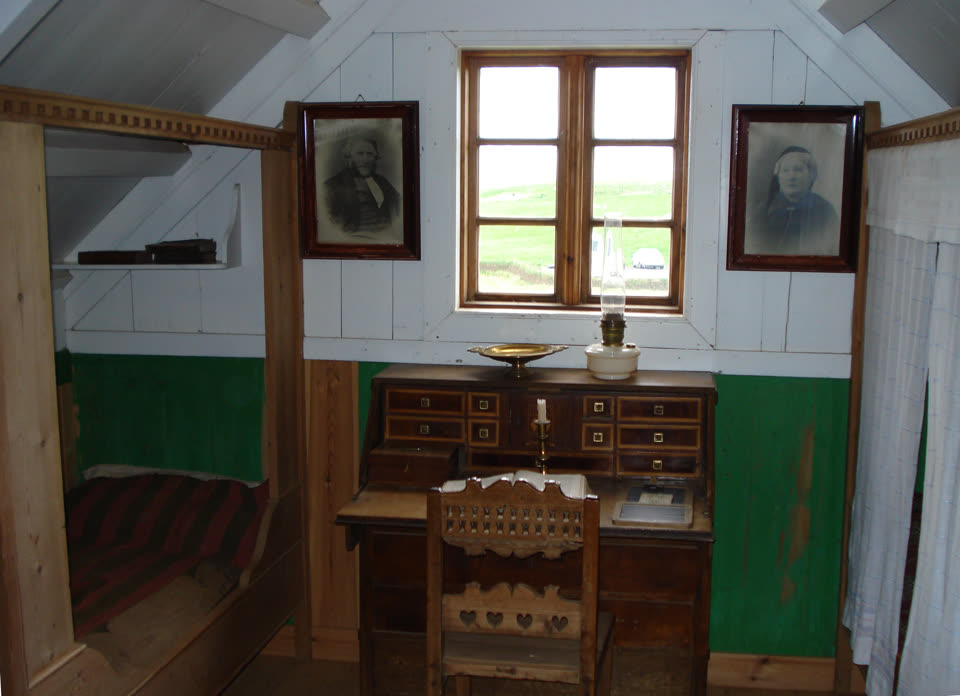
A snowy Reykjavik street at night: a slush-covered road between timber and corrugated-iron houses, cars under sodium streetlamps, two people by a car, and the tower of Hallgrimskirkja at the top of the hill strung with Christmas lights and a star.
Petr Kraumann · CC BY 3.0

All countdowns · Northern Europe

Christmas in Iceland

Christmas falls on
25 DecemberGregorian calendar
How it is kept
A public holiday
A day off work
YesHverjir eru lögbundnir frídagar okkar Íslendinga? (What are our statutory holidays?) — Vísindavefurinn (The Science Web), University of Iceland — answer by Eyja Margrét Brynjarsdóttir, professor of philosophy and applied ethics
Who brings the presents
Jólasveinarnir — the thirteen Yule Ladsjólasveinarnir · arrives 12 December
—days
—hrs
—min
—sec

Next: Friday 25 December 2026

How to say it

  • Gleðileg jól

    say it: KLEH-thih-lek YOH-ul

    A synthesised voice — not a recording of a person — saying Gleðileg jól in is-IS.

    THE FIRST SOUND IS A K, NOT A G. Icelandic initial g is an unaspirated [k], which the IPA above makes explicit, and every English guide respells this as "GLEH-thi-leg". The ð is the th of "the", voiced. And jól is two beats — [jouːl], "YOH-ul" — not the single syllable "jole".

    gleðileg jól — Icelandic entry — Wiktionary

How Christmas is kept

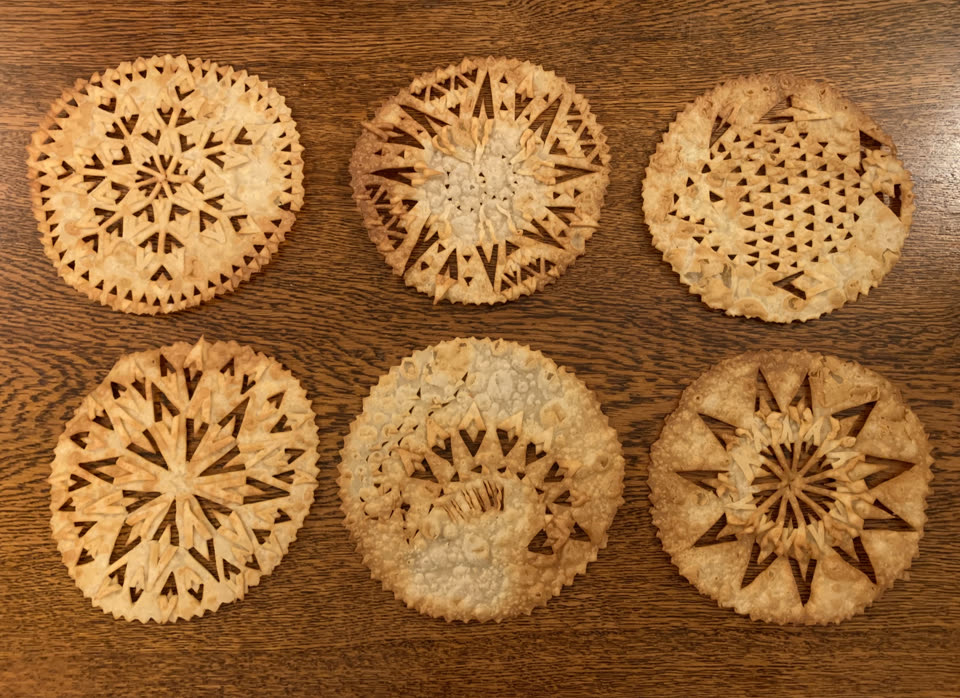
A room in the turf farm at Glaumbaer: a wooden writing bureau under a small window with its flap down and an open book on it, a carved chair with heart cut-outs, an oil lamp and a brass candlestick, framed portraits either side of the window, and a box bed with a striped blanket in the alcove to the left.
TommyBee · Public domain

Christmas starts at six o'clock on Christmas Eve

Not at midnight and not on the morning of the 25th. At 18:00 on 24 December the national broadcaster rings the church bells and Christmas is declared open; the meal and the presents follow that evening. 26 December, annar í jólum, is the night everyone goes out.

The Encyclopaedia of Icelandic Holidays — The Reykjavík Grapevine — Haukur S. Magnússon

Thirteen Yule Lads and a shoe in the window

From 12 to 24 December children put a shoe on the windowsill each night. A lad comes down from the mountains, one per night, and leaves a sweet or a small thing — or a rotten potato, if the day went badly. They are named for what they steal: the spoon-licker, the pot-scraper, the sausage-swiper, the one who sniffs at doorways for baking, the one who peers through windows.

Jólasveinar — the thirteen Icelandic Yule lads — Arctic Portal, Akureyri, Iceland

Grýla, who is older than the Christmas she belongs to

An ogress in the mountains with a bag on her back, who takes children who misbehave and boils them. Terry Gunnell, head of folkloristics at the University of Iceland, puts her in writing by about 1300 — but not at Christmas. She was a personification of winter closing in, and of a landscape Icelanders understood themselves to be tenants of rather than owners. Medieval verses have her coming down from the outer fields with forty tails, a knife in her hand, for the children who cry for meat during Lent.

Why Iceland's Christmas Witch Is Much Cooler (and Scarier) Than Krampus — Smithsonian Magazine — Alex Palmer

The Yule Cat, which eats you for not having new clothes

A giant cat that takes anyone who does not get a new piece of clothing before Christmas. The practical reading is not subtle: new wool meant the autumn work was done, and a household that had not finished its wool had somebody in it who had not worked.

Why Iceland's Christmas Witch Is Much Cooler (and Scarier) Than Krampus — Smithsonian Magazine — Alex Palmer

The Húsagatilskipun of 1746, which is Danish

Iceland was ruled from Copenhagen, and the decree everyone cites is a Danish royal one: Christian VI issued the Húsagatilskipun at Hirschholm on 3 June 1746, and it was laid before the Alþingi the year after. Read in full, it is an ordinance about how a household should be run, and two of its clauses matter more than the one it is famous for. The fourth requires parents who can read — or a servant who can — to start children reading "saa snart Børn ere 5 til 6 Aar gamle", as soon as they are five or six. The fifth requires that in every house where anyone can read, a chapter be read aloud "i det mindste een Gang om Dagen, helst om Vinteren" — at least once a day, and PREFERABLY IN WINTER. Where nobody in the house could read, those who could be spared were to walk to the next farm where somebody could. Around 1740 only about a third of Icelandic adults read well. This is the decree that changed that, and it is why the same document turns up at the other end of this record under the book flood.

Anordning om Hustugt paa Island, Hirschholm 3 June 1746 — in Lovsamling for Island, vol. 2 (1721–1748), pp. 606–619 — Oddgeir Stephensen & Jón Sigurðsson, Copenhagen 1853; scanned by the National and University Library of Iceland

The Santa-fication, and the museum undoing it

Through the twentieth century the lads were softened into Santas: bellies, red-and-white fur, and gifts instead of theft, with the Dutch shoe custom arriving alongside. The National Museum of Iceland has spent years pushing back — putting them into seventeenth- and eighteenth-century rags in undyed local wool. Gunnell's description of the intended effect is "aged Hell's Angels without bikes". Actors play them at the museum through the thirteen days.

Why Iceland's Christmas Witch Is Much Cooler (and Scarier) Than Krampus — Smithsonian Magazine — Alex Palmer

Þorláksmessa, 23 December

The feast of Saint Þorlákur Þórhallsson, bishop of Skálholt, who died on 23 December 1193 and was made patron saint of Iceland by John Paul II in 1984. It is kept by eating kæst skata — fermented skate — at lunch, and the smell is the point of half the stories about it.

Thorláksmessa — Gastro Obscura — Atlas Obscura (Gastro Obscura) — Rachel Rummel

Jólabókaflóðið — the Christmas book flood

Books are the default Christmas present, and the publishing year is built around it. Every household gets Bókatíðindi, the Publishers' Association catalogue of the year's new books, and most Icelandic hardbacks are timed to appear in the run-up. Books are unwrapped on 24 December and read that night, in bed, with chocolate. It began with a shortage: after the war Iceland rationed imports hard, and paper was one of the few things that got through.

The Christmas Book Flood: Iceland's Literature-Loving Holiday Tradition — Mental Floss — Shaunacy Ferro

Þrettándinn, 6 January

The thirteenth day, and the end of it — torch processions, bonfires and fireworks. Christmas in Iceland is not a day, it is a fortnight with a gate at each end.

The Encyclopaedia of Icelandic Holidays — The Reykjavík Grapevine — Haukur S. Magnússon
What is eaten

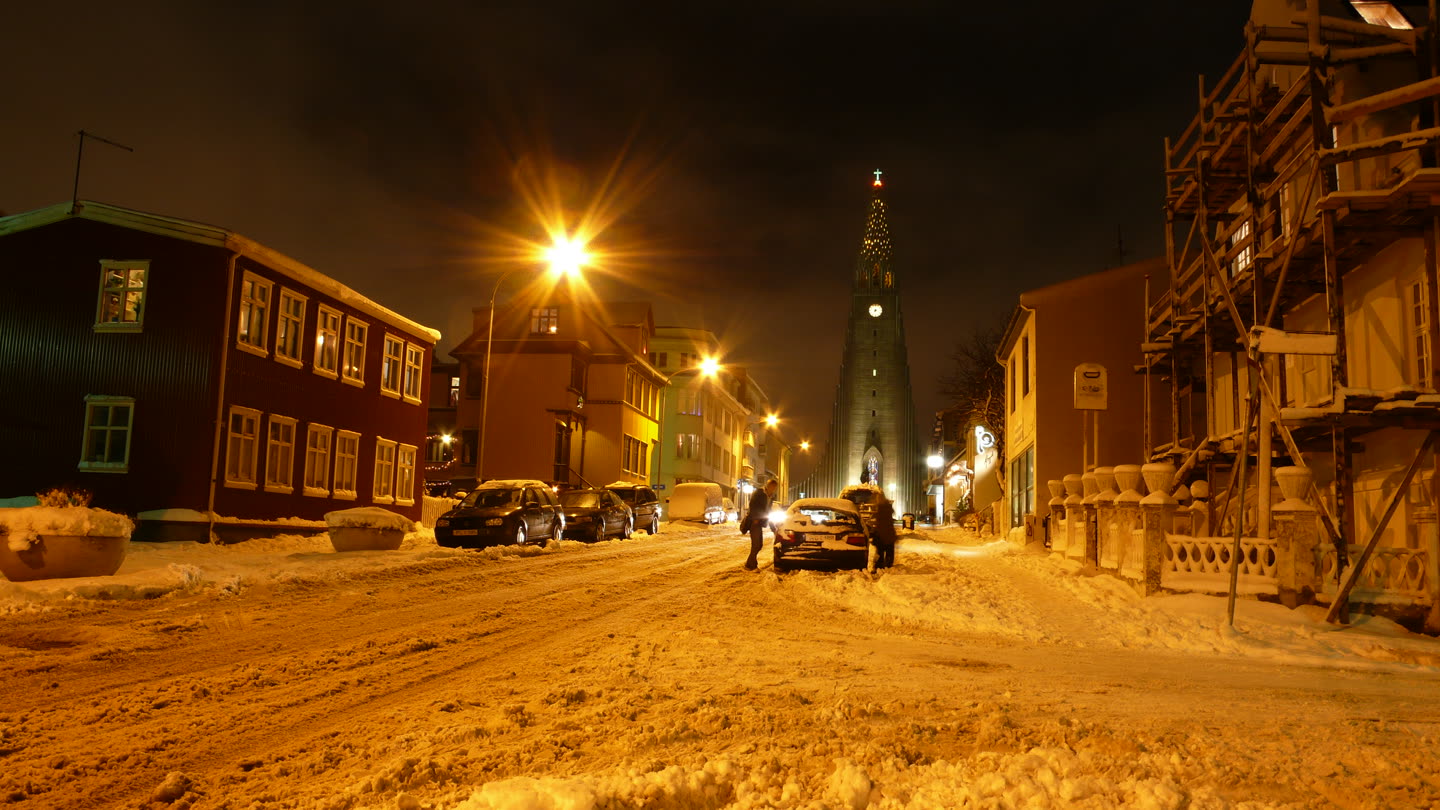
Six discs of laufabraud laid out on a dark wooden table, each cut by hand into a different fretwork pattern of triangles and stars, fried until crisp.
Surya Mjöll · CC BY 4.0

Hangikjöt

"Hung meat" — a leg of lamb hung in a smokehouse over a fire kept burning for two or three weeks, then sliced off the bone and served with potatoes, peas, carrots and white sauce. It is eaten by roughly nine Icelanders in ten at Christmas. It was traditionally smoked over dung; birch is the usual fuel now.

Food of Iceland: Hangikjöt — The Reykjavík Grapevine — Sam O'Donnell

Laufabrauð

Leaf bread: a disc of dough rolled until you can read through it, cut into fretwork with a knife or a laufabrauðsjárn, and deep-fried until it snaps. It comes from the north, and the ornament is a poverty story — flour was imported and scarce, so the little you had was made to look like as much as possible. First written down in 1736, in Jón Ólafsson of Grunnavík's Icelandic–Latin dictionary, where it is described as a kind of sweet. Families still cut a batch together on the first Sunday of Advent.

Icelandic Leaf Bread Traditions and History — Matador Network — Elisabeth Sherman

Kæst skata

Skate, fermented for weeks in a sealed container and then boiled, eaten at lunch on 23 December with buttered rye bread, potatoes and brennivín. Skate excretes uric acid through its skin, which preserves it and produces an ammonia smell that gets into the walls. It is eaten because Catholics kept meatless days before Christmas and, in an Icelandic winter, this was what there was.

Thorláksmessa — Gastro Obscura — Atlas Obscura (Gastro Obscura) — Rachel Rummel

Worth knowing

The thirteen Yule Lads are named for petty theft and nothing else. Spoon-Licker, Pot-Scraper, Bowl-Licker, Sausage-Swiper, Skyr-Gobbler, Candle-Stealer — and Candle-Stealer is the worst of them, because tallow candles were edible and a child's candle was worth stealing.

Jólasveinar — the thirteen Icelandic Yule lads — Arctic Portal, Akureyri, Iceland

Iceland did not get a Christian word for Christmas. Jól was already the name of the midwinter sacrifice, the solstice feast, in heathen practice; when Christianity reached the north and the birth of Christ was marked at about the same time of year, the old name simply moved across to the new festival. Faroese kept jól, and Danish, Norwegian and Swedish kept jul.

Hvaðan kemur orðið „jól“ og úr hverju er það myndað? (Where does the word jól come from, and what is it formed from?) — Vísindavefurinn (The Science Web), University of Iceland — answer by Guðrún Kvaran, professor

The names of the thirteen Yule Lads are not from the famous 1932 book. They appear together in Jón Árnason's collection of folk tales in 1862, seventy years earlier. What 1932 added was fame and a face: Jóhannes úr Kötlum's poem, and Tryggvi Magnússon's drawings, which are the picture every Icelander has in their head.

Hvað getið þið sagt mér um jólasveina? (What can you tell me about the Yule Lads?) — Vísindavefurinn (The Science Web), University of Iceland — answer by Gróa Finnsdóttir, librarian, and Árni Björnsson, dr. phil. in cultural history

What people get wrong

Widely repeated claims about Christmas in Iceland that do not survive checking. Each one says what is actually the case, because a correction with nothing in its place leaves you worse off than before.

Oversimplified

The Yule Lads are an ancient pagan tradition — thirteen sons of the ogress Grýla, handed down from the Middle Ages.

What is actually the case. Every part of that sentence is separately true and the assembly is modern. Grýla is in writing by about 1300, but she had nothing to do with Christmas then — Terry Gunnell of the University of Iceland dates her connection to the holiday to around the early nineteenth century, and says the Yule Lads and the Yule Cat were standalone Christmas figures until then, with no family relationship to her at all. The family is the newest part of it. The thirteen names every Icelandic child can recite are older than they are usually given credit for: they first appear together in Jón Árnason's Þjóðsögur of 1862. What is ninety-odd years old is the version everybody actually knows — Jóhannes úr Kötlum's 1932 poem Jólasveinarnir, in the collection Jólin koma, which made them famous, and Tryggvi Magnússon's illustrations in the same book, which fixed how they look. The tradition is genuinely old, the picture in everyone's head is not, and the two get told as one.

Why Iceland's Christmas Witch Is Much Cooler (and Scarier) Than Krampus — Smithsonian Magazine — Alex Palmer

Oversimplified

Iceland has thirteen Santa Clauses.

What is actually the case. They became Santa-like, recently, and it is being actively reversed. Through the twentieth century the lads acquired red-and-white fur, bellies and the habit of leaving presents instead of stealing food, under pressure from the American Santa and Danish Christmas gnomes; the shoe on the windowsill is borrowed from the Dutch. The National Museum of Iceland has spent years pulling them back to seventeenth- and eighteenth-century rags in undyed wool. They are not thirteen Santas. They are thirteen thieves who were dressed up as Santas within living memory and are being undressed again.

Why Iceland's Christmas Witch Is Much Cooler (and Scarier) Than Krampus — Smithsonian Magazine — Alex Palmer

Contradicted

In 1746 the Icelandic government banned parents from frightening children with the Yule Lads.

What is actually the case. The ordinance has now been read in full and it does not mention the Yule Lads, Grýla, trolls, ghosts, or frightening children anywhere. The decree is real and everything else about it holds: the Húsagatilskipun, issued by Christian VI of DENMARK at Hirschholm on 3 June 1746 and laid before the Alþingi the following year — not by an Icelandic government, which did not exist in the sense the claim implies. What the clause everyone points at actually prohibits, in the Danish original, is "usommelig Snak og Skjemt, Sværen og Banden, forfængelige Historier, eller saa kaldede Bøger, og letfærdige Digte eller Rime" — unseemly talk and jest, swearing and cursing, vain histories or so-called books, and frivolous poems or rhymes. It is a general ban on idle entertainment in a Christian household. It names nothing folkloric. The only superstition clause in the whole ordinance is the thirty-first, and it is about runes and carvings used at fishing. So: a Danish household-discipline ordinance of 1746 did ban telling idle tales, and it is widely reported as a ban on the Yule Lads. The ordinance does not say so.

Anordning om Hustugt paa Island, Hirschholm 3 June 1746 — in Lovsamling for Island, vol. 2 (1721–1748), pp. 606–619 — Oddgeir Stephensen & Jón Sigurðsson, Copenhagen 1853; scanned by the National and University Library of Iceland

Sources

Every claim on this page carries its own citation. They are collected here so you can see what this page is built on, and how much of it comes from where.

  1. Jólasveinar — the thirteen Icelandic Yule lads — Arctic Portal, Akureyri, Iceland. Retrieved 2026-09-19.Iceland-based publisher. Gives the thirteen names, English glosses and arrival dates, the shoe custom and the rotten potato. Its sentence about departures is ambiguous — it says the final visitor leaves on Christmas Day, which cannot be right if each stays thirteen days. The 6 January departure of the LAST lad is the usual account and is consistent with Þrettándinn being the thirteenth day.
  2. Thorláksmessa — Gastro Obscura — Atlas Obscura (Gastro Obscura) — Rachel Rummel. Retrieved 2026-09-19.
  3. Icelandic Leaf Bread Traditions and History — Matador Network — Elisabeth Sherman. Retrieved 2026-09-19.Published 21 December 2020. The 1736 dictionary reference is the article's; the dictionary is Jón Ólafsson úr Grunnavík's, which the article does not name — that attribution comes from corroborating searches and should be checked before it is spoken.
  4. The Christmas Book Flood: Iceland's Literature-Loving Holiday Tradition — Mental Floss — Shaunacy Ferro. Retrieved 2026-09-19.Updated 11 December 2024. Quotes Icelandic writer Alda Sigmundsdóttir on the bed-and-chocolate part. It sources the Bókatíðindi detail to Reader's Digest rather than to the Publishers' Association directly, so the catalogue's November distribution is second-hand here. The 1944 first edition is widely reported and is not stated in this article.
  5. Anordning om Hustugt paa Island, Hirschholm 3 June 1746 — in Lovsamling for Island, vol. 2 (1721–1748), pp. 606–619 — Oddgeir Stephensen & Jón Sigurðsson, Copenhagen 1853; scanned by the National and University Library of Iceland. Retrieved 2026-09-30.THE PRIMARY TEXT, read in full at last. The Danish original as printed in the authoritative Danish-Icelandic statute collection, fourteen pages, thirty-odd numbered clauses. Searched end to end for trold, spøgelse, skræmme, forskrække, bussemand, nisse, jule, Grýla and overtro. Every folklore term returns ZERO. The single hit for Overtroe is clause 31 and concerns 'saakaldede Runer og Ristinger' — runes and carvings used at fishing.
  6. Why Iceland's Christmas Witch Is Much Cooler (and Scarier) Than Krampus — Smithsonian Magazine — Alex Palmer. Retrieved 2026-09-19.Published 20 December 2017. Extended direct quotes from Terry Gunnell, University of Iceland, and from illustrator Brian Pilkington, who draws the figures for the National Museum. This is the single most load-bearing source in the record — the whole correction rests on it.
  7. The Encyclopaedia of Icelandic Holidays — The Reykjavík Grapevine — Haukur S. Magnússon. Retrieved 2026-09-19.Published 17 December 2014. Icelandic English-language paper. The six o'clock bells are its wording.
  8. Food of Iceland: Hangikjöt — The Reykjavík Grapevine — Sam O'Donnell. Retrieved 2026-09-19.Published 11 October 2019. The 90% figure is the article's and carries no citation of its own — treat it as a reported figure, not a measurement.
  9. Hverjir eru lögbundnir frídagar okkar Íslendinga? (What are our statutory holidays?) — Vísindavefurinn (The Science Web), University of Iceland — answer by Eyja Margrét Brynjarsdóttir, professor of philosophy and applied ethics. Retrieved 2026-09-19.Published 12 June 2001. Statutory holidays run on Law no. 88/1971 (the 40-hour working week) and Law no. 32/1997. 25 December and 26 December are full statutory holidays; 24 December is a half-day from 13:00, as is 31 December. Classed as holidays of the national church. An Icelandic-language source from the national university, which is what the record wanted rather than an English aggregator.
  10. Hvað getið þið sagt mér um jólasveina? (What can you tell me about the Yule Lads?) — Vísindavefurinn (The Science Web), University of Iceland — answer by Gróa Finnsdóttir, librarian, and Árni Björnsson, dr. phil. in cultural history. Retrieved 2026-10-01.Árni Björnsson — who wrote Saga daganna, the standard work on the Icelandic calendar — and Gróa Finnsdóttir, for the University of Iceland. "Í Þjóðsögum Jóns Árnasonar (1862) koma fyrst fyrir nöfn jólasveinanna 13 sem nú er þekktastir", and on the poem: "Ekki fór miklum sögum af þeim fyrr en Jóhannes úr Kötlum samdi kvæði um þá sveina ... og Tryggvi Magnússon myndskreytti árið 1932."
  11. Hvaðan kemur orðið „jól“ og úr hverju er það myndað? (Where does the word jól come from, and what is it formed from?) — Vísindavefurinn (The Science Web), University of Iceland — answer by Guðrún Kvaran, professor. Retrieved 2026-10-01.Guðrún Kvaran, professor, for the University of Iceland: "Orðið jól kemur þegar fyrir í heiðnum sið og var þá notað um miðsvetrarblót, sólhvarfahátíð. Síðar þegar kristni barst til Norðurlanda og fæðingar Krists var minnst á svipuðum tíma færðist heitið á heiðnu hátíðinni yfir á þá kristnu." The Nordic cognates are hers too.
  12. gleðileg jól — Icelandic entry — Wiktionary. Retrieved 2026-09-19.Community-edited, and used here for the IPA only.