Christmas Elsewhere

A country-by-country atlas of how Christmas is actually kept

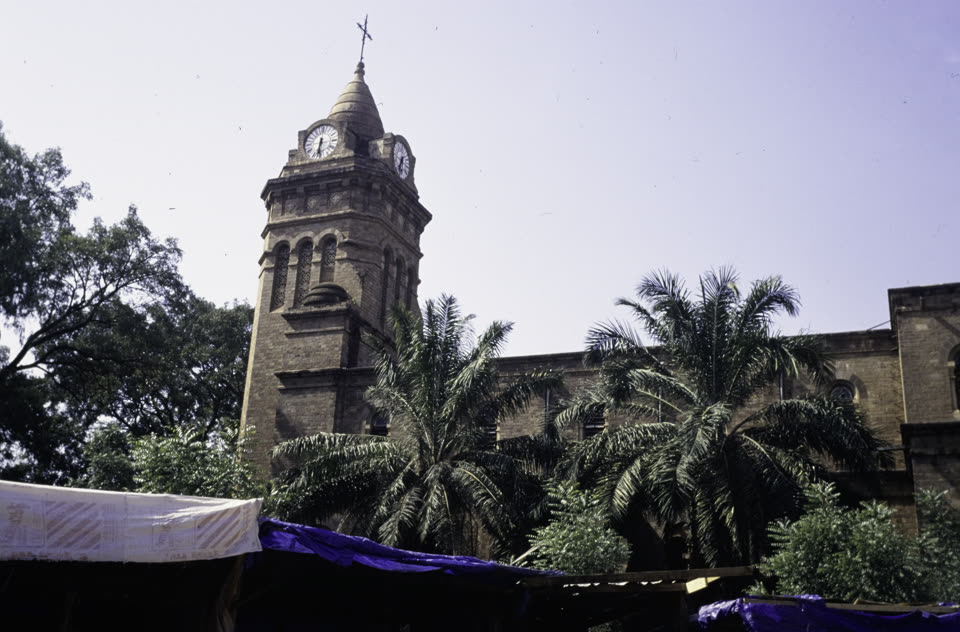
The brick clock tower of the Sacré-Cœur cathedral in Bamako, rising behind a stand of coconut palms on a city street in 2001. The tower is plain red-brown brick with a white clock face near the top and a slender spike above its conical cap. On the left, in a walled garden of clipped hedges and bougainvillea, stands a tall white monument in the shape of a stylised cross. The right half of the frame is the street: a kerb of bare red earth, pedestrians walking away from the camera, one in a long white boubou, a white pickup and a motorbike, and a glass-fronted office block beyond. The sky is pale with haze and the photograph has the soft grain of colour film.
Upyernoz · CC BY 2.0

All countries · Western Africa

Christmas in Mali

Christmas falls on
25 DecemberGregorian calendar
A public holiday
YesLoi n°05-040/ du 22 juillet 2005 relative aux fêtes légales en République du Mali — Journal officiel de la République du Mali, 46e année, n°25, 10 septembre 2005, pp. 965–966
—days
—hrs
—min
—sec

Next: Friday 25 December 2026

When is Christmas in Mali?

Christmas Day in Mali is 25 December. It is a public holiday.

How to say it

  • French

    Joyeux Noël

    Joyeux Noël

    say it: zhwa-YUH no-EL

    A synthesised voice — not a recording of a person — saying Joyeux Noël in fr-FR.

    French is Mali’s official language and the one the Malian press and the church use for Christmas. Bambara is the language most people speak at home.

    Au Mali, chrétiens et musulmans unis dans la joie de Noël — Studio Tamani (Fondation Hirondelle), Bamako, 25 December

How Christmas is kept

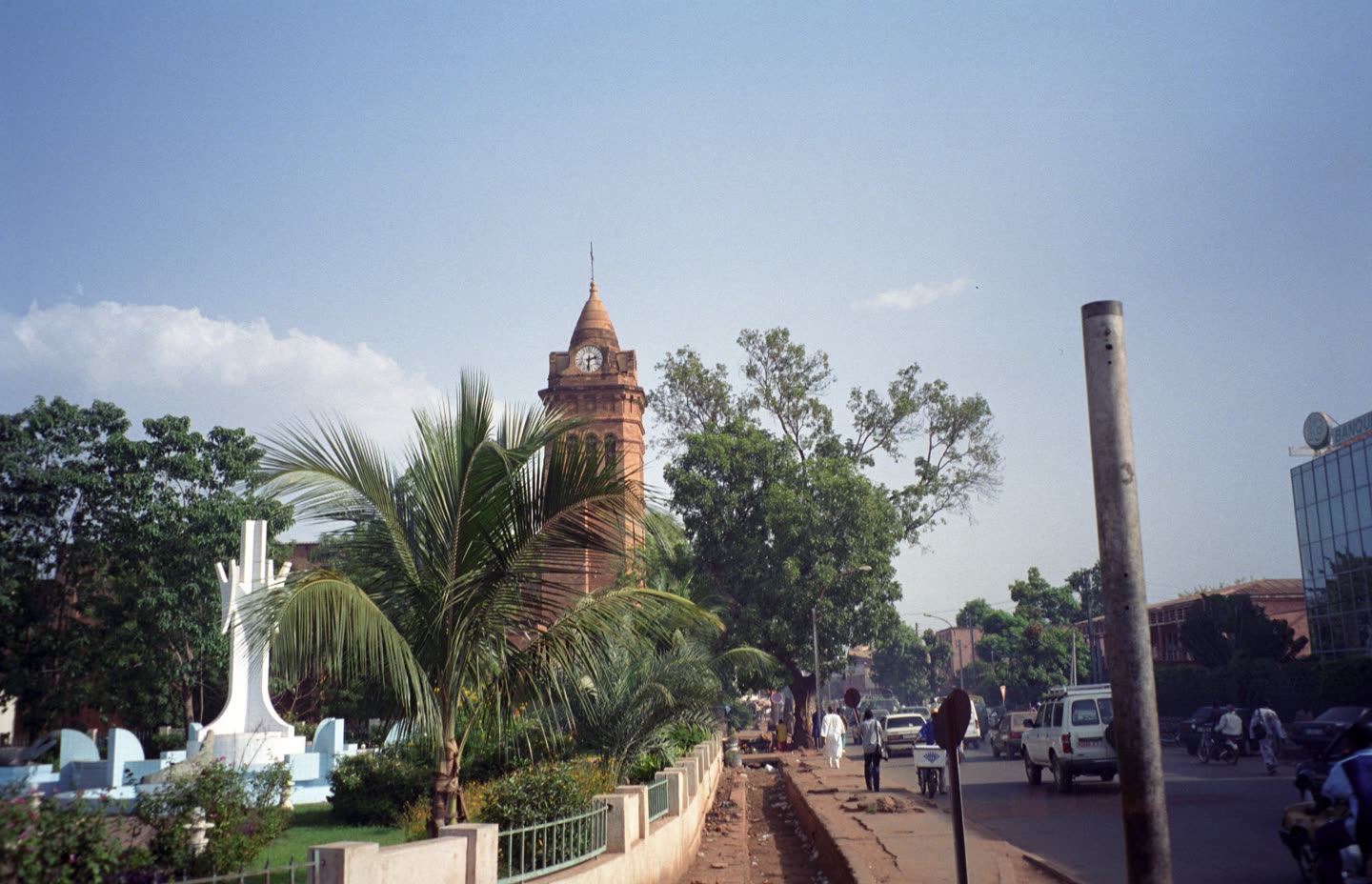
The bell tower of the Sacré-Cœur cathedral in Bamako, photographed from below in November or December 1993. The tower is grey dressed stone: two clock faces are in view, above them a belfry stage of tall louvred openings under round heads, and on top a small ribbed dome carrying a plain iron cross. The nave runs away to the right behind a line of oil palms, its windows square-headed and grilled, with one round-arched window at the far end. Across the bottom of the frame are the awnings of market stalls — a sheet of pale printed sacking on the left and lengths of purple tarpaulin beside it, stretched over wooden poles — and palms and scrub fill the ground between the stalls and the church. The sky is flat and pale with the violet cast of a thirty-year-old slide.
Angeline A. van Achterberg, African Studies Centre Leiden · CC BY-SA 4.0

Mass on the evening of the 24th, then the meal that has its own name

Abbé Edmond Dembélé, the national director of Catholic education in Mali, set out the two days for Studio Tamani before Christmas 2024: «Le 24 décembre, dans la soirée, il y aura dans toutes les églises une célébration de la messe. Après cette prière, il y a dans les familles un repas que nous appelons le repas de Noël.» The next morning there is prayer again in every church, and then the households gather a second time. The meal is a named part of the liturgy of the day rather than something that happens afterwards.

Noël 2024, quand l'inflation s'invite à la fête — Studio Tamani (Fondation Hirondelle), Bamako

The choir splits into one group for the voices, one for the dance steps and one for the gestures

Rehearsals run for weeks and the work is divided. Emmanuel Coulibaly, deputy head of the choir at the Évangélique protestante church of Bamako-Coura, described it to Maliweb after the last rehearsal on 21 December 2025: the choristers each proposed hymns and the choir selected from them, then «Nous divisions nos choristes en sous groupes. Un groupe chargé de chercher les pas de danse, un autre chargé de chercher les voix et un autre chercher les gestes à nos différentes cantiques.» The choir that had just finished rehearsing is the «chorale Bambaraphone» — the Bambara-speaking one. At Yorosso the Catholic choir had been rehearsing twice a week; its head Jacob Konaté: «Tout est fin prêt.»

Noël : les chorales « prêtes » à annoncer la bonne nouvelle — Maliweb, Bamako, 25 December 2025

Bamako

One family, four feasts, and a different house for each

Where a Malian family is both Muslim and Christian, the feasts are shared out by household. Elhadj Seydou Patrick Dembélé of Kalanban ACI in Bamako, who was Christian until he converted to Islam twenty years ago and was until then the eldest of the Christian side, told Studio Tamani how it is arranged with his brothers-in-law: «Les fêtes de Ramadan et Tabaski se font chez moi et la fête de Noël se fait chez ma sœur cadette. La fête de Pâques se fait chez notre benjamine à ATTBougou, qui est une famille chrétienne.» The whole family attends all four.

Comment les couples mixtes célèbrent noël à Bamako ? — Studio Tamani (Fondation Hirondelle), Bamako

Bamako

The Christmas meal is cooked by Christian and Muslim women together, and it is halal

In the courtyard at Kalaban Koro the women were round one large pot, some of them Muslim and some Christian. Mme Koïta Rosaline Dembélé: «Les femmes chrétiennes et musulmanes préparent les repas de noël ensemble et mangent ensemble sans problème.» Studio Tamani's report on mixed households opens by naming what they have in common — «des repas halal, des cadeaux pour enfants et beaux habits» — so the Christmas food is cooked to a rule that is not a Christmas rule.

Comment les couples mixtes célèbrent noël à Bamako ? — Studio Tamani (Fondation Hirondelle), Bamako

The neighbours who come are the Muslim ones, and the debt runs both ways

Laurent Dagnoko, a Christian head of household in San, told Studio Tamani on Christmas Day who sits down with him: «Naturellement, la fête chez nous se passe avec les voisins. Très généralement, c'est les musulmans même qui viennent agrémenter ma fête.» It is reciprocal and the return is in meat: at the Muslim feasts, Mme Koïta Rosaline Dembélé says, «les voisins nous donnent de la viande, des repas. Moi, je ne prépare même pas ce jour là.»

Au Mali, chrétiens et musulmans unis dans la joie de Noël — Studio Tamani (Fondation Hirondelle), Bamako, 25 December

What is eaten

Porc — the Christmas pig

What a Christian head of household in Mali buys for Christmas, when he can, is a pig. Pierre Dembélé told Mali Tribune on 24 December 2023 that he had not managed it for three years: «Depuis trois ans, je n'arrive plus à acheter un porc pour la famille à cause de la situation économique que traverse le Mali.» The choice carries its own meaning in a country that is about 95 per cent Muslim, and it is the one meat the Muslim neighbours at the table will not share.

Fête de fin d'année : Une célébration perturbée par le marasme économique — Mali Tribune, carried by Maliweb, Bamako, 24 December 2023

Worth knowing

Loi n°05-040 of 22 July 2005 fixes the legal holidays of the Republic of Mali, and Article 1 lists them: the national day of 22 September, New Year's Day, Army Day on 20 January, the 26 March commemoration, Labour Day, Africa Day, «25 décembre, Fête de Noël», the Maouloud days, the day of the Fête du Ramadan, the day of the Tabaski, and Easter Monday. Article 3 makes them all «chômés et payés». So a state whose population the religious-affairs ministry puts at about 95 per cent Muslim keeps two Christian feasts on its statutory list, and the law that put them there repealed every earlier provision to the contrary.

Loi n°05-040/ du 22 juillet 2005 relative aux fêtes légales en République du Mali — Journal officiel de la République du Mali, 46e année, n°25, 10 septembre 2005, pp. 965–966

Mali's government funds travel, housing and food for Muslims going to Saudi Arabia for the Hajj — and, the US State Department's religious freedom report records, «for Christians' travel to Lourdes and Kita for pilgrimage». Kita is in Mali, which makes the second half of that sentence a domestic pilgrimage paid for on the same basis as the foreign one.

2023 Report on International Religious Freedom: Mali — United States Department of State

The Ministry of Religious Affairs and Worship puts Muslims at an estimated 95 per cent of a population of some 22 million. Christians fall inside the remaining band of under five per cent, «of whom approximately two-thirds are Catholic and one-third Protestant». Caritas and some Protestant leaders told the same report that Christians do not experience unequal treatment from the government.

2023 Report on International Religious Freedom: Mali — United States Department of State

Mali Tribune walked the Bamako poultry markets before the 2023 holidays and the distinction it drew is worth keeping: it is the Saint-Sylvestre of 31 December, not Christmas, at which «la volaille notamment le poulet est très prisé». At Magnambougou a chicken of about a kilo was 5,000 to 6,000 F CFA. For the city itself the two feasts are one season — «les monuments sont nettoyés, voire repeints, les jeux de lumière illuminent et embellissent la capitale» — which is how a December in Bamako can look festive without the 25th being the reason.

Fête de fin d'année : Une célébration perturbée par le marasme économique — Mali Tribune, carried by Maliweb, Bamako, 24 December 2023

Studio Tamani's 2024 Christmas report did not stay in the capital. From the Bandiagara region, where Christian communities sit inside an insecure zone, a resident said: «par rapport aux années précédentes, cette année, ça s'annonce vraiment difficile à Bandiagara.» Another described a woman in tears before the feast asking how she would dress her children and what she would cook, and added that «du côté sécuritaire, c'est encore plus compliqué». The year was placed, by the churches, under the theme of «la paix».

Noël 2024, quand l'inflation s'invite à la fête — Studio Tamani (Fondation Hirondelle), Bamako
Sources

Every claim carries its own citation. They are collected below, so you can see what the page rests on and how much of it comes from where.

  1. Loi n°05-040/ du 22 juillet 2005 relative aux fêtes légales en République du Mali — Journal officiel de la République du Mali, 46e année, n°25, 10 septembre 2005, pp. 965–966. Retrieved 2026-11-23.Article 1 fixes eleven legal holidays and the seventh of them is «25 décembre, Fête de Noël»; «Lundi de Pâques» closes the list. Three are Muslim — «Journées du Maouloud (Naissance et Baptême)», «Journée de la Fête du Ramadan», «Journée de la Tabaski». Article 3: «Les fêtes légales et les jours déclarés fériés sont chômés et payés.»
  2. Fête de fin d'année : Une célébration perturbée par le marasme économique — Mali Tribune, carried by Maliweb, Bamako, 24 December 2023. Retrieved 2026-11-23.Pierre Dembélé, a head of household, on what Christmas costs: «Depuis trois ans, je n'arrive plus à acheter un porc pour la famille à cause de la situation économique que traverse le Mali. Pour cette année, c'est pire. Je ne sais même pas quoi faire. Les enfants ont commencé à réclamer les habits de fête.» The same piece separates the two end-of-year feasts: it is the 31 December Saint-Sylvestre, not Christmas, at which «la volaille notamment le poulet est très prisé», and at Magnambougou a chicken of about a kilo was selling at 5,000 to 6,000 F CFA. Lassana, a poultry seller: «Les prix en gros ont considérablement augmenté.» On the city: «la ville de Bamako change de look. Les monuments sont nettoyés, voire repeints, les jeux de lumière illuminent et embellissent la capitale.»
  3. Noël : les chorales « prêtes » à annoncer la bonne nouvelle — Maliweb, Bamako, 25 December 2025. Retrieved 2026-11-23.At the Évangélique protestante church of Bamako-Coura on the evening of Sunday 21 December, the last rehearsal of the «chorale Bambaraphone» had just finished. Emmanuel Coulibaly, deputy head of the choir, on how it is built: «On avait demandé à chaque choriste de faire des propositions de chant. Et après on a sélectionné les chants», and «Nous divisions nos choristes en sous groupes. Un groupe chargé de chercher les pas de danse, un autre chargé de chercher les voix et un autre chercher les gestes à nos différentes cantiques.» At Yorosso, the Catholic choir rehearsed twice a week; its head Jacob Konaté: «Tout est fin prêt. Noël c'est vraiment une fête grandiose pour nous. Quand on parle de la venue du sauveur, c'est une bonne nouvelle.»
  4. Noël 2024, quand l'inflation s'invite à la fête — Studio Tamani (Fondation Hirondelle), Bamako. Retrieved 2026-11-23.Abbé Edmond Dembélé, priest and national director of Catholic education in Mali, describes the shape of the two days: «Le 24 décembre, dans la soirée, il y aura dans toutes les églises une célébration de la messe. Après cette prière, il y a dans les familles un repas que nous appelons le repas de Noël. Le lendemain, dans toutes les églises, il y aura la prière. Et après, il y aura encore dans toutes les familles des moments de retrouvaille. Et les enfants, en général, reçoivent des cadeaux.» The year was placed under the theme of «la paix». Mme Keita Angeline Diakité, president of the Christian women of Bamako Coura, on the cost: «au marché, les cadeaux sont chers et aussi les habits.» From Bandiagara: «par rapport aux années précédentes, cette année, ça s'annonce vraiment difficile à Bandiagara».
  5. Comment les couples mixtes célèbrent noël à Bamako ? — Studio Tamani (Fondation Hirondelle), Bamako. Retrieved 2026-11-23.Elhadj Seydou Patrick Dembélé, who converted to Islam twenty years ago, on how the feasts are distributed: «Les fêtes de Ramadan et Tabaski se font chez moi et la fête de Noël se fait chez ma sœur cadette. La fête de Pâques se fait chez notre benjamine à ATTBougou, qui est une famille chrétienne.» His sister Mme Koïta Rosaline Dembélé, at Kalaban Koro: «Les femmes chrétiennes et musulmanes préparent les repas de noël ensemble et mangent ensemble sans problème», and on the neighbours: «Quand il y a les fêtes musulmanes, les voisins nous donnent de la viande, des repas. Moi, je ne prépare même pas ce jour là.» The report opens by listing what these households have in common: «Des repas halal, des cadeaux pour enfants et beaux habits.»
  6. Au Mali, chrétiens et musulmans unis dans la joie de Noël — Studio Tamani (Fondation Hirondelle), Bamako, 25 December. Retrieved 2026-11-23.Laurent Dagnoko, a Christian head of household in the town of San, on who comes to the table: «Naturellement, la fête chez nous se passe avec les voisins. Très généralement, c'est les musulmans même qui viennent agrémenter ma fête. Déjà à partir de ce soir, on est ensemble. Et demain également, on sera ensemble pour le repas.» On the preparation: «Le nettoyage de la cour, tous les environnements. Bien sûr, la nourriture aussi se prépare. Les enfants qui sont ailleurs, ils vont venir célébrer avec nous.» A Muslim head of household the same day: «Chaque année, avec mes parents, on fête ensemble.»
  7. 2023 Report on International Religious Freedom: Mali — United States Department of State. Retrieved 2026-11-23.On the population: «According to the MARCC, Muslims constitute an estimated 95 percent of the population», and the groups that together make up less than 5 per cent «include Christians, of whom approximately two-thirds are Catholic and one-third Protestant». On the even hand: «the transition government continued funding travel, housing, and food for Muslims to travel to Saudi Arabia for the Hajj or for Christians' travel to Lourdes and Kita for pilgrimage». Caritas representatives and some Protestant leaders «again stated that although there were far fewer Christians than Muslims in the country, Christians did not experience unequal treatment by the transition government».