Christmas Day in Indonesia is 25 December. It is a public holiday.
How to say it
Indonesian
Selamat Natal
A synthesised voice — not a recording of a person — saying Selamat Natal
in id-ID.
Natal is from the Portuguese and Latin for birth, and it arrived with the Portuguese rather than with the Dutch. Selamat does the work of every Indonesian greeting — safe, fortunate, well — and prefixes the name of the occasion.
Whether a Muslim may say it to a neighbour is the most argued-over question of the Indonesian December, and the Ulema Council's own secretary-general says the council has never ruled on it: «belum pernah mengeluarkan fatwa tentang boleh dan atau tidak bolehnya umat Islam menyampaikan ucapan selamat Natal kepada yang merayakannya».
In Papua the Christmas feast is cooked in a pit of hot stones, and the denomination decides the day
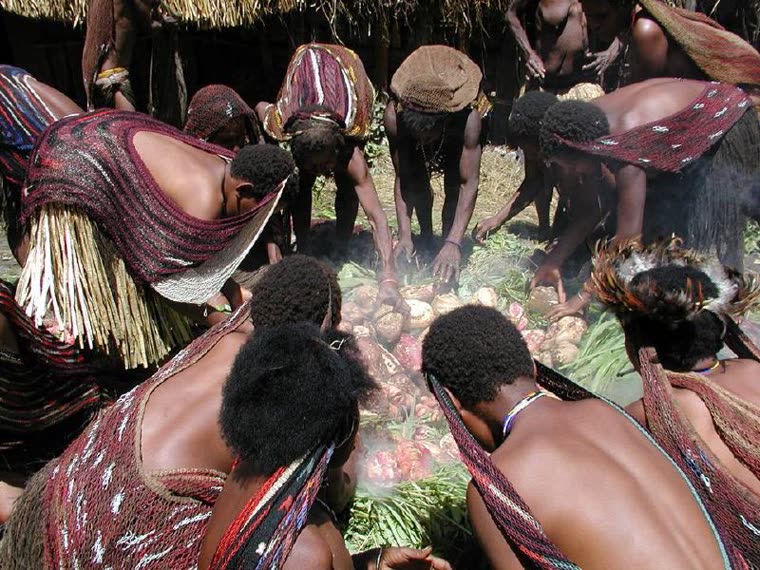
Bakar batu — barapen in some dialects — is a stone oven dug into the ground, and at Christmas the whole village eats from it. A Kamoro man in Timika describes the order of work: «They burn stones carefully chosen for the occasion until they are very hot. Then on top of the stones, they place taros, sweet potatoes or cassava, covered with banana leaves. Other hot stones are then placed on top of them, followed by pork also covered with leaves. Another layer of stones is then placed on top of the meat, followed by a layer of vegetables.» About an hour, then it is shared out in small groups.
The date is not the same for everybody, and the reason is the church rather than the calendar: «Papuan Catholics, he said, hold Barapen on Dec. 25 after they attend Christmas Mass, and Protestants perform it on Dec. 24, but it holds the same meaning.»
It is not only a Christmas custom — the same feast marks a birth or a new member of a tribe — and the Christmas meaning is stated by the people keeping it: an expression of thanks for the birth of Jesus, and a reconciliation. «People who might otherwise receive less attention, such as widows, the elderly, orphans, the poor or those with disabilities, must also have a joyful Christmas.»
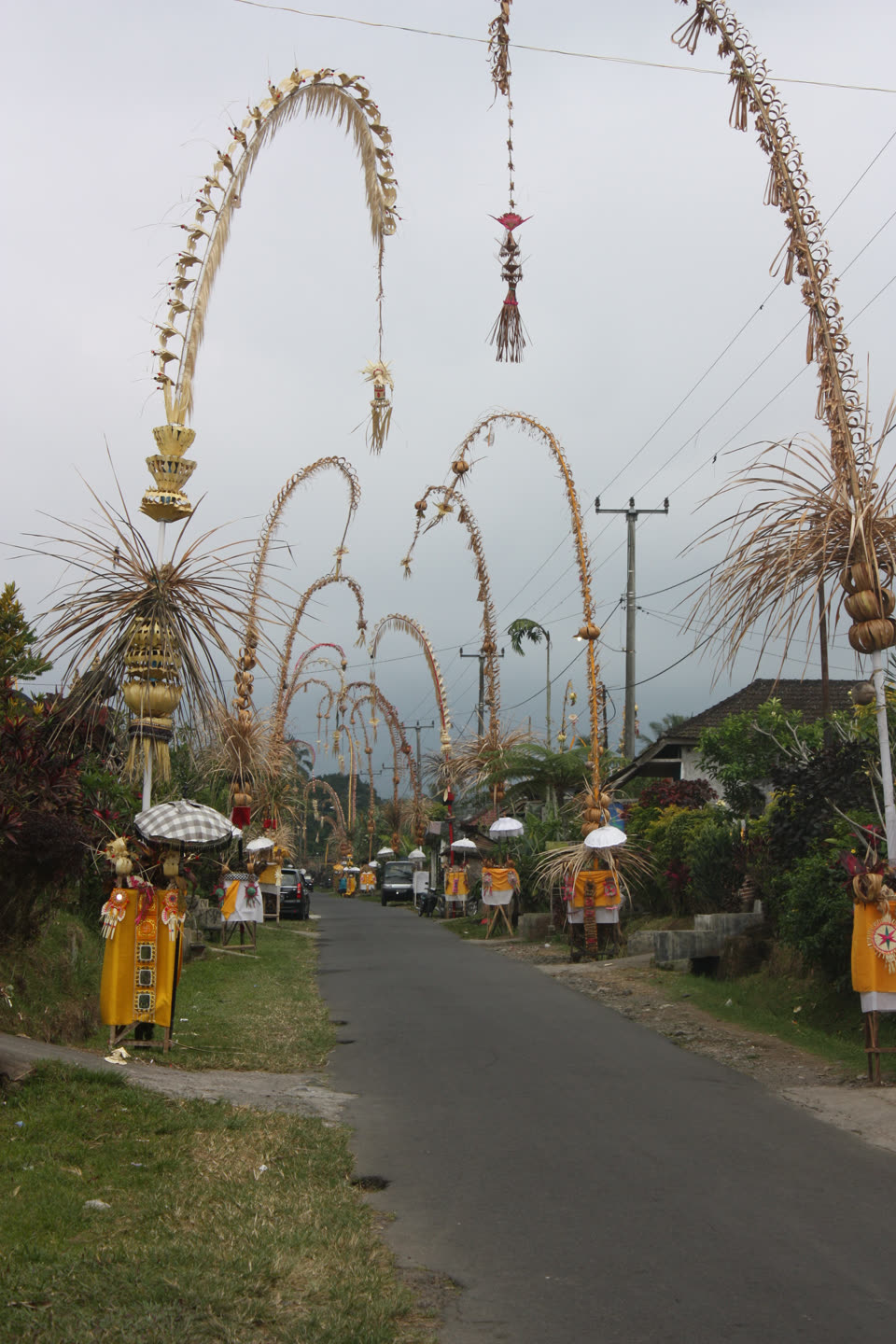
Christian houses in Bali put up the same bamboo poles their Hindu neighbours do
«Tradisi Ngenjot dilakukan dengan berbagi bingkisan makanan dengan para tetangga, kendati mereka berlainan agama. Selain itu, umat Kristiani juga akan memasang penjor, yaitu janur pada batang bambu di rumah-rumah mereka.» Parcels of food to the neighbours whatever their religion, and a penjor — the tall bent bamboo pole hung with young palm leaf — outside the house.
Both are Balinese Hindu forms. So is the dress: men go to church in a sarung rather than in trousers and women in Balinese clothes. The report reaches for a scholar to say what that adds up to, quoting Jean Couteau: «Natal di Bali yang kental kedaerahannya lebih dipengaruhi budaya Hindu daripada budaya Barat» — Christmas in Bali, in its strongly local form, owes more to Hindu culture than to Western.
Manado's Christmas opens on 1 December and is not locked until January
In Manado the season begins with pre-Christmas services from the first of the month, supported by the regional government as a Safari Natal, and families visit and light up the graves of their relatives before the feast.
The end of it is a month later: «puncak perayaan Natal di Manado jatuh di minggu pertama Januari. Tradisi ini dikenal dengan Kunci Taon, untuk mengunci atau menutup perayaan Natal di sana. Kunci Taon diakhiri dengan menyelenggarakan pawai keliling kota.» Locking the year, finished with a parade through the city.
Whether the January date descends from Epiphany is an inference the report makes from a book about Christmas in general, and it is left as that.
In Kampung Tugu the carollers collect the households they visit, and the procession has a tail
Kampung Tugu in north Jakarta is the village of the Mardijkers — captives freed and received into the Reformed church under the Dutch East India Company, who kept a Portuguese creole and still describe themselves as of Portuguese descent. Their season runs «sejak malam Natal hingga hari Minggu pertama tahun baru», from Christmas Eve to the first Sunday of the new year.
The shape of the custom is a procession that grows. Each household visited has to send somebody on with the group, so the party is larger at every door until the last house.
WHICH DAY: the two accounts differ. The BBC, reporting from the village, puts the named version at the New Year: «Rabo-rabo yang digelar tiap 1 Januari. Kata rabo dalam bahasa kreol Portugis berarti “ekor”» — tail, because of how the line grows. Kompas calls rabo-rabo a Christmas custom outright. A third account describes the Christmas-day house visiting under another name, menghelat, which would make them two ends of one season rather than one date reported twice.
Some churches in Ambon feed the poor at Christmas, and the bells and the sirens go off together
«Beberapa gereja di Ambon menghelat acara “Perjamuan-perjamuan Kasih”, yaitu jamuan makanan bagi orang-orang miskin dan orang-orang tua dari wisma lansia di Ambon.» Love feasts — meals for the poor and for residents of the city's old people's homes — enlivened, the account says citing the theologian J. L. C. Abineno, with music, singing and speeches.
And on Christmas Eve, at some of the city’s churches rather than all of them, the bells and the sirens of Ambon are sounded at the same moment.
A hundred and forty-six thousand police and soldiers are deployed for the season, and it is called Operation Candle
«Sebanyak 146.701 personel gabungan akan diturunkan dalam operasi pengamanan masa Natal 2025 dan Tahun Baru 2026 (Nataru), yakni Operasi Lilin 2025 yang berlangsung dari tanggal 20 Desember 2025-2 Januari 2026.» Of those, 77,637 are police, 13,775 are military and 55,289 come from other agencies.
It is not only about churches. The same operation covers the mass movement of people over the two weeks — around 119.5 million of them that season — the terminals, the roads and the shopping centres. But the name is Operation Candle, it runs from the twentieth of December, and churches are what it was built around.
The Dutch in Java argued about Christmas for ninety years and then gave up the snow
Christmas on colonial Java had, in a folklorist's words, «een wat onduidelijk karakter» — a somewhat unclear character — partly because the Dutch were not sure it was theirs. A writer in Tegal in 1886 complained that it lacked «dat stempel van het nationale en huiselijke» which Christmas had for an Englishman or a German.
The climate made it worse: «Hoe vreemd is het hier in dit warme land, Kerstfeest te vieren, hoe weinig past het in deze omgeving.»
What they arrived at, by the last decades of the colony, was to stop trying. Dreaming away at «het ‘beeld van een Kerstmis met sneeuw en stilte, met hulst en mistletoe en dennengroen’ leidde nergens toe»; better to admit that «op deze breedte de Noordelijke conceptie van een winterschen Kerstfeest niet aankomt». Then the Indies Christmas had its own full right to exist — under the casuarinas and the palms, among heavy-leaved trees and hot asphalt, in white suits — and in the dark skies and the hard tropical downpour that so often fell on the day they recognised the dark days they had known at home.
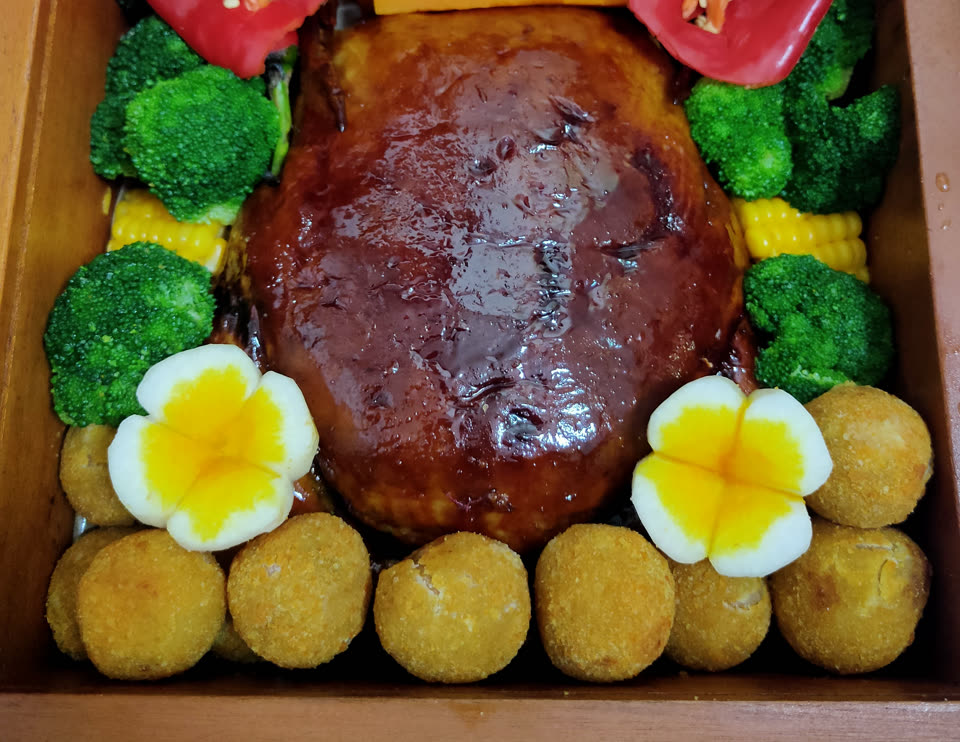
A whole chicken boned out through the skin, its meat minced with other meat and seasonings and packed back inside, then steamed and roasted. Nothing in it is frog. With the bones gone the bird spreads and flattens in the oven, and that is the entire explanation of the name: the journalist Hiang Marahimin, who cooks it, says «that is why the dish is called ayam kodok, because the chicken’s shape becomes similar to that of a frog».
It is a Christmas dish and it is Dutch. «The origin of ayam kodok dates back to the colonial era, when Dutch cooks published Indonesian cookbooks that included recipes for gevulde kip (stuffed chicken).» The food historian Fadly Rahman, of Universitas Padjadjaran, takes it another step back — a Dutch invention using what was available in Indonesia, «based on two French forcemeat dishes: ballotine and galantine» — and says the Dutch brought it out «not only for Christmas, but for other special occasions where fancy feasts are involved», a dish «big enough to be shared by 15 to 20 people».
The thrift is still in the recipe. Marahimin says boiled eggs went into the hollows left by the bones «in order to cut expenses to buy the meat», and sometimes sausages instead. The same labour is why the dish is going: both of the people quoted say it is in decline, and Rahman has friends of Chinese descent for whom the making of it «had ended in their grandmother’s or mother’s generation».
The Christmas meal in the Papuan highlands is not carried to a table: it is built in the ground and taken out of it. Stones are burned until they are very hot, and then the food goes on in layers — taro, sweet potatoes or cassava first, under banana leaves; more hot stones; pork, also under leaves; more stones; vegetables on top. About an hour, and then it is shared out in small groups.
The scale is the village rather than the household. The tribal leaders slaughter dozens of pigs, and the pigs are donated by local families.
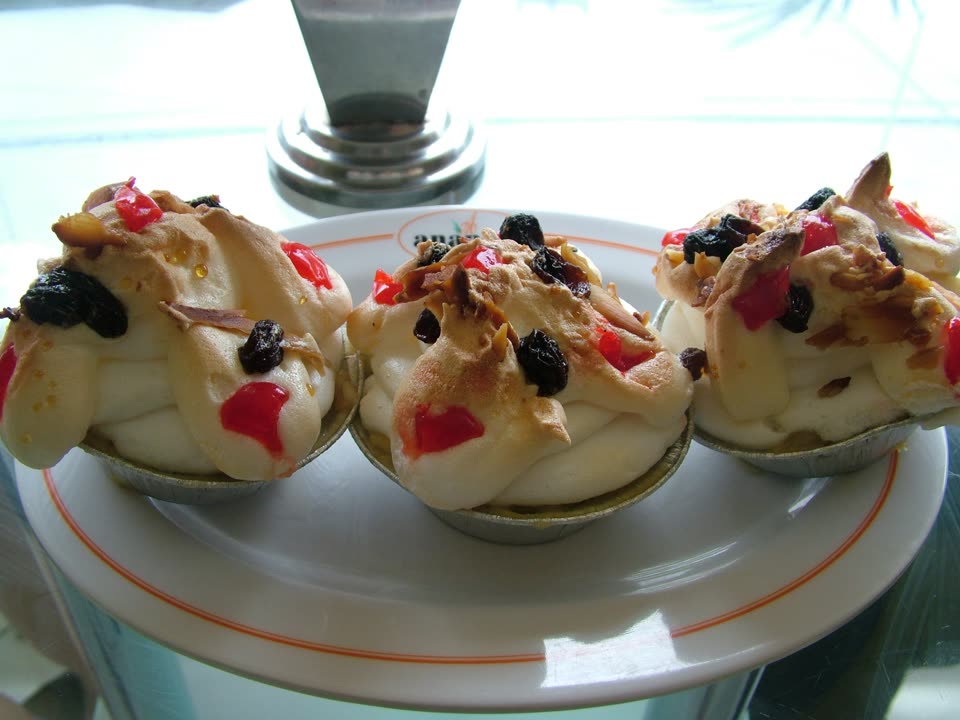
Manado’s coconut tart, and the clue is in the first half of the name: klapper is how the Dutch said coconut, taart is a cake. The state news agency puts it plainly — «Hidangan ini merupakan kuliner khas Manado, Sulawesi Utara, yang mendapat pengaruh kuat dari budaya Belanda» — and says that as Christmas approaches it is the dessert that gets made.
What makes it the fixed point is a combination of easy and always: «Proses pembuatannya yang relatif sederhana serta kehadirannya yang hampir selalu ada setiap Natal menjadikan klappertart sebagai hidangan wajib, khususnya bagi masyarakat Manado» — a dish that has to be there. The recipe printed beside that sentence is young coconut flesh in a thickened custard of evaporated milk, coconut water, flour, cornflour and egg yolks, steamed for twenty to twenty-five minutes under raisins and grated cheese, and eaten warm or cold.
Jan hagel jan hagel · kukis fantasi · kue lampu-lampu · es brenebon
A Manado Christmas is a table of small things, and most of them came off a Dutch biscuit tin. Jan hagel is «kukis atau kue kering khas Manado yang mendapat pengaruh dari Belanda» — a square of butter shortbread with sliced kenari nuts on top. Beside it sit kukis fantasi, which is a nastar pinched into the shape of a leaf around its pineapple jam, and kukis tosca, crimped like an open sunflower and strewn with the same kenari.
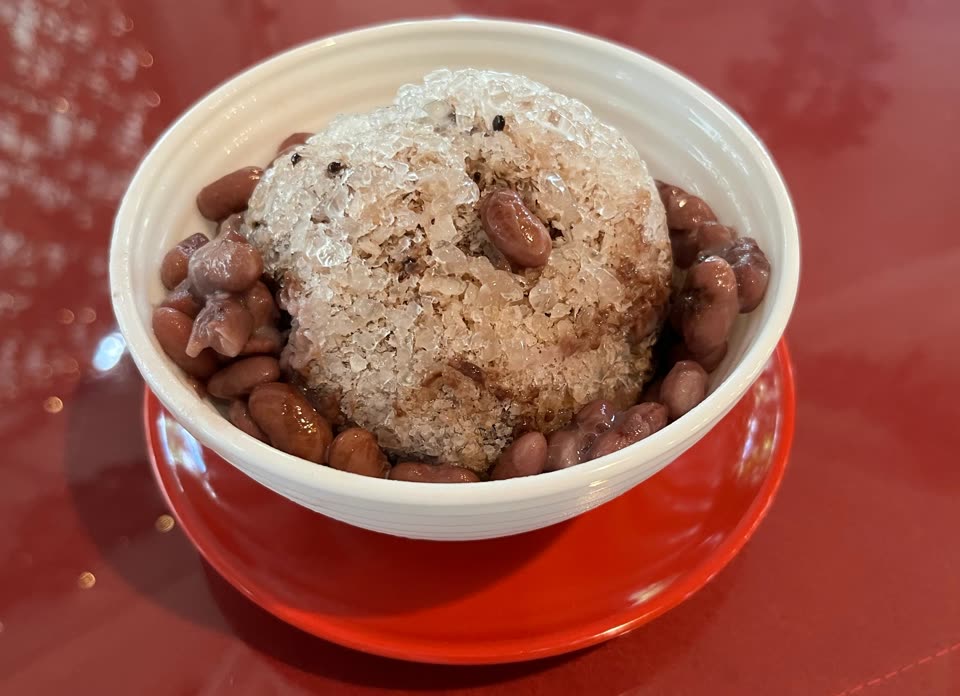
The local one in that company is kue lampu-lampu: rice flour, coconut milk, suji-leaf juice and sugar, poured over palm sugar into little square boxes folded from forest pandan leaves, and steamed. And to drink, es brenebon — boiled red beans under condensed milk, melted palm sugar and a heap of shaved ice, which is the cold form of the Dutch bruine bonen that Manado also eats hot as a soup.
Nastar itself is not a Christmas biscuit so much as a feast biscuit: it belongs to every religious holiday in Indonesia, Lebaran included, and its name is the Dutch ananas taartjes, pineapple tarts.
Widely repeated claims about Christmas in Indonesia that do not survive
checking. Each one says what is actually the case, because a correction
with nothing in its place leaves you worse off than before.
Unsupported
Indonesia's Ulema Council has issued a fatwa about saying Merry Christmas
What is actually the case. The council's own secretary-general says it has not. Anwar Abbas, speaking in Jakarta on Christmas Day 2018: the MUI «belum pernah mengeluarkan fatwa tentang boleh dan atau tidak bolehnya umat Islam menyampaikan ucapan selamat Natal kepada yang merayakannya» — it has never issued a fatwa on whether Muslims may or may not wish a happy Christmas to those who keep it.
Two real fatwas get collapsed into that one. «Yang sudah ada fatwanya yaitu tentang perayaan Natal bersama yang dikeluarkan oleh Komisi Fatwa sejak 1981» — one from 1981 about Muslims taking part in joint Christmas celebrations. And one from 2016, signed by Hasanuddin AF and Asrorun Ni'am Sholeh of the Fatwa Commission, about religious attributes: wearing the symbols of another religion is haram, and so is ordering an employee to wear them — which is what it was issued about, after shopping centres put Muslim staff in Santa hats.
An English-language report of that 2016 fatwa reads it more warmly, saying it «called on Muslims to preserve friendship with people of other faiths by wishing them well in their religious holidays». Set beside the secretary-general's statement, those are two different accounts of the same document, and neither is a ruling on the greeting.
About one Indonesian in ten is Christian, in the country with more Muslims than any other: «87 percent of the population identifies as Muslim, 7.4 percent Protestant, 3.0 percent Roman Catholic, 1.7 percent Hindu, and 0.7 percent Buddhist.»
They are not spread evenly. «The province of Bali is predominantly Hindu, and the provinces of Papua, West Papua, Central Papua, Highland Papua, Southwest Papua, East Nusa Tenggara, and North Sulawesi are predominantly Christian.» Seven provinces out of thirty-eight, at the two ends of a four-thousand-kilometre archipelago, so a Christmas custom here almost always belongs to a place before it belongs to the country.
Christmas Day is a holiday and Christmas Eve usually is not, and the difference costs the worker a day. The decree that sets the year's calendar lists «25 Desember (Jumat): Kelahiran Yesus Kristus» among the national holidays and «24 Desember (Kamis): Kelahiran Yesus Kristus» on a separate list of cuti bersama — collective leave.
What that means is stated in the decree: «Pelaksanaan cuti bersama sebagaimana dimaksud mengurangi hak cuti tahunan pegawai/karyawan/pekerja.» It comes out of annual leave. It is also set afresh every year by three ministers together, so Christmas Eve is a day off in Indonesia in the way a long weekend is, and not in the way Christmas is.
Since 2023 the Indonesian government calls the feast by a Christian name. «In September, MORA began using the Christian name Yesus Kristus when describing Christian holidays rather than using Jesus' name in Islam, Isa Al-Masih. Christians said they viewed this change as a positive step towards greater inclusivity.»
That is why the official entry for 25 December reads Kelahiran Yesus Kristus — the birth of Jesus Christ — on a decree signed by three ministers of a Muslim-majority state. The report's own examples of the change are Good Friday and the Ascension; Christmas was always Natal.
On Christmas Eve 2000 bombs went off outside churches across Indonesia, and the contemporaneous report is more careful than the story that has grown around it. «At least 10 people have been killed in a series of co-ordinated bomb attacks on churches and religious sites across Indonesia as Christians gathered to celebrate at Christmas services» — in Jakarta, Pekanbaru, Sukabumi and Mojokerto, with devices also found inside Christmas parcels posted to priests in Medan.
Nobody had claimed it: «No group has so far said it carried out the attacks», and the BBC's correspondent wrote that the simultaneous timing «is bound to throw suspicion on elements of the military». The attribution now attached to that night came years afterwards, and the contemporaneous report carries none.
The Christmas dinner was the other high point of a colonial Christmas on Java, and it grew through the 1920s — «Een ander hoogtepunt van de huiselijke kerstviering was het kerstdiner, dat eveneens in de loop van de jaren twintig aan belang en betekenis lijkt te winnen». Restaurateurs advertised game and poultry hard, and a folklorist reading those newspapers a century later concludes that the meal at home stayed modest anyway — on the evidence of a Java paper in 1922 that was pleased about it: «de overmatige eterij, waarom Engeland zoo terecht bekend is kennen we hier gelukkig evenmin als in patria». The excessive eating England is so rightly famous for, we are fortunate to know as little of here as at home.
The grocers were selling the other thing entirely. A Soerabaia advertisement of 1937 offers Christmas wreaths, Stollen and Christmas loaves above a line of turkeys, ducks, geese, rabbits and Zeeland oysters, which is a northern December shipped whole to the equator.
Every claim carries its own citation. They are collected below, so you
can see what the page rests on and how much of it comes from where.
MUI: belum ada fatwa ucapan selamat Natal — ANTARA, 25 December 2018, quoting MUI secretary-general Anwar Abbas. Retrieved 2026-10-30. archived 20 June 2019The agency's summary: «Sekjen Majelis Ulama Indonesia (MUI) Anwar Abbas mengatakan hingga saat ini lembaga tersebut belum pernah mengeluarkan fatwa tentang boleh dan atau tidak bolehnya umat Islam menyampaikan ucapan selamat Natal kepada yang merayakannya.»What does exist, in his words: «Yang sudah ada fatwanya yaitu tentang perayaan Natal bersama yang dikeluarkan oleh Komisi Fatwa sejak 1981.»And the 2016 one, with its signatories named: a fatwa on using non-Muslim religious attributes, signed by Hasanuddin AF and Asrorun Ni'am Sholeh as chair and secretary of the MUI Fatwa Commission, holding that «menggunakan atribut keagamaan non-Muslim adalah haram» and that «Mengajak dan/atau memerintahkan penggunaan atribut keagamaan non-Muslim adalah haram».
Sebanyak 146.701 personel diturunkan dalam Operasi Lilin 2025 — ANTARA, the Indonesian state news agency, 15 December 2025. Retrieved 2026-10-30. archived 3 January 2026«Sebanyak 146.701 personel gabungan akan diturunkan dalam operasi pengamanan masa Natal 2025 dan Tahun Baru 2026 (Nataru), yakni Operasi Lilin 2025 yang berlangsung dari tanggal 20 Desember 2025-2 Januari 2026.»The breakdown is given: «77.637 personel Polri, kemudian 13.775 dari personel TNI, dan sisanya 55.289» from other agencies. The operation covers the whole Christmas–New Year travel season rather than churches alone — the same report expects «sekitar 119,5 juta orang» to be travelling or celebrating, with the peak on 20 and 24 December.
Natal: Tradisi unik Natal dan Tahun Baru warga keturunan Portugis di Kampung Tugu — BBC News Indonesia, 25 December 2024. Retrieved 2026-10-30. archived 21 August 2026The span: «Rangkaian tradisi itu digelar sejak malam Natal hingga hari Minggu pertama tahun baru.»And the named custom belongs to the New Year end of it: «Selain perayaan Natal, warga keturunan Portugis di Kampung Tugu juga memiliki tradisi unik dalam perayaan Tahun Baru, yakni Rabo-rabo yang digelar tiap 1 Januari. Kata rabo dalam bahasa kreol Portugis berarti “ekor”.»
Bombs target Indonesian churches — BBC News, 25 December 2000. Retrieved 2026-10-30. archived 20 June 2004The toll on the day: «At least 10 people have been killed in a series of co-ordinated bomb attacks on churches and religious sites across Indonesia as Christians gathered to celebrate at Christmas services.»On who did it, the piece is explicit that nobody knew: «No group has so far said it carried out the attacks», and the BBC's correspondent says the simultaneous timing «is bound to throw suspicion on elements of the military».A police inspector, Supono, is quoted: «This is an act of terror against Christians on Christmas Eve.»
Di Manado, Natal Makin Lengkap dengan 5 Kue dan Dessert Ini — detikFood, 21 December 2024, by Andi Annisa Dwi R. Retrieved 2026-10-30. archived 21 December 2024Its own framing: «Manado adalah salah satu kota dengan penduduk umat Kristen paling banyak di Indonesia», and the desserts «kebanyakan... mendapat pengaruh dari Belanda».Jan hagel: «Jan hagel adalah kukis atau kue kering khas Manado yang mendapat pengaruh dari Belanda.» Kukis fantasi: «Natal di Manado identik dengan kukis fantasi yang merupakan nastar bentuk daun isi selai nanas.» Nastar’s own name: «Nama aslinya adalah ananas taartjes yang berarti kue nanas.» Es brenebon: «es brenebon alias es kacang merah».
Kerstboom en kerstviering op koloniaal Java (1852 - ca. 1941) — John Helsloot, Volkskundig Bulletin 25 (1999), Meertens Instituut. Retrieved 2026-10-30. archived 12 January 2026The complaint: «Hoe vreemd is het hier in dit warme land, Kerstfeest te vieren, hoe weinig past het in deze omgeving.»And the answer that was eventually reached, which is the interesting half: «Wegwijmelen bij het ‘beeld van een Kerstmis met sneeuw en stilte, met hulst en mistletoe en dennengroen’ leidde nergens toe. Beter kon men erkennen ‘dat het op deze breedte de Noordelijke conceptie van een winterschen Kerstfeest niet aankomt’.» Then the Indies Christmas was seen with other eyes, with its «volle bestaansrecht onder de tjemara's en de palmen, bij zwaarbebladerde boomen en heet asfalt, in witte pakeans», and in the dark skies and the heavy tropical downpour people recognised the «donkere dagen» they knew from Europe.Helsloot also records that Christmas had «een wat onduidelijk karakter» in the Indies partly because it was not felt to be a Dutch feast at all: a writer in Tegal in 1886 said it lacked «dat stempel van het nationale en huiselijke» that Christmas had for an Englishman or a German.
Inilah SKB 3 Menteri Libur Nasional dan Cuti Bersama 2026 — Kementerian Sekretariat Negara Republik Indonesia, 19 September 2025. Retrieved 2026-10-30. archived 8 October 2026Christmas is item 16 of the national holidays: «25 Desember (Jumat): Kelahiran Yesus Kristus». Christmas Eve is item 6 of a different list, the cuti bersama or collective leave: «24 Desember (Kamis): Kelahiran Yesus Kristus».The difference between the two lists matters and the decree states it: «Pelaksanaan cuti bersama sebagaimana dimaksud mengurangi hak cuti tahunan pegawai/karyawan/pekerja sesuai dengan ketentuan peraturan perundang-undangan dan ketentuan yang berlaku pada setiap unit kerja/satuan organisasi/lembaga/perusahaan.»
'Ayam kodok': Indonesia's near-forgotten holiday dish — The Jakarta Post, 18 December 2019, by Muthi Achadiat Kautsar. Retrieved 2026-10-30. archived 24 December 2022A national newspaper interviewing two named people who know the subject: Fadly Rahman, lecturer at Universitas Padjadjaran in Bandung and author of «Jejak rasa Nusantara: Sejarah Makanan Indonesia», by telephone; and Hiang Marahimin, senior journalist and co-author of «Indonesian Dishes and Desserts», who cooks the dish herself.Rahman also reads the eggs symbolically — «an egg is an embryo, [the earliest stage of] of life, symbolizing rebirth and the transformation to purity» — which the article presents as his interpretation rather than as a finding.The page carries 20 December in its URL and «Published on Dec. 18, 2019» in its own dateline.
Tradisi Unik Perayaan Natal di Bali, Manado, Papua, Hingga Sulsel — Tirto.id, 23 December 2021, by Abdul Hadi. Retrieved 2026-10-30.BALI: «Tradisi Ngenjot dilakukan dengan berbagi bingkisan makanan dengan para tetangga, kendati mereka berlainan agama. Selain itu, umat Kristiani juga akan memasang penjor, yaitu janur pada batang bambu di rumah-rumah mereka.» It cites Jean Couteau, Bali Today: Modernity, p. 111, for the conclusion: «Natal di Bali yang kental kedaerahannya lebih dipengaruhi budaya Hindu daripada budaya Barat.»MANADO: Christmas starts on 1 December with pre-Christmas services supported by the local government as a «Safari Natal»; graves are visited and lit; and «puncak perayaan Natal di Manado jatuh di minggu pertama Januari. Tradisi ini dikenal dengan Kunci Taon, untuk mengunci atau menutup perayaan Natal di sana. Kunci Taon diakhiri dengan menyelenggarakan pawai keliling kota.»AMBON: «Beberapa gereja di Ambon menghelat acara “Perjamuan-perjamuan Kasih”, yaitu jamuan makanan bagi orang-orang miskin dan orang-orang tua dari wisma lansia di Ambon», citing J.TORAJA: the regional government's annual «Lovely December» festival, opened by slaughtering a kerbau belang and closed with the Lettoan procession.Tirto calls this «menghelat» and a Portuguese inheritance.
Papuans build bridges by burning stones — UCA News, 5 December 2020, by Konradus Epa. Retrieved 2026-10-30. archived 27 January 2021Saul Wanimbo, 52, of the Kamoro group, living in Timika, calls it «Barapen as it is called in his people's dialect» and says it is held for births and new members of a family or tribe as well as at Christmas.The denominational split by date: «Papuan Catholics, he said, hold Barapen on Dec. 25 after they attend Christmas Mass, and Protestants perform it on Dec. 24, but it holds the same meaning.»The method, in order: «They burn stones carefully chosen for the occasion until they are very hot. Then on top of the stones, they place taros, sweet potatoes or cassava, covered with banana leaves. Other hot stones are then placed on top of them, followed by pork also covered with leaves. Another layer of stones is then placed on top of the meat, followed by a layer of vegetables.»Who it is for: «People who might otherwise receive less attention, such as widows, the elderly, orphans, the poor or those with disabilities, must also have a joyful Christmas.»And the political detail, from Father Alberto Bunay of the Moni group in Paniai: Indonesia's military chief «On Dec. 1, he gave 59 pigs to Christians for the Barapen ritual», which the priest reads as symbolic because 1 December was the Free Papua Movement's 59th anniversary — «Tjahjanto wants us to use Christmas to foster peace.»
2023 Report on International Religious Freedom: Indonesia — United States Department of State, Office of International Religious Freedom. Retrieved 2026-10-30. archived 3 June 2026The numbers, from the Indonesian interior ministry's registration data as relayed by the report: «According to 2022 data from the Ministry of Home Affairs (MOHA) 87 percent of the population identifies as Muslim, 7.4 percent Protestant, 3.0 percent Roman Catholic, 1.7 percent Hindu, and 0.7 percent Buddhist.»And where the Christians are: «The province of Bali is predominantly Hindu, and the provinces of Papua, West Papua, Central Papua, Highland Papua, Southwest Papua, East Nusa Tenggara, and North Sulawesi are predominantly Christian.»On the name of the feast in government use: «In September, MORA began using the Christian name Yesus Kristus when describing Christian holidays rather than using Jesus' name in Islam, Isa Al-Masih. Christians said they viewed this change as a positive step towards greater inclusivity.»