Christmas Elsewhere

A country-by-country atlas of how Christmas is actually kept

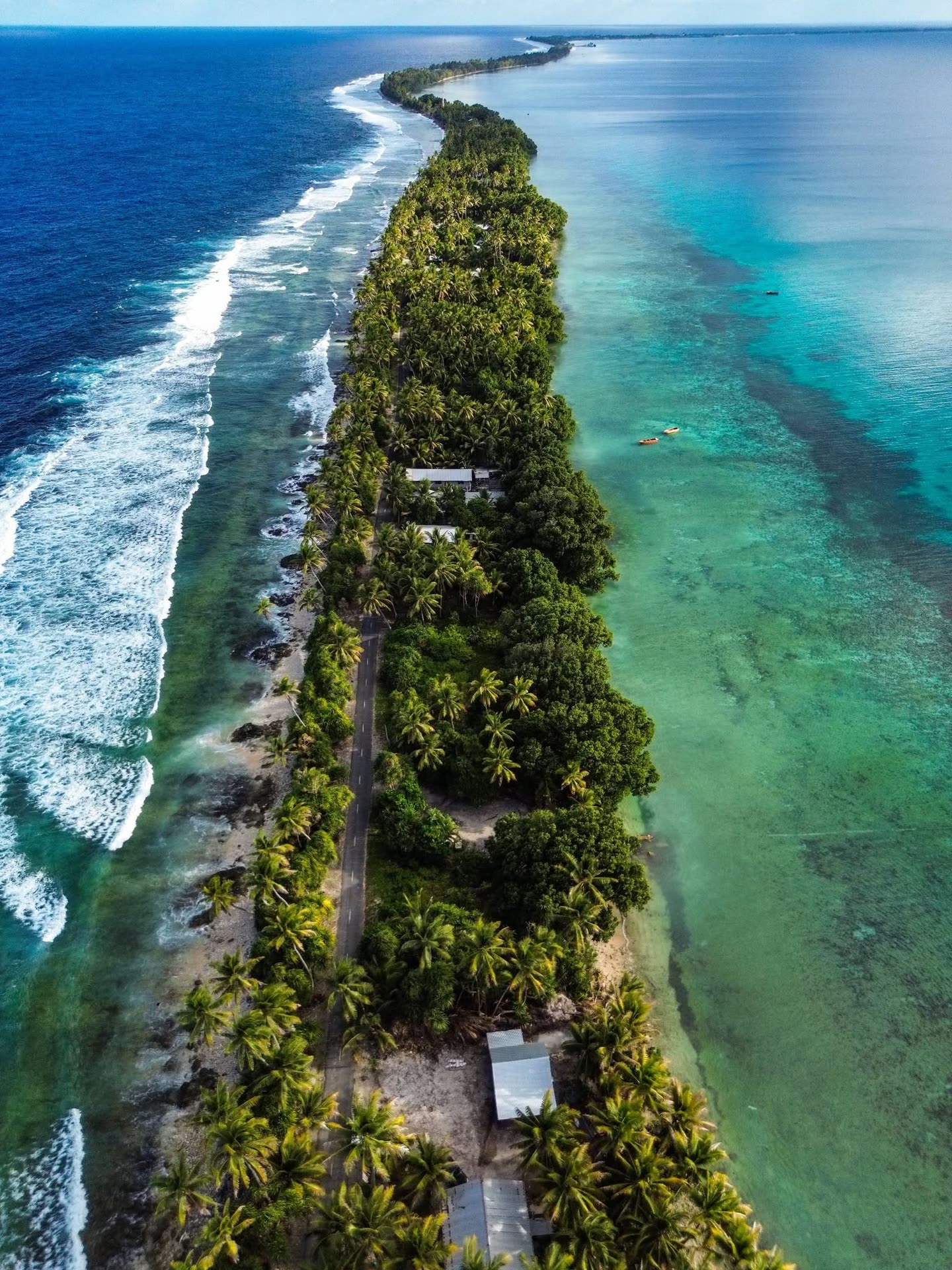
An aerial view straight down a Tuvaluan islet. Deep blue ocean and a long line of breaking surf run down the left, pale turquoise reef and lagoon down the right, and between them the land is a narrow green strip of coconut palms and breadfruit barely wider than the single road that runs its whole length. A handful of houses with pale metal roofs stand among the trees beside the road. A small boat sits on the reef flat at the right.
Gino Pop / Endemik Expeditions · Used by permission

All countries · Oceania

Christmas in Tuvalu

Christmas falls on
25 DecemberGregorian calendar
A public holiday
YesPublic Holidays Act, CAP. 4.50, 2022 Revised Edition — Government of Tuvalu, Tuvalu Legislation On-line
—days
—hrs
—min
—sec

Next: Friday 25 December 2026

When is Christmas in Tuvalu?

Christmas Day in Tuvalu is 25 December. It is a public holiday.

How to say it

How Christmas is kept

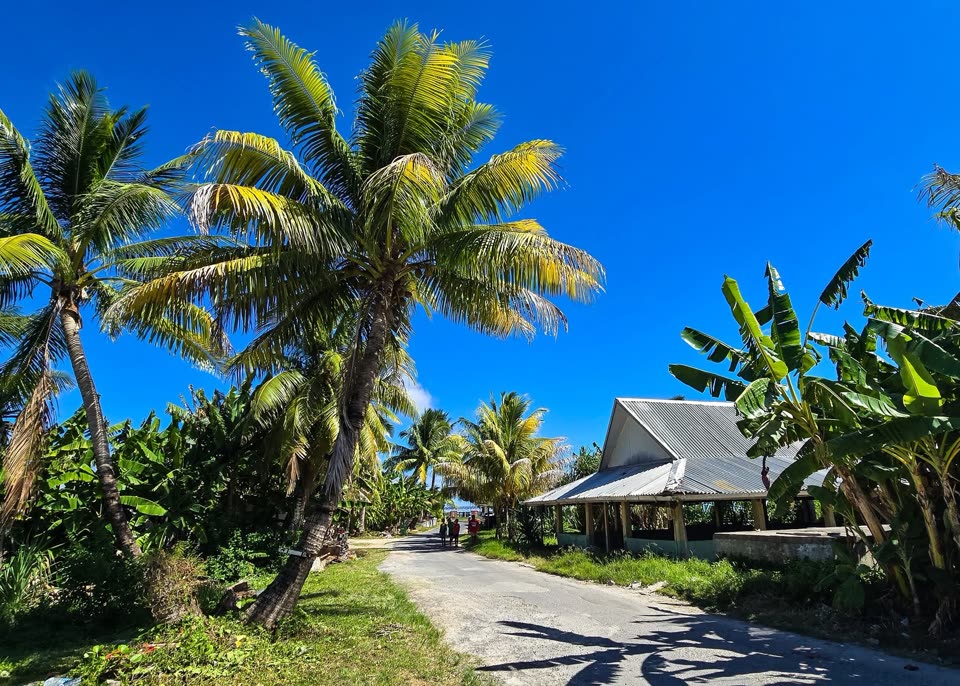
A lane on a Tuvaluan atoll in hard midday sun. Coconut palms lean over the road from the left, with banana plants crowding in behind them, and the sky above is a flat deep blue. On the right stands a long open-sided hall: concrete posts, no walls, a pitched corrugated-iron roof over a lower roof skirt, and a low painted plinth along its front. Three people in bright shirts are walking up the road in the middle distance. The road surface is patched and the verges are rough grass and fallen fronds.
Gino Pop / Endemik Expeditions · Used by permission

The fatele is danced at Christmas, and the women wear the titi

The fatele is Tuvalu's own dance-song: the dancers in lines, the singers working the song faster and louder until it stops dead. It belongs to the occasions that matter, and Christmas is one of them.

Grace Miriam Brown, describing a Tuvaluan Christmas for ABC Pacific, puts the whole community in it — «Us women and girls, we are the ones who are going to be performing the traditions as well as the men» — and names the dress: «So we'll be wearing our local costumes, which we call the titi.» The titi is a kilt; a New Zealand government guide to the language glosses the word exactly that way.

Celebrating Christmas in the Pacific — Hilda Wayne, ABC Pacific (Sistas Let's Talk), 15 December 2021

Te 'Gana Tuvalu — a brief guide to reading and speaking the Tuvaluan language — Ministry for Pacific Peoples, New Zealand

The five churches of Funafuti come together, and sing in Tuvaluan

On the capital atoll the congregations do not keep Christmas separately. The five churches of Funafuti come together to mark the birth of Christ, sing together in the language, and read from the Bible.

That is a small number of churches for a country, and it is most of them: the state church alone accounts for about six Tuvaluans in seven.

Celebrating Christmas in the Pacific — Hilda Wayne, ABC Pacific (Sistas Let's Talk), 15 December 2021

Christmas is when the children come home

Tuvalu's Christmas falls inside the long school holiday, and the country's secondary schooling is boarding schooling. So December is when the students travel back out to the islands they came from, and the capital fills with children for the summer.

It is the Pacific version of a journey the whole world makes at Christmas, run in reverse: not in from the villages to the city, but out from the capital to the outer islands.

Celebrating Christmas in the Pacific — Hilda Wayne, ABC Pacific (Sistas Let's Talk), 15 December 2021

Every evening the capital stops for a quarter of an hour

This is not a Christmas custom and it is the background to all of them. The government imposes a fifteen-minute pause on all public activity in Funafuti every evening, so that members of the state church can keep evening prayers. Prayer itself is not compulsory; the pause is.

The same church limits social and sporting activity on Sundays and asks for modest dress in the villages.

2023 Report on International Religious Freedom: Tuvalu — United States Department of State, Office of International Religious Freedom

Worth knowing

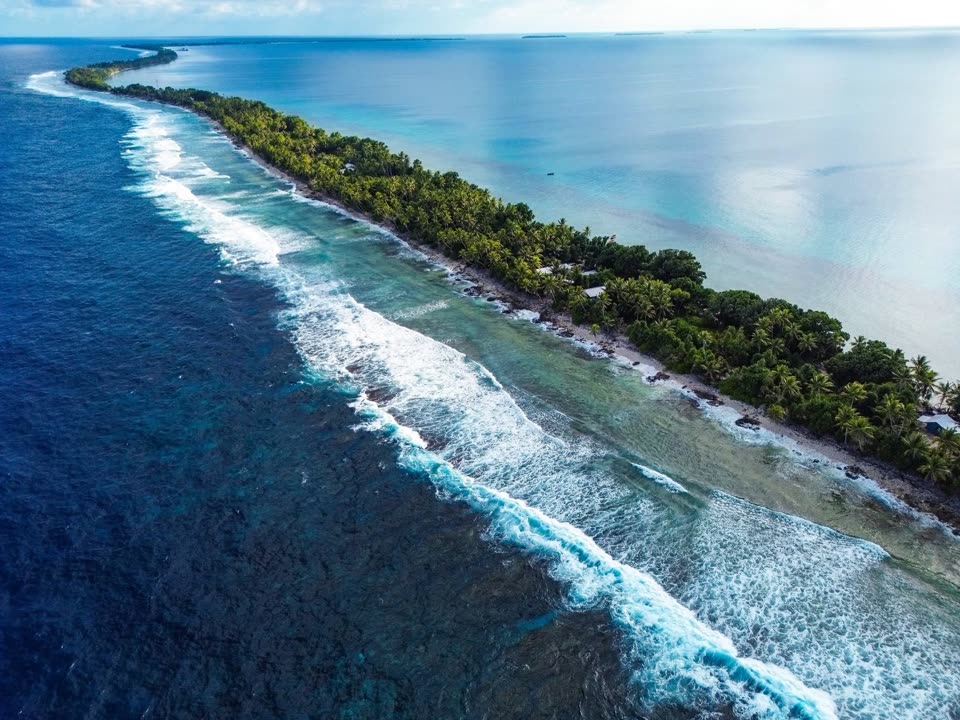
An aerial view along the ocean side of a Tuvaluan atoll. In the foreground a wide shelf of dark reef lies under clear shallow water, with a long white line of surf breaking along its outer edge. Beyond the surf the islet runs away into the distance as an unbroken band of coconut palms, with a pale beach and a scatter of metal-roofed buildings among the trees. The lagoon lies flat and silver beyond it on the right, and a few low islets break the horizon.
Gino Pop / Endemik Expeditions · Used by permission

Most public holidays in Tuvalu move the ordinary way: if one falls on a Saturday or a Sunday, the following Monday becomes the holiday instead.

Two days are treated differently, and they are the 2nd of October and the 26th of December. If either falls on a Sunday, the Monday AND the Tuesday after it are both public holidays. If either falls on a Monday, the Tuesday is a holiday too.

The 2nd of October is the second day of Tuvalu Day, the national day. The 26th of December is Boxing Day. Nothing else in the Act is defended like that.

Public Holidays Act, CAP. 4.50, section 2, 2022 Revised Edition — Government of Tuvalu, Tuvalu Legislation On-line

The Schedule to the Public Holidays Act is where the arrival of Christianity is written into the working year.

Te Aso o te Tala Lei — Gospel Day — is a public holiday, falling on the Monday after the second Sunday in May. And National Children's Day is fixed as «1st Monday after White Sunday»: White Sunday is the Pacific children's church festival that came to Tuvalu with the mission, and the mission came through Samoa.

That is not a guess about the route. The state church, Te Ekalesia Kelisiano Tuvalu, is described in the United States religious-freedom report as having «historical ties to the Congregational Christian Church and other churches in Samoa».

Public Holidays Act, CAP. 4.50, Schedule, 2022 Revised Edition — Government of Tuvalu, Tuvalu Legislation On-line

2023 Report on International Religious Freedom: Tuvalu — United States Department of State, Office of International Religious Freedom

The Public Holidays Act commences on 5 May 1937. Tuvalu became independent on 1 October 1978; in 1937 these islands were the Ellice Islands, administered with the Gilberts as a British colony.

The Act has been amended repeatedly since — most recently in 2020 — and the Schedule it carries now is plainly Tuvaluan: Gospel Day, Tuvalu Day, National Youth Day. But the instrument underneath them is a colonial one that was never replaced, only rewritten.

Public Holidays Act, CAP. 4.50, 2022 Revised Edition, endnotes — Government of Tuvalu, Tuvalu Legislation On-line
Sources

Every claim carries its own citation. They are collected below, so you can see what the page rests on and how much of it comes from where.

  1. Public Holidays Act, CAP. 4.50, 2022 Revised Edition — Government of Tuvalu, Tuvalu Legislation On-line. Retrieved 2026-11-17.«AN ACT TO MAKE PROVISION FOR PUBLIC HOLIDAYS», with «Commencement [5th May 1937]». The Schedule, under section 2(1), lists ten days, of which the last two are «Christmas Day — 25th December» and «Boxing Day — 26th December». Section 2(1) adds the general rule: «Provided that if any public holiday falls on a Saturday or a Sunday, the Monday next following shall be a public holiday unless otherwise ordered by the Minister by notice.»
  2. Celebrating Christmas in the Pacific — Hilda Wayne, ABC Pacific (Sistas Let's Talk), 15 December 2021. Retrieved 2026-11-17.The Tuvalu section is Grace Miriam Brown's: «Grace Miriam Brown has lots of gatherings to look forward to at Christmastime, with family, her island community and her church. During these celebrations, the local community practice a traditional dance called the fatele.»
  3. Te 'Gana Tuvalu — a brief guide to reading and speaking the Tuvaluan language, Pacific Language Weeks — Ministry for Pacific Peoples, New Zealand. Retrieved 2026-11-17.«Every word ends in a vowel.» The card glosses «Manuia!» as «Congratulations!», gives «Talofa» for hello and «Fakafetai» for thank you, and — usefully, for the fatele — gives «titi» as «woman's kilt» in its own list of vowel sounds.
  4. Merry Christmas in many languages — Tuvaluan — Omniglot. Retrieved 2026-11-17.
  5. 2023 Report on International Religious Freedom: Tuvalu — United States Department of State, Office of International Religious Freedom. Retrieved 2026-11-17.«The government continued to impose a 15-minute pause on all public activities in Funafuti every evening so that EKT members could observe evening prayers, although prayer was not mandatory.» And: «the church continued to limit social and sports activities on Sunday and encouraged modest dress in local villages.»