A paid Christmas holiday that exists for Christians only, on paper
Algeria's holidays law is from 1963, the year after independence. Its first article lists the national holidays, and they are civil and Islamic: 1 January, Yennayer, Labour Day, Independence Day, the Revolution, and the Islamic feasts. Christmas is not among them.
Then Article 3 does something else. It makes five Christian feasts «fêtes légales, chômées et payées» — legal holidays, not worked and paid — «chaque année pour les personnels algériens et étrangers de confession chrétienne», each year for Algerian and foreign staff of Christian faith. The five are Easter Monday, Ascension, Whit Monday, 15 August and «25 décembre (Noël)».
The article has a second half that is easy to miss. If the day off leaves non-Christian colleagues with no work, they are paid too: «Le personnel non chrétien qui se trouverait en chômage par application des dispositions du présent article sera rémunéré même s'il est payé à l'heure ou à la journée.»
On paper, then, a 1963 law lets Christian employees take 25 December as a paid day off.
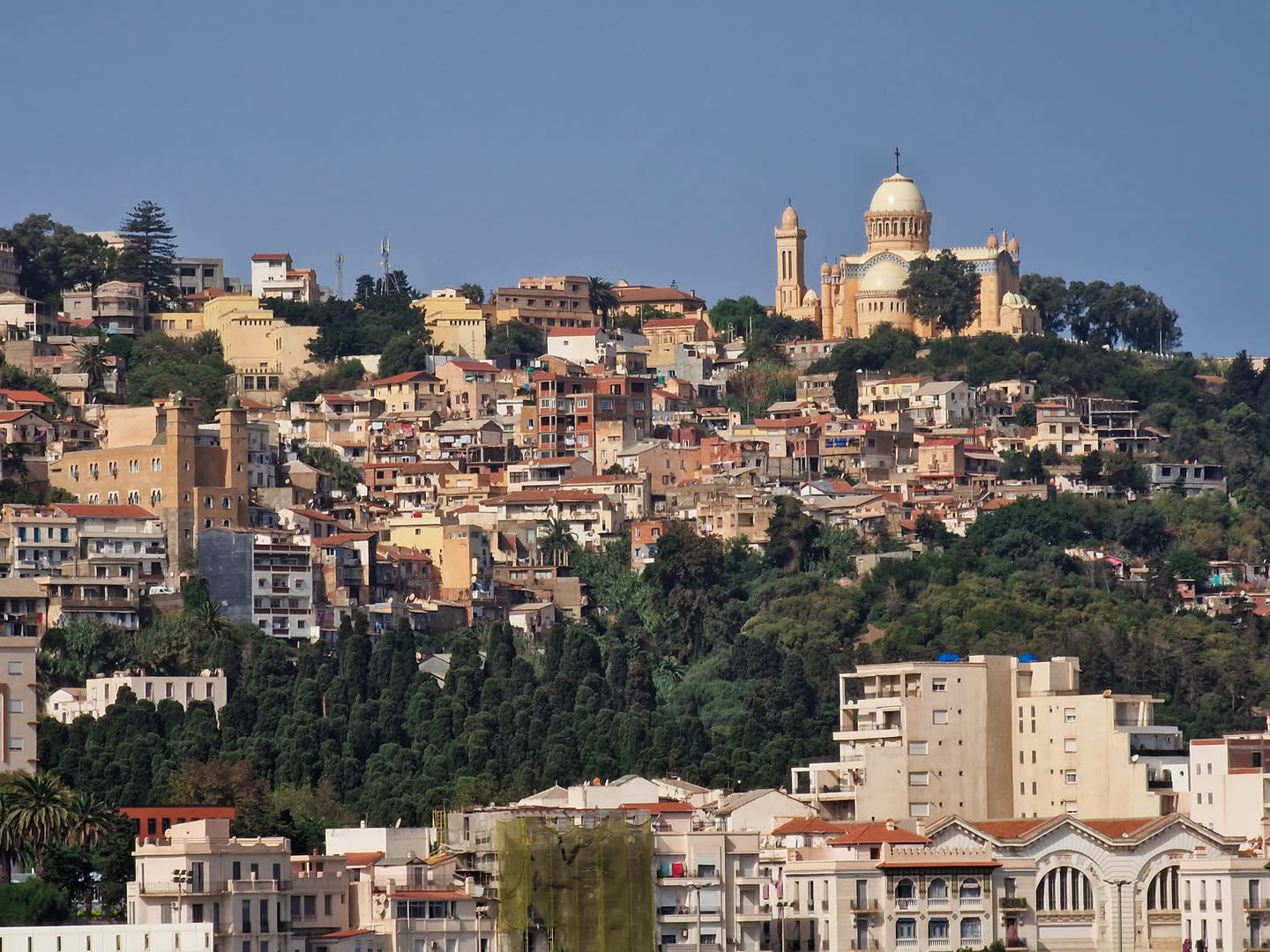
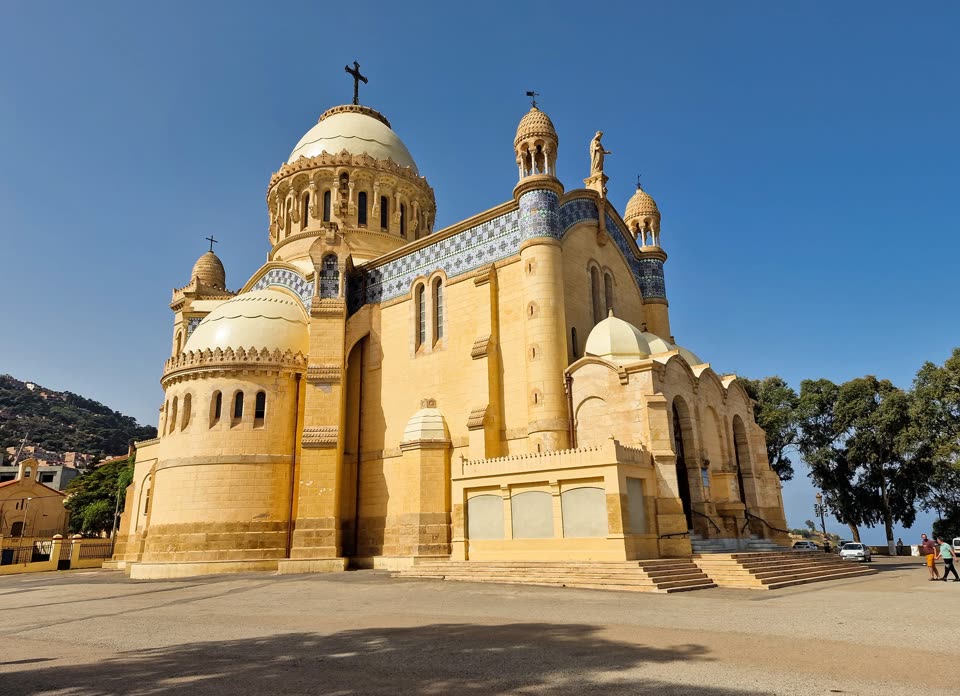
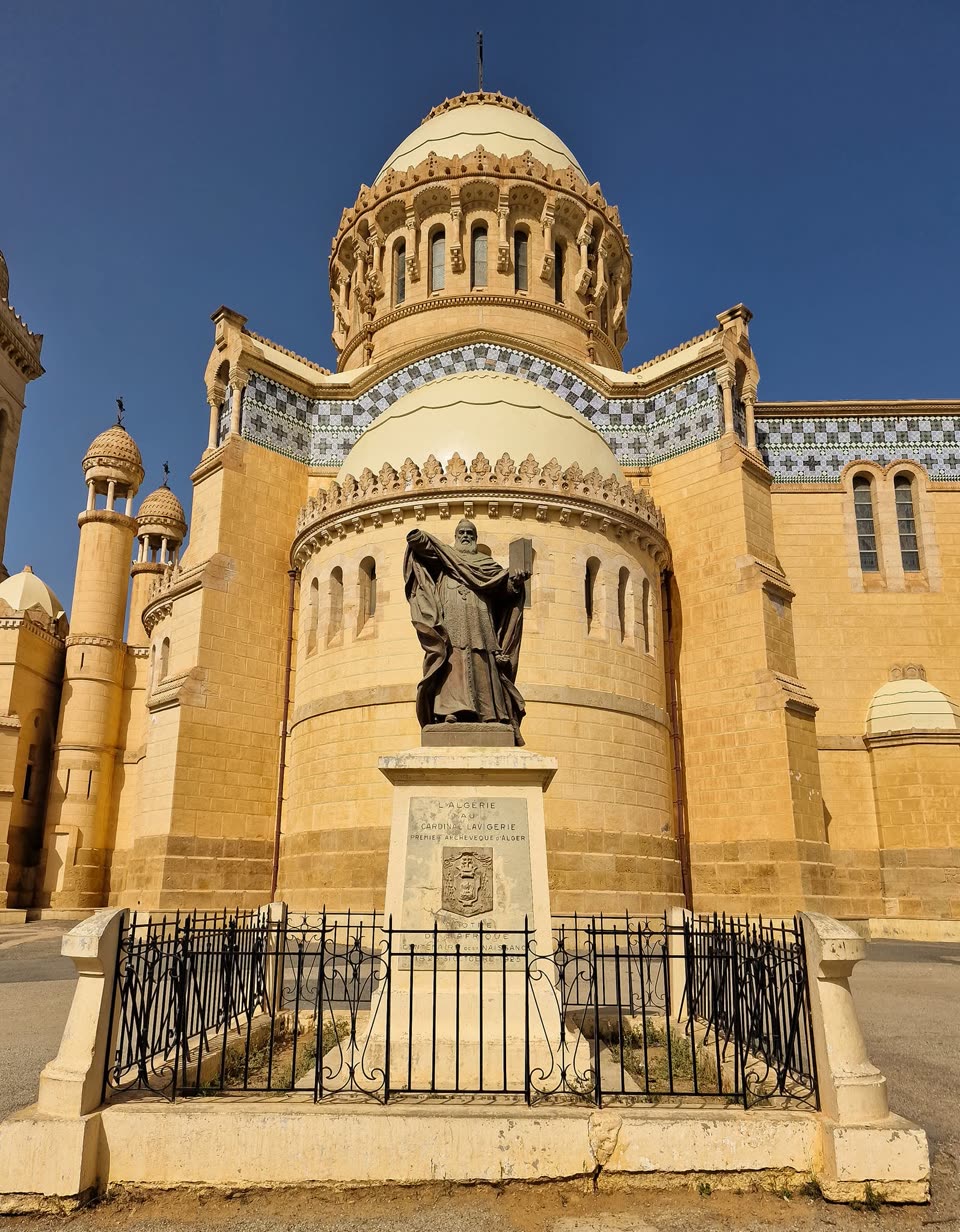
Christmas at Notre-Dame d'Afrique, above the bay of Algiers
The visible Christmas in Algiers happens in a handful of colonial-era Catholic churches, and the best known is the basilica of Notre-Dame d'Afrique at Bologhine, on the cliff above the bay. Its own site posted the arrangements for 2024 under the heading «Le culte de Noël»: «Messe du 24 décembre: 20H30 — Messe du 25 décembre: 18H00». Half past eight on Christmas Eve, six o'clock on Christmas Day.
The inscription in the apse is the thing visitors remember. It reads «Notre Dame d'Afrique priez pour nous et pour les Musulmans» — Our Lady of Africa, pray for us and for the Muslims.
Le culte de Noël — Basilique Notre-Dame d'Afrique, Algiers, 21 December 2024
A Christmas concert that filled the basilica with Muslims and Christians
In December 2025 an Algerian choir, Chorale Nagham, gave a free Christmas concert at Notre-Dame d'Afrique. The basilica filled with Algerians «di diverse generazioni e religioni» — of different generations and religions. The audience greeted «O Holy Night» with youyous, the ululation that carries North African celebrations.
Algeria's government-owned radio stations broadcast Christmas and Easter services, in French and in Arabic. The US State Department's religious-freedom report records it in one line and does not say which station or which service.
Christians are well under one per cent of about 46 million Algerians, and beyond that the figures are guesses. The State Department reports that «religious leaders' unofficial estimates of the number of Christians range from 20,000 to 200,000» — a range in which the top is ten times the bottom.
Most of them are foreign residents, including students and migrants from sub-Saharan Africa. Algerian citizens who are Christian are mostly Protestant. They live «mostly in Algiers and the provinces of Bejaia, Tizi Ouzou, Annaba, Ouargla, and Oran».
Islam is the state religion, and freedom of worship is guaranteed where it is exercised in accordance with the law. Converting is not illegal — but trying to convert Muslims is a criminal offence, punishable by up to five years in prison and a fine of a million dinars.
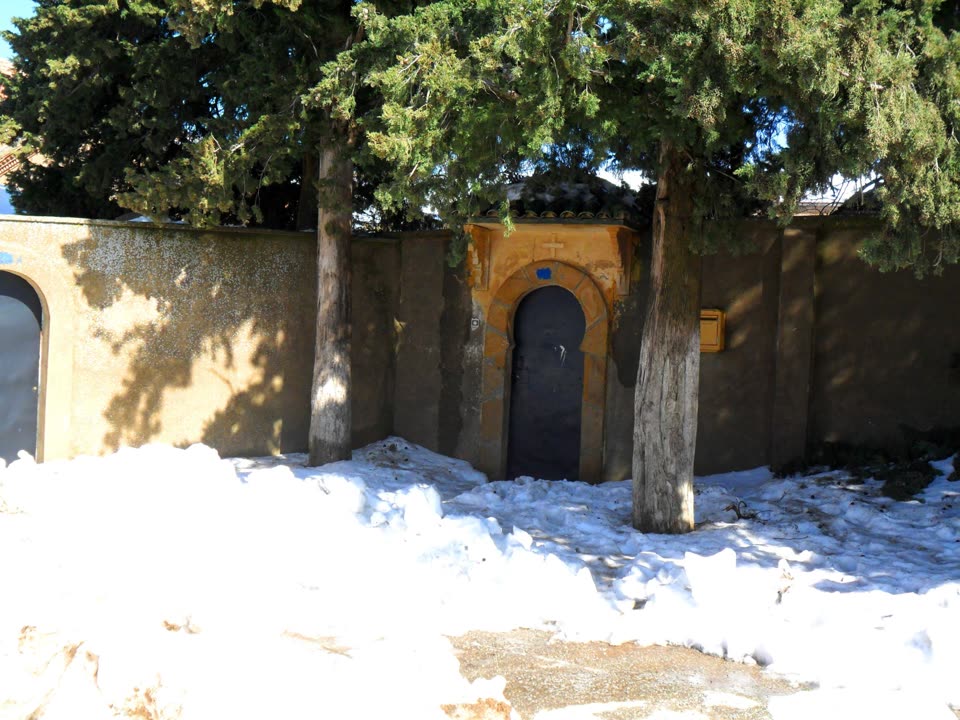
Since 2017 the authorities have closed dozens of Protestant churches, most of them in Kabylie, saying they lacked permits or broke safety rules. The State Department's 2023 report puts «the total number of closed churches since 2017 to 42», and records that by the end of that year the Protestant Church of Algeria said only three of its churches were still open. Members of Protestant congregations have been given prison sentences for unauthorised worship.
In the same report and the same year, Catholic officials say they can hold services without interference. The basilica above Algiers advertises its Christmas Mass times on its own website.
Both of those are true at once, and that two-track picture is the honest one.
On Christmas Eve 1993, armed men burst into the Trappist monastery of Tibhirine in Médéa, demanded money and left without harming anyone. In 1996 seven of the monks were kidnapped and killed. They were beatified in Oran in 2018.
Responsibility for the killings has never been settled: the French and English accounts name different armed groups, and one of them names the Algerian army.
The Catholic diocese of Algiers was created in 1838, eight years after the French conquest. Before independence in 1962 there were several hundred thousand Christians in Algeria, mostly European settlers. Most of them left around 1962, and the churches they built are what the present, far smaller Christian population keeps Christmas in.
Every claim carries its own citation. They are collected below, so you
can see what the page rests on and how much of it comes from where.
Le culte de Noël — Basilique Notre-Dame d'Afrique, Algiers, 21 December 2024. Retrieved 2026-11-04. archived 12 May 2026The basilica's own post: «Le culte de Noël … Messe du 24 décembre: 20H30 Messe du 25 décembre: 18H00».
Loi n° 63-278 du 26 juillet 1963 fixant la liste des fêtes légales (consolidated text) — Kanonix legal database (Algeria). Retrieved 2026-11-04.Article 3 as the consolidated text prints it: «Sont fêtes légales, chômées et payées, chaque année pour les personnels algériens et étrangers de confession chrétienne … Lundi de Pâques ; L'Ascension ; Lundi de Pentecôte; 15 août (Assomption) ; 25 décembre (Noël).» The same article adds that non-Christian staff left idle by it are paid anyway: «Le personnel non chrétien qui se trouverait en chômage par application des dispositions du présent article sera rémunéré même s'il est payé à l'heure ou à la journée.»
Notre-Dame d'Afrique — Wikipedia (English). Retrieved 2026-11-04. archived 6 September 2026For the apse inscription only: «the inscription on the apse : Notre Dame d'Afrique priez pour nous et pour les Musulmans».
Christianity in Algeria — Wikipedia (English). Retrieved 2026-11-04. archived 12 October 2026«The Catholic Church was reintroduced in Algeria after the French conquest, when the Diocese of Algiers was established in 1838.»