A synthesised voice — not a recording of a person — saying С Рождеством Христовым
in ru-RU.
With the Nativity of Christ — the Russian Orthodox greeting, and in Uzbekistan it is said by the head of state as well as in the churches. Russian is the language of the community that keeps the feast; it is not an official language of Uzbekistan, and no Uzbek-language Christmas greeting is in use.
The cathedral in Tashkent says the Christmas liturgy five times
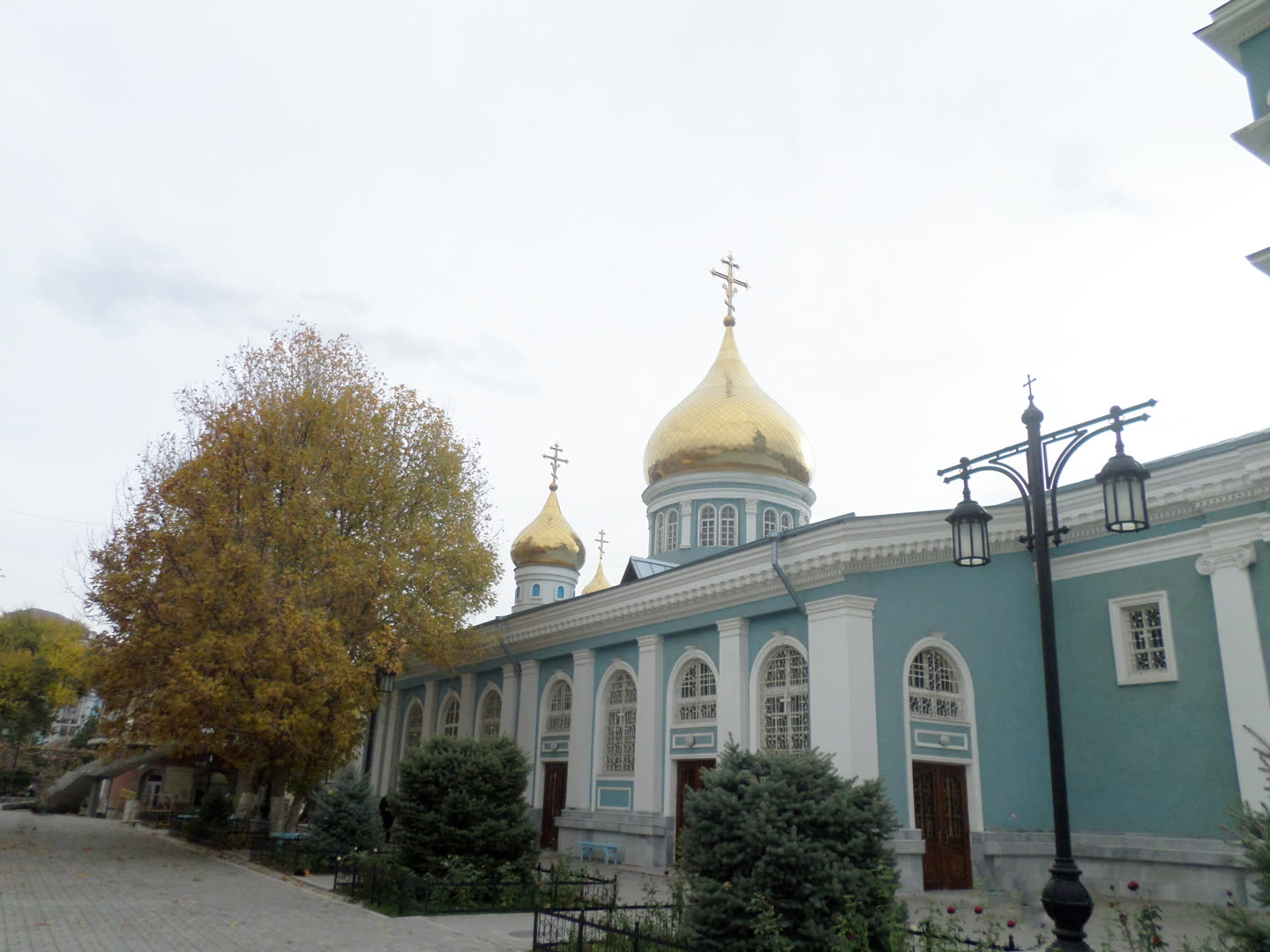
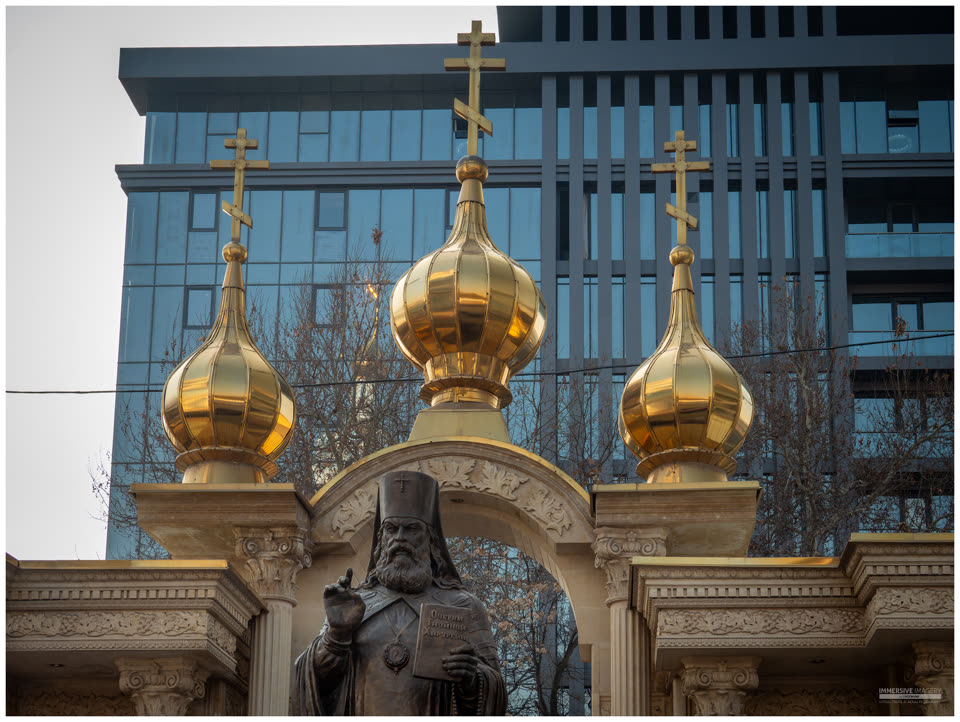
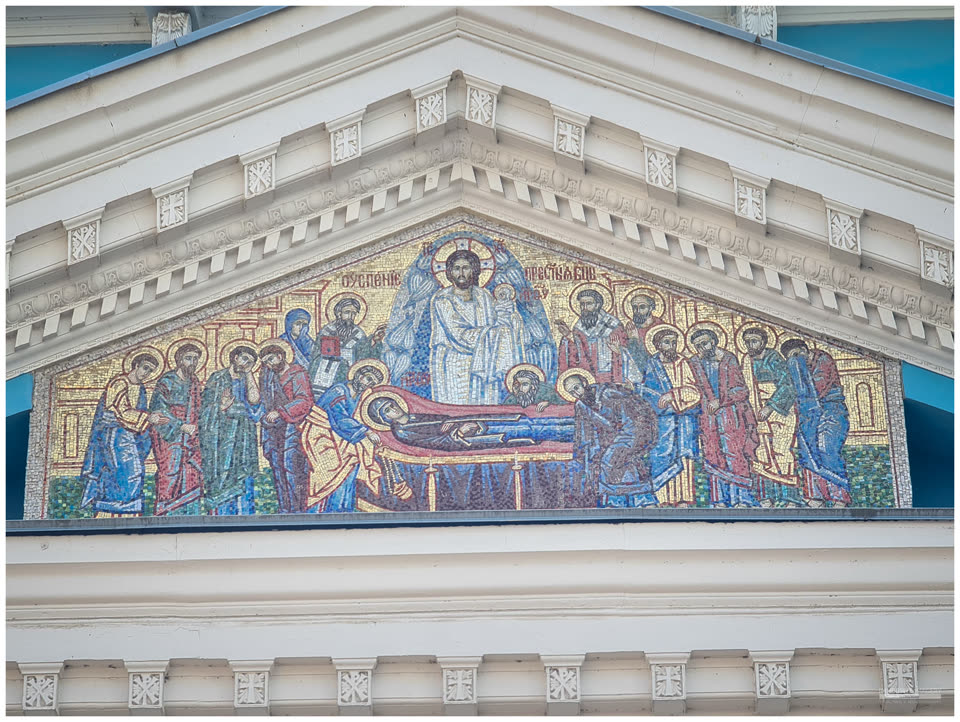
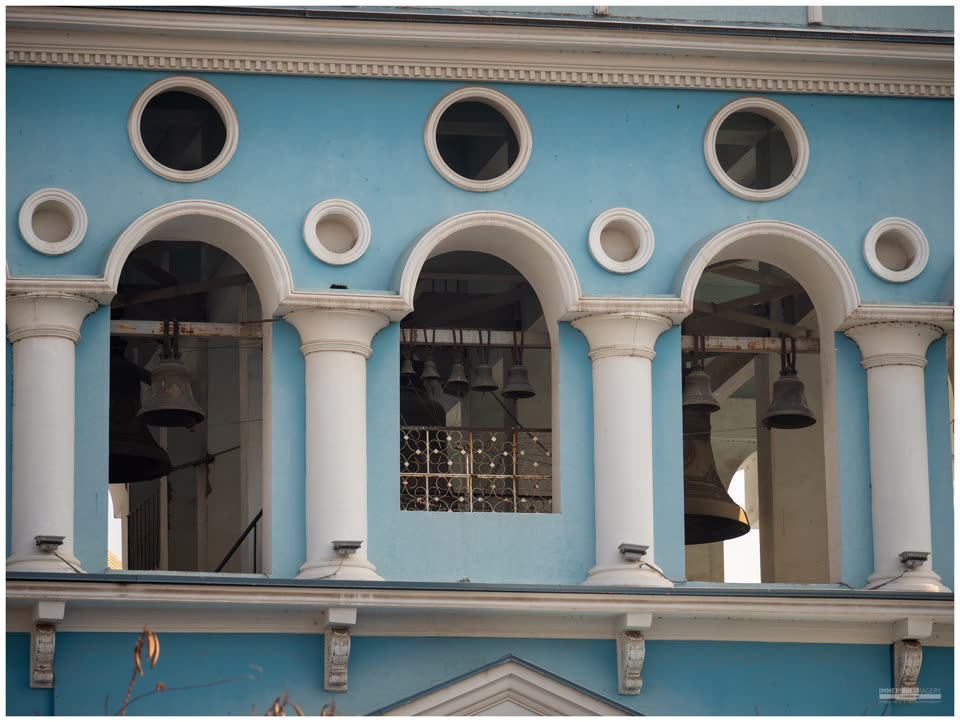
The Holy Dormition Cathedral in Tashkent is the centre of an Orthodox Christmas across Central Asia, and the problem it has is that the proper hour for the service is the middle of the night.
So it says it more than once. The Metropolitan of Tashkent and Uzbekistan, Vikentiy: «Традиционно литургия совершалась ночью, потому что Рождество Христово происходило ночью. Но не все могут присутствовать на ночной службе, поэтому мы совершаем несколько литургий» — traditionally the liturgy was at night because the Nativity happened at night, but not everybody can be at a night service, so we celebrate several. Five separate liturgies, with the night one running from 23:30 on 6 January to about half past three in the morning.
It fills. In 2019 the diocese counted «более 5 тысяч верующих» — more than five thousand — at the Christmas service in that one building.
The night service is watched on a screen in the courtyard, with a fair going on beside it
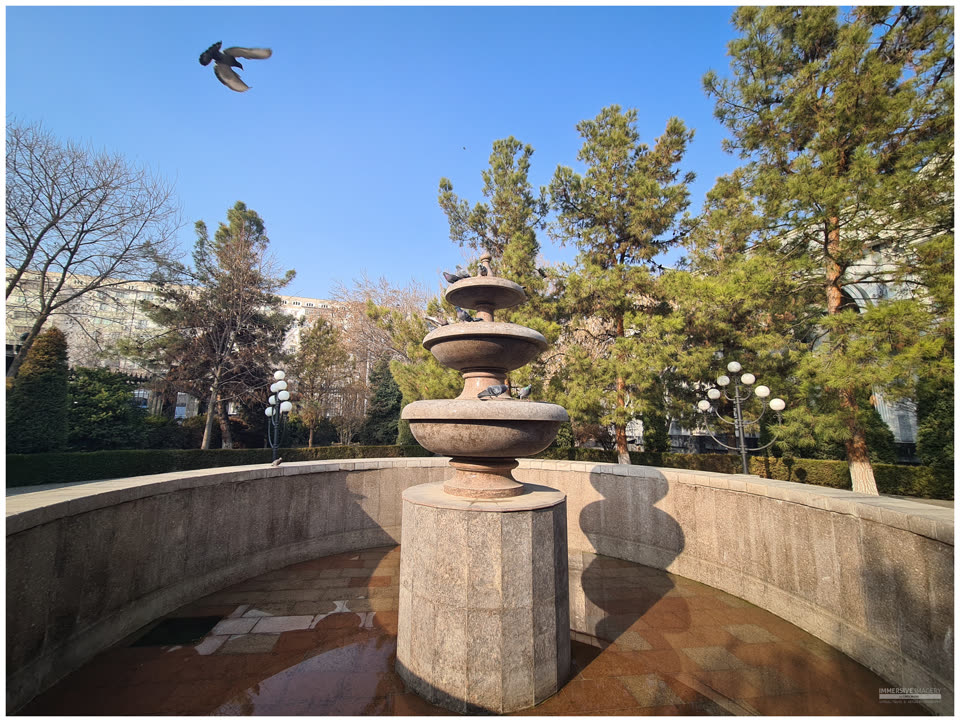
Not everybody who comes gets inside. On Christmas Eve 2026 the cathedral put the liturgy on a live screen in its own courtyard so that the people standing outside could follow it without going in.
In the same courtyard: «Здесь же работала небольшая ярмарка, где продавали рождественскую выпечку, чай и сувениры» — a small fair selling Christmas pastries, tea and souvenirs. Ambulance and emergency crews were on duty on the grounds and police kept order outside.
The report names no dish. The pastries are Christmas pastries and nothing in the source makes them Uzbek.
6 January is the strictest fast of the season, and some eat nothing at all
The day before is called sochelnik, and the Uzbek report of it is blunt about what it involves: «Традиционно перед Рождеством 6 января празднуется сочельник — преддверие Рождества. В этот день принято соблюдать особо строгий пост. Некоторые верующие принимают очень скромную пищу или совсем воздерживаются от неё.»
A particularly strict fast: some take a very modest meal and some abstain altogether. The reason given is the forty days Christ is said to have fasted before his ministry, and the forty-day fast the early Church kept before baptism.
In his sermon that night Metropolitan Vikentiy told the congregation that sochelnik is a day of preparation and of attention to oneself, and asked them to drop the fuss and live more deliberately.
Christmas opens twelve days of visiting that end in the river
7 January is not the end of it. Metropolitan Vikentiy, quoted by Gazeta.uz: «7 января начинаются святочные дни, посвящённые Рождеству. Они продлятся до праздника Крещения Господня, который отмечается 19 января.»
Svyatki — the twelve days from the Nativity to the Theophany on 19 January. What they are for, in the same account: «В святки принято ходить в гости к близким, поздравлять и угощать их, посещать нуждающихся, совершать дела милосердия по отношению к ним и славить Иисуса Христа» — visiting relatives, congratulating and feeding them, calling on people in need, works of mercy, and glorifying Christ.
That is the bishop's description of what the season is for rather than a count of what anybody did.
The tree, the lights and the old man in red are all New Year's, and people say so
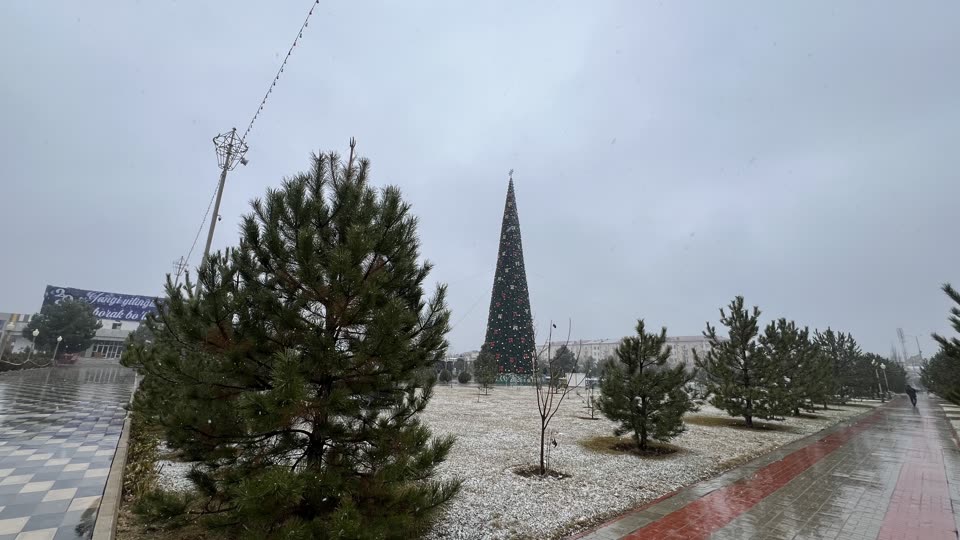
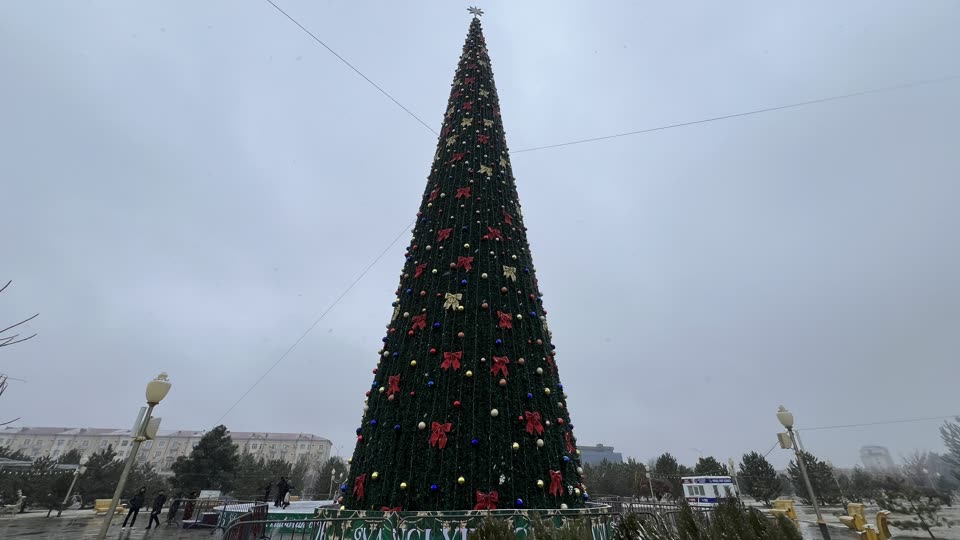
Walk through Tashkent in the second half of December and it looks like Christmas: lit trees, decorations, an old man with a white beard, children with presents. None of it is called Christmas.
Dr Dilnoza Duturaeva: «We decorate a "New Year tree" (we do not call it as a "Christmas tree") and our houses with lights and other decorations, invite Qor Bobo (Snowy Grandpa), the Uzbek equivalent of Santa Claus and his granddaughter Qor Qiz (Snowy Girl) who give presents to children in a New Year party.»
The furniture is the same and the feast underneath it is a different one. This is the Soviet winter holiday, built on purpose in the 1930s so that there would be a midwinter celebration which was not Christmas, and it long outlived the state that built it.
Widely repeated claims about Christmas in Uzbekistan that do not survive
checking. Each one says what is actually the case, because a correction
with nothing in its place leaves you worse off than before.
Contradicted
The lit trees in Tashkent in December are Christmas trees.
What is actually the case. They are New Year trees, and Uzbeks say so in as many words. Dr Dilnoza Duturaeva, a historian of Central Asia, on her own country's December: «We decorate a "New Year tree" (we do not call it as a "Christmas tree")».
The holiday the tree belongs to is 1 January, which has been an official holiday in Uzbekistan since 1948 and is the only winter day off there is. Christmas is neither a public holiday on 25 December nor on 7 January, and the man who comes with the presents, Qor Bobo, comes for the new year.
What IS Christmas in Uzbekistan is on 7 January and happens mostly in one building: the Holy Dormition Cathedral in Tashkent, which says the liturgy five times over that night and the following day because not everybody can come at half past eleven.
In December 2012 the authorities «slapped a ban on Ded Moroz and Snegurochka, as well as some other ancillary seasonal characters, such as the witch of Slavic folklore, Baba Yaga». The argument was that they are not Uzbek characters and do not reflect the local mindset.
It did not hold. The figures were back within about two years, helped by a ruling from the Muslim Spiritual Directorate of Uzbekistan: the decree said celebrating the new year is «permissible from the point of view of common sense and sharia law».
The argument underneath it has been running for more than a decade and has not stopped. Eurasianet quotes a man from a village in the Ferghana Valley whose family last kept the holiday in 2004, because the year after that his father said there would be no more of it.
The Uzbek government's own figures, as reported to the United States State Department: «According to the Uzbek government, there are 35 million Sunni Muslims, 122,000 Shiite Muslims, 822,000 Orthodox Christians, and 540,000 adherents of other faiths» in a population of about 36 million.
That makes Orthodoxy by a long way the largest minority religion — and the number is a headcount of a community rather than of churchgoers.
The Catholic figure in the same report is of a different kind and far smaller: «A local priest estimates there are 700 practicing Roman Catholics.» One man's estimate of the people he actually sees.
On 7 January 2023 Shavkat Mirziyoyev sent messages to Patriarch Kirill of Moscow and to Metropolitan Vikentiy of Tashkent, congratulating them and all Orthodox Christians on the feast.
«От всей души поздравляю Вас со светлым праздником православных христиан – Рождеством Христовым. Этот древний христианский праздник, наполняя сердца людей верой в торжество добра и справедливости, укрепляет духовно-нравственные ценности, обстановку мира, согласия и взаимопонимания в обществе.»
It is a greeting from the head of a state that does not give the day off, to a church whose members are about one person in forty-four.
Фото: Православные Узбекистана встретили Рождество — Gazeta.uz, 7 January 2026. Retrieved 2026-10-31.On the service: «Служба началась в 23:30.» On the courtyard: «На территории собора в этом году была организована прямая трансляция богослужения. Прихожане могли следить за службой на экране, не заходя в храм.» On who was there to keep it safe: «Во время праздничного богослужения на территории собора дежурили службы медицинской помощи и МЧС. За общественным порядком следили сотрудники органов внутренних дел.»
Uzbekistan: «A trendy way to celebrate the New Year» — an interview with Dr Dilnoza Duturaeva — L.I.S.A., the science portal of the Gerda Henkel Stiftung. Retrieved 2026-10-31. archived 22 March 2016An Uzbek historian, asked what the Christmas days are like at home, answering in one sentence: «Christmas is not an official holiday in Uzbekistan and we have not a day off on this date. However it is a religious holiday for Christians in Uzbekistan, who are mostly Russian Orthodox using the Julian calendar. For this reason they celebrate Christmas not in December 25, but in January 7 by the Gregorian calendar.»
В Узбекистане высоко ценят конструктивный диалог с Русской Православной Церковью – Мирзиёев поздравил православных христиан с Рождеством — Podrobno.uz, Tashkent, 7 January 2023. Retrieved 2026-10-31. archived 20 April 2026The President of Uzbekistan writing to the Patriarch of Moscow and to the Metropolitan of Tashkent on 7 January: «Ваше Святейшество! От всей души поздравляю Вас со светлым праздником православных христиан – Рождеством Христовым. Этот древний христианский праздник, наполняя сердца людей верой в торжество добра и справедливости, укрепляет духовно-нравственные ценности, обстановку мира, согласия и взаимопонимания в обществе» — Your Holiness, with all my heart I congratulate you on the bright feast of Orthodox Christians, the Nativity of Christ.
Как празднуют православное Рождество в Средней Азии — The Times of Central Asia (Russian edition). Retrieved 2026-10-31.For the five liturgies and the hours: «Службы начнутся в 23:30 6 января и закончатся в 3:30 утра. Чтобы обеспечить максимальное участие, собор проводит пять отдельных литургий.»