Christmas Day in Egypt is 7 January. It is a public holiday.
How to say it
Arabic
كل سنة وانتو طيبين
kull sana w-intu tayyibin
say it: kull SAN-a win-TOO tie-yi-BEEN
A synthesised voice — not a recording of a person — saying كل سنة وانتو طيبين
in ar-EG.
What is actually said is not about Christmas. «Kull sana w-intu tayyibin» — may you be well every year — is the Egyptian greeting for any feast at all, and it is what the head of state said at the Christmas service in the Nativity of Christ Cathedral on 6 January 2026, twice, once to open and once to close. The feast has a name of its own and it is the one the state and the church both use: عيد الميلاد المجيد, the Glorious Feast of the Nativity.
The spelling is colloquial and is kept that way. انتو for أنتم and طيبين for طيبون are Egyptian Arabic rather than written Arabic, which is how the state information service transcribed the spoken words. The written form in the same address is «كل عام وانتم بخير».
The fast is forty-three days, and the day it starts on moves
The Coptic Orthodox Nativity fast runs for forty-three days and ends with the feast on 7 January. It begins on 25 November in most years and on the 26th in others, because the Coptic months move against the Gregorian ones in the year before a leap year: the fast opened on 25 November in 2026 and opens on 26 November in 2027. What it is counting towards is 29 Kiahk.
A pope wrote the fast down in the eleventh century, with a rule for a Christmas that falls on a fast day
The fast was fixed by Pope Christodoulos, sixty-sixth patriarch of the Coptic Orthodox Church (1046–1077), in the canons by which he set out the obligatory fasts. He dated it by his own calendar — from the feast of Saint Mina on 15 Hatour through to 29 Kiahk — and he added the rule that makes it a document rather than a custom: if the Nativity itself falls on a Wednesday or a Friday, the two weekly fast days, the fast is broken that day and not kept at all. He gave Epiphany on 11 Toba the same treatment.
The month before Christmas is a month of singing, and the praise has a number in its name
Kiahk, the month Christmas falls in, is kept in Egyptian churches as the month of praise. Through it the congregations sing a vigil that goes by several names at once — the month of praise, the Kiahk praise, the praise of the Virgin’s month, and the praise of seven and four. The number is the structure. The seven are the Theotokias, from the Greek for God-bearer, the praises of the Virgin Mary; the four are the Hoses, from the Coptic word for praise. The fourth Hos is Psalms 148, 149 and 150, which are psalms of nothing but praise.
«كيهك» شهر التسبيح في الكنيسة — بوابة أخبار اليوم (Akhbar El-Yom), Cairo — quoting Father Abd al-Masih Basit of the Church of the Virgin, Mostorod
The holiday is not standing law. A prime minister declares it, every January
Seven January is on the Presidency’s list of national holidays, and it still arrives by decision each year. On Saturday 4 January 2025 the Prime Minister announced the coming Tuesday as an official paid holiday for ministries, government agencies, public authorities, local administration units, public sector and public business sector companies — and private sector companies too. The decision carried one exception: examinations went ahead on the dates already set. A year later, on 4 January 2026, the same announcement was made for the Wednesday, that time without the private sector in the list the service printed.
The president comes to the cathedral, and has done every year since 2015
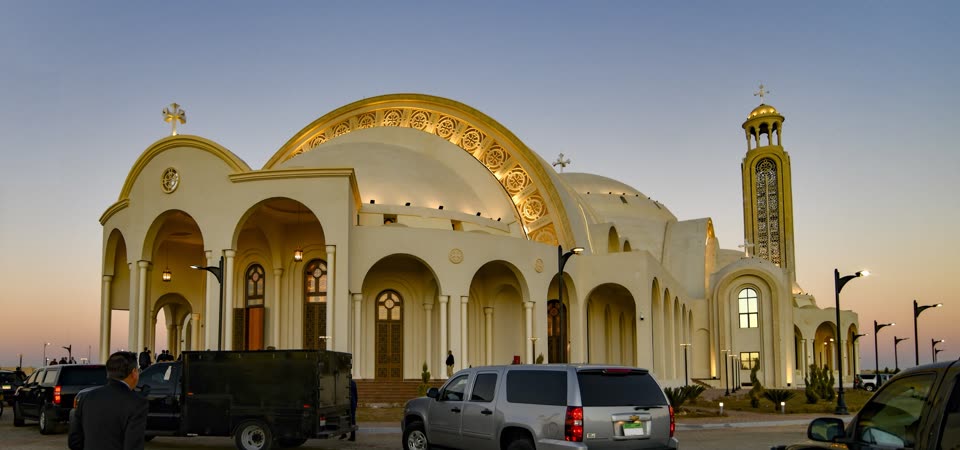
On the evening of 6 January the head of state goes to the Christmas liturgy and says so from the lectern. In 2026 it was the Cathedral of the Nativity of Christ in the New Administrative Capital, where Pope Tawadros II, Pope of Alexandria and Patriarch of the See of Saint Mark, met him at the door; the president gave him a bouquet of white roses, told the congregation he had been coming since 2015, and the Pope called the visit a national tradition the president had established. The Egyptian state publishes the whole thing in Arabic, in English and in French.
The first dish after the fast goes to the neighbours before anyone sits down
In the countryside of Beheira, in the western Delta, the plate that meets a family coming home from the Christmas liturgy is fatta — and some of it leaves the house first. A trader in Delengat describes the round: plates of fatta and meat go to the Muslim neighbours before the family eats, and the neighbours come back into the kitchen for the biscuit-baking. A table of affection before it is a table of food, he calls it.
Egypt has a second Christmas, two weeks earlier, and the state does not give a day off for it
Not every Egyptian Christian keeps 7 January. The Coptic Catholic Church and the Anglican Episcopal Church of Egypt follow the Western calendar and hold their Christmas liturgy on the night of 25 December, with a tree and a crib in the church. It is a working day. The national holiday is 7 January and 25 December is not on the Presidency’s list at all, so the congregation that keeps the earlier date keeps it around a working week.
Muslim and Christian neighbours bake the feast biscuits together, days before anyone fasts their last day
Beheira's own rite around the Christmas baking is that it is done collectively: the women of neighbouring households, Muslim and Christian, gather some days before the feast to make the qurs and the biscuits between them. It runs in both directions — the Coptic families send out plates of fatta and meat to their Muslim neighbours before sitting down to eat, and those neighbours are at the baking.
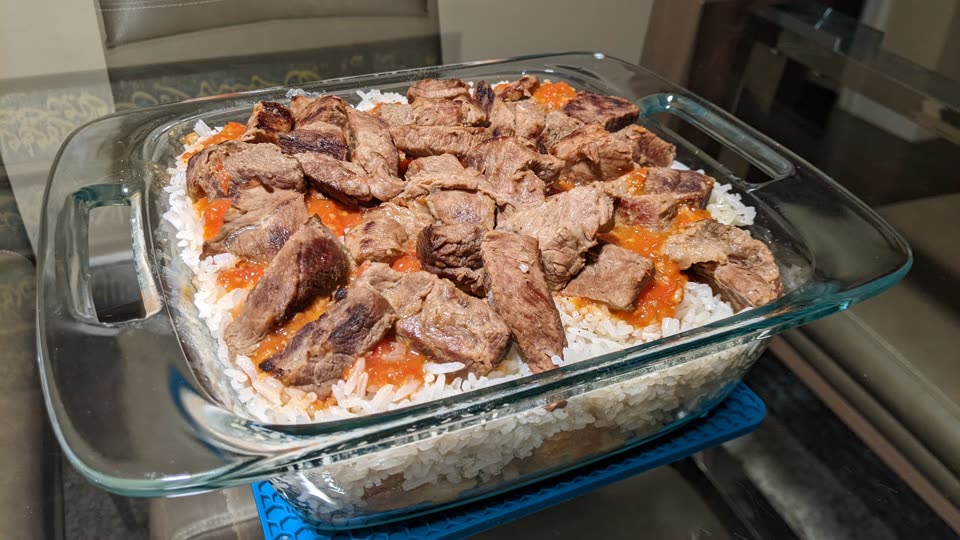
Dry bread toasted in the village oven, meat, and a mix of garlic and vinegar whose smell, an Al-Dostor interviewee says, goes down the lanes. In Beheira in the western Delta the fatta is made with farm ghee and with beef or mutton killed for the occasion, and it is the first plate on the table when the family comes back from the Christmas liturgy — after some of it has gone to the neighbours.
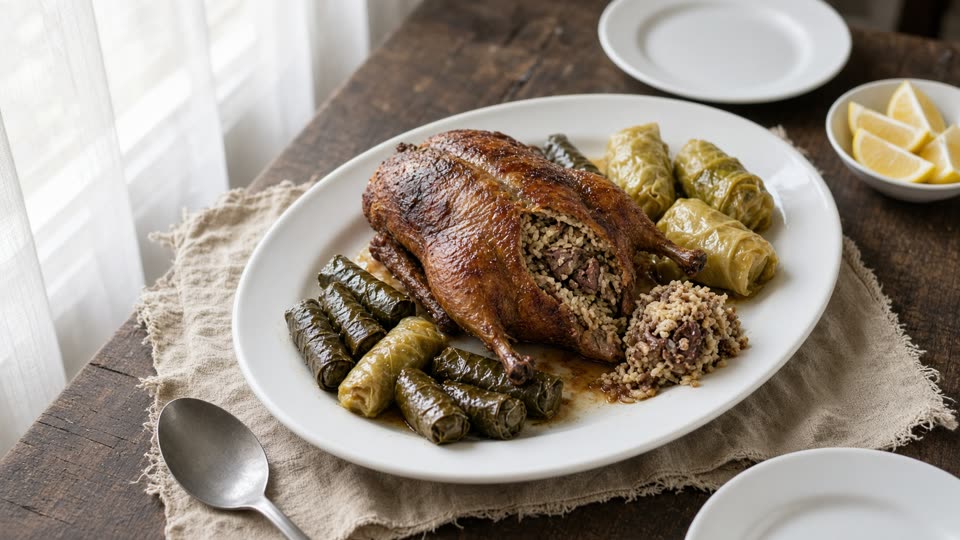
A lawyer in Beheira tells Al-Dostor that the feast in the province's villages is not complete without the duck, stuffed with rice, liver and gizzards and set down beside stuffed cabbage and stuffed vine leaves. Having it on the table is read as the proof that the guest has been honoured and that forty-three days of fasting have been broken properly.
Taro corms stewed soft with chard, eaten at the feast-day lunch rather than at the table the family comes home to from the midnight liturgy. The same Al-Dostor interviewee says many Beheira households will not sit down to that lunch without it, and reads the whiteness of the dish as purity.
Widely repeated claims about Christmas in Egypt that do not survive
checking. Each one says what is actually the case, because a correction
with nothing in its place leaves you worse off than before.
Oversimplified
Egypt keeps Christmas on 7 January because the Coptic Church uses the Julian calendar.
What is actually the case. The Coptic Church uses the Coptic calendar, which is the ancient Egyptian one. It has thirteen months — twelve of thirty days and a short one of five or six at the end — and its year begins on 11 September, not in January. The month Christmas falls in is Kiahk, which begins on 10 December, and the feast is its twenty-ninth day. The arithmetic puts 29 Kiahk on the same day as Julian 25 December, which is where the shorthand comes from and why it is not simply wrong; but the calendar being kept is Egyptian, it is counted in Egyptian months, and its new year is in September.
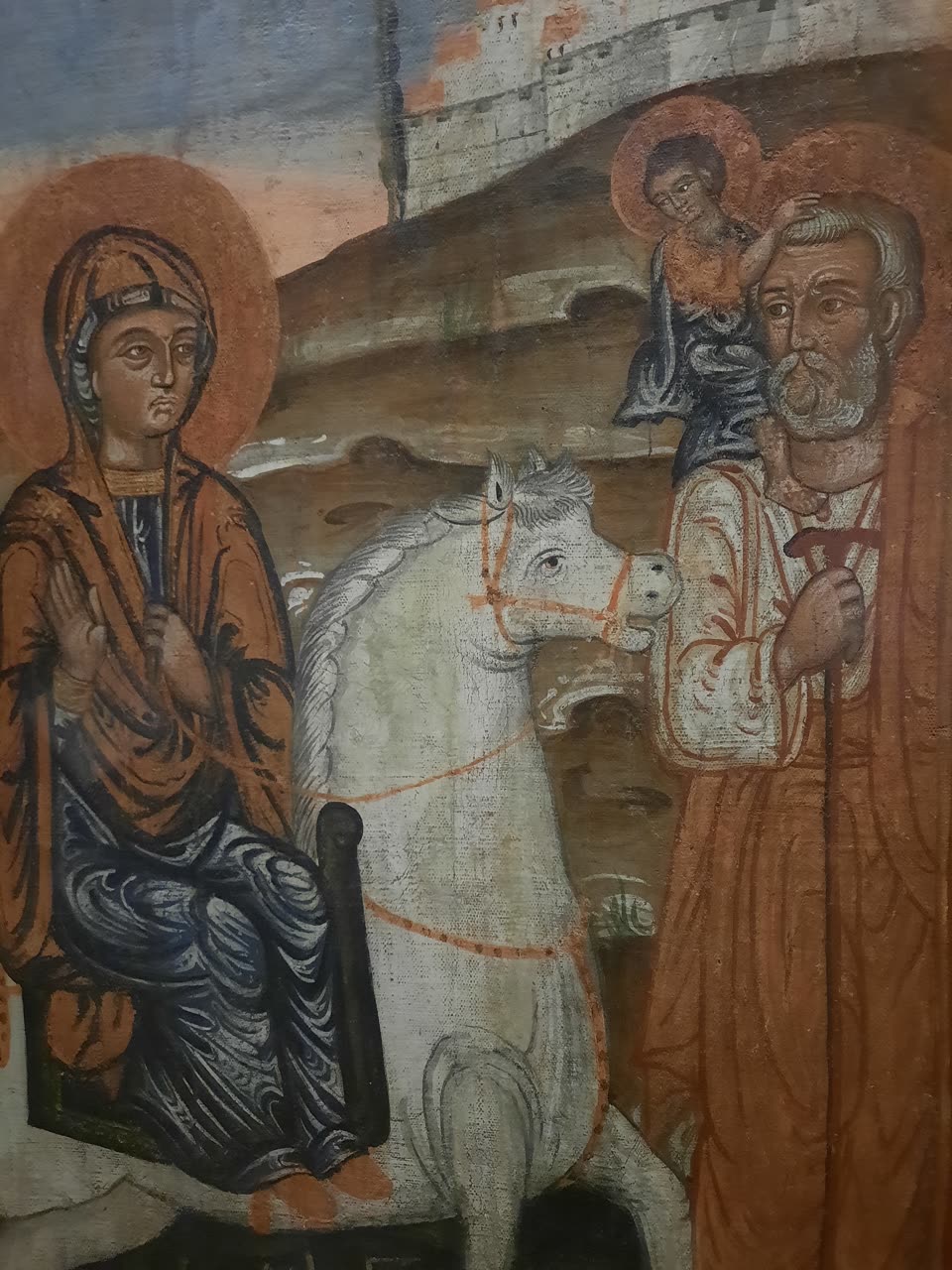
Egypt is the one country where the Christmas story keeps going after the Nativity, and it has a national feast for the sequel. The flight into Egypt is kept as a feast of its own — the Entrance of the Lord into Egypt, 1 June — and the festivals that grow around the route the Holy Family is said to have taken were inscribed by UNESCO in 2022 on the Representative List of the Intangible Cultural Heritage of Humanity. The inscription describes two festivals, not one, and it describes who goes: «Egyptians, including Muslims and Coptic Christians of all ages and genders, participate in large numbers».
Seven January is not where this feast started and not where it will stay. The date the Coptic Church keeps is 29 Kiahk, and 29 Kiahk once fell on 25 December — the same day as everybody else’s. Then the calendars came apart twice over. The Gregorian reform of 1582 struck ten days out of the Western year at a stroke, which put 29 Kiahk on 4 January; the century years did the rest, because the Egyptian reckoning kept 1700, 1800 and 1900 as leap years and the Gregorian one did not. Five January, then 6 January, and 7 January now. The next century year is 2100, and the same arithmetic takes the feast to 8 January — in 2101 rather than 2100, because the leap day the Gregorian rule drops falls in the February after that January.
Every claim carries its own citation. They are collected below, so you
can see what the page rests on and how much of it comes from where.
Coptic Feasts for 2026 and for 2027 — CopticChurch.net, the Coptic Orthodox Church Network. Retrieved 2026-10-25.The 2026 table gives «Christmas Fast November 25th»; the 2027 table gives «Christmas Fast November 26th». Both give «Christmas January 7th».
The Coptic Calendar of Martyrs: Coptic Feasts & Easter Calculations — CopticChurch.net, the Coptic Orthodox Church Network. Retrieved 2026-10-25. archived 4 October 2026The structure, in the church network’s own words: «The Coptic calendar has 13 months, 12 of 30 days each and intercalary month at end the year of 5 or 6 days depending whether the year is leap year or not.» and «The year starts on 11 September in the Gregorian Calendar».
National Holidays 2026 — Presidency of the Arab Republic of Egypt (presidency.eg). Retrieved 2026-10-25. archived 5 October 2026It opens the year with «Wednesday 07 January Coptic Christmas Day» and runs on through «January 25th Revolution and National Police Day», Eid Al-Fitr, «Sham El-Nessim», Sinai Liberation Day, Labor Day, Arafat’s Day, Eid Al-Adha, the Islamic New Year, the June 30 and July 23 revolutions, the Prophet Muhammad’s Birthday and Armed Forces Day.
Le président Al-Sissi arrive à la cathédrale de la Nativité du Christ — Service d’information de l’État, République arabe d’Égypte. Retrieved 2026-10-25.The same event in the state’s French edition: «afin de présenter ses vœux à l’occasion de la fête de Noël», and «À son arrivée, le chef de l’État a été accueilli par Sa Sainteté le pape Tawadros II, pape d’Alexandrie et patriarche de la prédication de saint Marc».
الرئيس السيسي يشارك في احتفالية عيد الميلاد المجيد ٢٠٢٦ — State Information Service, Arab Republic of Egypt (الهيئة العامة للاستعلامات), 6 January 2026. Retrieved 2026-10-25. archived 8 October 2026It opens «بسم الله الرحمن الرحيم، هقول لكم كل سنة وانتو طيبين» and ends «كل سنة وانتو طيبين، متشكر جدا». In between: «كل سنة وانتو طيبين وعيد سعيد علينا كلنا», and the formal closing «كل عام وانتم بخير وسلام وسعادة».
Egyptian Cabinet Announces Tuesday Official Holiday Marking Coptic Christmas Day — State Information Service, Arab Republic of Egypt, 4 January 2025. Retrieved 2026-10-25. archived 16 November 2025In full: «Egyptian Prime Minister Mostafa Madbouly issued a decision on Saturday 4/1/2025, announcing coming Tuesday 7/1/2025as an official paid holiday for employees in ministries, government agencies, public authorities, local administration units, public sector companies, public business sector companies, and private sector companies, marking the Coptic Christmas Day.» Then: «The decision said that exams, however, will continue according to the dates set by the competent authority». The date and the word «as» are run together in the service’s own text.
PM declares Wednesday official paid holiday for Christmas — State Information Service, Arab Republic of Egypt, 4 January 2026. Retrieved 2026-10-25.The 2026 notice: «Prime Minister Mostafa Madbouly declared Wednesday, January 7, an official paid holiday on the occasion of Christmas.» and «The decision applies to employees of ministries, government departments, public authorities, local administration units, public sector companies, and public business sector companies.»
Festivals related to the Journey of the Holy family in Egypt — UNESCO, Representative List of the Intangible Cultural Heritage of Humanity, inscribed 2022 (element no. 01700). Retrieved 2026-10-25. archived 11 September 2026UNESCO’s description: «The festivals related to the Journey of the Holy Family in Egypt commemorate the Holy Family’s voyage from Bethlehem to Egypt to escape King Herod’s oppression.» The two festivals are «The Festival of the Advent of the Holy Family to Egypt», a one-day event at the beginning of June, and «The Nativity of the Virgin», kept in several towns including Durunka and Cairo between May and August. Activities named include «singing, traditional games, body-painting, re-enactments of the journey, religious processions, artistic performances and the sharing of traditional foods».
لماذا تحتفل الكنيسة المصرية يوم 7 يناير بعيد الميلاد المجيد؟ — العين الإخبارية (Al-Ain News), Abu Dhabi. Retrieved 2026-10-25. archived 16 March 2025The ten days, which are most of the drift and are in the same article: «وحتى عام 1582، أصبح الفارق 10 أيام في الاحتفال، ليقرر بابا روما وقتها بحذف 10 أيام من التقويم الميلادي» — by 1582 the gap had reached ten days, and the Pope of Rome struck ten days out of the calendar. The rule that followed: «ومع مرور السنوات يتم حذف 3 أيام كل 400 سنة», three days dropped every four hundred years.The century years: «لتصبح سنوات 1700- 1800- 1900 هي سنوات أطول "كبيسة" لدي الشرقيين، وأقصر "بسيطة" لدي الغربيين» — 1700, 1800 and 1900 longer, «leap», in the East, and shorter, «simple», in the West. The walk: «أصبح يوم 29 كيهك اليوم الذي يصادف 25 ديسمبر في الغرب، يصادف يوم 5 يناير، بعدها 6 يناير، ثم 7 يناير». The paper puts 8 January at 2100 and as an expectation rather than a date: «ليعتقد بعض العلماء مع تضاعف السنوات ووصولاً لعام 2100 ميلادياً، يتصادف 29 كيهك بـ يوم 8 يناير», SOME scholars believe.
الكنائس الكاثوليكية تحتفل بقداس ليلة عيد الميلاد في الإسكندرية — الوطن (Al-Watan), Cairo, 24 December 2022. Retrieved 2026-10-25. archived 6 January 2023The calendar sentence, in full: «وتتبع الكنيسة الأسقفية الأنجليكانية والكنيسة الكاثوليكية القبطية، التقويم الغربي وتحتفل بميلاد المسيح ليلة الخامس والعشرين من ديسمبر.» — the Anglican Episcopal Church and the Coptic Catholic Church follow the Western calendar and keep the birth of Christ on the night of the twenty-fifth of December. The report of the evening itself: «احتفل الأقباط الكاثوليك وأبناء الكنيسة الأسقفية، مساء اليوم، بليلة عيد الميلاد المجيد», and «وشهدت الكنائس الكاثوليكية تزيين شجرة الكريسماس وإقامة مزود ميلاد المسيح».
تاريخ بداية صوم الميلاد المجيد فى الشرق.. تعرف عليه — اليوم السابع (Youm7), Cairo. Retrieved 2026-10-25.The paper quotes the canon itself: «كذلك صوم الميلاد المقدس من عيد مار مينا في خمسة عشر يوما من هاتور» and on to 29 Kiahk, then «وإن وافق عيد الميلاد الشريف يوم الأربعاء أو يوم الجمعة، فيفطروا فيه ولا يصوموا بالجملة». It identifies him as «البابا خريستوذولس البطريرك الـ66» of the Coptic Orthodox Church. The paper prints the words for «29 days» and «of Kiahk» with no space between them.
«كيهك» شهر التسبيح في الكنيسة — بوابة أخبار اليوم (Akhbar El-Yom), Cairo. Retrieved 2026-10-25.The opening sentence: «بدأت الكنيسة القبطية الأرثوذكسية صوم الميلاد والذي يستمر لمدة ٤٣ يومًا ينتهي يوم ٧ يناير المقبل يوم عيد الميلاد المجيد».
مائدة الميلاد في البحيرة: مزيج بين الأصالة القبطية وكرم الريف المصري — جريدة الدستور (Al-Dostor), Cairo. Retrieved 2026-10-25. archived 7 January 2026Michael Zarif, a trader from Delengat: «إحنا بنوزع أطباق الفتة واللحمة على جيراننا المسلمين قبل ما نقعد ناكل، وهما كمان بيشاركونا في خبيز البسكويت». And Samir Kamil Salib, a retired official in the same district, on the dish itself: «تكون الفتة المصرية هي طبق الاستقبال الأول بمجرد العودة من قداس العيد».