Yesand in South Australia the 26th is Proclamation DayPublic holidays — Fair Work Ombudsman, the Australian government workplace regulator
Who brings the presents
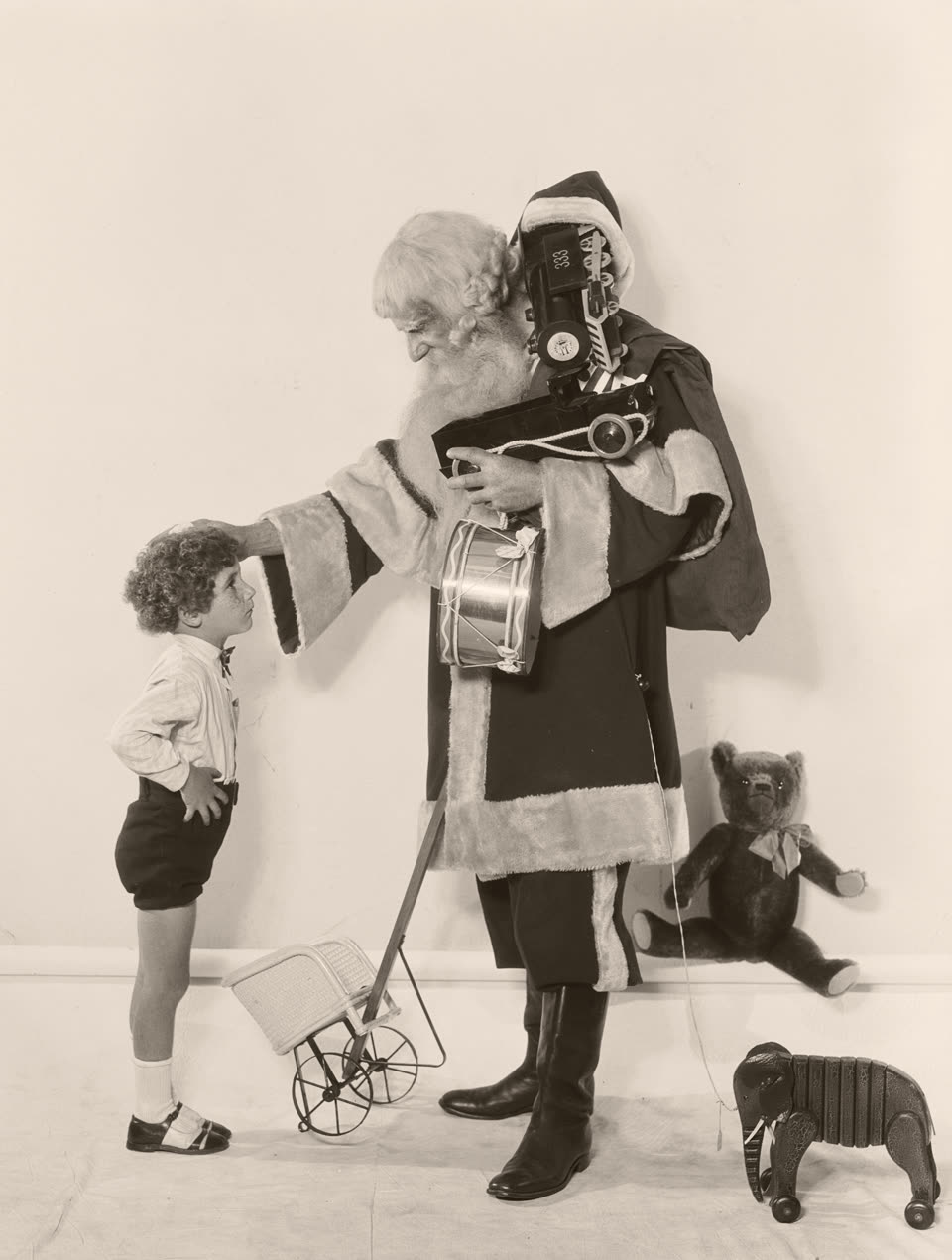
Father ChristmasMama Kritjimitji · arrives 25 December
—days
—hrs
—min
—sec
Next: Friday 25 December 2026
When is Christmas in Australia?
Christmas Day in Australia is 25 December. It is a public holiday, and in South Australia the 26th is Proclamation Day.
How to say it
English
Merry Christmas
Merry Christmas
say it: MERR-ee KRISS-məss
A synthesised voice — not a recording of a person — saying Merry Christmas
in en-AU.
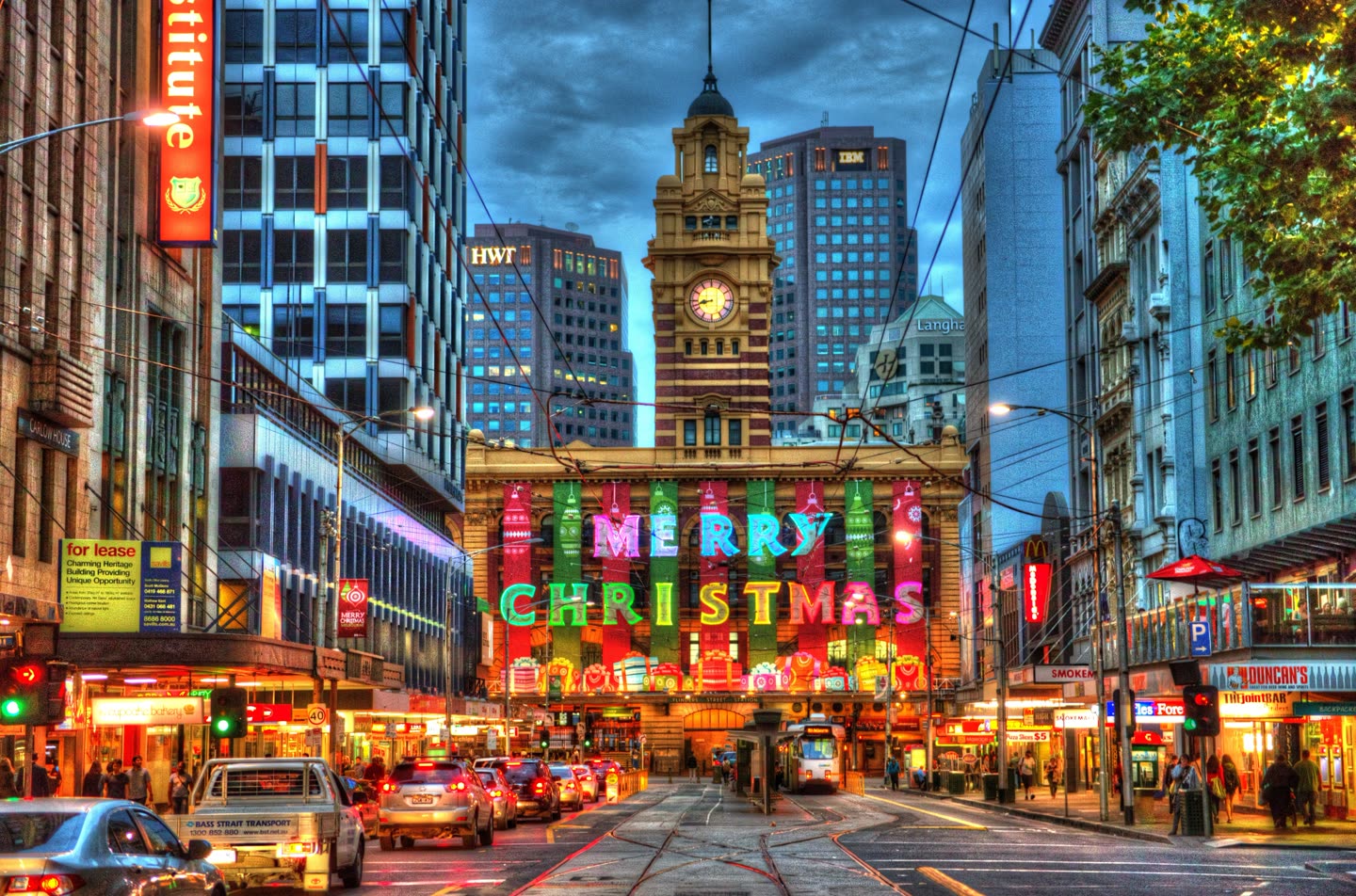
English. Melbourne spells it out in lit letters across the front of Flinders Street Station every December, which is where this is cited from. The more interesting Australian answer is which other languages it is said in: the Living Archive of Aboriginal Languages holds Christmas books and carols in Kriol, Burarra, Ndébbana, Warlpiri, Gupapuyŋu and Pitjantjatjara, and in Pitjantjatjara Father Christmas is «Mama Kritjimitji».
The local name is the one the archive prints, in a 1983 photo book from Areyonga in the Northern Territory. It is Father Christmas in Pitjantjatjara, not a separate figure.
Christmas Eve is a public holiday of a few hours, and only in some states
Australia has no single list of public holidays. The workplace regulator publishes one per state and territory, and in December they come apart. Queensland makes Christmas Eve a public holiday from 6 pm to midnight; the Northern Territory and South Australia from 7 pm. A few hours of the evening are the holiday, and the rest of the day is a working day.
Public holidays — Fair Work Ombudsman, the Australian government workplace regulator
South Australia
South Australia does not keep Boxing Day
On 26 December the rest of the country has Boxing Day. South Australia has Proclamation Day, which marks the proclamation of the colony in 1836 and falls on the same date. The regulator lists it by that name, and the substitute holiday on the following Monday is a substitute for Proclamation Day rather than for Boxing Day.
Public holidays — Fair Work Ombudsman, the Australian government workplace regulator
Victoria
Carols by Candlelight began with a radio announcer in 1938, and the rest is his own story
Norman Banks, an announcer at the Melbourne station 3KZ, put on a carol service in the Alexandra Gardens on Christmas Eve 1938. About ten thousand people came and 3KZ broadcast it. Why he did it is less certain than that he did: the account of an elderly woman singing alone by a candle, which Banks said he saw walking home the Christmas Eve before, comes from Banks. The State Library introduces it with «The story goes» and eMelbourne writes that he claimed it. The event still runs, and the Royal Victorian Institute for the Blind has been its sole beneficiary since 1965.
Carols by Candlelight — State Library Victoria, Ask a Librarian blog (K. Best), 21 December 2020
Carols by Candlelight — eMelbourne, the city past and present — University of Melbourne (C. M. Childs)
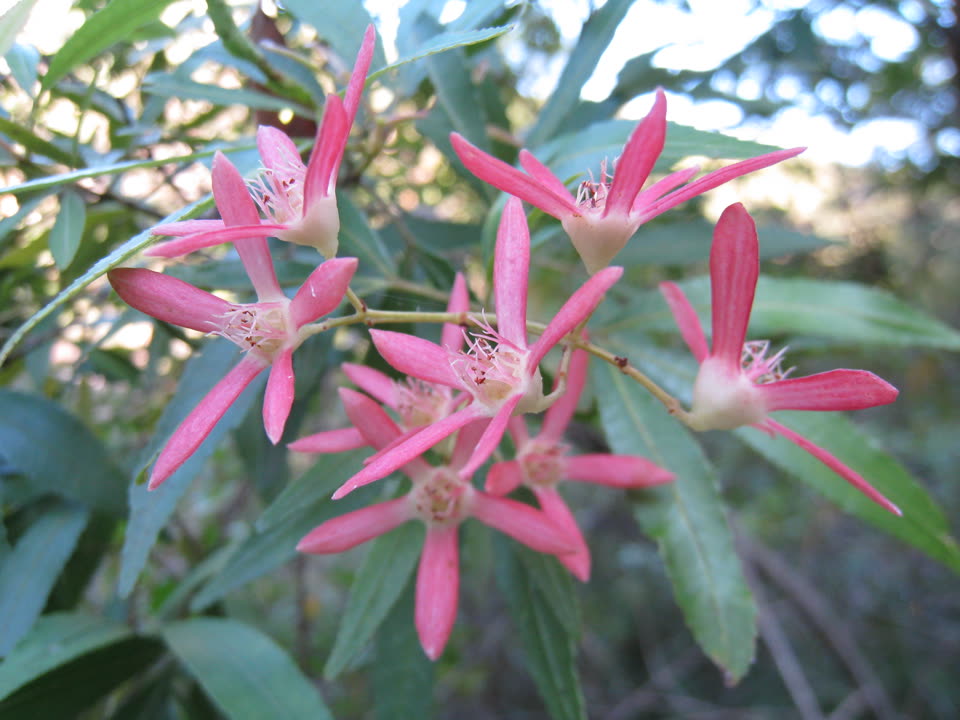
The New South Wales Christmas bush, Ceratopetalum gummiferum, flowers white in late spring. What turns red in December is the calyx behind each spent flower, swelling and colouring after the petals have gone, so the plant is at its most Christmassy once it has finished flowering. Christmas bells, Blandfordia, are a separate plant and genuinely flower in summer. Victoria uses the name Christmas bush for something else entirely.
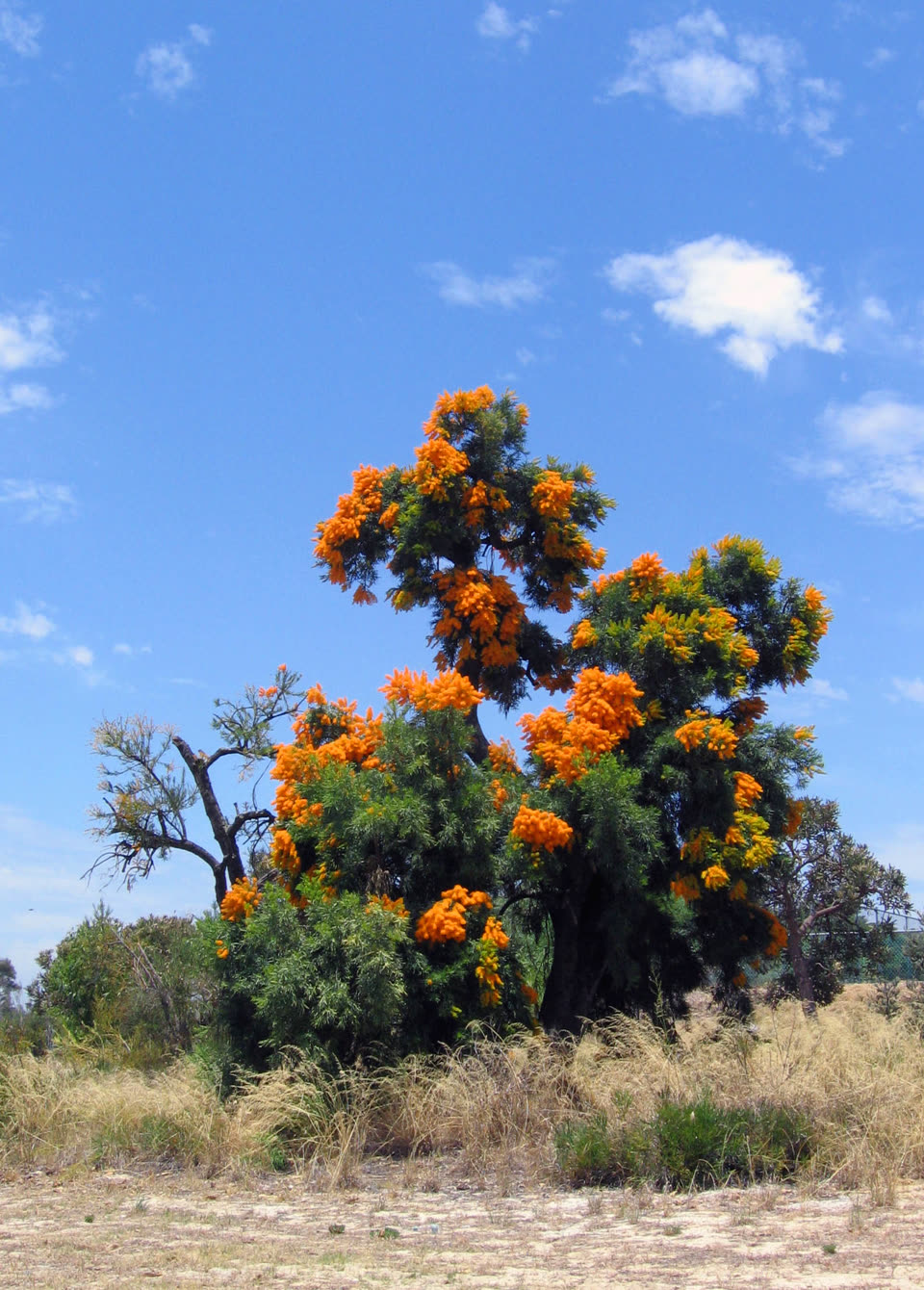
Two states use the name for different plants, and the western one is the stranger. Nuytsia floribunda flowers brilliant orange across the summer and the botanic gardens describe it in four words that change the picture entirely: a parasitic tree to ten metres. It takes what it needs from the roots of the plants around it, and it is very hard to grow on purpose — raising one as far as flowering has been managed in Perth and is recorded as an achievement.
The Boxing Day Test has only been annual since 1980
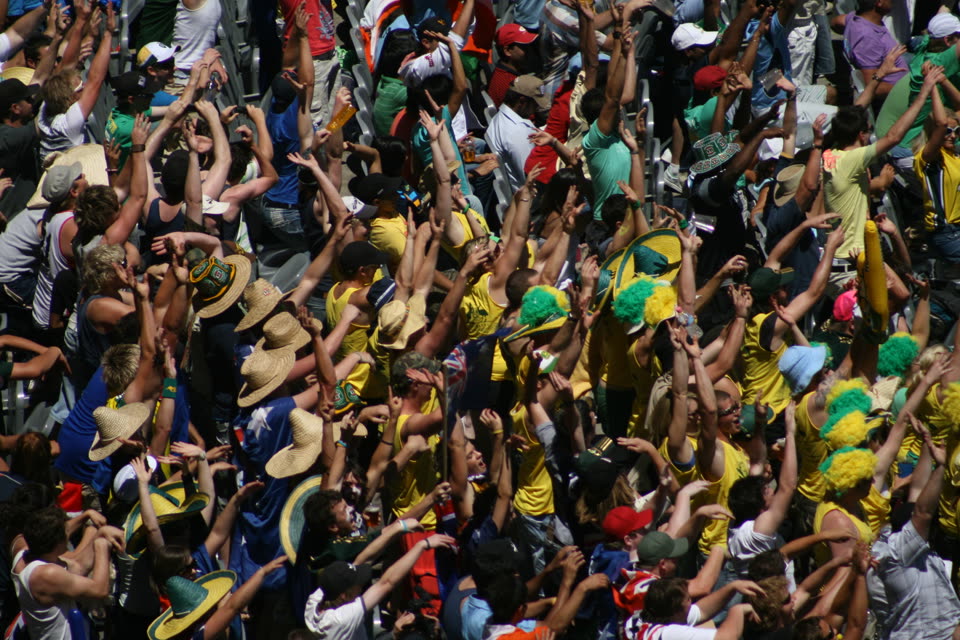
Cricket at the Melbourne Cricket Ground over Christmas is old — Victoria played New South Wales there from 1892 — but the fixture everyone treats as immemorial is not. Before 1980 a Test match at the MCG touched Boxing Day in only a handful of years, and in others Adelaide had the date. It has been annual at the MCG since 1980, with one break. The first day in 1975 drew 85,596 people.
The Sydney Hobart began as a cruise somebody turned into a race
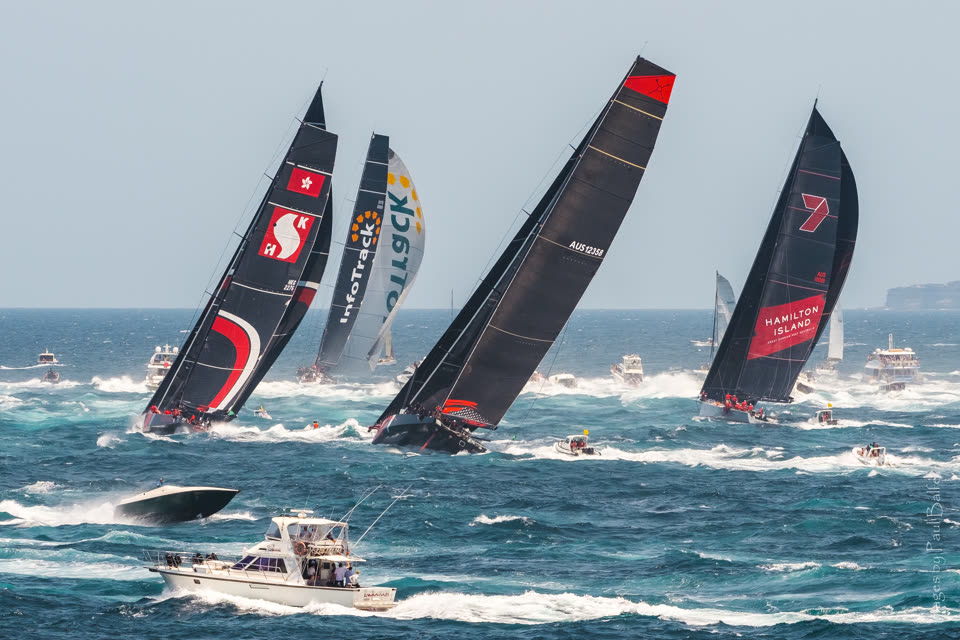
In May 1945 the Cruising Yacht Club was planning a cruise to Hobart. The English sailor Captain John Illingworth was asked to join it and answered «why don’t we make a race of it?». Nine yachts started on Boxing Day 1945 into what the club calls a beautiful summer day; gales followed, two boats were reported missing for four days, and crews put in to shore to telephone home. Illingworth’s Rani finished in 6 days and 14 hours and took the handicap as well as the line. The last boat home, Wayfarer, took 11 days and 6 hours, which is still the record for the longest time anyone has taken to finish.
CYCA History — Cruising Yacht Club of Australia, the club that runs the Sydney Hobart
Northern Territory
Christmas is published in the languages of the Northern Territory
The Living Archive of Aboriginal Languages at Charles Darwin University holds Christmas material in the Territory’s languages: two Kriol books with recordings, carols in Burarra from Maningrida, a Ndébbana songbook, one Warlpiri song in an otherwise English songbook from Yuendumu, the Birth of Jesus in Gupapuyŋu, and in Pitjantjatjara an illustrated story and a 1983 photo book of Mama Kritjimitji at Areyonga.
Australia keeps a midwinter Christmas as well, with tinsel and roast dinners in June and July. Where it started is not settled. Garry Crockett says it began at his Mountain Heritage hotel at Katoomba in 1980, when half a dozen Irishmen came in on a cold evening with snow falling outside and he offered them a Christmas in July. The BBC reports his account and says plainly that it is hard to pinpoint, with rumours that the United States did it earlier.
The spread Australians now treat as the national Christmas dinner — prawns, oysters, cold fish, eaten outside — is about forty years old. Fish had no fixed place in the menu the British brought, and roast fowl, beef and ham held the table for most of two centuries. The change begins in the 1980s and speeds up through the 1990s, helped by post-war migration from the Mediterranean.
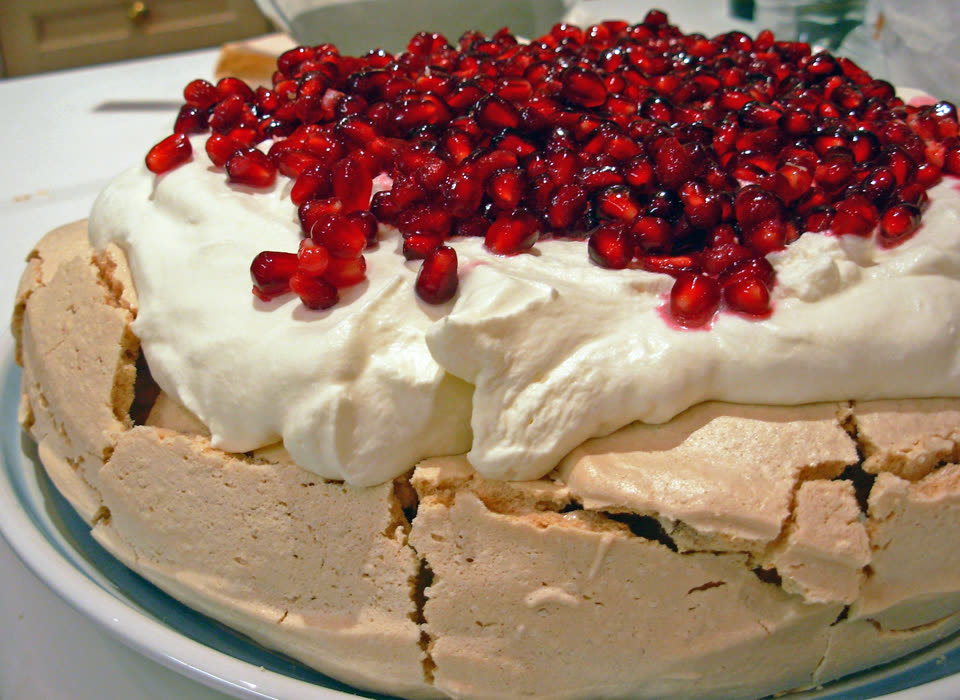
A meringue the size of a cake, soft in the middle, under cream and fruit, named after the ballerina Anna Pavlova. Who made the first one is the longest-running argument in the southern hemisphere: the earliest known recipe for the large meringue version is a New Zealand one of 1929, and the Australian claim is for Bert Sachse at the Esplanade Hotel in Perth in 1935. The food historian Helen Leach’s answer is that the dish evolved in more than one place at once.
The one dish that never left, eaten hot in the heat. It came with the First Fleet’s rations and stayed through every change in the rest of the meal. In 1832 a convict named Charlotte Welsh was given six weeks in the Parramatta Female Factory over the brandy she insisted belonged in hers.
Widely repeated claims about Christmas in Australia that do not survive
checking. Each one says what is actually the case, because a correction
with nothing in its place leaves you worse off than before.
Contradicted
Australians have always eaten seafood at Christmas
What is actually the case. Roast fowl, beef and ham dominated Australian Christmas tables for almost two hundred years, and fish had no defined role in the menu the British brought. The seafood Christmas begins in the 1980s and gathers pace in the 1990s.
What is actually the case. The earliest known recipe for a large meringue pavlova is from New Zealand in 1929; the Perth claim for Bert Sachse is 1935. The food historian Helen Leach argues the dish evolved in parallel in both countries and that no single inventor can be shown, which is why this is contested rather than settled either way.
The Boxing Day Test is an ancient Australian tradition
What is actually the case. Christmas cricket at the Melbourne Cricket Ground goes back to 1892, but a Test match there on Boxing Day was occasional until 1980 and Adelaide held the date in several years. It has been annual at the MCG only since 1980.
Carols by Candlelight began because Norman Banks saw a lonely woman singing by a candle
What is actually the case. The 1938 founding is solid and well recorded. The scene that is said to have inspired it rests on Banks’s own telling: the State Library introduces it with «The story goes» and eMelbourne writes that he claimed it. Nothing independent confirms the woman.
Carols by Candlelight — State Library Victoria, Ask a Librarian blog (K. Best), 21 December 2020
Carols by Candlelight — eMelbourne, the city past and present — University of Melbourne (C. M. Childs)
Oversimplified
Christmas Island was discovered on Christmas Day
What is actually the case. It was named on Christmas Day 1643 by Captain William Mynors, who saw it in passing. Being sighted and being discovered are not the same event, and nobody is recorded landing on it for another forty-five years.
History — Christmas Island National Park — Parks Australia (Director of National Parks), the Australian Government agency that manages the island’s national park
Contested
Christmas in July was invented in the Blue Mountains in 1980
What is actually the case. A Katoomba hotel owner says it began at his hotel in 1980 and tells a consistent story about it. The BBC reports that account and says in the same breath that it is hard to pinpoint when and where Christmas in July began, and that there are rumours the United States did it earlier in the twentieth century.
Christmas Island was named on Christmas Day 1643, by Captain William Mynors of the East India Company, who sighted it and sailed on. Britain annexed it in 1888, for phosphate.
History — Christmas Island National Park — Parks Australia (Director of National Parks), the Australian Government agency that manages the island’s national park
The slowest finish in the history of the Sydney Hobart belongs to the first race. Peter Luke’s Wayfarer took 11 days and 6 hours to reach Hobart in 1945, and no one has taken longer since.
CYCA History — Cruising Yacht Club of Australia, the club that runs the Sydney Hobart
Sources
Every claim carries its own citation. They are collected below, so you
can see what the page rests on and how much of it comes from where.
A festive feast of fish and fruit: how Australians made Christmas their own — ABC News, carrying Madeline Shanahan (University of New England) via The Conversation, 25 December 2020. Retrieved 2026-10-21. archived 16 September 2024The sentence the whole correction rests on, and it is one historian’s synthesis rather than a survey: «Fish had no defined role in the menu the British brought with them to Australia, where roast fowl, beef and ham dominated Christmas tables for almost 200 years». And then: «Real change did not begin until the 1980s, gathering pace in the 1990s, as Australian culinary identity developed increasing confidence and embraced new flavours».
Christmas in July: Why Australians celebrate Christmas twice a year — BBC News (L. Lam), 30 July 2025. Retrieved 2026-10-21. archived 2 December 2025The BBC refuses to settle it: «It’s hard to pinpoint exactly when and where Christmas in July began - there are some rumours the US actually pioneered it in the early 20th Century - but Garry Crockett believes Australia’s national tradition began in his Mountain Heritage hotel in 1980». Crockett’s own account is of half a dozen Irishmen walking into the Katoomba lodge one cold July evening with snow outside: «So I told them, why don’t we do a Christmas in July for you?».
CYCA History — Cruising Yacht Club of Australia, the club that runs the Sydney Hobart. Retrieved 2026-10-21. archived 17 August 2025A cruise to Hobart was being planned in May 1945 when the English sailor Captain John Illingworth was invited to join it and answered «why don’t we make a race of it?».The page names all nine starters — Ambermele, Archina, Horizon, Kathleen, Mistral, Rani, Saltair, Wayfarer and Winston Churchill — and says «Boxing Day 1945 was a beautiful summer day» before the gales. «Two yachts were reported missing for four days». Illingworth’s Rani finished «6 days and 14 hours later» and took handicap honours as well, the «double». Peter Luke’s Wayfarer came last in «11 days and 6 hours», «which stands as the record for the longest elapsed time».
Carols by Candlelight — eMelbourne, the city past and present — University of Melbourne (C. M. Childs). Retrieved 2026-10-21. archived 20 August 2026The second account, and it is more careful than the first about whose story it is: the inspiration is something Banks «he claimed».
Public holidays — Fair Work Ombudsman, the Australian government workplace regulator. Retrieved 2026-10-21. archived 18 September 2026It opens by saying the thing that makes Australia awkward to summarise: «Public holidays can be different depending on the state or territory you work in». The entitlement is national — «All employees have a right to be absent from work on a public holiday» — but the days are not.South Australia has «Saturday 26 December: Proclamation Day holiday» where the others have Boxing Day. The Northern Territory and South Australia list «Christmas Eve (from 7 pm to midnight)» and Queensland «Christmas Eve (from 6 pm to midnight)», which is a public holiday of a few hours.
Celebrating Christmas in Indigenous languages — Living Archive of Aboriginal Languages, Charles Darwin University, 20 December 2019. Retrieved 2026-10-21. archived 18 August 2026Two Kriol books, Samting speshul and Krismis Stori, both with recordings; carols in Burarra from Maningrida; a Ndjébbana songbook; one Warlpiri song, Wurulypa Munga, in an otherwise English Yuendumu songbook; Dhawal-guyaŋana (The Birth of Jesus) in Gupapuyŋu; and in Pitjantjatjara both an illustrated tale, Kulilypuru, and a 1983 photo book of the visit of «Mama Kritjimitji» to Areyonga.The page signs off «Happy Christmas from everyone at the Living Archive of Aboriginal Languages!».
Carols by Candlelight — State Library Victoria, Ask a Librarian blog (K. Best), 21 December 2020. Retrieved 2026-10-21. archived 16 April 2026It gives 1938, Norman Banks, 3KZ, the Alexandra Gardens and a crowd of about 10,000, and it marks the origin story as a story: the page introduces the lonely-singer scene with «The story goes».