Yesfederally; the states legislate their own5 U.S. Code § 6103 — Holidays — Legal Information Institute, Cornell Law School, reproducing the United States Code
Who brings the presents
Santa Clausarrives 25 December
—days
—hrs
—min
—sec
Next: Friday 25 December 2026
When is Christmas in the United States?
Christmas Day in the United States is 25 December. It is a public holiday, federally; the states legislate their own.
How to say it
Hawaiian
Mele Kalikimaka
Mele Kalikimaka
say it: MEH-leh kah-LEE-kee-MAH-kah
Hawaiian, and it is a borrowing rather than a translation: Hawaiian has no r or s and a syllable cannot end in a consonant, so "Merry Christmas" is rebuilt sound by sound into something the language can say. The Office of Hawaiian Affairs’ own paper signs a Christmas column off with it.
Kalikimaka Past — Ka Wai Ola, the Office of Hawaiian Affairs (trustee column by Carmen "Hulu" Lindsey), 1 December 2020
Massachusetts fined people five shillings for keeping Christmas
The General Court of Massachusetts Bay passed the law on 11 May 1659. Anyone found observing Christmas «either by forbearing of labor, feasting, or any other way» paid five shillings to the county. The objection was that the day had no warrant in scripture: Increase Mather called it a profane and superstitious custom, and almanacs printed in the colony did not mark 25 December as Christmas at all. The law was repealed in 1681 under pressure from London, and Christmas did not become a Massachusetts state holiday until 1856 — nearly two centuries after it was banned.
Reindeer were in print two years before the famous poem
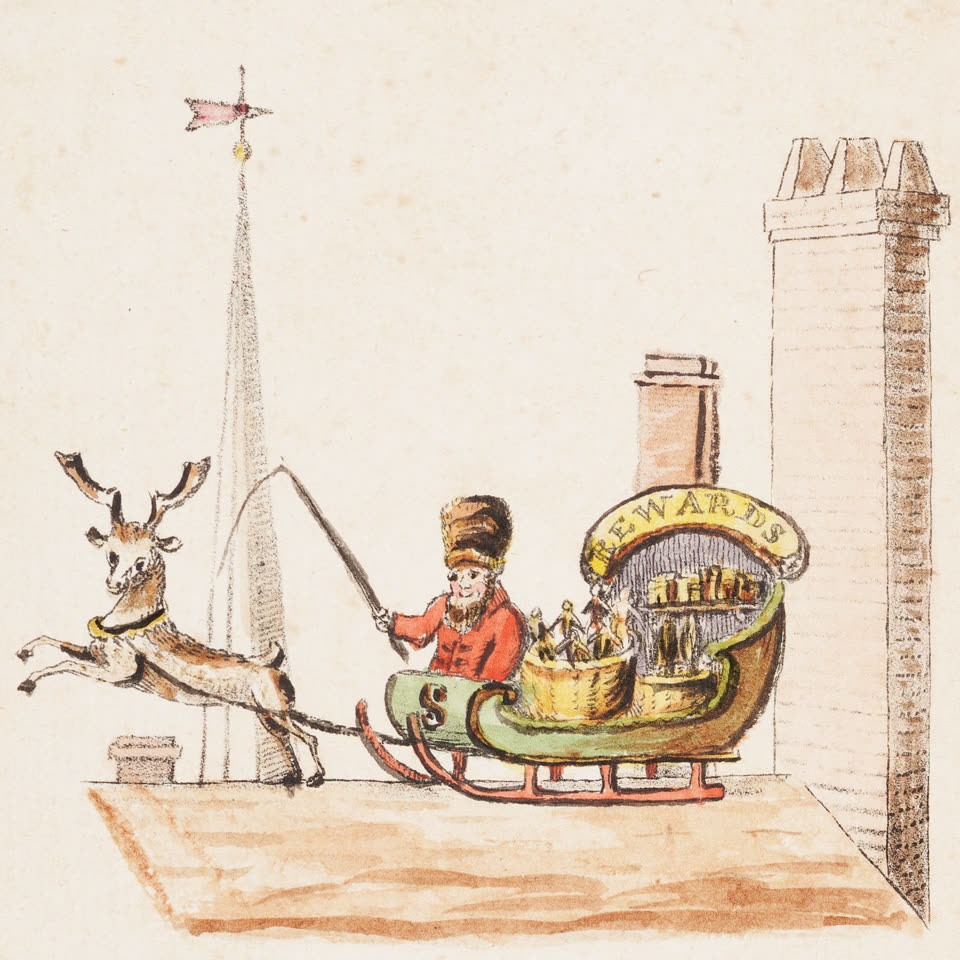
The poem of 1823 is usually credited with inventing the whole apparatus. It did not invent the reindeer. In 1821 the New York printer William Gilley published a sixteen-page book for children whose opening verse already has them: «Old Santeclaus with much delight / His reindeer drives this frosty night. / O’er chimneytops, and tracks of snow, / To bring his yearly gifts to you.» Its author is unknown.
Santa and Reindeer — Hearthstone Historic House Museum, Appleton, Wisconsin
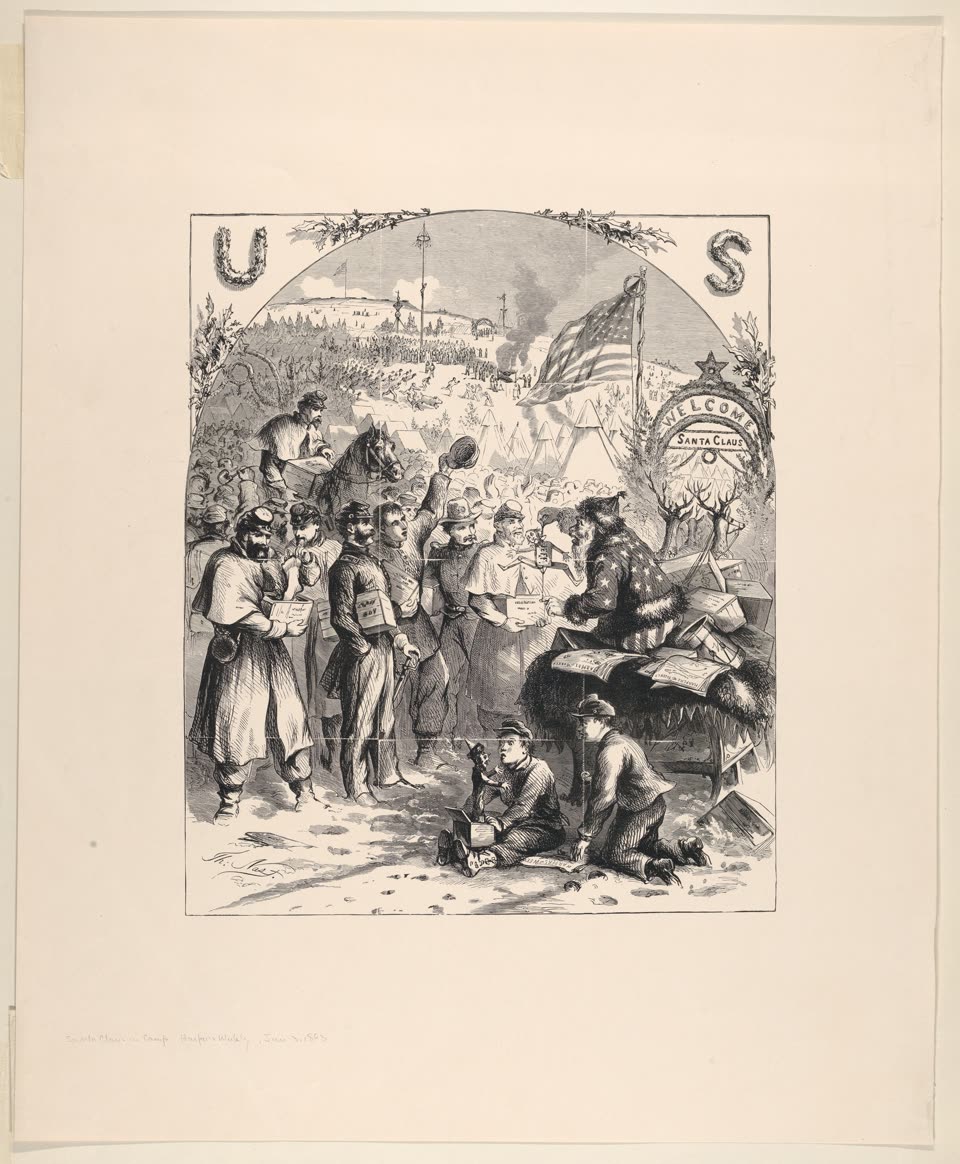
Thomas Nast first drew Santa Claus for Harper’s Weekly on 3 January 1863, in the middle of the Civil War. Santa is in a Union army camp handing out presents, wearing a jacket patterned with stars and trousers in stripes, and the toy in his hands is a puppet on a rope whose face is that of the Confederate president. The figure that became everybody’s Santa started as a partisan cartoon.
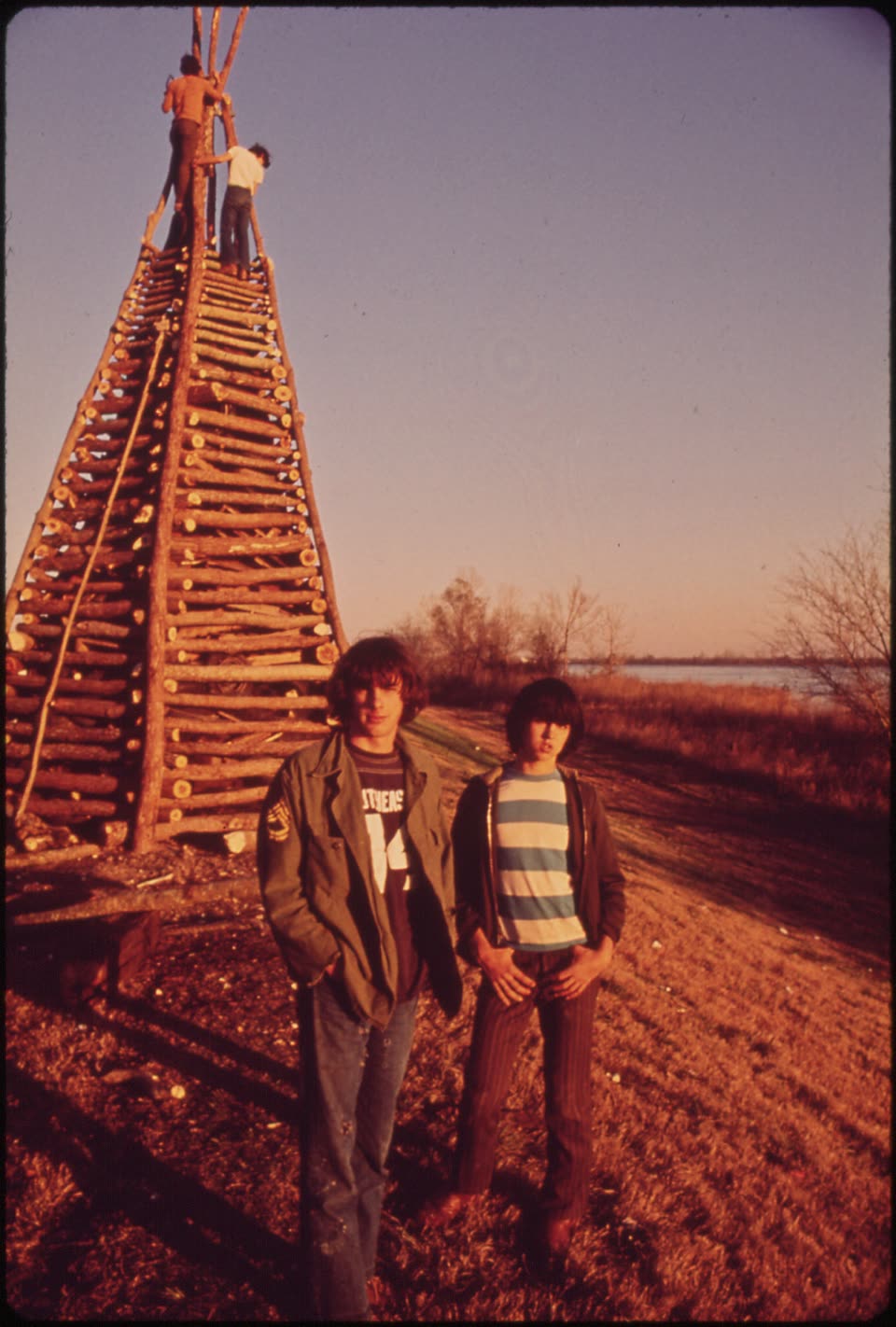
Louisiana’s levee bonfires were New Year fires until the 1950s
On Christmas Eve, bonfires burn along the Mississippi levee in St James Parish. The state folklife programme puts the custom’s establishment between 1880 and 1900, and records that it moved twice: the fires were built on the batture, the land between the levee and the river, and they were lit for New Year’s Eve. Only in the 1950s did they move onto the levee and onto Christmas Eve.
In New Mexico the same word means two different lights
A paper bag weighted with sand around a candle lines walls and roofs at Christmas. North of Santa Fe it is a farolito, and a luminaria is a small bonfire; south of Santa Fe the bag itself is the luminaria. The quarrel is local and genuine, and the older thing is the fire: the bag version needed the square-bottomed paper sack before it could exist.
The Moravian beeswax candle is dated to a German village in 1747
At the Christmas Eve lovefeast, Moravian congregations give every child a lit beeswax candle trimmed with red. The church dates the custom to Marienborn in Germany in 1747, and the first record of it in the New World to the Bethlehem, Pennsylvania diary for Christmas 1756.
Old Christmas is still kept in January on the Outer Banks
Britain changed calendar in 1752 and moved every date eleven days. Some communities refused, kept the old reckoning, and ended up with a Christmas in early January that merged with Epiphany. Rodanthe on the North Carolina Outer Banks still marks Old Christmas, with a figure called Old Buck.
Old Christmas — NCpedia, State Library of North Carolina
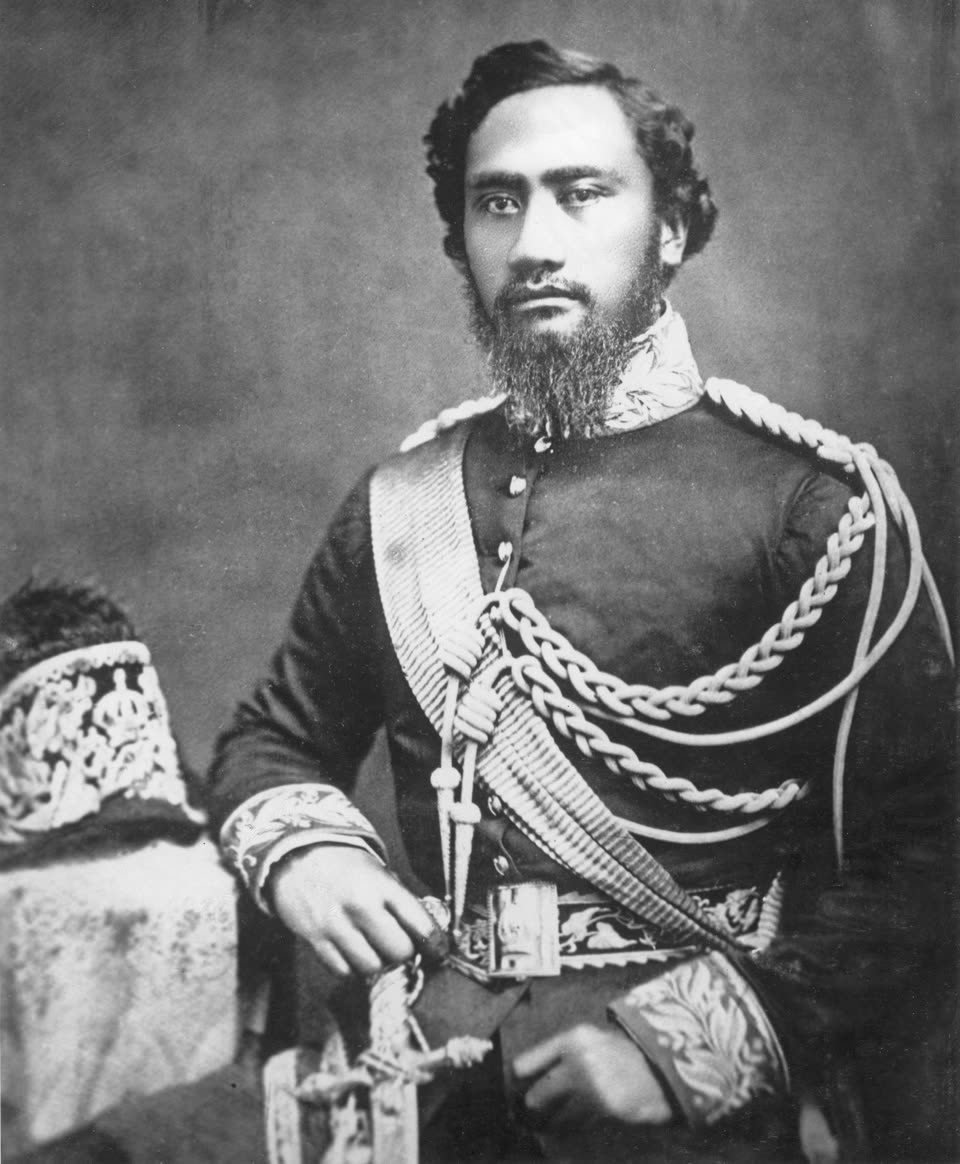
Hawaiʻi’s Christmas was made official by a king in 1862
Christmas is said to have been first kept in Hawaiʻi in 1786, aboard an English merchant ship anchored at Waimea Bay on Kauaʻi. It arrived during Makahiki, the four-month Hawaiian festival of games and feasting in which war was forbidden. King Kamehameha IV, having seen Christmas in Europe, declared 25 December a national day of thanksgiving in his kingdom in 1862 — six years after Massachusetts made it a state holiday, and while Hawaiʻi was still a kingdom of its own.
Kalikimaka Past — Ka Wai Ola, the Office of Hawaiian Affairs (trustee column by Carmen "Hulu" Lindsey), 1 December 2020
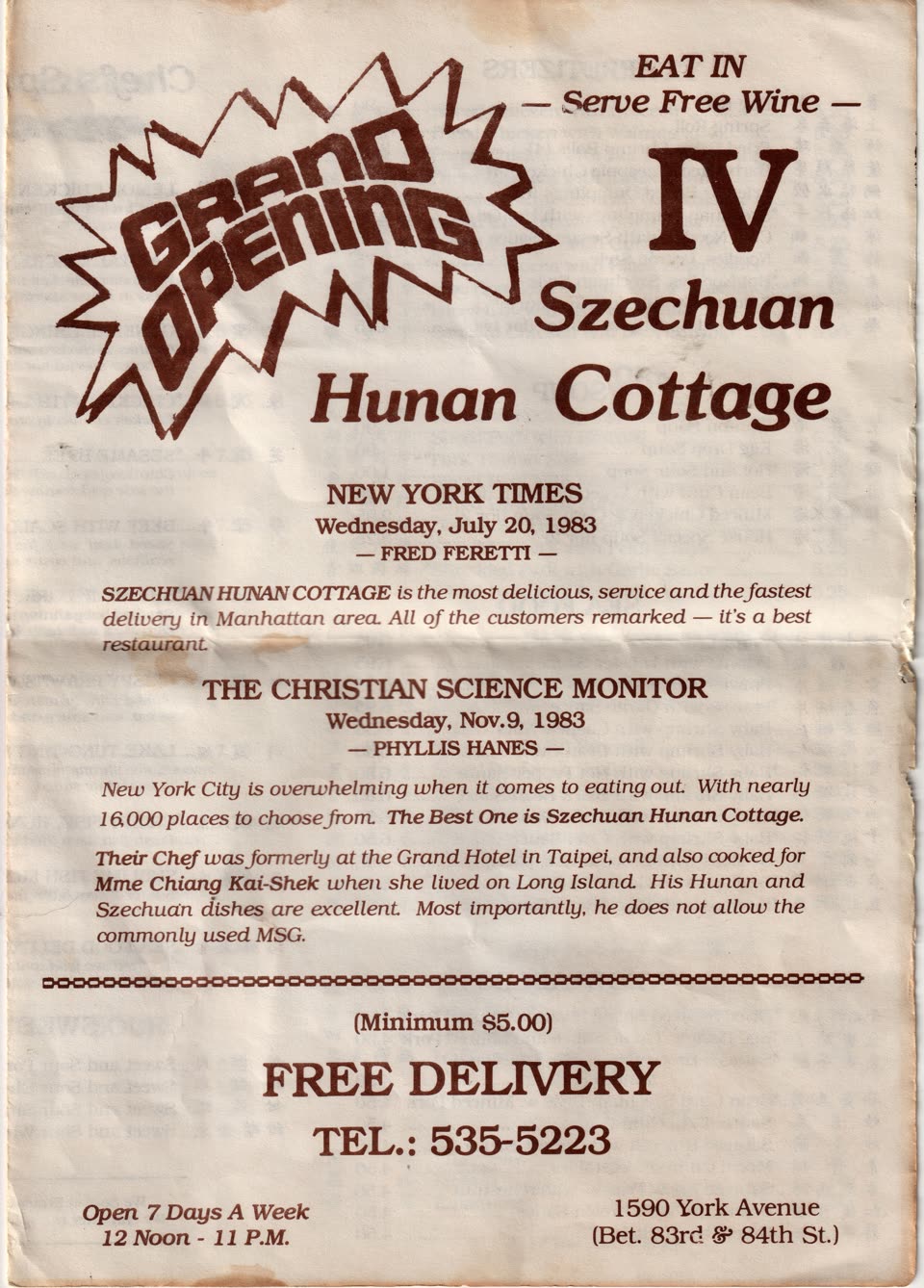
Chinese restaurants on Christmas Day, kept since the 1890s
For many Jewish Americans the day is spent in a Chinese restaurant, and the habit is old enough to have been complained about in print: the American Hebrew was criticising it in 1899. It began on the Lower East Side, where the two immigrant populations lived next to each other and the Chinese restaurants were the ones open.
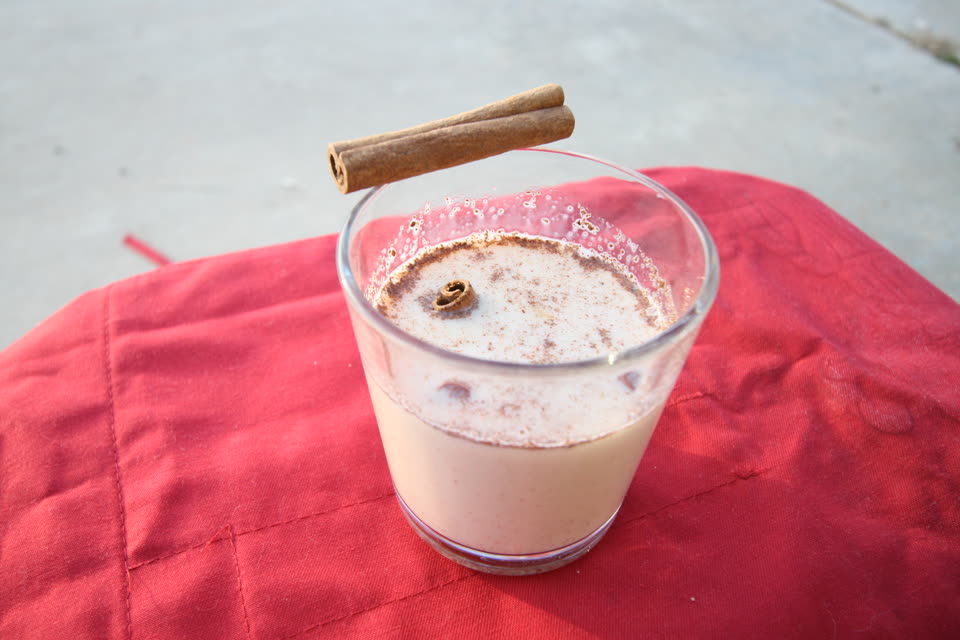
Milk, eggs, sugar and spirit, and the cause of a riot. The superintendent of West Point had banned alcohol outright when cadets smuggled four gallons of whiskey in for Christmas 1826; by the morning of the 25th the North Barracks were close to ruined. One of the cadets who helped bring the liquor in was Jefferson Davis.
Not a Christmas dish and precisely the point. For Jewish New Yorkers the restaurants that were open on 25 December were the Chinese ones, and the custom is documented back to the Lower East Side of the 1890s. A New York paper reported chow mein being taken to a Jewish children’s home in Newark in 1935.
Widely repeated claims about Christmas in the United States that do not survive
checking. Each one says what is actually the case, because a correction
with nothing in its place leaves you worse off than before.
Contradicted
Coca-Cola invented the red-suited Santa Claus
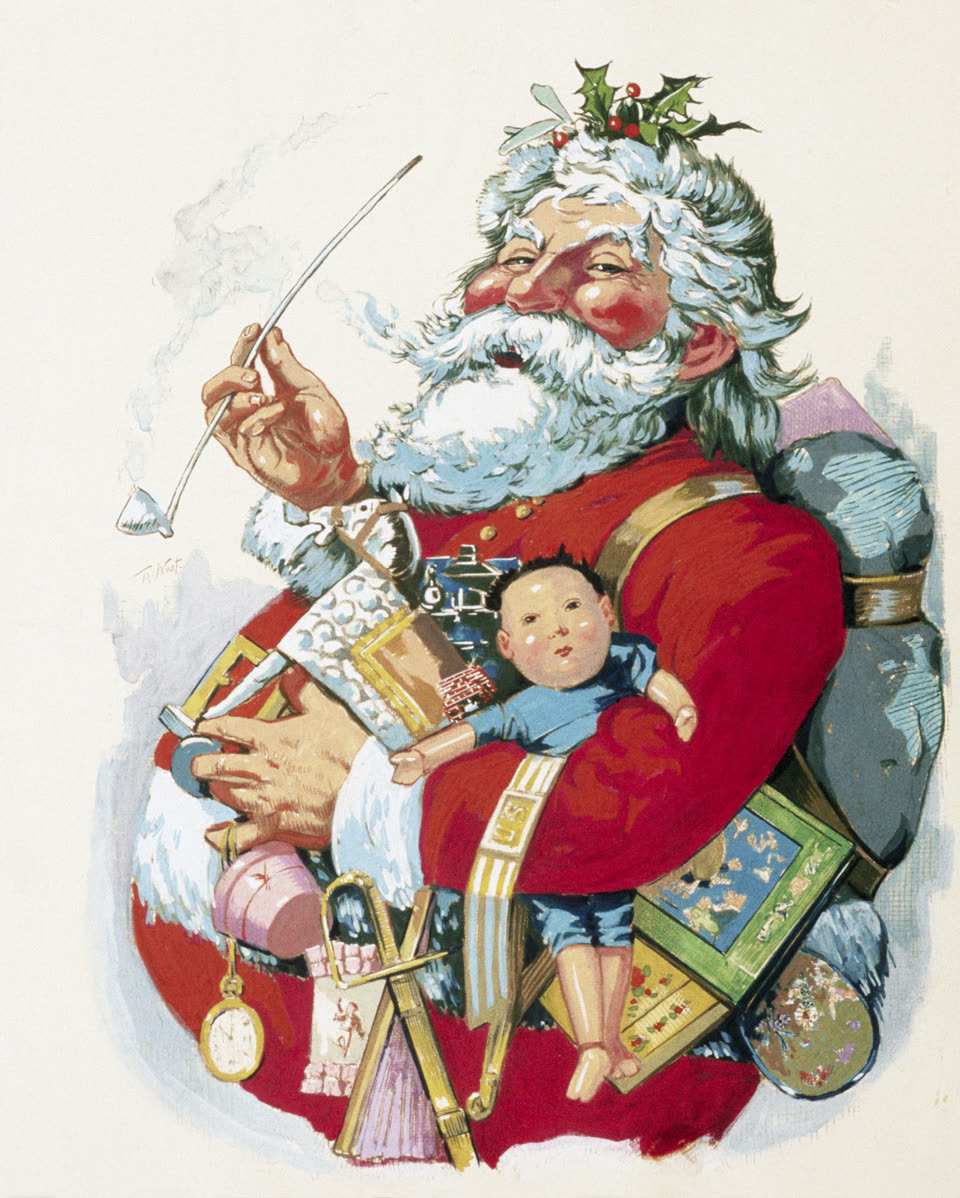
What is actually the case. Haddon Sundblom drew his first Coca-Cola Santa in 1931, and the red-and-white Santa was already standard before that — a New York Times piece of 1927 describes a Santa whose costume had become standardised. Coca-Cola’s advertising spread a figure it found.
What is actually the case. One colony did, for twenty-two years. Massachusetts Bay fined Christmas-keeping from 1659 until the law was repealed in 1681 under pressure from London. The other colonies had their own law and their own practice, and Massachusetts itself made Christmas a state holiday in 1856.
Alabama was the first state to make Christmas an official holiday, in 1836
What is actually the case. The Alabama Department of Archives and History looked and found no evidence for it; what the record shows is an 1848 rule about bank holidays. The 1836 date is traced to an uncited book of 1954 and has been repeated ever since.
What is actually the case. A booklet printed in New York in 1821 already has them, two years earlier: «Old Santeclaus with much delight / His reindeer drives this frosty night». The poem did a great deal, but not that.
Santa and Reindeer — Hearthstone Historic House Museum, Appleton, Wisconsin
Contested
Clement Clarke Moore wrote "A Visit from St. Nicholas"
What is actually the case. It was printed anonymously in a Troy, New York newspaper on 23 December 1823. Moore claimed it about fifteen years later, saying a friend had sent it in without his knowledge. The descendants of Henry Livingston claim it for him, and the Library of Congress notes that some modern scholars agree with them. There is no manuscript that settles it.
NORAD began tracking Santa because of a misprinted newspaper advertisement
What is actually the case. Both versions agree that in December 1955 a child’s call reached Colonel Harry Shoup at CONAD in Colorado Springs and that he played along. They disagree on how: Shoup’s children told NPR the newspaper advertisement carried a misprint, and the Smithsonian’s Air and Space Museum says a child misdialled the number.
The Christmas Eve bonfires on the Mississippi levee are centuries old
What is actually the case. The Louisiana Folklife Program puts the custom’s establishment in St James Parish between 1880 and 1900, and records that the fires were built for New Year’s Eve, on the batture below the levee. They moved onto the levee and onto Christmas Eve only in the 1950s. Lighting the way for Papa Noël is the popular explanation today rather than the recorded origin.
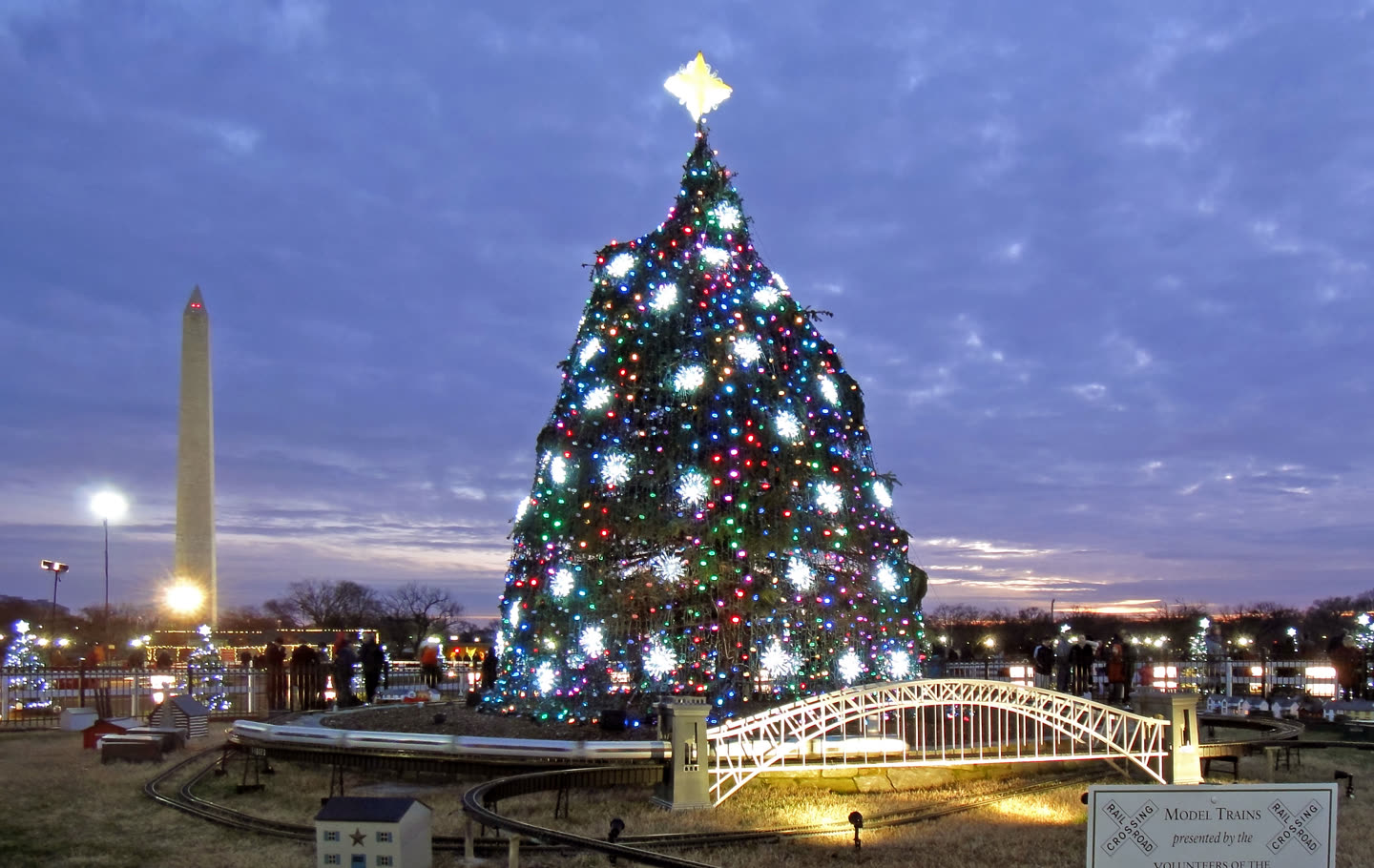
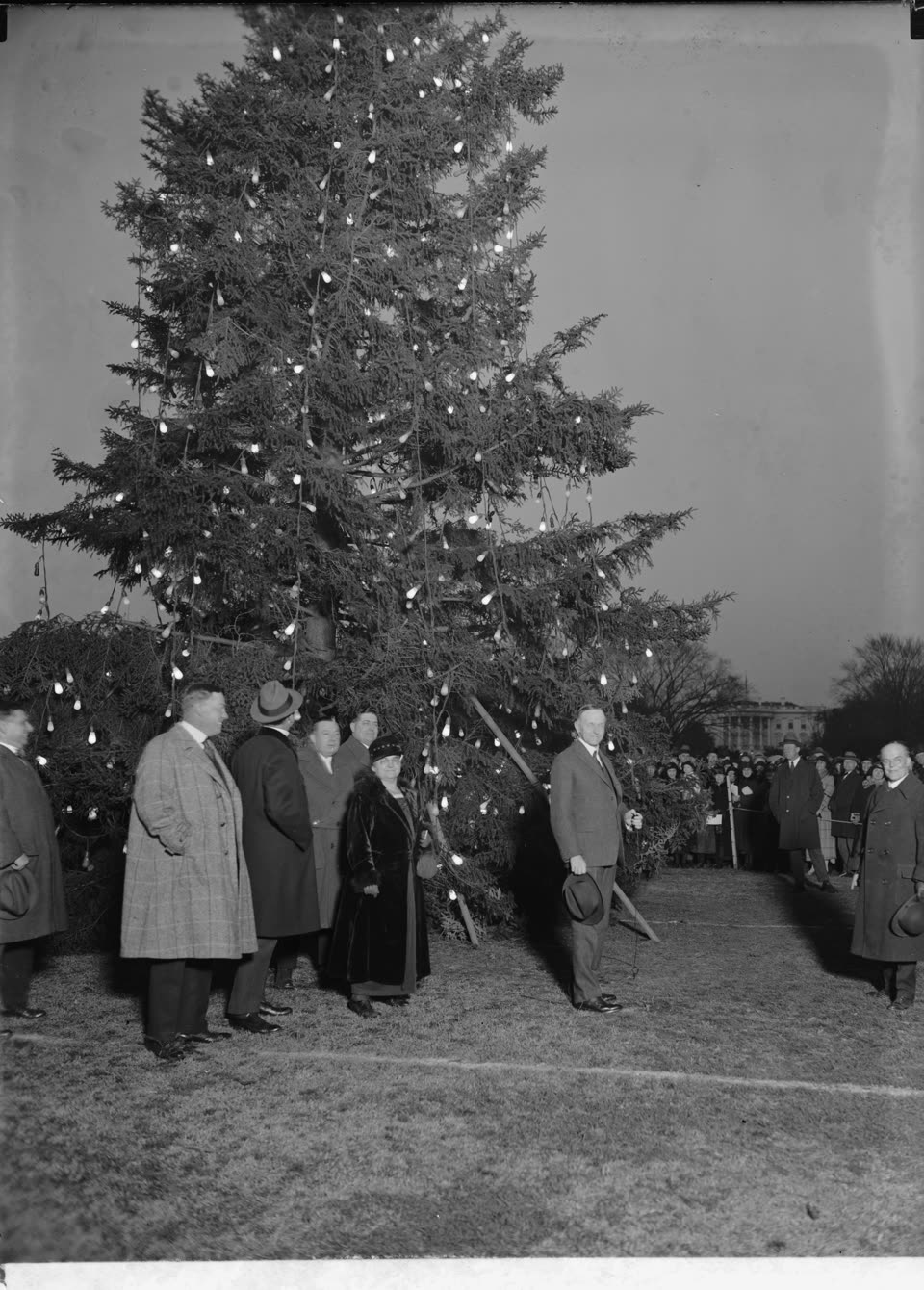
The first Christmas tree inside the White House was Benjamin Harrison’s in 1889, lit with candles in the Second Floor Oval Room for his grandchildren. The first National Christmas Tree came thirty-four years later: Calvin Coolidge lit it on the Ellipse on Christmas Eve 1923, and Middlebury College in Vermont supplied the tree.
Christmas is a legal public holiday in federal law, listed in section 6103 of title 5 of the United States Code between Thanksgiving and New Year’s Day. That section binds the federal government. Every state passes its own holiday law, which is why there has never been a single American Christmas holiday.
Every claim carries its own citation. They are collected below, so you
can see what the page rests on and how much of it comes from where.
Santa and Reindeer — Hearthstone Historic House Museum, Appleton, Wisconsin. Retrieved 2026-10-21. archived 11 March 2026For the 1821 booklet that beat the famous poem by two years: «The first known written account of Santa’s reindeer occurred in 1821», in a sixteen-page book published by the New York printer William Gilley. The page prints the verse: «Old Santeclaus with much delight / His reindeer drives this frosty night. / O’er chimneytops, and tracks of snow, / To bring his yearly gifts to you.»
Kalikimaka Past — Ka Wai Ola, the Office of Hawaiian Affairs (trustee column by Carmen "Hulu" Lindsey), 1 December 2020. Retrieved 2026-10-21. archived 17 October 2025It sets Christmas against Makahiki, the four-month Hawaiian festival in the same season, during which «wars and conflicts were strictly forbidden». Christmas was «believed to have been first celebrated in Hawaiʻi on an English merchant ship, the Queen Charlotte, that was docked in Waimea Bay, Kauaʻi» in 1786, under Captain George Dixon.King Kamehameha IV «honorably declared December 25 to be the national day of thanksgiving in his kingdom, celebrating Christmas as an official holiday in 1862». The column ends «Mele Kalikimaka!».
5 U.S. Code § 6103 — Holidays — Legal Information Institute, Cornell Law School, reproducing the United States Code. Retrieved 2026-10-21. archived 17 October 2026It opens «The following are legal public holidays:» and lists eleven, among them «Christmas Day, December 25».
A Visit from Santa…Who You Might Not Recognize — Library of Congress, Timeless blog, December 2020. Retrieved 2026-10-21. archived 9 March 2026The Library of Congress on the 1823 poem: «The poem was first published anonymously in the Troy (New York) Sentinel newspaper on Dec. 23, 1823». On authorship it is careful — Moore «eventually claimed credit nearly 15 years later», and «A friend had sent it into the paper without his knowledge, he later said».
Christmas Eve Bonfires and the Mayor — Louisiana Folklife Program, Louisiana Division of the Arts. Retrieved 2026-10-21. archived 19 May 2026The state folklife programme on the levee bonfires of St James Parish, and it is careful about dates in a way the tourist version is not: «The custom was probably established in Saint James parish between 1880 and 1900». It also records what came first — the fires were built on the batture, the strip between the levee and the river, and were New Year’s Eve fires: «only later, in the 1950s, were they lit on Christmas Eve on the levee».On why they are lit, the page separates today’s explanation from the older ones: «One of the most popular today is that they are to "light the way for Papa Noel."»
Christmas Celebration Outlawed — Mass Moments, Mass Humanities. Retrieved 2026-10-21. archived 9 June 2026The operative sentence: «whosoever shall be found observing any such day as Christmas or the like, either by forbearing of labor, feasting, or any other way, upon any such account as aforesaid, every such person so offending shall pay for every such offence five shilling as a fine to the county», and its own dateline, «From the Records of the General Court, Massachusetts Bay Colony, May 11, 1659».Also: «The law was repealed in 1681 along with several other laws, under pressure from the government in London» and «It was not until 1856 that Christmas Day became a state holiday in Massachusetts». On the Puritan objection it quotes Increase Mather calling the day a «profane and superstitious custom», and notes that «Almanacs published in the Bay Colony did not mark December 25 th as Christmas Day».The fine is «five shilling», singular, as the transcription prints it.
Eggnog: It’s All Fun and Games Until Someone Starts a Holiday Riot — Smithsonian Magazine (N. Geiling), 19 December 2013. Retrieved 2026-10-21. archived 12 July 2026«December 25, 1826, at West Point was not a typical Christmas morning»: the superintendent Sylvanus Thayer had «expressly forbidden the purchase, storage, or consumption alcohol at West Point», four gallons of whiskey came in anyway, and the North Barracks were left «in a state of near ruin».
A Civil War Cartoonist Created the Modern Image of Santa Claus as Union Propaganda — Smithsonian Magazine, 19 December 2018. Retrieved 2026-10-21. archived 4 October 2026«Cartoonist Thomas Nast first drew Santa Claus in January 1863, for Harper’s Weekly», appearing on 3 January. The article describes what Santa is doing in it: distributing presents in a Union Army camp, wearing «a jacket patterned with stars and pants colored in stripes», and holding «a puppet toy with a rope around its neck, its features like those of Confederate president Jefferson Davis».