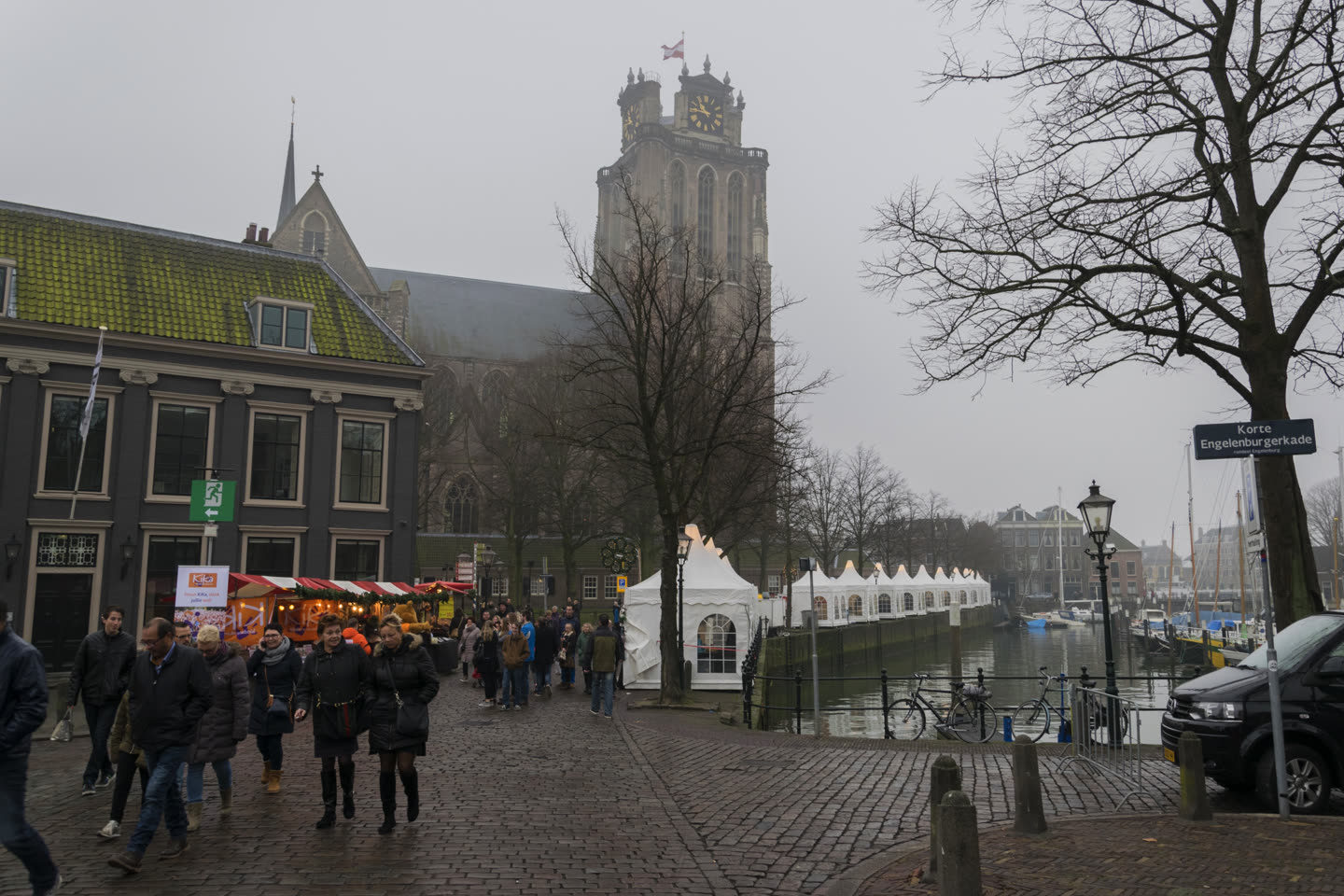
Christmas Day in the Netherlands is 25 December. It is a public holiday.
How to say it
Dutch
Gezegend Kerstfeest
Gezegend Kerstfeest
A synthesised voice — not a recording of a person — saying Gezegend Kerstfeest
in nl-NL.
A BLESSED Christmas — the form the Dutch head of state uses to close his Christmas address. It is formal and religious.
The everyday greeting is A PLURAL. What is actually said, and printed on cards, is «Fijne kerstdagen» or «Prettige kerstdagen» — happy Christmas DAYS, because the Netherlands keeps two of them, eerste kerstdag and tweede kerstdag. The card version runs «Prettige Kerstdagen en een Gelukkig Nieuwjaar». The Dutch language society treats the wish as ordinary lower-case prose and says the capitals on a Christmas card are not wrong either, which is a fair description of where the phrase lives: on the card more than in the grammar book.
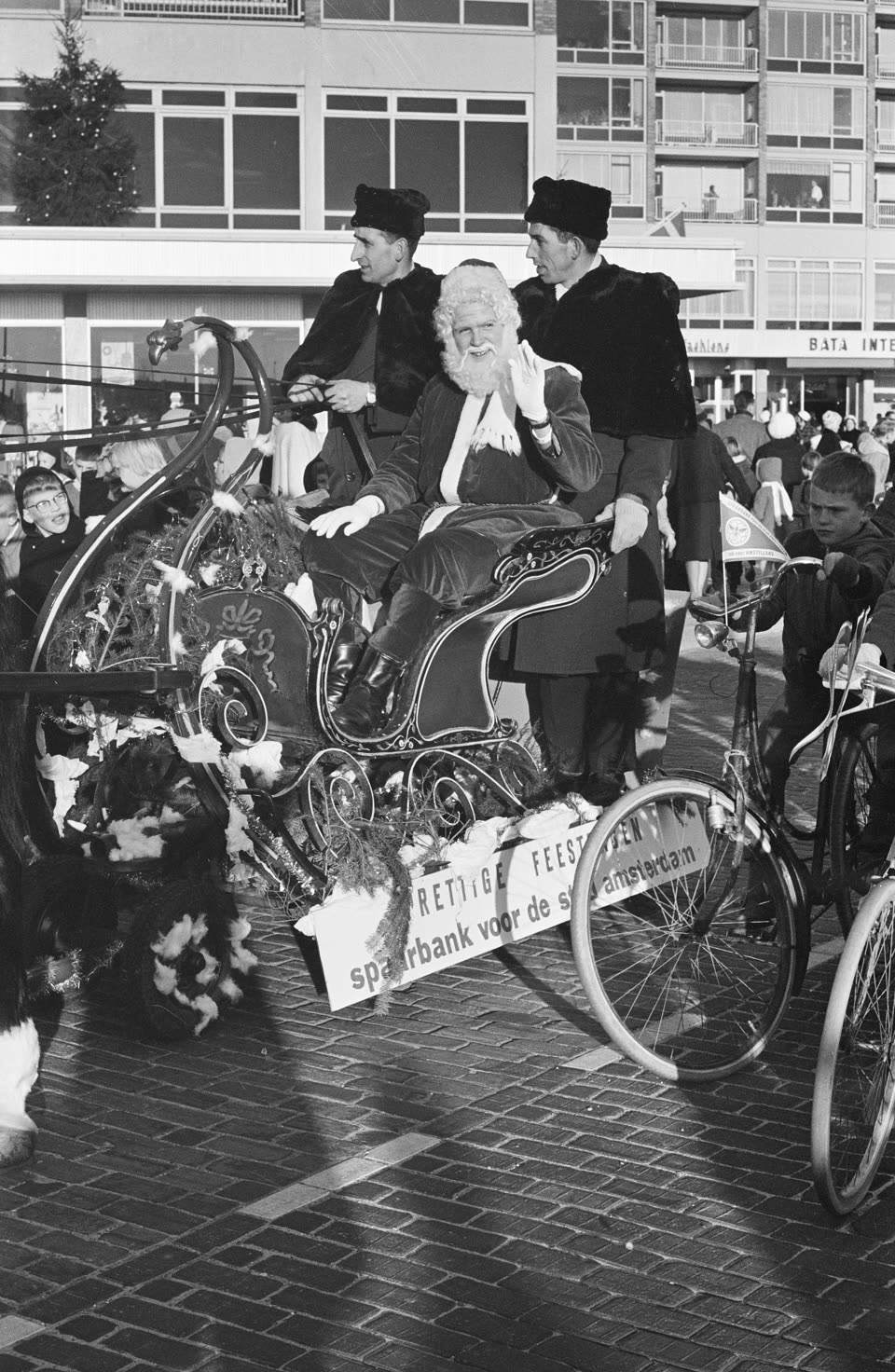
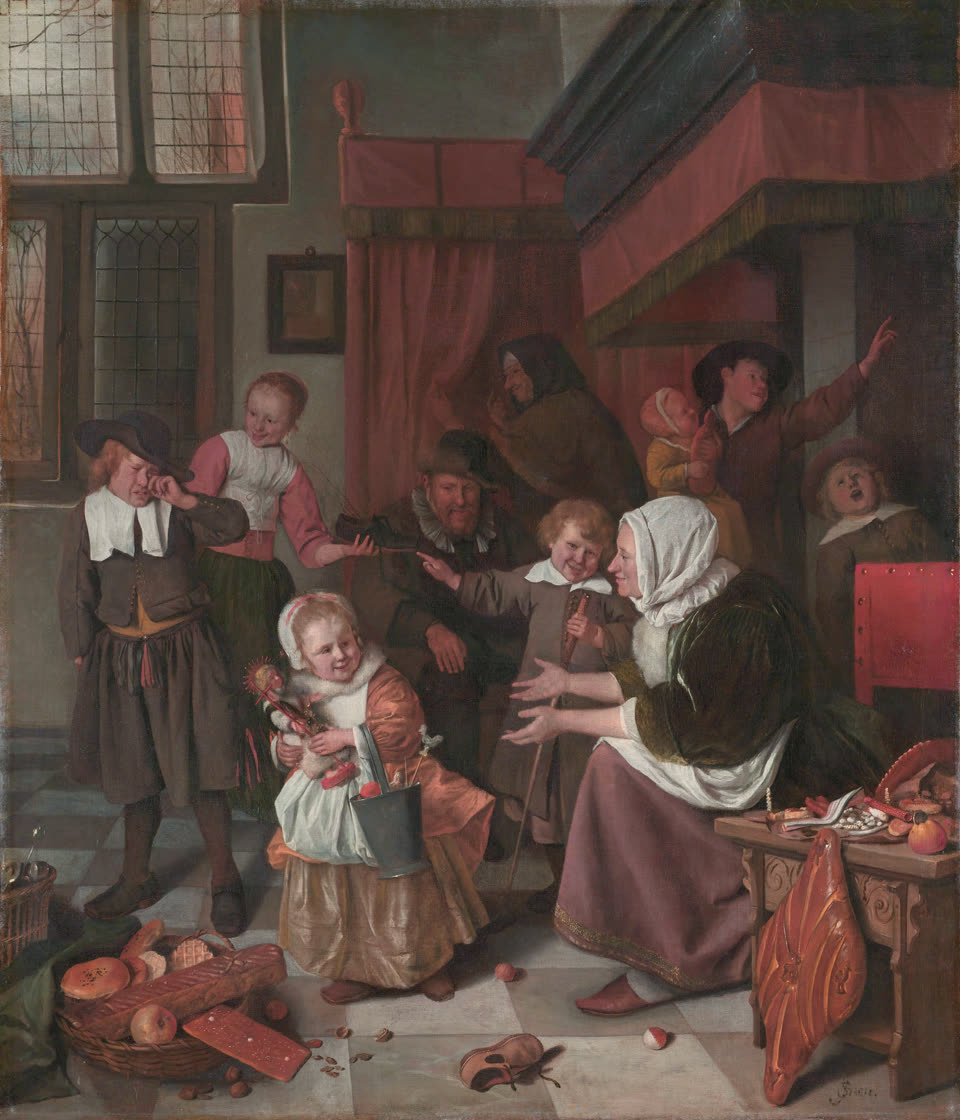
The presents are brought by Sinterklaas, and he brings them on the evening of 5 December — three weeks before Christmas Day. The Dutch national open-air museum calls the feast one of the best known and most popular traditions in the country and describes the evening in the present tense: «Sinterklaas is weer aangekomen in Nederland en zal cadeautjes langsbrengen bij iedereen die zich goed heeft gedragen» — he has arrived in the Netherlands again, and will drop presents off at everyone who has behaved. The date is the eve of the saint’s day. Nicholas of Myra was a bishop born in what is now Turkey, known early as a friend of children, and «Zijn sterfdag was 6 december».
He is not A CHRISTMAS FIGURE. The Dutch Christmas is two public holidays with a King’s speech in the middle of the first one; the parcels belong to another feast, with another saint, on another date. The feast is old and its national shape is not — the museum puts that in the nineteenth century: «Sinterklaas werd pas vanaf de 19e eeuw een Volksfeest, dat door het hele land gevierd werd», a feast kept across the whole country.
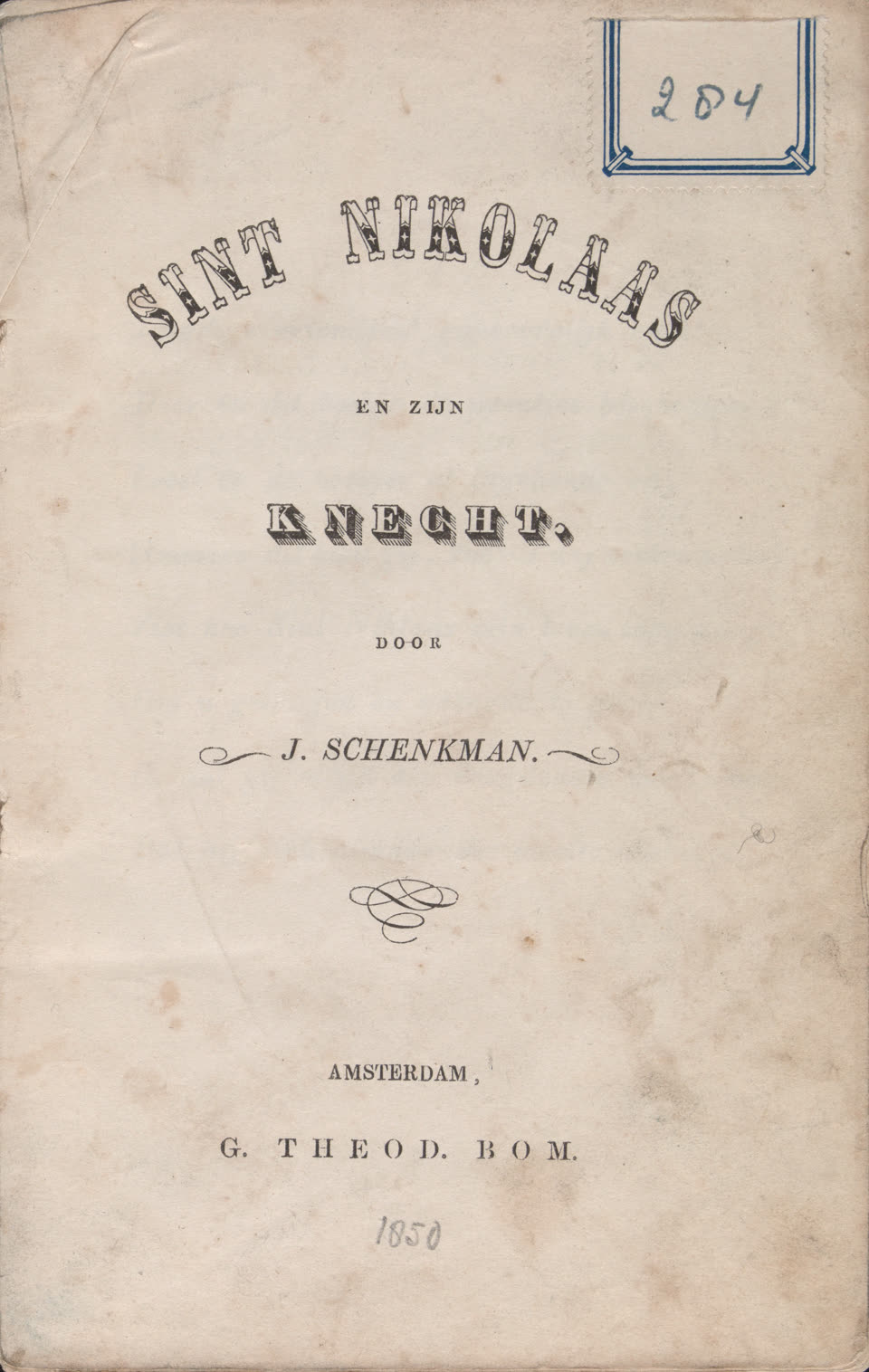
Much of what he is was written in one book in 1850. Jan Schenkman (1806–1863), a schoolteacher, published «Sint Nikolaas en zijn knecht» in Amsterdam that year with Gerrit Theodoor Bom: sixteen verses of twelve lines each, sixteen hand-coloured lithographs, thirty-six pages, seventeen centimetres tall. The national library keeps it as a topstuk and says it is the first book with Sinterklaas in the lead — before it he had only walk-on parts — that it was reprinted for fifty years, and that the song every Dutch child can sing comes from it. Schenkman also gave him the horse that goes over the rooftops and the book of notes on good and naughty children. Before 1850 the saint was «een wat duister figuur» who frightened children into obedience; Schenkman made him a dignified bishop of whom one of the rhymes says “Hij straft niet graag kindren, maar is hun een vriend”.
Het Sinterklaasfeest — Nederlands Openluchtmuseum, Arnhem (the Dutch national open-air museum)
Sint Nikolaas en zijn knecht — KB, de nationale bibliotheek (the National Library of the Netherlands), Topstukken
A second figure brings presents on 25 December, and he is the newcomer the Netherlands has been arguing about for thirty years. What the argument is about turns out to be countable, and the Meertens Instituut counted it in 1996 — not which figure a household believes in, but whether it gives presents twice. NIPO found 11 per cent of the population giving at both Sinterklaas and Christmas in 1971 and 15 per cent by 1984, and research by GfK Interact had the share still rising through the nineties. Amsterdam, «altijd afwijkende en trendsettende», was far ahead of the rest: «in 1992 zou 60% van de inwoners sinterklaas én Kerstmis vieren met het geven van cadeaus».
Families swap rather than choose once, which is the part a figure hides. The same study quotes an eighteen-year-old from Medemblik: «We hebben nu twee jaar kerst met pakjes gevierd. Nu doen we weer eens wat op vijf december.» A man of twenty-three had moved his family to Christmas once there were no small children left in it; a woman of thirty-four whose family gives its parcels under the tree hoped to move back to «de echte pakjesavond» when her son was older. Whether there is a small child in the house is what decides it, and it decides it again every few years.
Christmas acquired presents before the Kerstman did. Peter Jan Margry, emeritus professor of European ethnology, puts the giving with the rise of the family rather than with any figure: «In de negentiende eeuw werd de kerstviering een familiefeest», the same century that produced books written for children, and «zo werden ook cadeaus toegevoegd aan kerst, om familiebanden aan te halen» — presents added to Christmas to draw the family closer.
An official holiday in the Netherlands does not give anybody the day off
Christmas Day and Boxing Day are both «algemeen erkende feestdagen», and that confers no right to stop working. The Dutch government says so itself, in as many words: there is no law laying down that particular public holidays are days off for employees, so there is no legal right to a free day on one. Whether a Dutch worker is at home on 25 December is settled by their collective labour agreement or their individual contract. What the recognised-holiday status actually does is move legal deadlines: a payment or response period that ends on one is extended to the next day that is neither a weekend nor a holiday.
The King speaks at one o'clock, and the country can watch it in sign language at the same moment
The Kersttoespraak is a fixed point of the Dutch Christmas Day. It goes out at 13:00 on Eerste Kerstdag, broadcast by the NOS on NPO 1 and NPO Radio 1, with a simultaneous NPO 2 transmission carrying a sign-language interpreter and a repeat at 18:05 — and other broadcasters carry it too. It is recorded a few days in advance inside Palace Huis ten Bosch: the 2025 address in the vestibule, the 2023 one in the Witte Eetzaal. The text is published on the Royal House's own site later the same day.
The presents are not at Christmas. They are on the evening of 5 December
The Dutch gift festival is Sinterklaas, and its climax is pakjesavond on 5 December — parcel evening — not Christmas morning. Presents come with rhyming poems written for the recipient, often teasing, and frequently hidden inside a hand-made «surprise». That is the shape the Netherlands argues about every December, because it is the thing Christmas is seen to be taking: Dutch ethnologists writing in 1996 describe the media treating the advance of the kerstman as a threat, the claim that pakjesavond was «op haar retour», and the worry that busy two-earner households would move to the easier business of expensive presents under a tree.
A country that rewrote its national anthem about the Christmas man
The tension has produced one artefact worth quoting in full. After NRC Handelsblad invited readers to write a new version of the Wilhelmus, a woman from Oegstgeest sent in this: «Wij hebben niks met Spanje, / ook Sinterklaas niet meer, / of appeltjes van Oranje: / de kerstman brengt ons meer!» — we have nothing to do with Spain any more, nor with Sinterklaas, nor with the little apples of Orange: the Christmas man brings us more. The Meertens ethnologist who collected it reads the joke as serious underneath: Sinterklaas is held to be as Dutch as windmills and tulips, and the argument about him is an argument about national identity.
Sint-gevoel and kerst-gevoel, argued about in parliament and in the newspapers
The argument has been conducted by named people in public. A member of the Tweede Kamer, the sociologist Louise Groenman, suggested that a shared sense of threat from the Christmas man might at least stop support for Sinterklaas crumbling further. The writer Nicolaas Matsier asked in newspaper articles how the Dutch could possibly watch it happen passively, and argued for founding a «Stichting Sinterklaasgevoel» — a Sinterklaas Feeling Foundation. The distinction the whole quarrel turns on is one Dutch people make easily, and it does not translate: the «sint-gevoel» is held to be something quite different from the «kerst-gevoel».
From the first Sunday of Advent, men blow a two-metre wooden horn over a well
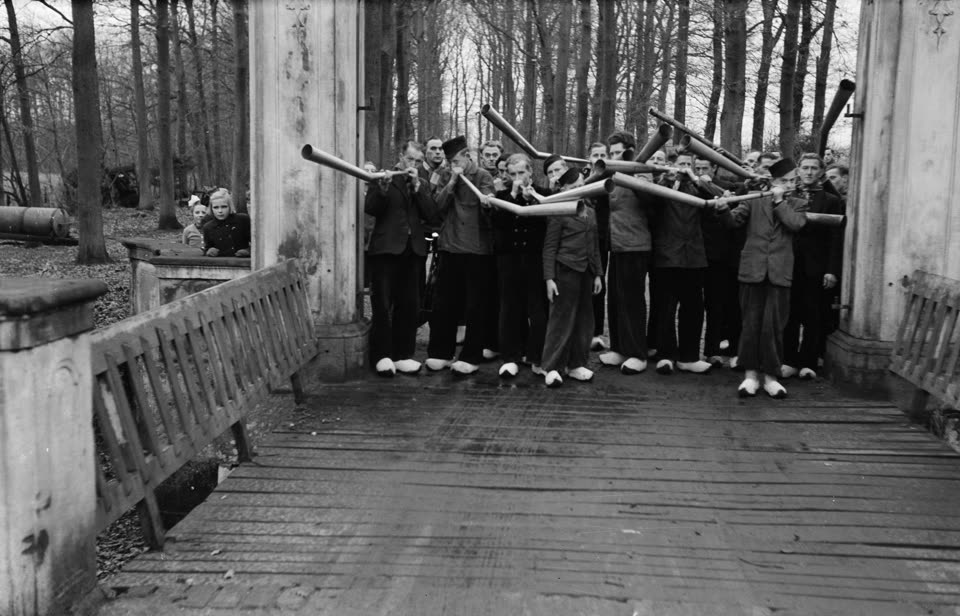
In Twente, the Achterhoek and on the Veluwe, the midwinterhoorn is blown from the first Sunday of Advent to announce the coming of the Christ child, and put away on 6 January, Epiphany. The horn is split, hollowed and bound, and soaked in water so the two wooden halves swell and seal; its removable mouthpiece, the «hap», is elder wood. There is a standard melody with a different name in each region — «n'oal'n roop» in Twente, «d'olde roop» in the Achterhoek, «de olde rôep» on the Veluwe — and individual hamlets have their own. The tunes are usually monotone, and they are sometimes blown over a water well to amplify the sound.
In 2022 the Sinterklaas feast was struck off the national heritage inventory
The Netherlands keeps an inventory of its intangible heritage, run by KIEN under the UNESCO convention. The Sinterklaasfeest was on it. In 2022 KIEN removed the listing — specifically the feast as entered by the Sint & Pietengilde, not the feast in general — on the advice of its review committee, because the entry no longer met the ethical principles of the convention. KIEN's stated reason is that listed heritage may not discriminate against groups of people, that the foundation held to the position that Zwarte Piet was historically not meant as racist, and that this passes over the figure's hurtful effect on different groups. The centre said in the same statement that it does want the Sinterklaasfeest in the inventory, in its many forms, and named the parts it has in mind: making surprises, writing poems, putting out the shoe, pakjesavond.
The most characteristic Dutch Christmas dinner is a tabletop grill, a stack of raw meat and vegetables and two or three hours of cooking your own small pans at the table — and it is younger than most people eating it. The Dutch butchers' trade bodies watched a cheese campaign persuade the country to eat Dutch gouda fondue instead of gruyère, and ran their own to sell more meat. The slogan was «Gourmet, probeer 't eens!» The word gourmet and the verb gourmetten were invented for the campaign, from the French gourmandises. Television, magazines and two chefs touring the country with demonstrations got the Netherlands gourmetting from 1977. The equipment came from Switzerland to begin with, because gourmet is, as the museum puts it, fondue's little brother.
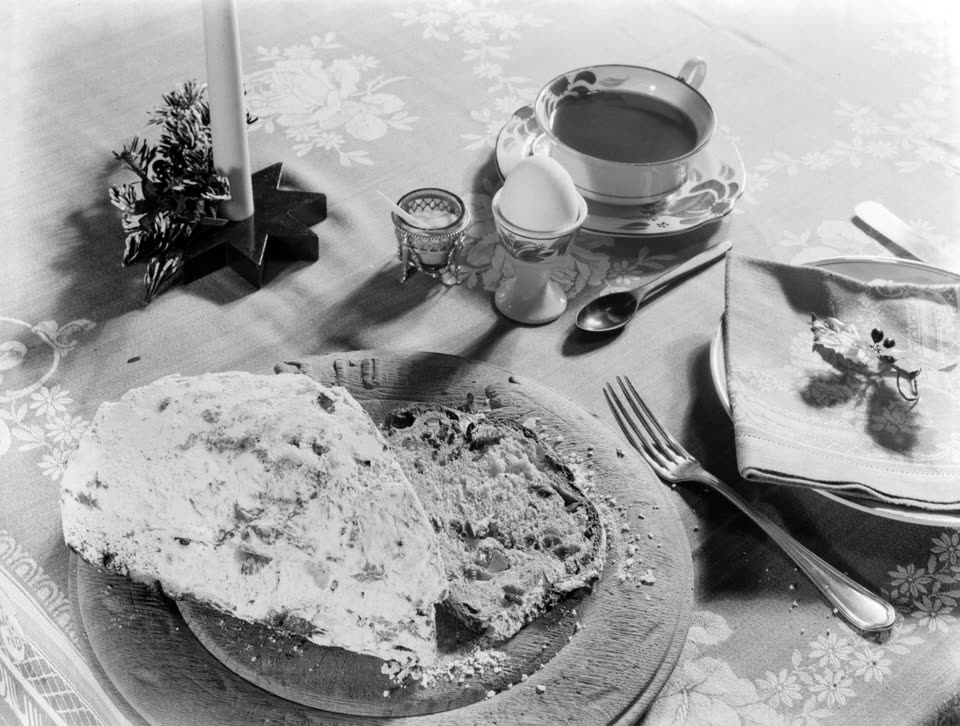
A long fruited loaf with a seam of almond paste through the middle, dusted white. Dutch Christmas breads were traditionally flat, sugared on top and filled with prunes, raisins and candied peel; the risen German Weihnachtsstol arrived in the second half of the nineteenth century. The story the Noord-Holland archive tells — and tells as a story — is of Adolph Katterfeld, from Gotha in Saxony, who set up as a baker in the Sint Jansstraat in Amsterdam in 1838 and for years baked a Weihnachtsstolle for his own family at Christmas, until one that came out particularly well went into the shop window to cool. On 24 December 1864 he baked seven, and they sold. He advertised them in the Algemeen Handelsblad on 23 December 1869.
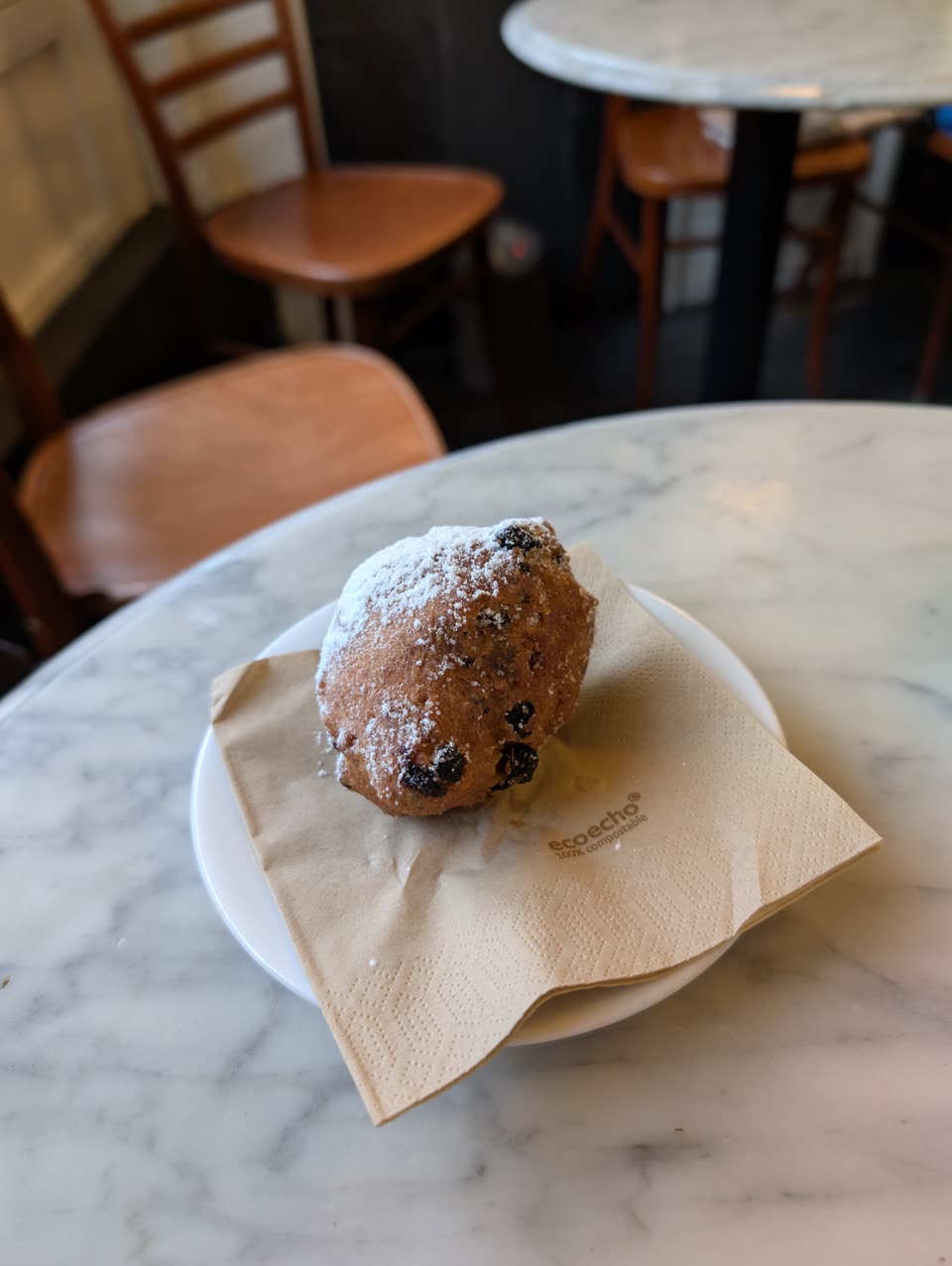
Not a Christmas food but the one the Dutch December ends on. Oliebollen — deep-fried dough balls, usually with currants, under a blizzard of icing sugar — are eaten traditionally on oudejaarsavond, New Year's Eve, from stalls that appear in the streets well before the turn of the year. The ancestor is the flatter oliekoek, fried in lard, linseed or rapeseed oil, whose oldest recipe is in De Verstandige Kock of 1667, the first Dutch cookbook. The round ball came later, with deeper frying, ready-made oil and cheap beet sugar.
Widely repeated claims about Christmas in the Netherlands that do not survive
checking. Each one says what is actually the case, because a correction
with nothing in its place leaves you worse off than before.
Oversimplified
Dutch children wake up to presents from Santa Claus on Christmas morning, as children do in Britain or America.
What is actually the case. The Dutch gift festival is Sinterklaas and its climax is the evening of 5 December, three weeks earlier, with poems and hand-made surprises rather than a stocking. What makes the claim «oversimplified» rather than false is that the kerstman really has advanced: Dutch ethnologists were writing in 1996 about him putting parcels under the tree in more and more households every year, and about a country arguing over whether that was a loss. So a Dutch child may well get something at Christmas. What is wrong is the assumption that Christmas is where the giving lives.
What is actually the case. It is a marketing campaign from 1977 that worked. The Dutch meat trade's publicity bureau and the butchers' board, having watched a cheese campaign move the country from gruyère to gouda, ran their own to sell more meat under the slogan «Gourmet, probeer 't eens!» — and launched the word gourmet and the verb gourmetten along with it, from the French gourmandises. Television, magazines and two touring chefs did the rest. The equipment was imported from Switzerland, because the thing it was modelled on was fondue. Within a generation it was what a Dutch family does on Christmas Day.
Oliebollen began as Germanic offering cakes, eaten so the goddess Perchta's sword would slide off the eater's greased belly.
What is actually the case. The archive that tells this story files it among the more sensational theories and offers no evidence for it. What is documented is much plainer and later: the flat oliekoek has its oldest recipe in the 1667 cookbook De Verstandige Kock, and the New Year link is traceable to the late Middle Ages, when the end of the fasting period after St Martin was marked by making and eating oliekoeken and the poor were treated to them around Oud en Nieuw. Two other origin stories circulate alongside the Perchta one — a Portuguese-Jewish introduction and an Eighty Years' War siege — and the archive considers the first of those more likely without claiming it is proven.
The law that makes Christmas official in the Netherlands never says when it is. The Algemene termijnenwet lists «de beide Kerstdagen» among the recognised holidays and gives no dates at all — not for Christmas, and not for Easter or Whitsun either, which it names only as «de Christelijke tweede Paas- en Pinksterdag». The one day in the list that is pinned to a number is «de vijfde mei», Liberation Day. The Netherlands is specific in its statute about the end of the occupation and vague about the birth of Christ.
Every claim carries its own citation. They are collected below, so you
can see what the page rests on and how much of it comes from where.
kerst / Kerst — Taalloket — Genootschap Onze Taal, the Dutch language society. Retrieved 2026-10-20. archived 18 April 2026On the wish itself: «De wens fijne/prettige kerstdagen moet je officieel ook met kleine letters schrijven. Het is echter zeker niet ‘fout’ om op een kerstkaart bijvoorbeeld Prettige Kerstdagen en een Gelukkig Nieuwjaar te schrijven - vaak staat deze wens al met hoofdletters afgedrukt op de kaart.» It supplies the two day-names the plural refers to as well, «eerste kerstdag en tweede kerstdag».
Kersttoespraak van de Koning, 25 december 2023 — Het Koninklijk Huis (the Royal House of the Netherlands). Retrieved 2026-10-17. archived 2 January 2026The closing sentence of the address: «Ik wens U allen – waar U zich ook bevindt en hoe Uw persoonlijke omstandigheden ook zijn – een gezegend Kerstfeest.»
Kersttoespraak Koning op 25 december 2025 — Het Koninklijk Huis / Rijksvoorlichtingsdienst, press notice RVD no. 339. Retrieved 2026-10-17. archived 19 January 2026«De kersttoespraak van Zijne Majesteit de Koning wordt Eerste Kerstdag, donderdag 25 december, om 13.00 uur uitgezonden door de NOS op NPO 1 en op NPO Radio 1. Gelijktijdig is de kersttoespraak op NPO 2 te zien met gebarentolk. Ook zenden diverse andere omroepen de kersttoespraak uit. De herhaling van de NOS-uitzending volgt om 18.05 uur op NPO 1. De toespraak is enkele dagen eerder opgenomen in de vestibule van Paleis Huis ten Bosch.»«Eerste Kerstdag» is the Royal House’s own name for 25 December, used in this notice; the government’s holiday page prints «Kerstmis» and two dates.
Sinterklaas en de komst van de kerstman. Decemberfeesten in postmodern Nederland tussen eigen en vreemd — John Helsloot, Volkskundig Bulletin 22.3 (1996), Meertens Instituut (KNAW). Retrieved 2026-10-25. archived 11 January 2026Page 286, in full: «Een belangrijk gegeven is dat volgens NIPO in 1971 11% van de bevolking cadeaus gaf met zowel sinterklaas als kerst; in 1984 was dit percentage al 15%. Deze percentages zijn in de jaren negentig, blijkens onderzoek van GfK Interact, alleen maar gestegen. In het altijd afwijkende en trendsettende Amsterdam lagen die cijfers zeer veel hoger: in 1992 zou 60% van de inwoners sinterklaas én Kerstmis vieren met het geven van cadeaus.»
Sint Nikolaas en zijn knecht — KB, de nationale bibliotheek (the National Library of the Netherlands), Topstukken. Retrieved 2026-10-25. archived 10 July 2026The book, described by the library that holds it: «Sint Nikolaas en zijn knecht is een kinderboek uit 1850 van Jan Schenkman (1806-1863). In het boekje vind je een voorwoord en 16 versjes over de goedheiligman van elk 12 regels.» And its standing: «Het is het eerste boek met Sinterklaas in de hoofdrol. Daarvoor kwam Sinterklaas wel al in boeken voor, maar had hij altijd een bijrol.» Also «Het boek werd heel populair en is 50 jaar lang herdrukt» and «Dankzij Schenkman kennen wij nu het lied Zie ginds komt de stoomboot».The library does not say Schenkman invented any of it: «We weten niet zeker of Schenkman dit zelf heeft bedacht. Misschien zijn de boeken waarin dit verteld wordt niet bewaard gebleven. In ieder geval kennen we geen boeken van vóór Sint Nikolaas en zijn knecht waarin deze zaken terugkomen.»
Midwinterhoornblazen in Gelderland en Overijssel — Kenniscentrum Immaterieel Erfgoed Nederland (KIEN), Inventaris Immaterieel Erfgoed. Retrieved 2026-10-17. archived 10 May 2026«Het is een echte wintertraditie, want de hoorn wordt vanaf de eerste zondag van Advent geblazen om de komst van het kerstkind aan te kondigen. Met Driekoningen, op 6 januari, wordt er afgeblazen en worden de hoorns weer opgeborgen.» And: «Voor de melodie bestaat een soort standaard, die in Twente n'oal'n roop, in de Achterhoek d'olde roop en op de Veluwe de olde rôep genoemd wordt… Meestal zijn het monotone melodieën die soms boven een waterput geblazen worden om het geluid te versterken.» The «hap» of elder wood is from the same page.
Statement uitschrijving Sinterklaasfeest — Kenniscentrum Immaterieel Erfgoed Nederland (KIEN), the Dutch UNESCO-accredited intangible heritage centre. Retrieved 2026-10-17. archived 21 January 2026«Kenniscentrum Immaterieel Erfgoed Nederland (KIEN) heeft het Sinterklaasfeest, zoals bijgeschreven door het Sint & Pietengilde, uitgeschreven uit de Inventaris Immaterieel Erfgoed Nederland… De inschrijving van het Sinterklaasfeest zoals deze in de Inventaris stond, voldeed niet langer aan (de ethische uitgangspunten van) het internationale UNESCO-verdrag voor immaterieel erfgoed. Een ingeschreven erfgoed mag bevolkingsgroepen niet discrimineren en dient respectvol om te gaan met culturele diversiteit en etnische identiteit.»On the specific disagreement: «…eraan vast wil houden dat de figuur van Zwarte Piet historisch niet racistisch bedoeld is, waarmee zij voorbij gaat aan het feit dat deze figuur een kwetsende uitwerking heeft op verschillende groepen. Aangezien deze figuur door velen in de samenleving als discriminerend wordt ervaren, is het handhaven van de huidige inschrijving van het Sinterklaasfeest in de Inventaris in strijd met de ethische uitgangspunten van UNESCO.»And on what KIEN wants instead: «Het Kenniscentrum wil het Sinterklaasfeest, in zijn vele varianten en manieren waarop het gevierd wordt in Nederland, wel graag een plek geven in de Inventaris, net als onderdelen zoals surprises maken, Sinterklaasgedichtjes schrijven, schoen zetten, pakjesavond…»
November 2025: Waar komen onze kersttradities vandaan? — Meertens Instituut (KNAW), In de media, 26 November 2025 — Peter Jan Margry, interviewed by NEMO Kennislink. Retrieved 2026-10-25. archived 15 February 2026On the presents: «“In de negentiende eeuw werd de kerstviering een familiefeest”, vertelt Margry… “Er verschenen kinderboeken, met verhalen die speciaal voor kinderen geschreven waren.” En zo werden ook cadeaus toegevoegd aan kerst, om familiebanden aan te halen.»He is as careful about 25 December itself: asked whether Jesus was born on it, «“We weten het niet”», and on the solstice explanation, «21 december is geen 25 december. Er is vermoedelijk een datum genomen die fictief is.»
Wie gelooft er nog in Sinterklaas? Een ritueel geschenkenfeest als spiegel van veranderende relaties — Mirjam van Leer, Volkskundig Bulletin 22.3 (1996), Meertens Instituut (KNAW). Retrieved 2026-10-17. archived 11 January 2026Opening paragraph, read from the PDF: «De opmars van de kerstman, die in Nederland jaarlijks in steeds meer huishoudens pakjes onder de kerstboom legt, wordt de laatste jaren in de media dikwijls uitgelegd als een bedreiging voor de viering van het sinterklaasfeest. De traditie van pakjesavond zou op haar retour zijn. Druk-bezette tweeverdieners zouden geen tijd meer hebben voor het zorgvuldig uitzoeken van cadeaus met een boodschap, het maken van surprises en het schrijven van gedichten. Nederland zou, daarin ook gestimuleerd door het grootwinkelbedrijf, massaal overgaan tot het veel gemakkelijker geven van prijzige cadeaus tijdens de kerstdagen.»It is evidence of what was being said and written in the Netherlands in the mid-1990s, which is exactly what it set out to record — and the article's own argument is that the pessimism is wrong, that the history of giving «suggereert een andere uitleg».
Het Sinterklaasfeest — Nederlands Openluchtmuseum, Arnhem (the Dutch national open-air museum). Retrieved 2026-10-25. archived 12 February 2026The museum’s own words for the date and the figure: «Eén van de bekendste en meest populaire Nederlandse tradities is het vieren van het Sinterklaasfeest op 5 december.» And for the saint: «Het begon allemaal bij de heilige bisschop Nicolaas van Myra. Hij werd geboren in het huidige Turkije en stond al snel bekend als kindervriend. Zijn sterfdag was 6 december.»The museum reaches the 1850 book from the other direction and without naming its author: «Een oude schoolmeester schreef in 1850 een boekje en voegde nog wat elementen aan het feest toe, zoals het schimmelpaard en de stoomboot.»
Gourmetten: een typisch Nederlandse eettraditie? — Nederlands Openluchtmuseum, Object of the Month, curator Tim Smeets. Retrieved 2026-10-17. archived 19 January 2026«Het Voorlichtingsbureau Vlees en het Bedrijfschap Slagersbedrijf (VVBS) startte daarom een eigen campagne: om meer vlees te verkopen. ‘Gourmet, probeer ’t eens!’ werd de slogan. Het woord gourmet en het werkwoord gourmetten werden gelanceerd, afgeleid van het Franse woord gourmandises dat ‘exclusieve hapjes’ betekent. Via de televisie, via de tijdschriften en door middel van twee koks die het land doorreisden om gourmetdemonstraties te geven, wist de vleesindustrie Nederlanders vanaf 1977 aan het gourmetten te krijgen. De apparatuur kwam eerst uit Zwitserland; gourmet is immers het kleine broertje van fondue.»
Hoe de Weihnachtsstol zijn intrede deed — Oneindig Noord-Holland (ONH), Noord-Hollands Archief. Retrieved 2026-10-17. archived 18 June 2026«Nederlandse kerstbroden zijn vanouds plat en de bovenkant is vaak met wit suikerpoeder bestrooid. Meestal zijn ze gevuld met pruimen, rozijnen en sukade. Maar in de tweede helft van de negentiende eeuw dient zich een nieuwe variant aan: de Weihnachtsstol. Naar verluid is het allemaal begonnen met een Duitse bakker in de Sint Jansstraat 33 in Amsterdam. Adolph Katterfeld is afkomstig uit Gotha in Saksen en in 1838 vestigt hij zich als broodbakker in het centrum van de hoofdstad.» And: «Het jaar daarop, op 24 december 1864, bakt hij maar liefst zeven Sächsische Thüringer Weihnachtstollen, die grif van de hand gaan… Op 23 december 1869 adverteert Katterfeld er voor het eerst mee in het Algemeen Handelsblad.»«NAAR VERLUID»
Van oliekoek tot oliebol — Oneindig Noord-Holland (ONH), Noord-Hollands Archief. Retrieved 2026-10-17. archived 18 June 2026«De typisch Nederlandse lekkernij wordt traditioneel op oudejaarsavond gegeten, maar al ruim voor de jaarwisseling staan mensen, al dan niet verkleumd van de kou, bij de dichtstbijzijnde oliebollenkraam…» And: «Het oudste recept voor de oliekoek staat in ‘De Verstandige Kock’ uit 1667; het allereerste Nederlandse kookboek.» And on the shape: «De ronde gefrituurde deegbal kwam in de loop van de negentiende en twintigste eeuw binnen het bereik van ieder die maar trek had», which the page attributes to manufacturers producing ready-to-use frying oil and cheaper beet sugar.
Wanneer zijn de officiële feestdagen in Nederland? — Rijksoverheid (the Dutch central government). Retrieved 2026-10-17. archived 20 August 2026«Er is geen wet die heeft vastgelegd dat bepaalde feestdagen vrije dagen zijn voor werknemers. Er is dus geen wettelijk recht op een vrije dag op een feestdag. In uw cao of arbeidsovereenkomst staat of u vrij bent op feestdagen.»And on what the status does do: «Valt de termijn van betaling op een zaterdag, zondag of officiële feestdag? Dan wordt die verlengd tot en met de eerstvolgende dag die niet in het weekend of op een officiële feestdag valt.»It does not use «Eerste Kerstdag» or «Tweede Kerstdag», and it does not cite the Algemene termijnenwet by name. It prints «Kerstmis: vrijdag 25 december en zaterdag 26 december 2026» and leaves the statute to be looked up.
Algemene termijnenwet (Wet van 25 juli 1964) — wetten.overheid.nl, Ministerie van Binnenlandse Zaken en Koninkrijksrelaties. Retrieved 2026-10-17.The statute that makes Christmas an «algemeen erkende feestdag» in the Netherlands is a law about COUNTING DAYS, and it is worth reading for what it is. The Algemene termijnenwet of 25 July 1964 — issued in the name of Queen Juliana — exists, in its own preamble, to set rules «inzake berekening van termijnen in verband met de zaterdag, de zondag en algemeen erkende feestdagen»: how to calculate a legal deadline that falls on a Saturday, a Sunday or a recognised holiday.Article 3(1), in full: «Algemeen erkende feestdagen in de zin van deze wet zijn: de Nieuwjaarsdag, de Christelijke tweede Paas- en Pinksterdag, de beide Kerstdagen, de Hemelvaartsdag, de dag waarop de verjaardag van de Koning wordt gevierd en de vijfde mei.»«DE BEIDE KERSTDAGEN» — both Christmas days — and no dates.Read on 17 October 2026 in the consolidation «Geldend van 10-10-2010 t/m heden».