Christmas Day in Finland is 25 December. It is a public holiday.
How to say it
Finnish
Hyvää joulua
Hyvää joulua
say it: HUU-vaa YOH-loo-ah
A synthesised voice — not a recording of a person — saying Hyvää joulua
in fi-FI.
Written with a small j, and the language authority says so in as many words: joulu is an ordinary noun in Finnish, like vappu and pääsiäinen, so the greeting takes a lower-case initial in general-language text. English capitalises Christmas; Finnish does not capitalise its word for it.
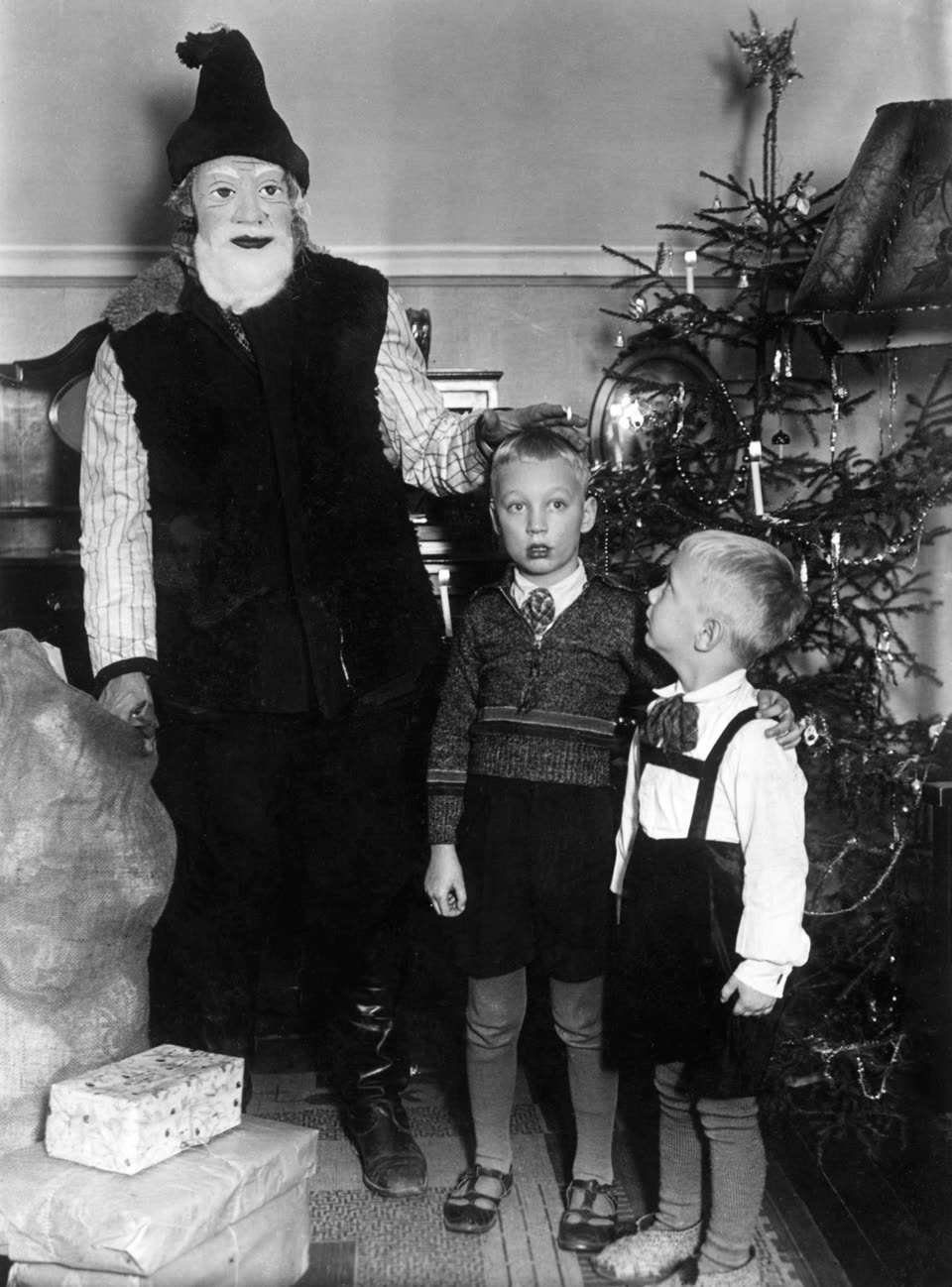
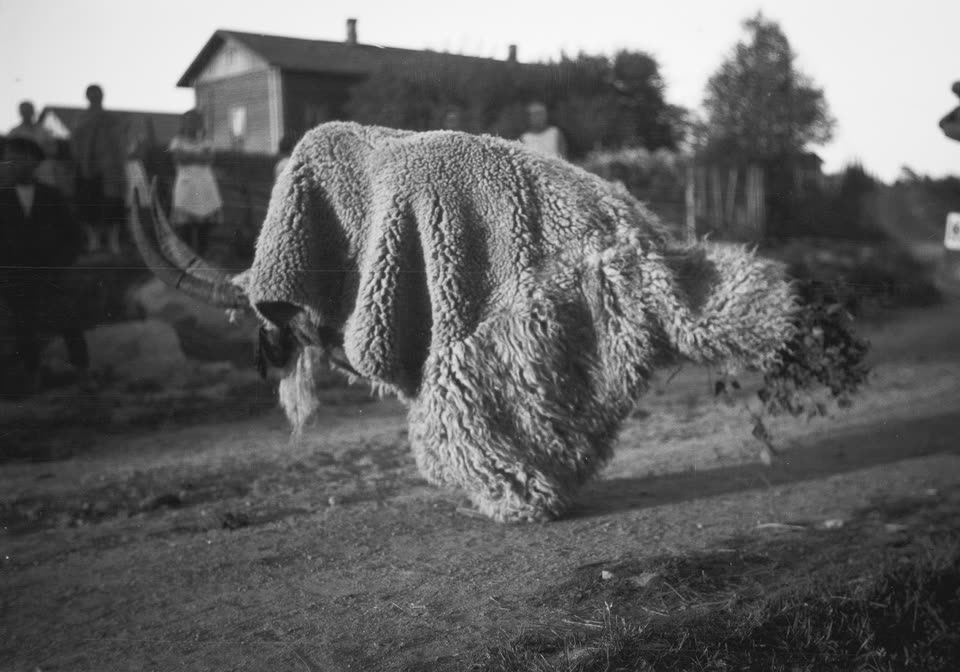
The Finnish Father Christmas is called the Yule Goat, and the name is not decoration: the figure in the old house-visiting rounds was an animal, horned, and it did not bring anything. It demanded hospitality from the houses it called on. Finland's joulupukki lost his horns by the turn of the twentieth century but kept a sheepskin coat worn inside out for a long time after that; the red and white suit, on the American pattern, only became usual from the 1950s. He lives at Korvatunturi in Finnish tradition, and the tradition had competitors — Rovaniemi, and places in Sweden and Norway.
Joulu — Yle Oppiminen — Yleisradio, Finland's national public broadcaster
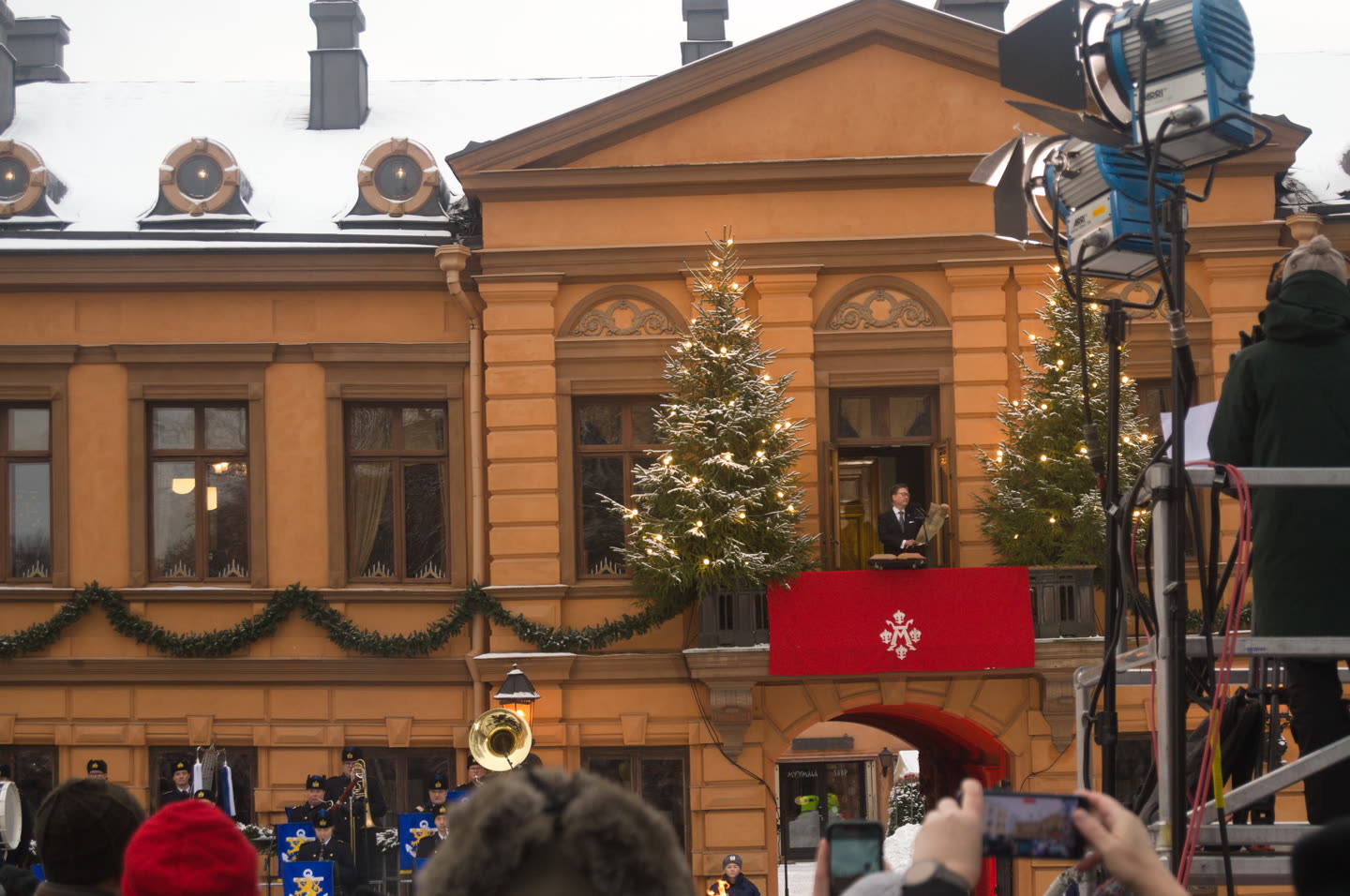
Christmas peace is declared from a balcony in Turku at noon, and half the country means to watch
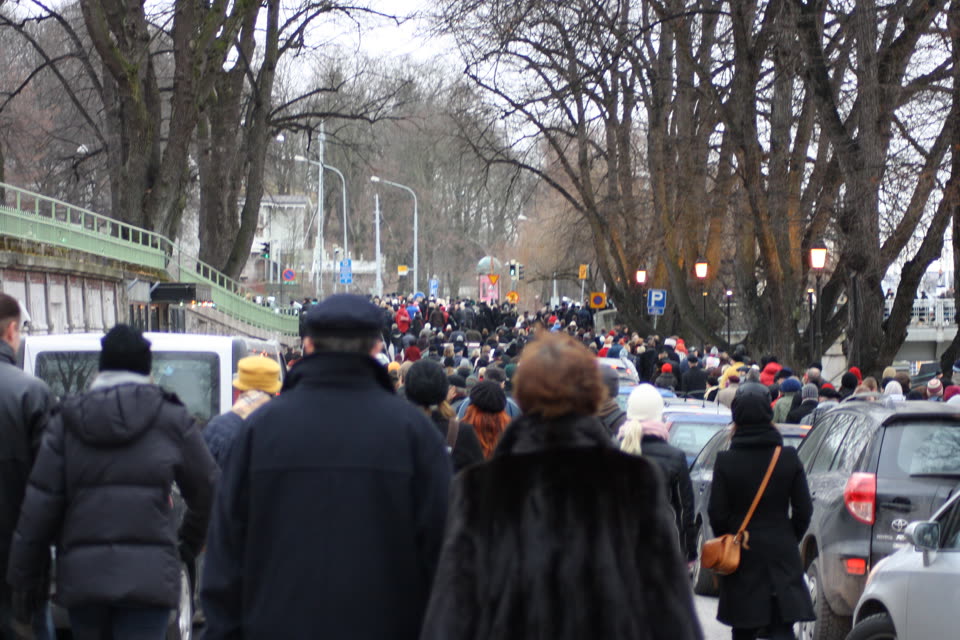
At twelve o'clock on Christmas Eve the city of Turku declares the Christmas peace from the balcony of the Brinkkala house on the Old Great Square, in Finnish and then in Swedish. It has been read in Turku as a nearly unbroken tradition for seven hundred years and from that balcony since 1886. It is broadcast live on television, on the national radio and on the broadcaster's streaming service, and a national survey found that more than half of Finns want to follow it.
The scroll it is read from dates to 1956, and in heavy rain it has to be dried afterwards
The declaration is read from a leather parchment, and the reader's chief practical worries are weather and footing. The text was last set out on that parchment in 1956; if it rains hard the scroll has to be dried once the reading is over. Behind the balcony there is a room kept for the purpose — the joulurauhahuone — where the reader waits. Swedish-speaking listeners, the reader notes, judge him largely on how the Swedish goes.
The most important Christmas tradition Finns name is going to the graves
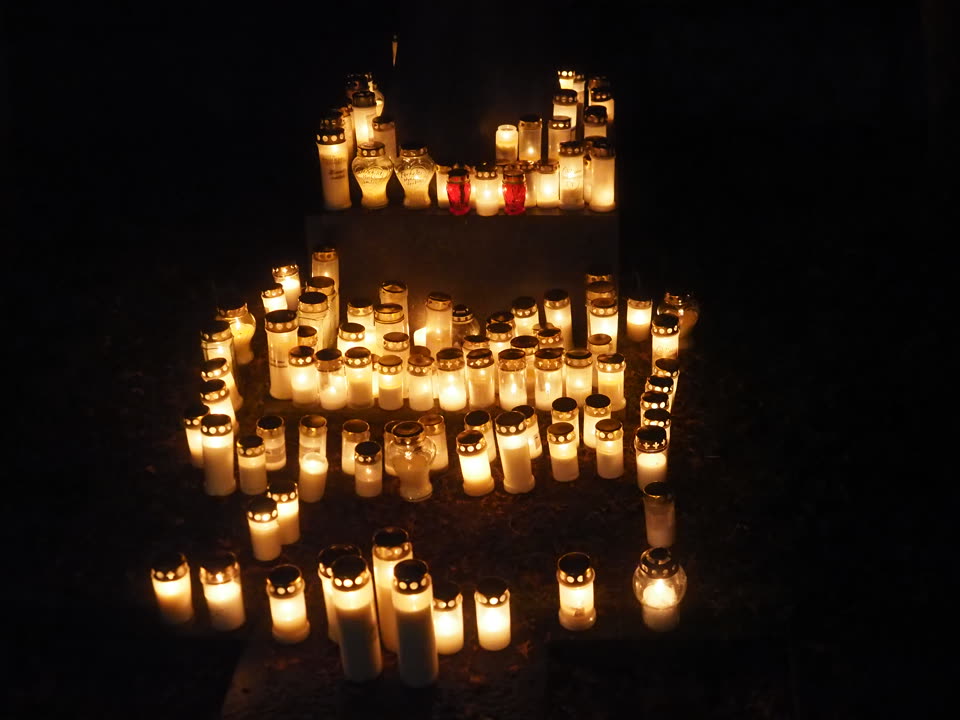
Asked which Christmas traditions matter most, Finns put visiting the graves of their dead first — ahead of following the Christmas peace and ahead of giving to collections. A candle is carried to the grave on Christmas Eve; people go even when nobody of theirs is buried there, and leave the candle at a memorial instead. Then they drive home and the Christmas meal begins.
Christmas Eve is not an official holiday, and it is the whole of Christmas
The day the Finnish Christmas actually happens on is not a public holiday. The state's list has Christmas Day, Boxing Day and Epiphany on it, and not Christmas Eve — and the national broadcaster says so plainly while describing the Eve as the high point of the whole feast, particularly in families with children. The things that belong to it are the tree, the food, the cemetery, the sauna and the presents.
Joulu — Yle Oppiminen — Yleisradio, Finland's national public broadcaster
The tree is bought early and carried in late
A Finnish household may have had its tree standing outside or in the shed for weeks — bought, or cut in the forest with permission — but it generally comes indoors only on Christmas Eve itself, or the day before. Finland does not start its decorating as early as many countries do; November is when Christmas starts to be visible in the shops and on the streets, and the pikkujoulut, the office and friends' parties, run from November onwards.
Joulupukki comes to the door, and the children have to sing to him
The Finnish Father Christmas does not come down a chimney while everyone is asleep. He knocks, comes in, and asks whether there are any well-behaved children here. The children and the guests sing to him, he hands out the presents, he may take the glass the house offers him, and then he leaves to carry on by reindeer. It is the high point of the evening.
After the silent Christmas Day you were allowed to make a noise, and the horses came out
St Stephen's Day, 26 December, is the noisy one. The tradition in Finland was sleigh rides and young people's gatherings — after the quiet of Christmas Day, on Tapani you had leave to enjoy yourself and to be loud about it. In places the old tapaninajelut are still run, behind a horse.
Joulu — Yle Oppiminen — Yleisradio, Finland's national public broadcaster
The shops may legally open, and that is the opposite of the Danish rule
Finnish law does not stop a shop opening on a public holiday. Whether it opens is a commercial decision, and whether an employee gets the day off is a question for the collective agreement rather than for the statute — Independence Day is the only day whose pay is written into law. Across the Baltic, Danish retail is shut by the lukkelov on Christmas Eve whatever the shopkeeper would prefer.
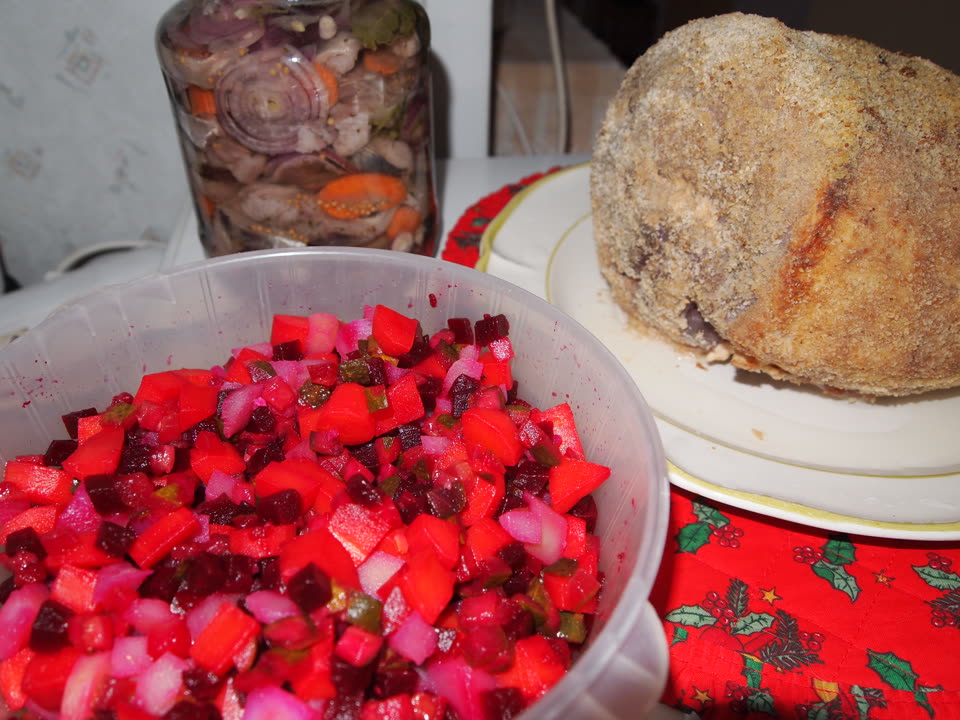
A beetroot salad — beetroot, potato, carrot, onion and pickled herring, chopped small and bound, often with whipped cream coloured pink by the beet. It is the dish that makes a Finnish Christmas plate look the way it does.
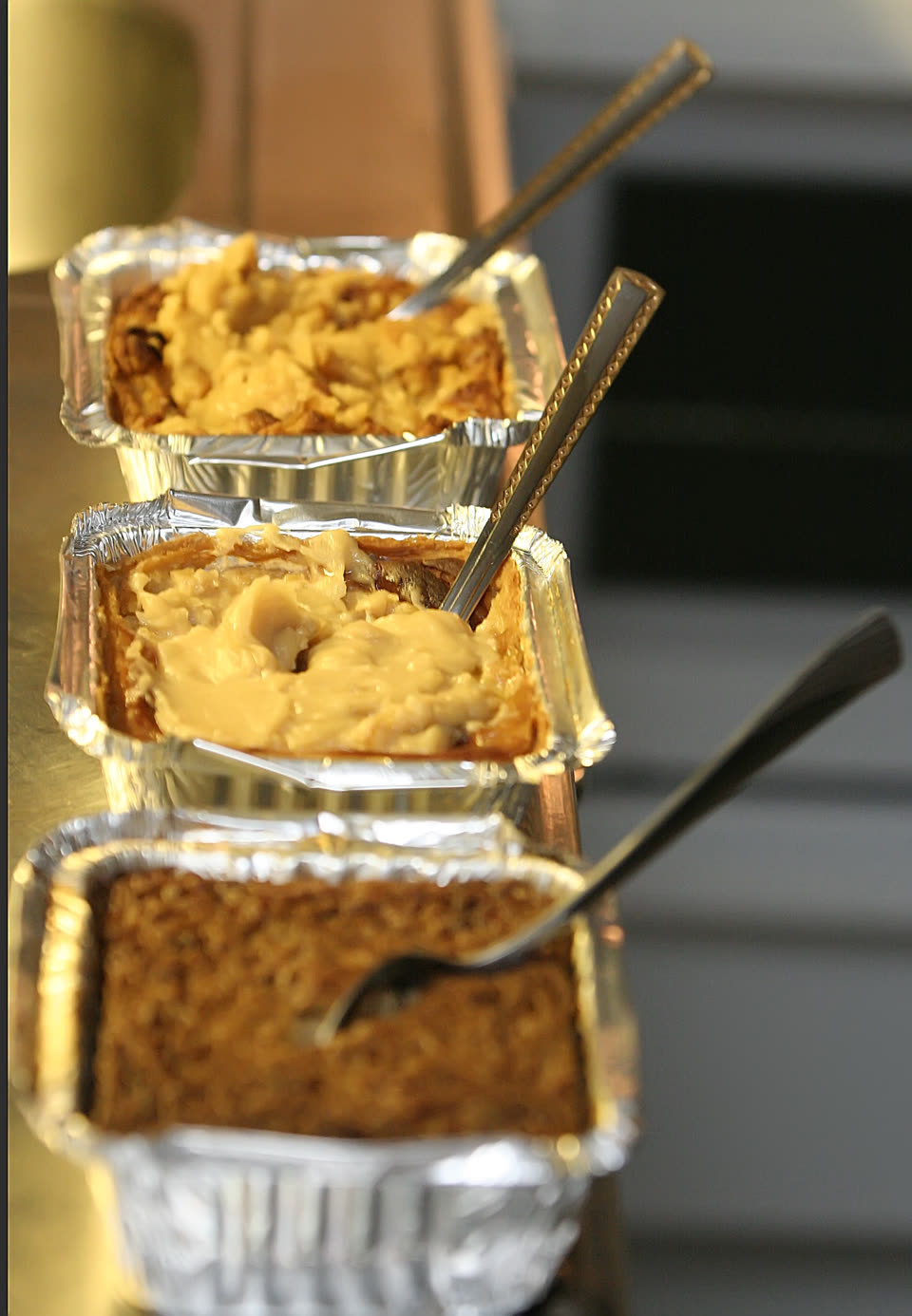
Three baked casseroles — swede, potato and carrot — sweet, soft and served alongside the ham. They are on the table because they were cheap: humble country food that poor households could manage, which became the thing the Christmas table is not complete without.
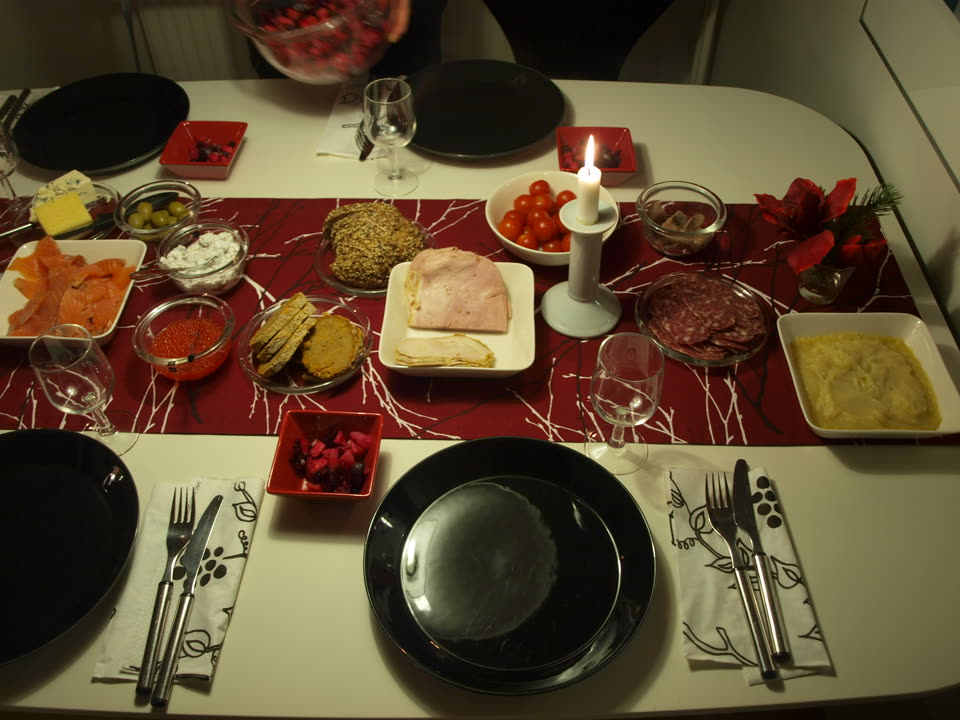
Herrings, cured salmon and smoked fish, which open the meal rather than close it. In eastern Finland the Karelian pasty belongs on the same table, and many houses also put out roe with sour cream.
Joulupukki means Christmas goat. The word is not a leftover piece of whimsy: the figure it names was a horned animal who went round the houses in the old midwinter processions and demanded to be fed. He brought nothing. The horns went at the turn of the twentieth century, the inside-out sheepskin coat lasted decades longer, and the red suit arrived from America in the 1950s. The name is the only part of the original that survived.
Joulu — Yle Oppiminen — Yleisradio, Finland's national public broadcaster
Joulu and juhla — Christmas and celebration — come down from the same Old Norse root, borrowed into Finnish long before anybody here had heard of Bethlehem. A pagan midwinter feast was kept at this time of year before Christianity gave the date its present meaning. Finnish still writes the word with a small letter, because the language authority classes joulu as an ordinary noun rather than a name.
Joulu — Yle Oppiminen — Yleisradio, Finland's national public broadcaster
Kekri was the Finnish harvest and turn-of-year feast, and it did not simply give way to Christmas when Christmas arrived. In Savo and in Karelia the two were kept side by side, and kekri survived there well into the 1800s.
Joulu — Yle Oppiminen — Yleisradio, Finland's national public broadcaster
Sources
Every claim carries its own citation. They are collected below, so you
can see what the page rests on and how much of it comes from where.
Public holidays in Finland — Info Norden, Nordisk Ministerråd. Retrieved 2026-11-19.The list gives «25 December: Christmas Day» and «26 December: Boxing Day», and also 6 January: Epiphany, which Denmark does not keep. 24 December is not on it. One line separates Finland sharply from its Nordic neighbours: «In Finland, the law does not prevent retail shops from being open on public holidays» — where Denmark's lukkelov closes them.
Epävarmoina aikoina perinteistä haetaan tukea — haudoilla käynti ja joulurauhan julistus kuuluvat joka toisen jouluun — Jaana Hevonoja, Yle. Retrieved 2026-11-19.«Joulurauhan julistusta haluaa seurata yli puolet suomalaisista. Joulurauha on julistettu Turussa lähes katkeamattomana perinteenä 700 vuoden ajan. Julistusta voi seurata Yle TV1:ssä, Areenassa ja Radio Suomessa jouluaattona kello 12.» The 1886 date is from the same page's photograph caption, credited to the City of Turku: «Nykyisestä paikastaan Brinkkalan talon parvekkeelta joulurauha on julistettu vuodesta 1886 lähtien.»
Alkukirjain: juhla- ja merkkipäivien nimet — Kielitoimiston ohjepankki, Kotimaisten kielten keskus (Institute for the Languages of Finland). Retrieved 2026-11-19.The guidance lists joulu among the festival names written with a small initial, and gives the greeting as its own example: «Tämän mukaisesti juhlapäivätervehdyksiin tulee yleiskielisissä teksteissä pieni alkukirjain: … Toivotamme teille hyvää joulua ja onnellista uutta vuotta!»
Uusi joulurauhanjulistaja luottaa mielikuvaharjoitteluun — Minna Rosvall, Yle. Retrieved 2026-11-19.Turku's protocol chief Mika Akkanen, taking over the reading for the first time, on the parchment: «Se on vuodelta 1956 eli silloin tämä teksti on viimeksi muotoiltu tällaiselle nahkapergamentille. Jos oikein kovasti sataa, se täytyy puheen tai julistuksen jälkeen kuivata.» And: «Monet ruotsinkieliset kuulijat arvioivat joulurauhanjulistajaa vähän sen mukaan, että miten se teksti menee ruotsiksi.»
Supisuomalainen joulu on tehty odotuksesta, tarinoista ja tietysti lahjoista — Sini Sovijärvi, Yle Oppiminen. Retrieved 2026-11-19.«Jotkut hankkivat joulukuusen odottamaan jo hyvissä ajoin. Sen voi ostaa tai hankkia luvan kanssa metsästä. Suomessa kuusi kuitenkin kannetaan sisään yleensä vasta aattona tai aatonaattona.» And: «Työpaikoilla ja ystäväpiireissä järjestetään jo marraskuusta lähtien pikkujouluja tai jouluglögejä.»
Joulu — Yle Oppiminen — Yleisradio, Finland's national public broadcaster. Retrieved 2026-11-19.«Valkopartainen, punapukuinen joulupukki on varsin tuore tulokas joulun perinteissä. Nimi viittaa eläimeen, joka esiintyi vanhoissa juhlakiertueissa, mutta silloin aivan toisessa roolissa. Sarvipäinen otus ei tuonut lahjoja, vaan vaati taloista kestitystä.» And: «Suomalainen joulupukki menetti sarvensa 1900-luvulle tultaessa, mutta vaatetuksena säilyi vielä pitkään nurin käännetty lammasturkki. Amerikkalaisen mallin mukainen punavalkoinen vaatetus yleistyi vasta 50-luvusta lähtien. Joulupukin asuinpaikaksi on suomalaisessa perinteessä vakiintunut Korvatunturi, vaikka kilpailevia paikkakuntia on ollut tarjolla Rovaniemen lisäksi myös Ruotsissa ja Norjassa.»