Santa Clausसान्टा क्लस · Santa Klas · arrives 25 December
—days
—hrs
—min
—sec
Next: Friday 25 December 2026
When is Christmas in Nepal?
Christmas Day in Nepal is 25 December. It is a public holiday.
How to say it
Nepali
क्रिसमसको शुभकामना
Krismasko shubhakamana
Good wishes for Christmas. क्रिसमस is the English word taken into Nepali whole; शुभकामना is the ordinary Nepali word for the good wishes offered at any festival, the same one used at Dashain and Tihar.
«Merry Christmas», written out in Devanagari. It is the second half of the same Hamro Patro greeting, and the form most often seen on shopfronts and cards.
Santa Claus, under the English name written out in Devanagari — Santa Klas. Nepali has not given him a name of its own: the word, the red cap, the white beard and the sack all arrive together.
The Federation of National Christians, Nepal keeps 25 December as three days at once: a day of salvation, a day of love and a day of peace. Its chairman, C. B. Gahatraj, explains the division by what the Christian community believes Jesus came to bring — मुक्ति, salvation; प्रेम, love; शान्ति, peace — and says the day is marked as all three together.
The Federation's main committee holds a Christmas Mahotsav — a Christmas festival — in Kathmandu on the day itself. Representatives of the government, officials of the bodies concerned and human-rights figures attend. The Federation began marking Christmas as a mahotsav after 2063 in the Nepali calendar, the year Nepal ceased to be a Hindu state.
In recent years the prominent places of the larger towns are decorated with Christmas trees, and the bustle is heaviest in the quarters that take the most visitors: Thamel in Kathmandu, Boudha, Pokhara and Sauraha. Decorated trees appear in the shopping centres of the three cities of the Kathmandu Valley from the start of December.
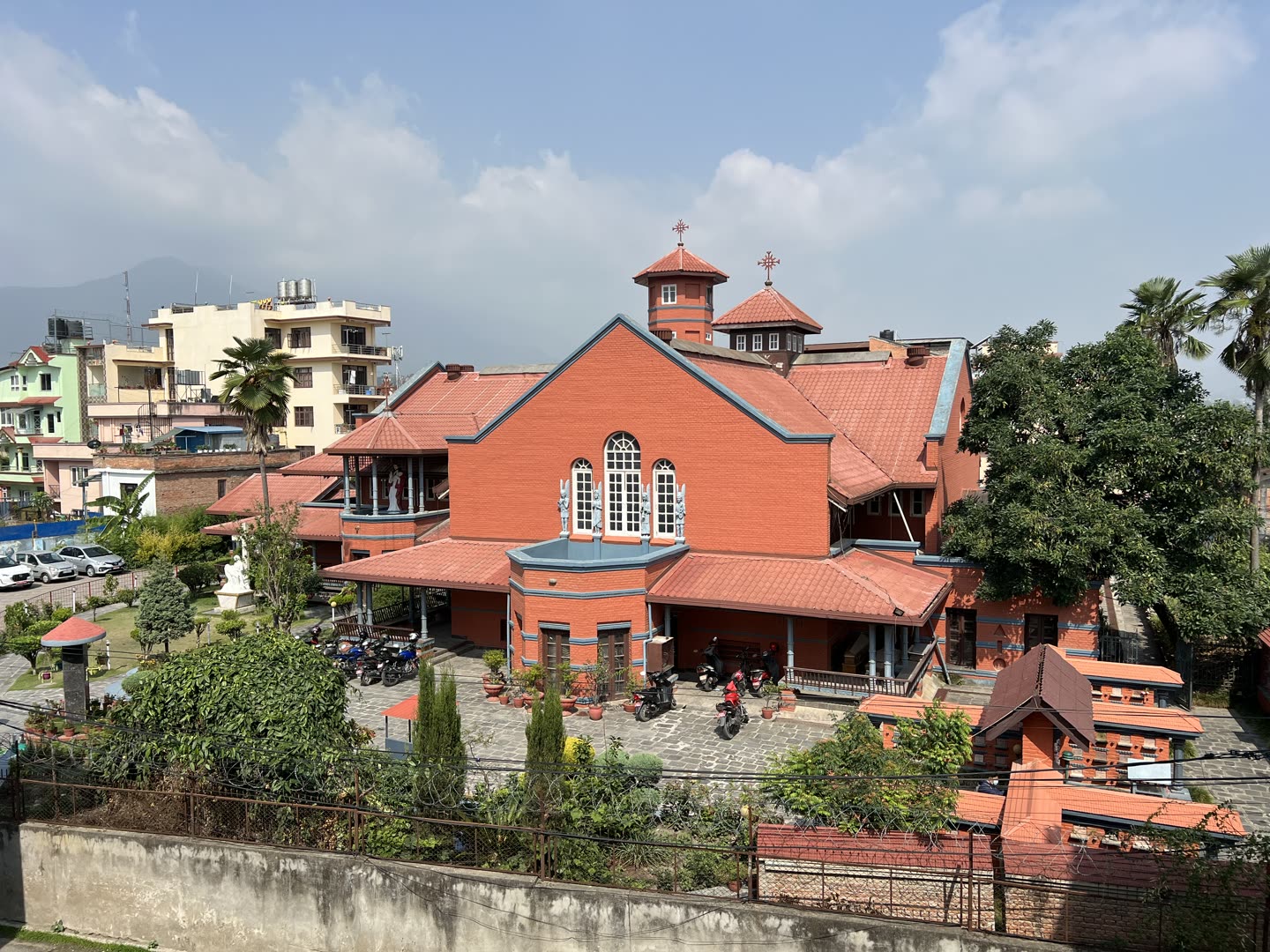
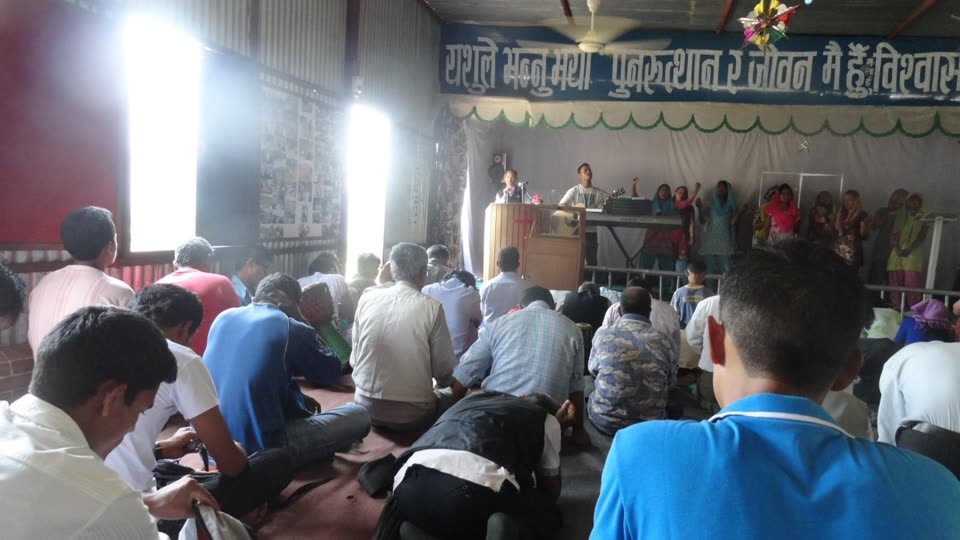
Christians across the country mark the day in church, remembering the birth of Jesus and dwelling on his teaching. The Nepali press describes the day as one of prayer in the churches first and then of good wishes and exchanged gifts among family and friends.
Santa Claus is the great attraction of the day — a stout, white-bearded figure in a red cap believed to give presents to everyone and to hand round happiness. Many children stay up late waiting for him, and some adults go about in his dress distributing and exchanging gifts.
Widely repeated claims about Christmas in Nepal that do not survive
checking. Each one says what is actually the case, because a correction
with nothing in its place leaves you worse off than before.
Contradicted
Christmas in Nepal is a holiday for Christians only — an optional day off that other Nepalis do not get.
What is actually the case. It was true for three years and has not been true since. The holiday notice for 2083 in the Nepali calendar — the year running from April 2026 to April 2027 — puts Christmas Day in the section headed «festivals that are a public holiday throughout the country», not in the section immediately after it, which exists precisely for festivals granted to one religion, culture or district and whose every entry says so in as many words. The line that produces the mistake is the descriptive genitive «इसाई धर्मावलम्बीको पर्व क्रिसमस डे» — Christmas Day, the festival of those of the Christian faith — which names whose feast it is. Eid al-Fitr and Eid al-Adha are listed four items later under exactly the same construction, and nobody reads those as holidays for Muslims only. The national news agency states the position directly: from 2078 in the Nepali calendar, which is 2021–22, the holiday is for everyone again.
Nepal has given Christmas a holiday, taken it away, given it back to Christians only, and then given it back to everybody. The national news agency sets out the sequence in the Nepali calendar: a public holiday from 2063 to 2074; a holiday for those of the Christian faith alone from 2075 to 2077; and from 2078 a public holiday for everyone again.
Twice in two years the holiday was cancelled and then put back before the day arrived. In 2016 a new governing coalition decided on Christmas Eve to restore Christmas as a public holiday for that year, reversing the previous government. In March 2017 the government announced it would no longer recognise Christmas as a public holiday; in November it reversed that too and reinstated the holiday for the year.
There was a Catholic church in Kathmandu two and a half centuries ago, and a congregation to go with it. Capuchin friars settled in the city in the winter of 1715 and worked in Kathmandu, Patan and Bhaktapur for fifty-four years; on 24 March 1760 Father Tranquillius blessed a small new church at Wotu Tole in Kathmandu, under the title of the Assumption of Our Lady.
Nepal's first Christian congregation left the country on foot. On 4 February 1769, as Prithvi Narayan Shah completed his conquest of the valley, the Capuchins were driven out and went to Bettiah in India with fifty-seven Newar converts — the first community of Nepali Christians there is any record of, and it left rather than give up its faith.
The first Christian known to have reached the Kathmandu Valley came with a copper plate for his trouble. The Portuguese Jesuit Juan Cabral arrived in the spring of 1628 and was received by King Lakshminarasimha Malla, who gave him a tamra patra — a copper plate — permitting him to preach.
Christmas is a national holiday in a country where converting somebody is a crime. Nepal's law prohibits proselytism outright, and preachers have been convicted under it; the constitutional clause behind that prohibition sits alongside the guarantee of freedom to profess a religion.
The census and the churches are a long way apart on how many Nepali Christians there are. The 2021 census put Christians at 1.8 per cent of the population; the Federation of National Christians, Nepal says there are three million adherents and more than thirteen thousand churches, which on the same population would be about ten per cent.
Every claim carries its own citation. They are collected below, so you
can see what the page rests on and how much of it comes from where.
History of the Church in Nepal — ECS Nepal, Issue 49, August 2010, text by Ivan Sada. Retrieved 2026-11-22.«After reorganizing, they arrived and settled in Kathmandu in the middle of a cold winter in 1715. Over the next fifty-four years, the Capuchin Fathers toiled and extended their services to the people of Bhaktapur and Patan... On 24th March 1760, Father Tranquillius blessed a small new church situated in Wotu Tole in Kathmandu under the title of the Assumption of Our Lady.»
नेपाल राजपत्र, खण्ड ७५, संख्या ६७, भाग ५ — गृह मन्त्रालयको सूचना (Nepal Gazette, Part 5, Ministry of Home Affairs notice on public, festival and substitute holidays for the year 2083 of the Nepali calendar, April 2026 to April 2027) — Government of Nepal, published by the Department of Printing, 18 Falgun 2082 (2 March 2026). Retrieved 2026-11-22.Its section २.१ is headed «मुलुकभरि सार्वजनिक बिदा हुने पर्व» — festivals that are a public holiday throughout the country — and item (ञ) of that section reads «इसाई धर्मावलम्बीको पर्व क्रिसमस डे, (डिसेम्बर २५) - पुस १० गते शुक्रबार।»: Christmas Day, the festival of those of the Christian faith, December 25, Poush 10, a Friday.It is not a restriction on who gets the day, and the notice is built so that the difference is visible: its next section, २.२, is headed «सम्बन्धित धर्म, संस्कृति, भौगोलिक क्षेत्र र स्थान विशेषका लागि मात्र हुने सार्वजनिक पर्व बिदा» — public festival holidays only for the relevant religion, culture, geographical area and particular place — and holds four entries that each say «लागि मात्र», for such-and-such only. Both Eid al-Fitr and Eid al-Adha sit beside Christmas in २.१ under the identical construction, «इस्लाम धर्मावलम्बीको पर्व ईद».
क्रिसमस डे — Hamro Patro, 24 December 2019. Retrieved 2026-11-22.The piece opens on the greeting itself: «क्रिसमसको शुभकामना! मेरि क्रिसमस!»
Christmas greetings in many languages — Omniglot. Retrieved 2026-11-22.Omniglot's Nepali entry prints «क्रिसमस तथा नयाँ वर्षको शुभकामना (krismas tathā nayā̃ varṣako śubhakāmanā)».
2017 Report on International Religious Freedom: Nepal — United States Department of State, Office of International Religious Freedom. Retrieved 2026-11-22.«In March the government announced it would no longer recognize Christmas as a public holiday, a decision Christian groups said they interpreted as a reflection of anti-Christian sentiment. In November the government reversed the decision and reinstated the Christmas holiday for the year.» The 2016 edition of the same report carries the Christmas Eve restoration: «On Christmas Eve, a new governing coalition formed in August decided to restore Christmas as a public holiday for the current year, reversing a decision by the previous government to no longer acknowledge Christmas.»
2023 Report on International Religious Freedom: Nepal — United States Department of State, Office of International Religious Freedom. Retrieved 2026-11-22.«The law prohibits both proselytism and “harming the religious sentiment” of any caste, ethnic community, or class.»
आज डिसेम्बर २५ : ‘क्रिसमस डे’ मनाइँदै, देशभर सार्वजनिक बिदा — कान्तिपुर (Kantipur), report by राष्ट्रिय समाचार समिति (Rastriya Samachar Samiti, the national news agency), 25 December 2025. Retrieved 2026-11-22.«मानिसलाई प्रेम गरेर आएकाले प्रेम दिवस, शान्ति स्थापना गर्न आएकाले शान्ति दिवस र मुक्ति दिन आएकाले मुक्ति दिवसका रूपमा आजको दिनलाई मनाउने गरिएको अध्यक्ष गहतराजको भनाइ छ।» — the chairman's own framing, reported by the national news agency.