Christmas Day in Bolivia is 25 December. It is a public holiday.
How to say it
Spanish
Feliz Navidad
Feliz Navidad
say it: feh-LEESS nah-vee-DAHD
A synthesised voice — not a recording of a person — saying Feliz Navidad
in es-BO.
Spanish is one of Bolivia's official languages and the one a Christmas greeting is normally said in. It is not the only language the season is sung in: the Oficial Mayor de Culturas of La Paz says the villancicos are kept up in El Alto and in the countryside «donde los cánticos, en algunos casos, son en aymara» — in Aymara.
The Child brought the presents and the children put their shoes out at the door or the window to receive them — the same shoe as the Reyes Magos elsewhere in South America, twelve days earlier. Sayuri Loza describes this as what used to happen, before Father Christmas.
Misa de Gallo at midnight, and the family brings its own Christ Child
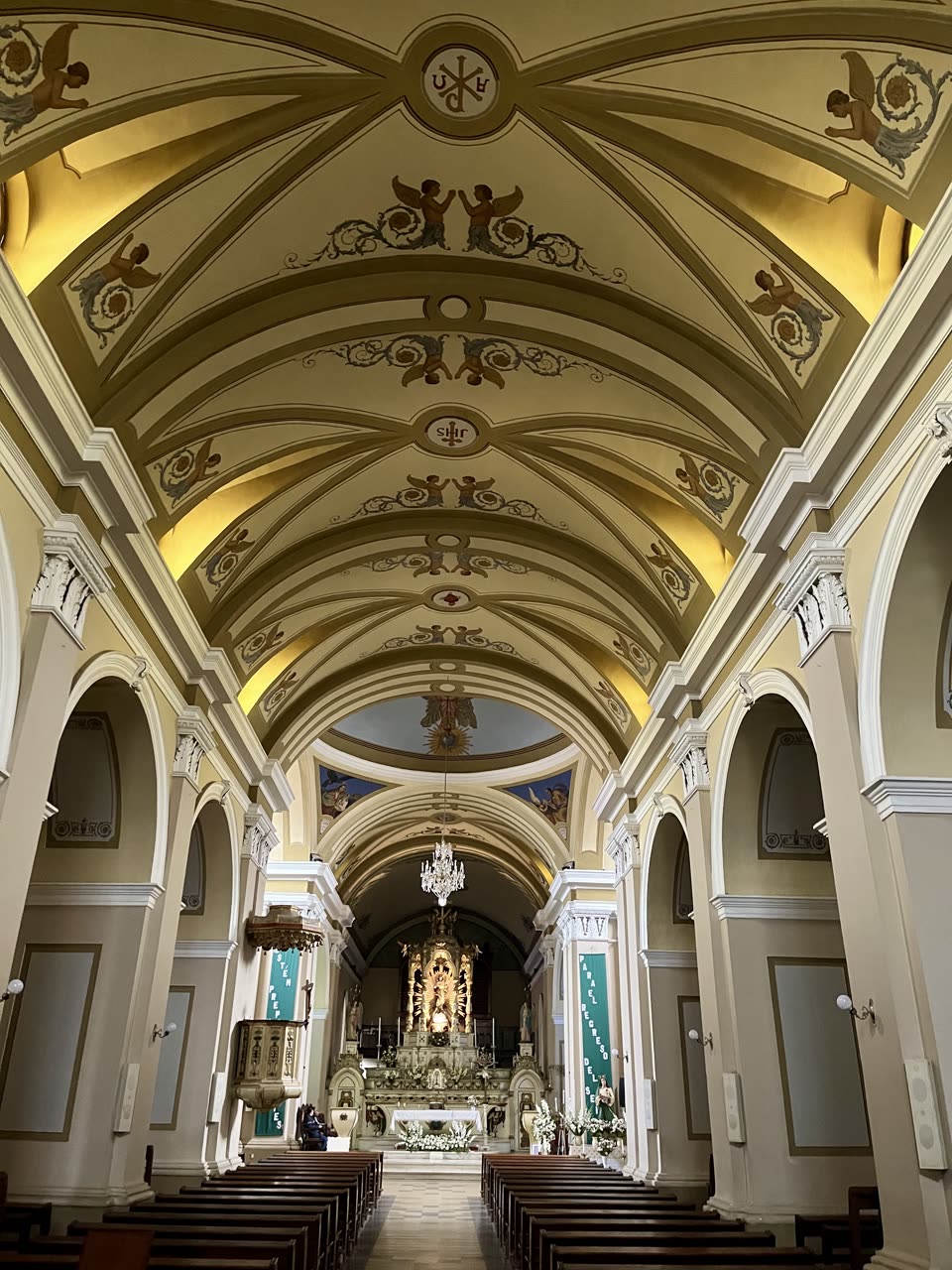
The Mass on the night of the 24th is the fixed point of a Bolivian Christmas. Some parishes move it earlier «para que las familias compartan el momento del nacimiento en su hogar», so that families can be at home for the moment of the birth; in others it stays exactly at midnight.
Households bring the figure of the Child from their own nativity scene with them to be blessed, and some churches then carry him out: «Incluso en algunas iglesias se eleva al Niño Jesús en procesión por las calles y luego en casa todos bailan villancicos al pie de los nacimientos».
In La Paz the city's own culture office counts it among the traditions that have survived intact: «La Misa de Gallo es otra tradición viva en la urbe y une a las autoridades y al pueblo. Además ya es una costumbre escuchar el repique de las campanas antes de la medianoche» — the bells are rung before midnight, and the Mass itself is at 00.00 on the 25th.
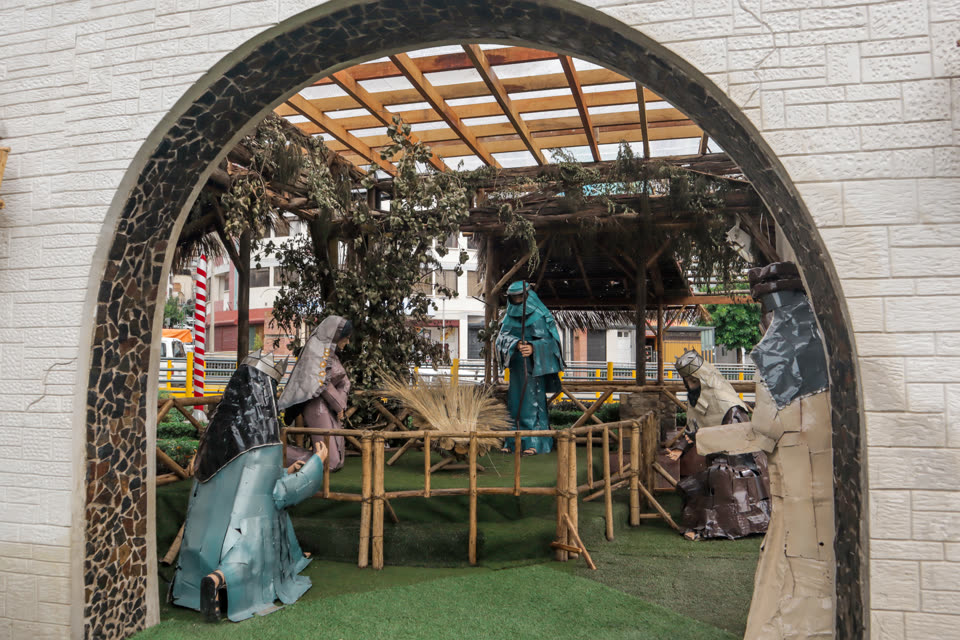
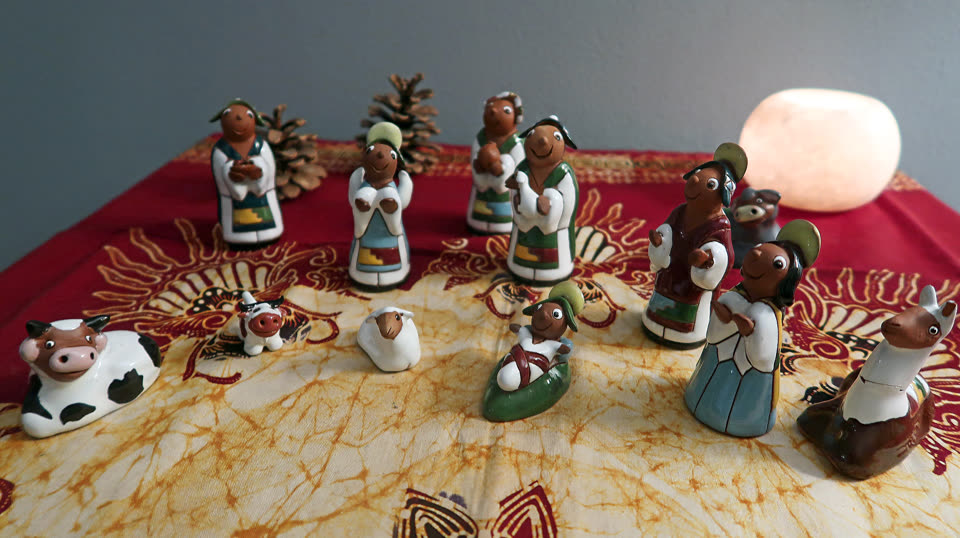
The centrepiece of a Bolivian Christmas house is the pesebre — also called the nacimiento — and it outranks everything else in the room: «La decoración que más sobresale en los hogares bolivianos es el pesebre (también llamado nacimiento). Es la pieza central en el hogar y en las iglesias aún por encima del árbol de navidad.»
The tree is gaining, and the same source says so in the same breath: it «ha tomado mucha más relevancia de la que tenía antes», and families are slowly taking on imported customs — turkey dinners, Christmas trees.
What is being lost is at the small end. In La Paz the city's culture office names the thing that is going: «la fabricación artesanal de los animales de barro para colocarlos en el pesebre del nacimiento y la ropa del Niño Jesús» — the hand-made clay animals for the crib, and the clothes made for the Child.
Children's bands sing villancicos down the street, and used to be paid in buñuelos
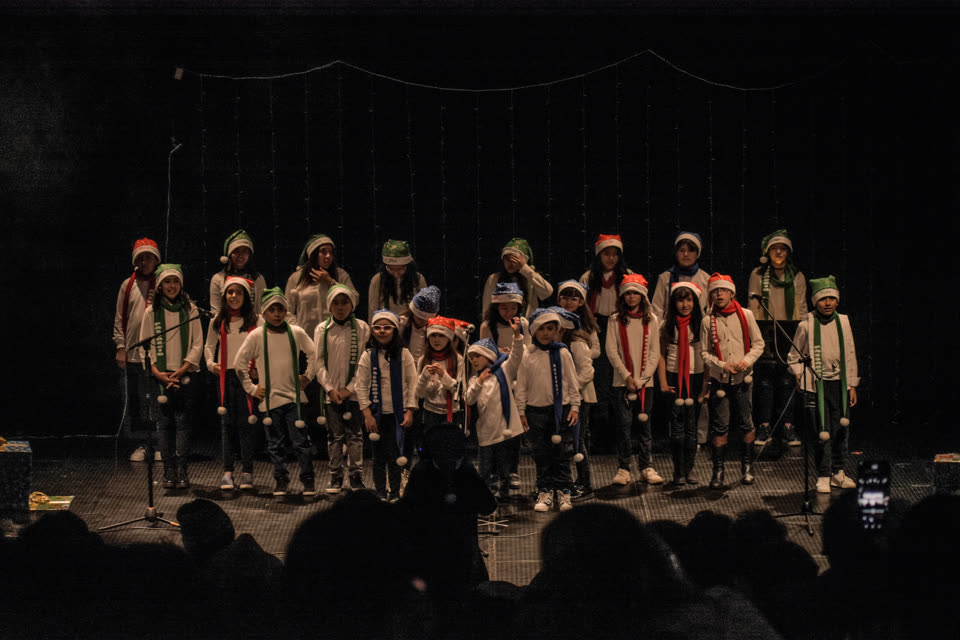
In La Paz the carol singers are children, and they build their own instruments: «los niños se reunían para conformar grupos que iban por las calles tocando villancicos con instrumentos musicales que ellos mismos construían».
The payment has changed. «Al verlos, los adultos los invitaban a comer buñuelos y chocolate» — they were called in for fritters and hot chocolate; now, Bolivia.com reports, «se ha cambiado el chocolate y los buñuelos por algunas cuantas monedas que los adultos les regalan a los niños».
The city is trying to bring it back with competitions. La Paz's culture office: «Los villancicos son un legado que se está recuperando con concursos que se realizan. Por ello ahora son los jóvenes y niños que alegran las noches navideñas en las villas, con su canto.»
In El Alto and the countryside, the carols are sung in Aymara
Carol singing is not a city custom only. Wálter Gómez, the Oficial Mayor de Culturas of La Paz, has said that the practice runs well beyond the capital: «esta práctica no es propia sólo de la ciudad de La Paz, también se la practica en El Alto y el área rural, donde los cánticos, en algunos casos, son en aymara».
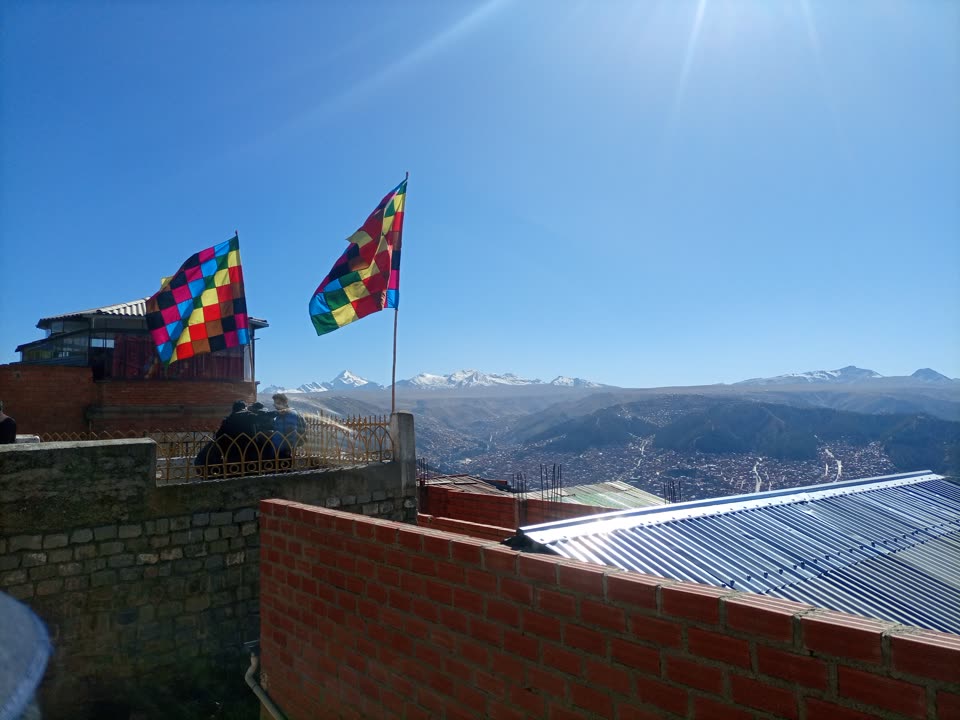
El Alto is the Aymara city above La Paz — a million people on the altiplano at four thousand metres — and the countryside around it is Aymara-speaking. What the sentence records is a Christmas that is sung in a language that was here before the carol was.
Dinner at six, chocolate at nine, against the cold
Christmas in highland Bolivia is a midsummer date at four thousand metres, which means a cold night. The historian Sayuri Loza describes how La Paz used to arrange the evening around that: «los paceños cenaban a las seis de la tarde, y a las nueve tomaban su chocolate antes de dormir, ya que pensaban que les daba calor y les ayudaba a resistir las bajas temperaturas».
Dinner at six, hot chocolate at nine, bed. She tells it in the past tense, and the modern Bolivian Christmas Eve runs much later — the Mass is at midnight and the picana comes after it.
The rest of her account of the old La Paz Christmas is food raised for the purpose: people «criaban chanchos o pollos durante el año y los cocinaban especialmente en estas fechas», kept a pig or chickens through the year to cook at Christmas.
A chocolatada is a hot-chocolate handout for children, given in plazas and on main avenues around Christmas. Sayuri Loza traces it to what children used to do for it: «Los niños realizaban un pequeño show para el Niño Jesús, y las familias les regalaban buñuelos y les ofrecían chocolate. De ahí surge la chocolatada, con chocolate con leche para darles a los niños.»
The performance came first and the chocolate was the payment — the same transaction as the villancico bands in the street, formalised and moved into a square.
The origin is one historian's account and is given here as hers.
The state adds days to Christmas on purpose, to make people travel
Bolivia's holiday calendar is an instrument of tourism policy, and the decrees say so. The 2026 calendar decree states its purpose in its first article: to declare additional national holidays and move others «con la finalidad de promover el turismo interno como actividad económica estratégica».
It works at Christmas. For the turn of 2025 into 2026 the Ministry of Labour announced that both 1 and 2 January were national holidays with public and private work suspended, and that 31 December would be worked «en HORARIO CONTINUO DE 08:00 A 14:30» — a straight shift ending at half past two. The stated reason is the same: «brindar a las familias bolivianas un periodo de descanso planificado para el reencuentro… y al mismo tiempo impulsar el turismo interno y el consumo local».
The effect is that the Bolivian Christmas week is routinely longer than the calendar's nine entries suggest, and by how much is decided each December.
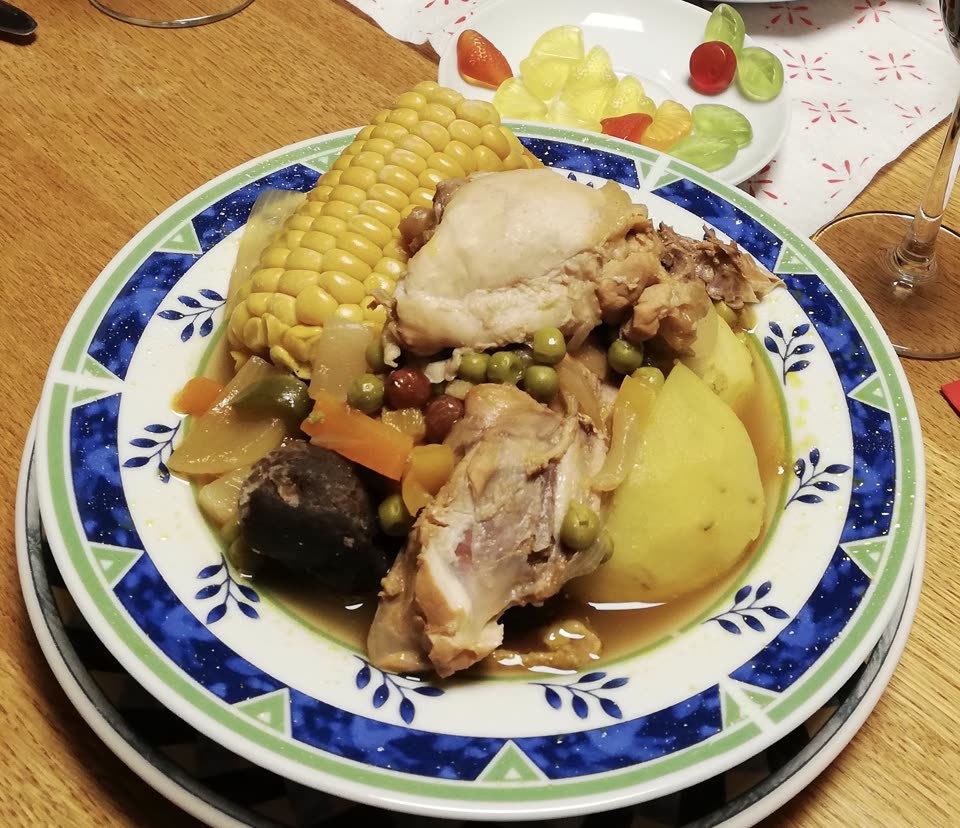
The dish of Christmas Eve, eaten after the midnight Mass. It is a broth rather than a stew and it carries several meats at once: «La picana es una especie de sopa que contiene al menos tres carnes: pollo, res y cerdo. Va acompañada de papa, pasas, verduras, choclo, vino e ingredientes a gusto de las familias» — chicken, beef and pork at least, with potato, raisins, vegetables, a cob of corn, wine, and whatever else the family puts in.
The wine and the raisins are the surprise: it comes out faintly sweet and faintly hot at the same time, and it is served in a bowl with the corn standing in it.
Bolivia.com calls it «tal vez el más tradicional de la gastronomía navideña en Bolivia», and the La Paz culture office lists it among the three things the city has actually kept, with the Misa de Gallo and the villancicos.
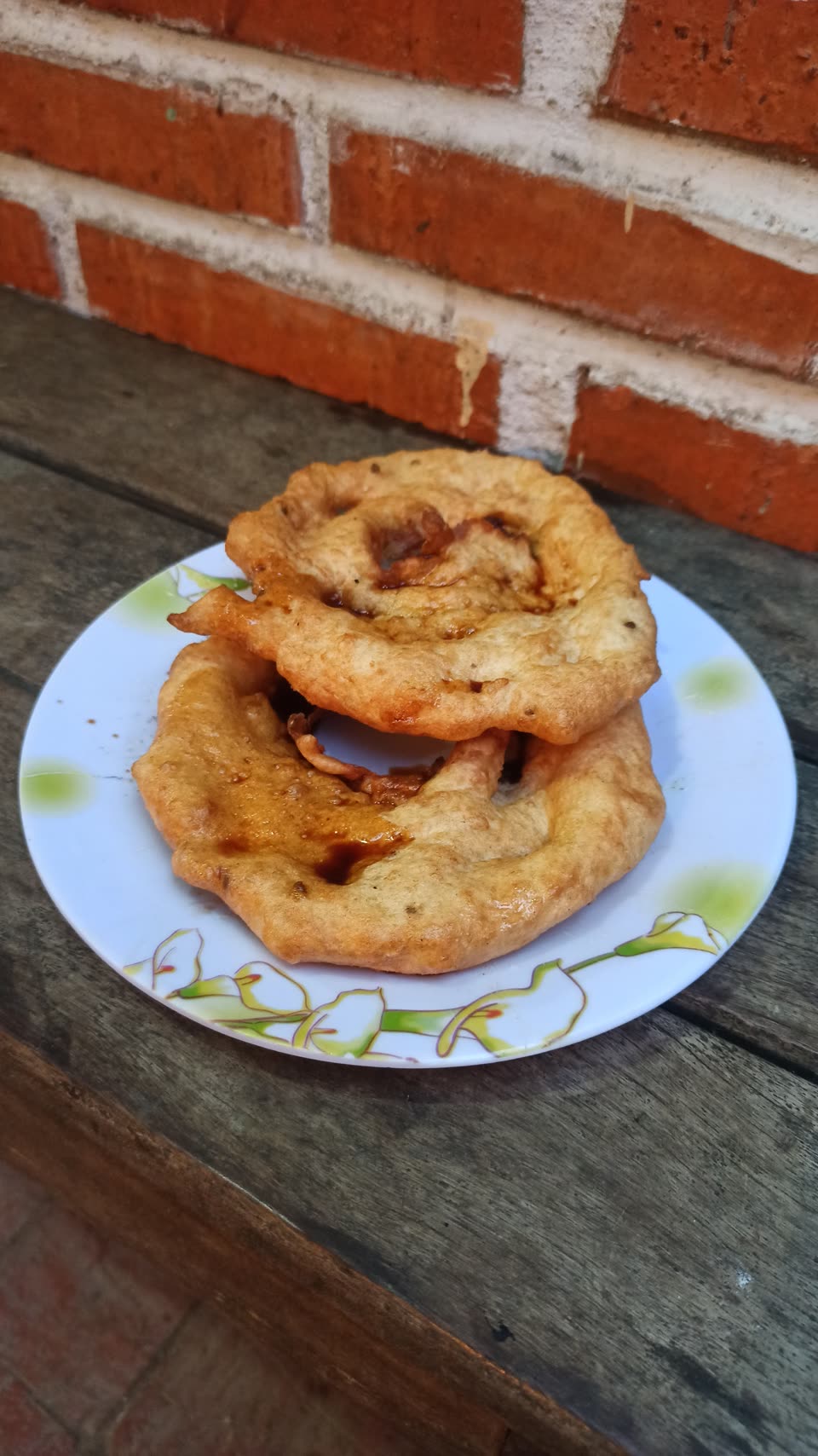
Fried dough and hot chocolate, eaten on Christmas morning and through the afternoon of the 25th: «la Picana se sirve en la Nochebuena y los buñuelos con chocolate se preparan para la mañana y la tarde».
They are also the oldest Christmas food in the Bolivian year. Sayuri Loza describes the buñuelo — «masa de harina frita en abundante aceite» — as the characteristic Christmas thing, eaten at night with a cup of hot chocolate, and says what replaced it: «En Navidad se festejaba con el chocolate, pero también con los buñuelos. El panetón empezó a aparecer en los años ochenta.»
So the Italian panettone that is now on every Bolivian Christmas table is forty years old there, and the thing it displaced is still fried on the morning of the 25th.
Widely repeated claims about Christmas in Bolivia that do not survive
checking. Each one says what is actually the case, because a correction
with nothing in its place leaves you worse off than before.
Oversimplified
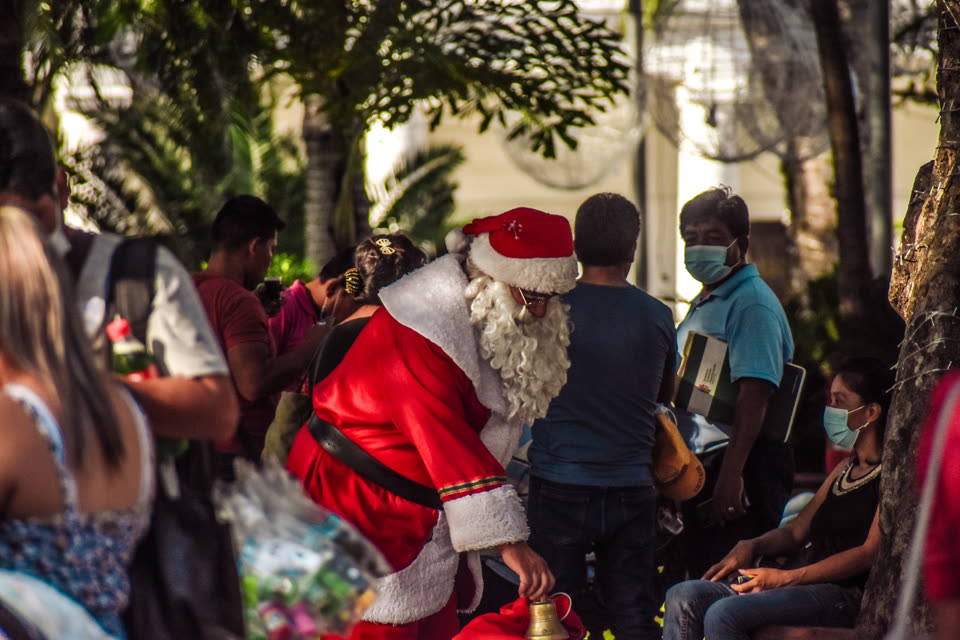
In Bolivia, as everywhere else in Latin America, Father Christmas brings the presents on the night of the 24th.
What is actually the case. Papá Noel has arrived and is winning, and he is not what Bolivian children were told. The historian Sayuri Loza, describing the Christmas she grew up with, is explicit that the Child brought them and that the shoes were the mechanism: «El regalo lo traía el Niño Jesús. A los niños les decían que pusieran sus zapatitos en la puerta o en la ventana, y al día siguiente encontrarían el regalo allí.» Children, she says, preferred adoring the Christ Child and the nativity scenes to looking for Father Christmas.
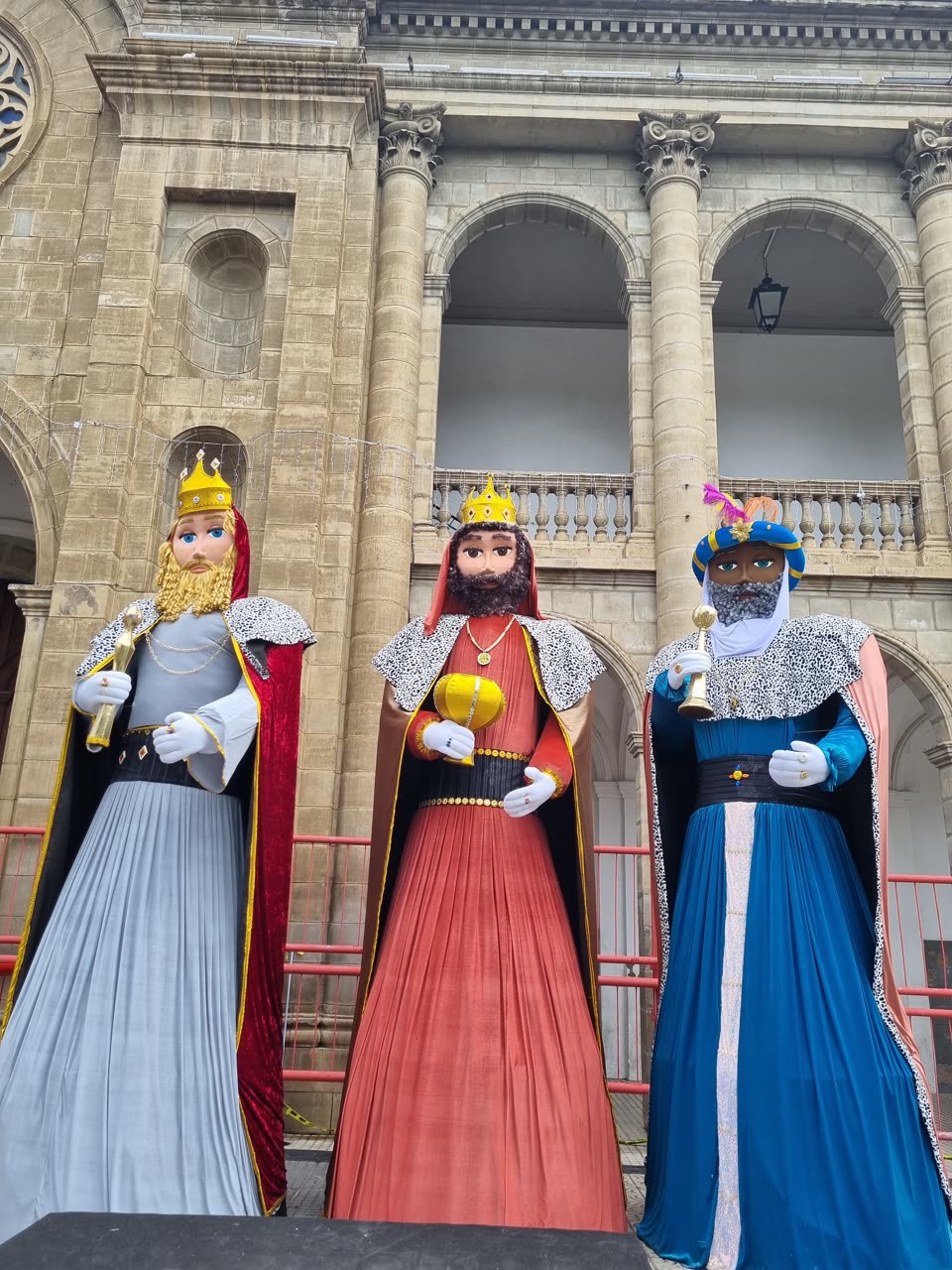
And in some parts of the country the presents do not come at Christmas at all: «En algunos lugares de Bolivia no se intercambian los regalos en Navidad, sino que prefieren esperar hasta el final de las fiestas el 6 de enero… en donde son los Tres Reyes los que traen consigo los obsequios para grandes y chicos.»
So the honest statement is that Bolivia has three answers running at once — the Child, the Kings, and an imported Father Christmas — and the oldest of them is the one with the shoes by the window.
Bolivia's 2026 holiday decree sets out the year in one table, and two of its nine rows belong to different calendars. Row 6 is the «Año Nuevo Andino Amazónico Chaqueño» on 21 June — the southern winter solstice, the Aymara Willkakuti — and row 9 is «Navidad | Viernes 25 de diciembre».
The decree is not neutral between them in form: the Andean new year falls on a Sunday in 2026 and is moved to Monday 22 June so that it is a day off, while Christmas falls on a Friday and stays where it is.
The same document also invents a holiday while it is at it: article 2 declares 27 September, every year, the Día Nacional de la Integración Boliviana — without suspension of work.
Panetón — the Italian panettone, by way of Peru — is now unavoidable on a Bolivian Christmas table. It is also recent: the historian Sayuri Loza puts its arrival in the 1980s, displacing the buñuelos and hot chocolate that Bolivians had kept Christmas on before that.
It is a useful correction to a common way of reading a Christmas table, which is to assume that everything on it is old. The buñuelos and the hot chocolate are the older custom; the panetón that now sits beside them arrived inside living memory, and is the one nobody questions.
Sayuri Loza's account of the rural Bolivian Christmas has two customs in it that are mostly gone. One was to go to the Misa de Gallo and «hacer muñequitos de arcilla para colocarlos a las 12 de la noche, al pie del pesebre» — to make little clay figures and set them at the foot of the crib on the stroke of midnight.
The other was for the animals: «bautizar a los animales con el fin de “pedir la bendición para ellos”», baptising the livestock to ask a blessing on them.
Both have largely disappeared, she says, «debido a la influencia de las ciudades y la migración del campo» — because of the pull of the cities and migration off the land.
Every claim carries its own citation. They are collected below, so you
can see what the page rests on and how much of it comes from where.
Navidad a la boliviana — Bolivia.com, 23 December 2018. Retrieved 2026-10-31. archived 6 March 2026«En algunos lugares de Bolivia no se intercambian los regalos en Navidad, sino que prefieren esperar hasta el final de las fiestas el 6 de enero, en la denominada Epifanía en donde son los Tres Reyes los que traen consigo los obsequios para grandes y chicos.»
¿Qué tradiciones navideñas se han perdido con el tiempo? — El Día (Santa Cruz), 24 December 2024. Retrieved 2026-10-31. archived 27 December 2024The historian Sayuri Loza, on the older Bolivian arrangement: «El regalo lo traía el Niño Jesús. A los niños les decían que pusieran sus zapatitos en la puerta o en la ventana, y al día siguiente encontrarían el regalo allí».
Decreto Supremo N° 5521, artículo 5 — Calendario de Feriados Nacionales, gestión 2026 — Gaceta Oficial del Estado Plurinacional de Bolivia; texto de consulta published by the Ministerio de Minería y Metalurgia. Retrieved 2026-10-31.Its calendar table ends: «9 | Navidad | Viernes 25 de diciembre | Viernes 25 de diciembre» — the date, and the date on which activities are suspended. Its recitals name the standing rule it works from: «el Decreto Supremo N° 2750, de 1 de mayo de 2016, regula el calendario y traslado de feriados nacionales del Estado Plurinacional de Bolivia, con el fin de promover el turismo como actividad económica estratégica».